
Introduction
The Hairy-footed Flower Bee (Anthophora plumipes) is one of the easiest spring bees to notice once you know what to look for. It is often mistaken for a small bumblebee because it is furry, fast-moving and active early in the year, but it is actually a solitary bee.
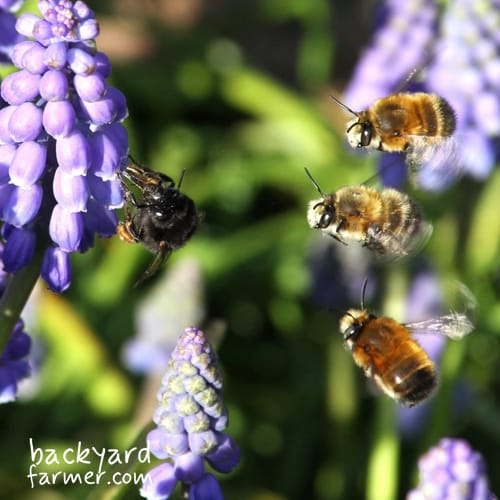
Many people first notice this species as a black furry bee with orange legs or a ginger bee hovering around flowers in spring. That is because the males and females look very different, which can be confusing at first.
This is a common UK spring bee, often seen in gardens, parks, old walls, churchyards and other flower-rich places. It is especially associated with lungwort, dead-nettle, comfrey and other early flowers.
How To Identify Hairy-footed Flower Bees In The UK
The Hairy-footed Flower Bee is a good beginner species because the male and female are both distinctive once you know the main clues. It is usually a fast, darting, hover-prone bee seen in spring, often around flowers or old walls.
Females are usually easier to mistake for bumblebees. They are dark, furry and more solid-looking. Males look very different, with a warmer gingery-brown colour, a pale face and obvious feathery hairs on the middle feet.
Female Hairy-footed Flower Bee
A female Hairy-footed Flower Bee is mostly black or very dark brown, with a furry body and orange or rusty pollen hairs on the hind legs. She often looks like a small dark bumblebee at first glance.
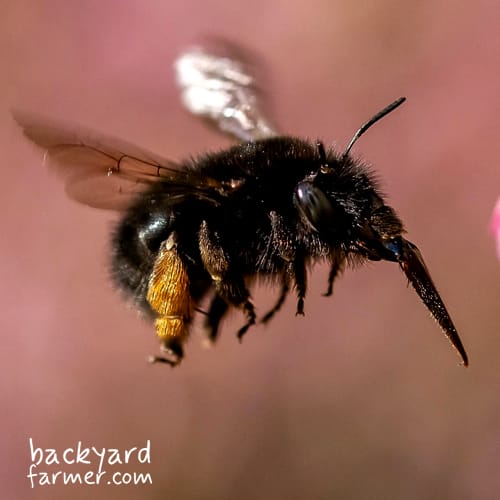
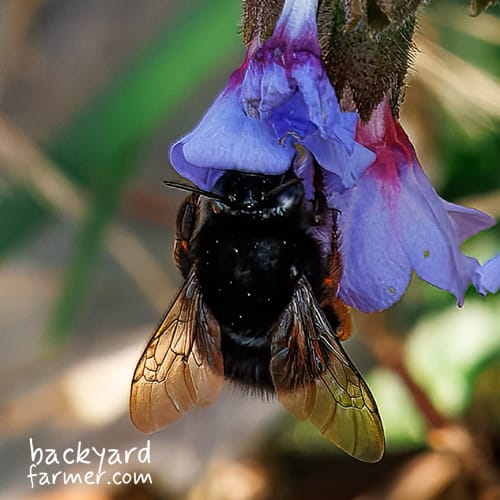
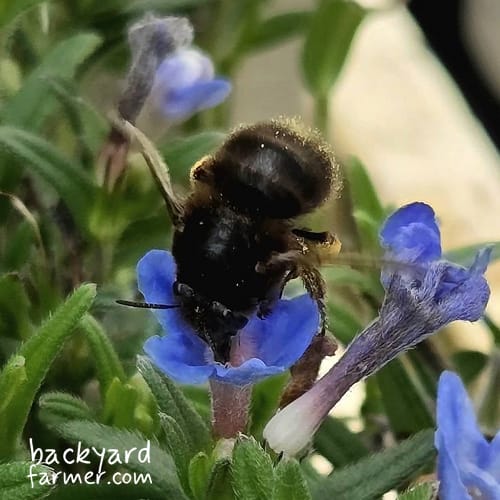
Females are usually seen feeding steadily on spring flowers or collecting pollen. If you see a black bee with orange hind-leg hairs around lungwort or comfrey in spring, it is often a female Hairy-footed Flower Bee.
Male Hairy-footed Flower Bee
A male Hairy-footed Flower Bee is much lighter in colour, usually gingery-brown or tawny, with a pale or creamy face. The male also has the feathery middle feet that give the species its common name.
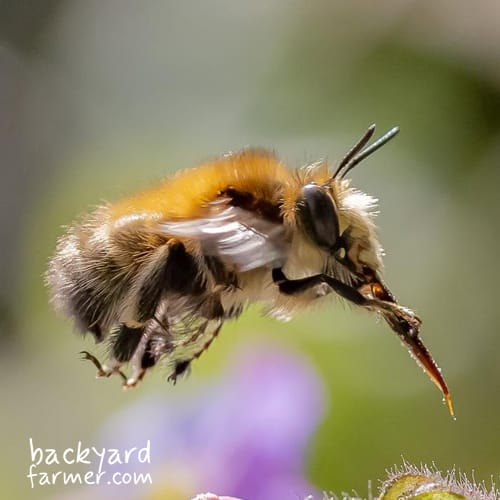
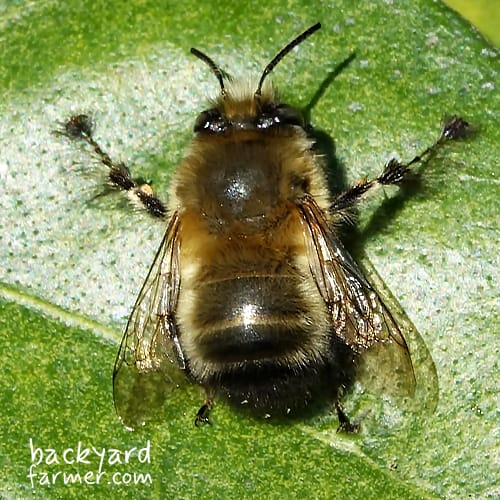
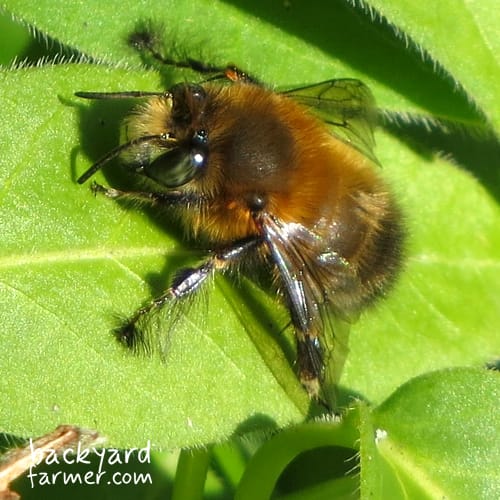
Males are especially noticeable because they hover, patrol flower patches and dart quickly around walls, banks and garden borders. If you see a ginger hoverer in spring, it is often the male.
Male Vs Female At A Glance
| Feature | Male | Female |
|---|---|---|
| Colour | Gingery-brown or tawny | Mostly black or very dark |
| Face | Pale or creamy | Darker |
| Legs | Feathery middle feet | Orange pollen hairs on hind legs |
| General look | Lighter, faster, hover-prone | Darker, fuller, more bumblebee-like |
| Most often noticed | Hovering and patrolling | Feeding and collecting pollen |
Identification & Key Facts
| Attribute | Details |
|---|---|
| Common name | Hairy-footed Flower Bee |
| Scientific name | Anthophora plumipes |
| Bee group | Solitary bee |
| Family | Apidae |
| Best beginner clue | Spring bee with a ginger male and a black female |
| Main ID feature | Fast, darting flight and frequent hovering |
| Size | Around 14–16 mm |
| Male markings | Pale face and feathery middle feet |
| Female markings | Black furry body with orange pollen hairs on hind legs |
| Active period | Usually March to June, with males sometimes appearing earlier in mild weather |
| Habitat | Gardens, parks, churchyards, old walls, sunny banks and flower-rich urban spaces |
| Nesting | Soft mortar, cob, earth banks, clay and weak spots in old walls |
| Favourite flowers | Lungwort, dead-nettle, comfrey, primrose, rosemary, wallflowers and fruit blossom |
| UK status | Common in much of England and Wales, especially farther south |
Hairy-footed Flower Bee Nesting Behaviour
Hairy-footed Flower Bees are solitary, which means each female builds her own nest. They do not form a colony like bumblebees or honeybees.
They often nest in soft mortar, cob, clay, bare banks and weak spots in old walls. Several females may use the same area, so a nesting site can look busy, but each bee is nesting independently.
If a nest is not causing a genuine safety or structural problem, it is usually best to leave it alone. Avoid blocking active holes during spring, and delay non-urgent repairs until activity has finished where possible.
What Flowers Do Hairy-footed Flower Bees Visit?
Hairy-footed Flower Bees visit a range of early spring flowers and are especially easy to spot in gardens where nectar-rich plants are already in bloom.
They are often seen on flowers such as lungwort, dead-nettle, comfrey, primrose, rosemary, wallflowers, ground ivy and fruit blossom.
For gardens, the best approach is to provide flowers across the spring season. Early flowers matter because this bee is active when fewer nectar and pollen sources are available.
Similar Species
Most Hairy-footed Flower Bees are fairly easy to recognise once you know the male and female forms, but a few spring insects and bees can still cause confusion.
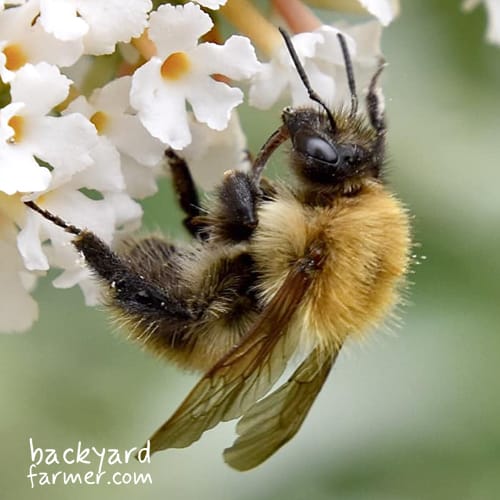
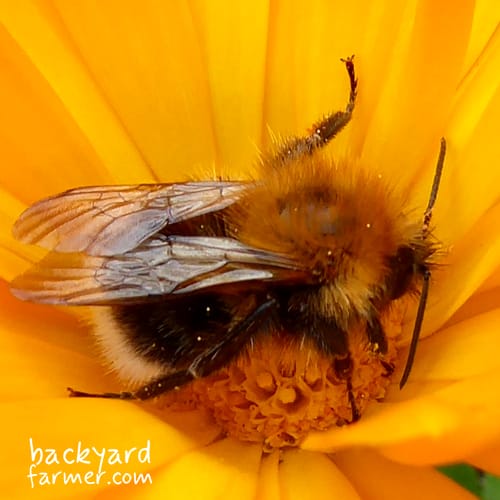
Common Carder Bumblebee (Bombus pascuorum) – The Common Carder Bumblebee can look similar to the male at a glance because it is also warm brown and furry.
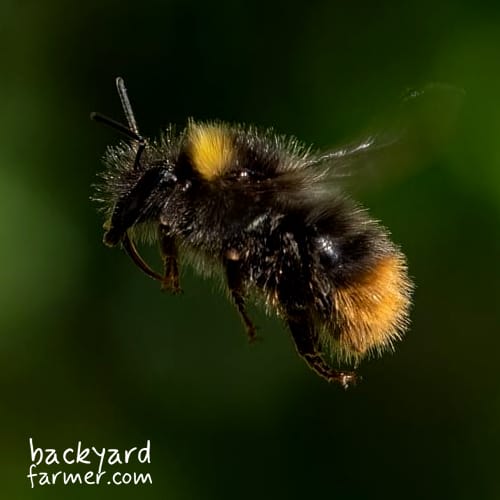
Early Bumblebee (Bombus pratorum) – The Early Bumblebee can cause confusion with the female because it is also active in spring.
Tree Bumblebee (Bombus hypnorum) – The Tree Bumblebee is another common spring garden bee.
Why The Hairy-footed Flower Bee Matters
The Hairy-footed Flower Bee is a useful early spring pollinator. It visits a wide range of flowers and helps support pollination in gardens and other flower-rich places at a time when fewer insects are active.
Like other solitary bees, it benefits from flower-rich gardens, fewer pesticides, warm nesting corners and connected habitats. A garden with flowers from early spring onward is far more useful than one that is tidy but flower-poor.
How You Can Help Hairy-footed Flower Bees
Grow Flowers Across The Spring Season
Plant or keep a mix of early flowers so food is available as soon as the bees emerge.
Good choices include:
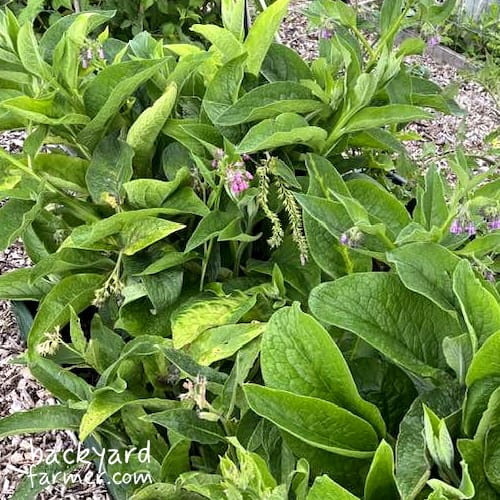
- Lungwort
- Dead-nettle
- Comfrey
- Primrose
- Rosemary
- Wallflowers
- Ground ivy
- Fruit blossom
- Other nectar-rich spring flowers
Leave Nesting Corners
Hairy-footed Flower Bees often nest in soft mortar, sunny banks and crumbly wall sections. Leaving a few quiet, undisturbed corners can make the garden more useful for nesting bees.
Avoid Pesticides
Avoid spraying flowering plants, especially when bees are active. A pesticide-free garden is much more useful for Hairy-footed Flower Bees and other pollinators.
Frequently Asked Questions
The male is gingery-brown with a pale face and feathery middle feet. The female is black and furry with orange pollen hairs on the hind legs.
No. It looks a bit like a small bumblebee, but it is actually a solitary flower bee.
Males cannot sting. Females can sting, but they rarely do unless handled or trapped.
They especially like lungwort, dead-nettle, comfrey, primrose, rosemary and other early spring flowers.
They usually nest in soft mortar, old walls, cob, earth banks and clay.
No. They are not aggressive towards people, though males may chase other insects.
No. They are common in much of England and Wales.
Males are lighter, gingery and pale-faced. Females are darker, fuller-bodied and have orange pollen hairs on the hind legs.