
Why Growing Food Feels So Hard Today
Growing food in modern Britain can feel unrealistic, especially for people living in towns and suburbs.
Space is limited, time is short, and much of the advice online is aimed at people with acres of land, large budgets, or picture‑perfect gardens. As a result, practical home food growing often feels out of reach for ordinary households.
For many of us living in UK suburbs, growing food at home can seem either unrealistic or too difficult to fit around work, family, and everyday commitments.
The Idea Behind The Backyard Farmer
The Backyard Farmer exists to challenge that assumption.
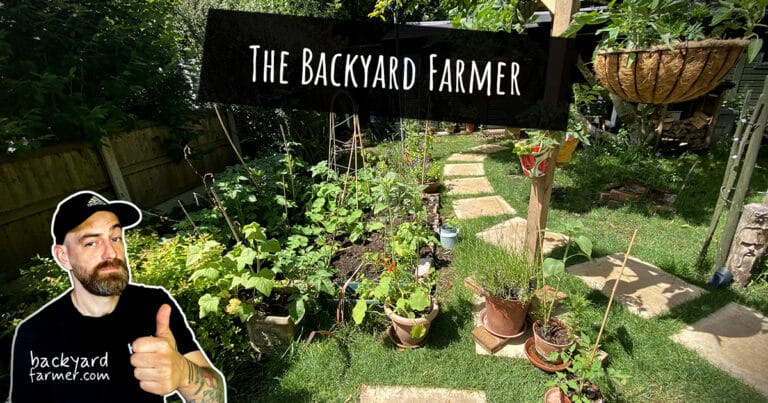
At its core, this project is about backyard farming as it really happens — growing food at home in ordinary gardens, with real constraints, and by people who are learning as they go. It isn’t polished or idealised. However, it is honest, practical, and achievable.
Rather than chasing total self‑sufficiency or trying to escape modern life, the focus here is much simpler. Backyard farming, in this context, is about regaining a small but meaningful amount of control over:
- what we eat
- how our food is grown
- how much we rely on long, fragile food systems
Who This Project Is For
Like many people, I’ve spent most of my life in British suburbia.
I’m not a farmer. I didn’t grow up on the land, and I don’t come from a long line of growers. Instead, my background is fairly typical for someone interested in small‑scale food growing and sustainable living.
I work with computers, build websites, and spend my free time outdoors when I can. This site documents what happens when someone with curiosity — but limited experience — decides to start backyard farming and turn a typical suburban garden into a productive, food‑growing space.
What Backyard Farming Means Here
Backyard farming, in this context, isn’t about perfection or maximum yields.
Instead, it focuses on:
- learning what actually works in a UK climate
- improving skills through trial and error
- building healthier soil over time
- growing realistic amounts of food at home
- avoiding unnecessary chemicals, gimmicks, and quick fixes
At the same time, backyard farming is also about slowing down, reconnecting with the seasons, and finding a sense of calm through working with the earth.
What You’ll Find on This Site
Everything shared here is tested in real conditions and shaped by hands‑on experience.
Ultimately, the aim is to provide practical, achievable guidance for people who want to grow food at home, explore backyard farming, and make better use of their garden — even if they’re starting from scratch.
Continue your backyard farming journey
If you’re learning why Backyard Farmer exists and what the project stands for, these guides will help you explore practical gardening, sustainability, and how to grow your own food.
- How to live sustainably UK – Tips and guidance on living more sustainably — aligning with the ethos of growing your own and reducing environmental impact.
- How to grow strawberries at home – A practical guide to growing a favourite fruit, perfect for beginners and backyard growers.
- What vegetables are good to grow – An essential resource on choosing productive and rewarding vegetables for your garden.
Why Backyard Farming Matters in Modern Britain
For much of British history, growing food at home was normal. During the World Wars, households across the UK were encouraged to produce food wherever they could — in gardens, allotments, and shared spaces. At the time, it wasn’t about self-sufficiency or ideology, but resilience. By growing food locally, communities reduced pressure on supply chains and adapted to difficult conditions.
In the decades since, however, much of that everyday food-growing knowledge has been lost. Food has increasingly become something we buy rather than something we understand. Although supermarkets now offer year-round abundance, this convenience comes at a cost. Long supply chains, heavy transport, and increased food miles have created a growing distance between people and the land that feeds them.
Backyard farming isn’t about rejecting modern life or returning to the past. Instead, it offers a practical balance. By growing even a small amount of food at home, people can reduce food miles, cut packaging waste, and develop a better understanding of how seasons, soil, and climate really work — particularly within a UK context.
In many parts of Europe, home food growing remains part of everyday life. Gardens tend to be productive by default, with herbs and vegetables grown alongside ornamental plants. As a result, food production is seen as normal rather than extreme. In contrast, British gardens have gradually shifted toward low-maintenance lawns and decorative planting, often leaving valuable growing space unused.
Backyard farming directly challenges that mindset. It shows that growing food at home doesn’t require large plots, expensive equipment, or specialist knowledge. With realistic expectations and gradual learning, even a suburban garden can support small-scale food growing, produce fresh food, and improve soil health while supporting wildlife.
Perhaps most importantly, backyard farming reconnects people with natural rhythms. It encourages patience, observation, and adaptability — qualities that are increasingly rare in fast, convenience-driven lifestyles. In a small but meaningful way, backyard farming helps people regain agency over something fundamental: how their food is grown and where it comes from.
What the Backyard Farm Involves
The backyard farm is built around a simple, practical idea: make the most of the space available without overcomplicating things.
Rather than trying to grow everything, the focus stays on a small number of reliable crops and simple systems that work together. As a result, backyard farming here remains practical, manageable, and realistic for everyday life. Each part of the garden has a clear purpose — whether that’s growing food at home, improving soil health, or supporting wildlife.
Growing Food in a Small Space
Food growing on the backyard farm prioritises practicality over novelty. Instead of chasing unusual varieties, crops are chosen because they support small-scale food growing and perform well in real UK conditions.
In practice, priority is given to plants that:
- grow well in a UK climate
- produce reliable yields in limited space
- can be harvested gradually, rather than all at once
- offer good value compared to shop-bought produce
Because of this approach, growing food at home stays realistic and sustainable. Typical crops include potatoes, tomatoes, onions, salads, and root vegetables. Alongside these, herbs such as thyme, basil, mint, and rosemary are grown to maximise space, encourage pollinators, and provide fresh flavour throughout the year.
Keeping Chickens as Part of the System
Chickens play an important role in backyard farming, not just as egg layers, but as part of a wider, balanced food-growing system.
The hens kept here are rescued ex-battery chickens, given a permanent home after their commercial laying lives would otherwise end. In return, they contribute to the backyard farm by providing:
- a steady supply of fresh eggs
- natural pest control within the garden
- manure that can be composted and returned to the soil
Together, this helps close the loop between food production and waste. At the same time, the chickens add life, movement, and character to the garden, reinforcing the idea that backyard farming works best when systems support one another rather than operating in isolation.
Gardening Without Chemicals
Another key principle of backyard farming is working with nature rather than trying to control it.
For that reason, chemical pesticides are avoided wherever possible. Instead, the focus stays on natural methods that support long-term garden health, including:
- improving soil health over time
- encouraging beneficial insects
- using physical barriers and natural deterrents
- accepting some losses as part of the growing process
In practice, this approach leads to healthier soil, stronger plants, and a more resilient garden ecosystem, all without relying on chemicals or quick fixes.
Learning and Adjusting Over Time
Nothing in the backyard farm is treated as fixed or final. As conditions change, beds are adjusted, crops are rotated, and methods are refined based on what works in practice.
Some ideas succeed, while others fail, and both are valuable. Over time, backyard farming becomes easier to manage and more productive, with steady improvement replacing the pressure for instant results. Ultimately, the goal is a garden that grows stronger, more resilient, and better balanced with each season.
What Success Looks Like
Success on the backyard farm isn’t measured by perfection, record‑breaking yields, or neatly curated results.
Instead, it’s defined by steady progress and realistic outcomes that fit around everyday life. The aim isn’t to grow everything we eat, but to grow something — consistently, sustainably, and with intention. In that sense, backyard farming succeeds when it supports everyday living rather than competing with it.
On a practical level, success in backyard farming looks like:
- producing a meaningful amount of fresh food at home
- improving soil health year after year through better growing practices
- gradually reducing reliance on shop‑bought produce
- learning which crops are genuinely worth growing locally
- wasting less food and packaging over time
However, success isn’t only about what the garden produces. It’s also about mindset.
Backyard farming naturally encourages patience, observation, and adaptability. Crops fail, weather disrupts plans, and pests inevitably show up. Even so, each setback builds understanding rather than frustration. Over time, small‑scale food growing becomes easier to manage, more productive, and better suited to the garden’s environment.
There’s also value in what can’t be measured. Spending time outdoors, working with the seasons, and caring for living systems often brings a sense of calm that’s missing from modern routines. As a result, the garden becomes not just a source of food, but a place to slow down, reset, and reconnect.
Ultimately, success means building a backyard space that supports growing food at home, soil health, wildlife, and personal wellbeing — without pressure, comparison, or unrealistic expectations.
How This Site Can Help You Start Backyard Farming
The Backyard Farmer is designed to be practical first and inspirational second.
Rather than presenting an idealised version of backyard farming, this site focuses on clear guidance, realistic expectations, and tools that help you make steady progress. As a result, it’s well suited to people growing food at home with limited space, time, or experience — especially in UK gardens and suburban settings.
Across the site, you’ll find:
- beginner-friendly gardening guides written for UK conditions
- step-by-step advice for growing food at home in small or suburban spaces
- practical DIY and self-sufficiency projects that support backyard farming
- seasonal growing information that reflects real weather patterns
- tools and resources designed to save time, money, and effort
If you’re new to backyard farming or home food growing, the best place to begin is with simple, reliable crops and manageable systems. Many guides are written specifically to help you avoid common beginner mistakes, while also showing where small-scale food growing has the biggest impact.
Start Here
If you’re unsure where to begin, these pages offer a clear starting point:
- what to grow first in a small UK garden
- preparing soil naturally without chemicals
- growing vegetables in limited space
- keeping chickens at home responsibly
- beginner gardening mistakes to avoid
Each article builds on the same core principles: keep it realistic, learn as you go, and make changes that fit around everyday life.
Backyard farming doesn’t require a dramatic lifestyle shift. Instead, it starts with one bed, one crop, or one small decision. This site exists to support that first step — and every step that follows — as you build confidence, skills, and a more productive garden over time.