
Tomatoes can crop well outdoors in the UK when they get enough warmth, sunlight and shelter. Our short growing season, cool nights and unpredictable summer weather make timing and variety choice important. Bush tomatoes are often easiest for pots and smaller gardens, while cordon varieties can produce a longer crop when given support and regular attention.
This guide explains how to grow tomatoes outdoors from seed to harvest, including when to sow, how to harden plants off, where to plant them, how to water and feed them, and what to do if problems develop.
How to Grow Tomatoes Outdoors in the UK: Quick Answer
- Sow tomato seeds indoors in late March or early April.
- Keep seedlings warm and give them as much strong light as possible.
- Pot them on as they grow, using fresh compost and avoiding waterlogged conditions.
- Harden plants off gradually before planting them outside.
- Plant out once frost risk has passed, usually from late May into early June, in a sunny, sheltered position.
- Support cordon tomatoes and remove their side shoots; bush varieties need much less pruning.
- Water consistently and begin feeding with tomato fertiliser once the first fruits have set.
- Pick ripe tomatoes regularly from summer into early autumn, bringing remaining fruit indoors before damaging frost.
Cordon or Bush Tomatoes?
The first important choice is whether to grow a cordon or bush variety. The two types need different levels of support and pruning, and one may suit your growing space much better than the other.
| Feature | Cordon Tomatoes | Bush Tomatoes |
|---|---|---|
| Growth habit | Tall and upright | Shorter and spreading |
| Support | Strong, continuous support needed | Usually little support, although fruiting branches may need tying |
| Side shoots | Remove regularly | Usually leave in place |
| Maintenance | Higher; needs tying, pruning and training | Lower; mainly watering, feeding and harvesting |
| Best uses | Borders, large pots, walls and sheltered positions | Containers, grow bags, raised beds and small gardens |
Which should you choose?
Choose a bush tomato if you want a simpler plant for a pot or small space. Choose a cordon tomato if you have a sunny, sheltered position and do not mind providing support and removing side shoots regularly. In a cool or exposed garden, an early bush variety may be more reliable than a large, late-cropping cordon variety.
Where to Grow Tomatoes Outdoors
Before buying plants or sowing seeds, ask:
Will tomatoes actually grow well where I want to put them?
Tomatoes need warmth and sunlight to ripen fruit properly. A position that is bright in spring may become shaded later in the season, so check how much sun the area receives during summer.
Sun and Shelter
Choose the warmest, sunniest position available.
- Aim for at least six hours of direct sunlight a day.
- Protect plants from strong winds, which can damage stems and dry out containers quickly.
- A south-facing wall or fence can reflect warmth and create a useful microclimate.
- Avoid low, frost-prone areas where cold air collects.
- Do not plant tomatoes where they will be shaded by tall crops or buildings for much of the day.
Good shelter can make the difference between fruit ripening successfully and remaining green at the end of the season.
Ground, Pots or Grow Bags?
Tomatoes can be grown in open ground, large containers or grow bags.
- Open ground: Holds moisture well and gives roots plenty of space, especially if the soil is fertile and well drained.
- Large containers: Useful where soil is poor or space is limited, but they dry out faster and need regular feeding.
- Grow bags: Convenient and suitable for one or two plants, although they have limited compost volume and can dry out quickly in warm weather.
Whatever method you choose, make sure excess water can drain away. Waterlogged roots grow poorly and are more vulnerable to disease.
What If Your Garden Is Cool or Exposed?
Outdoor cropping becomes less reliable in cold, windy or shaded gardens. Improve your chances by choosing early or smaller-fruited varieties, planting against a warm wall and avoiding very late sowing.
If your garden remains cool, a greenhouse or polytunnel will usually give a longer and more reliable cropping season. A cold frame or sheltered porch can also be useful for protecting young plants and extending the hardening-off period.
When to Sow Tomato Seeds
For outdoor growing in most of the UK, sow tomato seeds indoors in late March or early April. This gives plants enough time to grow before planting outside without leaving them in small pots for too long.
Sowing much earlier can create weak, leggy plants if you do not have a warm, bright growing space. Tomato seeds need warmth to germinate, and seedlings need strong light immediately afterwards. A bright windowsill can work, but turn pots regularly so plants do not lean towards the glass.
How to Sow Tomato Seeds
- Fill small pots or modules with moist seed compost.
- Sow one or two seeds per pot or module.
- Cover the seeds lightly with compost or vermiculite.
- Water gently so the seeds are not displaced.
- Keep the containers warm, ideally around 18–21°C for germination.
- Move seedlings into strong light as soon as they appear.
Once seedlings emerge, avoid keeping them in a dark or overheated room. Warmth without enough light produces thin, stretched growth.
Potting On and Growing Tomato Seedlings
Pot seedlings on when they have developed their first true leaves or when roots begin to fill their original container. Move each plant into a slightly larger pot of good-quality multipurpose compost.
Handle seedlings by their leaves rather than gripping the delicate stem. Tomatoes can be planted slightly deeper than they were growing, with some stem below the compost surface. They can produce additional roots along buried stem, which helps create a stronger plant.
Keep seedlings:
- In strong light.
- Warm but not excessively hot.
- Evenly moist rather than constantly wet.
- Protected from cold draughts and sudden temperature drops.
Do not leave young plants standing in water. Allow excess moisture to drain, then water again when the surface of the compost begins to dry. If plants become tall and thin, they usually need more light rather than more fertiliser.
When and How to Plant Tomatoes Outside
When Can Tomatoes Go Outside?
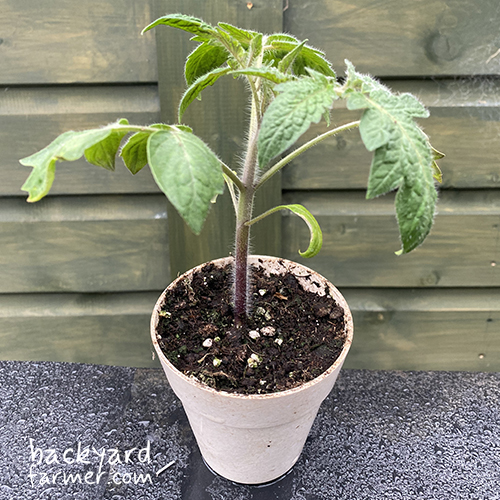
Tomatoes can usually be planted outside from late May into early June, depending on your location and the weather. Wait until the risk of frost has passed and nights are no longer consistently cold.
Do not treat a calendar date as a guarantee. A late frost can kill young plants, while cold, wet conditions can check their growth even without frost. Keep plants under cover for longer if the forecast is unsettled.
Harden Plants Off First
Harden off tomato plants gradually before planting them outside. This acclimatises them to stronger sunlight, cooler temperatures and wind.
Over about two weeks:
- Put plants outside in a sheltered position during the day.
- Bring them back indoors or under cover at night.
- Gradually increase the time they spend outside.
- Expose them to more sunlight and light wind as they become accustomed to conditions.
- Plant them out once they remain sturdy and the weather is settled.
If conditions stay cold, extend the hardening-off period rather than rushing the process.
Prepare the Growing Position
Tomatoes grow best in fertile, well-drained soil enriched with garden compost or well-rotted organic matter. Avoid planting into ground that remains waterlogged after rain.
For containers:
- Use a good-quality multipurpose or container compost.
- Choose a large pot with drainage holes.
- Allow enough space for the roots and plant canopy.
- Place supports in position before the plant becomes large.
Cordon plants are easier to support if the cane, frame or string is installed at planting time.
Planting Tomatoes
Water plants before planting. Make a hole slightly larger than the root ball and place the plant in it carefully.
Tomatoes can be planted deeply, with some of the lower stem buried. Remove the lowest leaves if necessary, but do not bury foliage. Firm the compost or soil around the roots and water thoroughly to settle the plant.
Add a mulch of compost or other suitable organic material around the plant, keeping it clear of the stem, to help conserve moisture.
Tomato Spacing
As a simple guide:
- Cordon tomatoes: Space about 45–60cm apart, depending on the variety and support system.
- Bush tomatoes: Space about 45–60cm apart, allowing room for their spreading habit.
- Containers: Grow one vigorous tomato in a large pot, generally at least 30–40cm wide, unless the variety is specifically compact.
Good spacing improves airflow and makes watering, tying and harvesting easier.
How to Care for Outdoor Tomato Plants
Supporting Tomato Plants
Cordon Tomatoes
Support cordon tomatoes from planting using a cane, string, trellis or sturdy frame. Tie the main stem loosely as it grows, leaving room for it to thicken, and check ties regularly so they do not cut into the plant.
Bush Tomatoes
Bush tomatoes are usually self-supporting, although heavily laden branches may need a short cane or soft tie to keep fruit off the ground.
Pruning and Removing Side Shoots
How to Prune Cordon Tomatoes
Side shoots grow from the joint between the main stem and a leaf. Remove them while they are small by pinching them out with your fingers.
Check cordon plants at least once a week during active growth. If side shoots are left to develop, the plant becomes bushier and harder to support, and energy is spread across more stems.
Do not remove every leaf. Healthy leaves are needed for photosynthesis and help protect fruit from excessive sun. Remove only yellow, damaged or diseased leaves, and any foliage that is touching the soil.
Should You Prune Bush Tomatoes?
Bush tomatoes do not usually need routine side-shoot removal. Their natural spreading habit is part of how they produce their crop.
Removing shoots from a bush variety can reduce its potential yield. Concentrate instead on watering, feeding, supporting heavy branches and picking ripe fruit.
When to Stop Outdoor Cordon Tomatoes
Once an outdoor cordon tomato has set around four fruit trusses, pinch out the main growing tip two leaves above the top truss. This helps the plant concentrate on ripening its existing crop before the season ends.
The exact number can vary with the variety, planting date and local climate. In a particularly warm, sheltered position, plants may support more growth; in a cool garden, stopping earlier may be sensible.
Watering Tomatoes
Consistent watering is more important than following a rigid schedule. Keep the soil or compost evenly moist, particularly once plants are flowering and setting fruit.
- Water the root zone rather than routinely soaking the foliage.
- Containers dry out much faster than open ground.
- In hot weather, container plants may need watering every day.
- Check plants regularly rather than relying only on the weather.
- Water slowly and thoroughly so moisture reaches the full root ball.
- Avoid repeated cycles of severe drying followed by heavy watering.
Irregular watering can contribute to fruit splitting and blossom end rot. A mulch around plants can help reduce evaporation and keep moisture levels steadier.
Feeding Tomatoes
Tomatoes grown in containers usually need regular supplementary feeding because the available nutrients are limited.
Begin using a high-potassium tomato feed once the first fruits have set or start to swell. Follow the manufacturer’s dilution and frequency instructions, as products vary.
Plants growing in fertile open ground may need less feeding, particularly early in the season. Avoid excessive nitrogen, which encourages lush leafy growth at the expense of flowers and fruit.
Common Outdoor Tomato Problems
Outdoor tomatoes are exposed to cooler temperatures, rainfall and disease pressure, so some problems are normal and do not necessarily mean you have grown the plants incorrectly.
| Problem | Likely Cause | What to Do |
|---|---|---|
| Tomato blight | Blight disease favoured by warm, wet weather | Remove badly affected material, improve airflow and choose resistant varieties where possible |
| Split fruit | Uneven watering or rapid uptake of water after dry conditions | Keep moisture levels steady and pick ripe fruit promptly |
| Blossom end rot | Irregular moisture preventing calcium reaching developing fruit | Water consistently and remove badly affected fruit |
| Yellow leaves | Natural ageing, overwatering, nutrient shortage or disease | Check moisture, drainage and feeding before removing affected leaves |
| Slow growth | Cold conditions, poor light, root disturbance or waterlogged soil | Improve warmth, shelter, light and drainage |
| Wilting | Lack of water, damaged roots, disease or excessive heat | Check the compost and roots, then water thoroughly if dry |
Tomato Blight
Tomato blight is more likely during warm, humid and wet weather. Symptoms can include dark brown or black patches on leaves and stems, rapidly collapsing foliage and discoloured fruit.
Remove seriously affected leaves and fruit promptly, but remember that leaf removal is not a cure once the disease is established. Do not put blighted material on a normal home compost heap. Use your council’s green-waste collection or another permitted disposal route instead. RHS specifically notes that the organism can potentially produce resilient resting spores that may survive home composting.
Improve airflow by avoiding overcrowding and watering at the base of plants. Blight-resistant varieties can reduce the risk, but no variety is completely immune.
Blossom End Rot
Blossom end rot appears as a dark, sunken patch at the base of the fruit. It is caused by too little calcium reaching the developing fruit, but in UK gardens it is usually linked to uneven moisture uptake rather than calcium-poor soil.
Existing damage will not repair. Remove affected fruit and keep watering more consistently to protect later fruit. Avoid adding unnecessary calcium products unless a genuine deficiency has been confirmed.
Split Tomatoes
Tomatoes often split after a dry period followed by heavy rain or watering. The fruit takes up water faster than the skin can expand.
Keep moisture levels more even, use a mulch to reduce fluctuations and pick fruit as soon as it is ripe. Split fruit can be eaten if it is otherwise sound, but discard any that has started to rot.
When to Harvest Tomatoes
How to Tell When Tomatoes Are Ripe
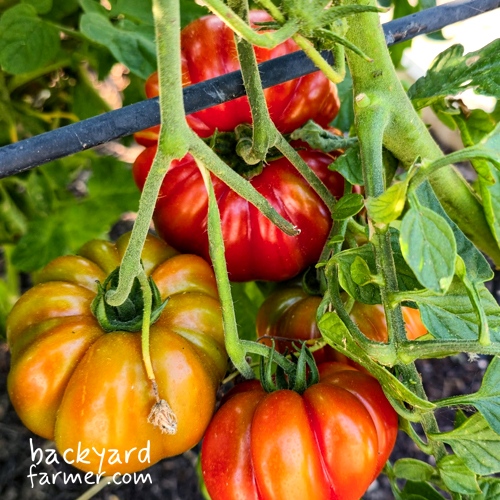
Most tomatoes are ready when they have developed the full colour expected for their variety and feel slightly soft when gently squeezed. Ripe fruit should usually come away readily with a small twist.
Flavour generally improves when tomatoes are allowed to ripen properly on the plant. However, in cool autumn weather, it can be sensible to pick fruit that is beginning to colour and finish ripening it indoors.
How Often to Pick
Check plants every few days during peak cropping. Regular picking helps prevent fruit from splitting, overripening or being damaged by pests and wet weather.
Use scissors or secateurs if fruit does not detach easily, taking care not to damage the stem or nearby trusses.
Got more ripe tomatoes than you can use? See how to freeze fresh tomatoes for a simple way to preserve the harvest.
What to Do With Green Tomatoes at the End of the Season
Pick remaining sound fruit before damaging frost and ripen it indoors at room temperature. Fruit that has begun to colour will usually ripen readily; completely green fruit can be slower.
Discard damaged or diseased fruit, or use sound green tomatoes for chutney, relish or other recipes.
For more detail on ripeness, picking times and late-season crops, see my When to Harvest Tomatoes in the UK guide.
What Should You Do Next?
Still choosing what to grow?
→ Read an outdoor tomato variety guide to find suitable cordon and bush varieties.
Tomatoes showing signs of disease?
→ Use a tomato blight or tomato-problem guide to identify the cause.
Planning where your crops will go?
→ Use the BYF Allotment Planner to organise your growing space.
Tomato Growing FAQ
Yes. Tomatoes can crop well outdoors in the UK when started under cover, planted out after frost risk has passed and grown in a sunny, sheltered position.
Usually from late May into early June, once frost risk has passed and plants have been hardened off. Local weather and location matter more than a fixed date.
Usually not. Leave their side shoots in place and concentrate on watering, feeding and supporting heavy branches if necessary.
Around four fruit trusses is a useful guide for outdoor cordon tomatoes in the UK. Once the fourth truss has set, pinch out the main growing tip two leaves above it so the existing fruit has time to ripen.