
Bug hotels provide nesting and sheltering spaces for solitary bees, beetles, ladybirds and other beneficial garden insects. They can be built from simple materials such as untreated wood, hollow stems, bark, dry leaves and old bricks, many of which you may already have in the garden or shed.
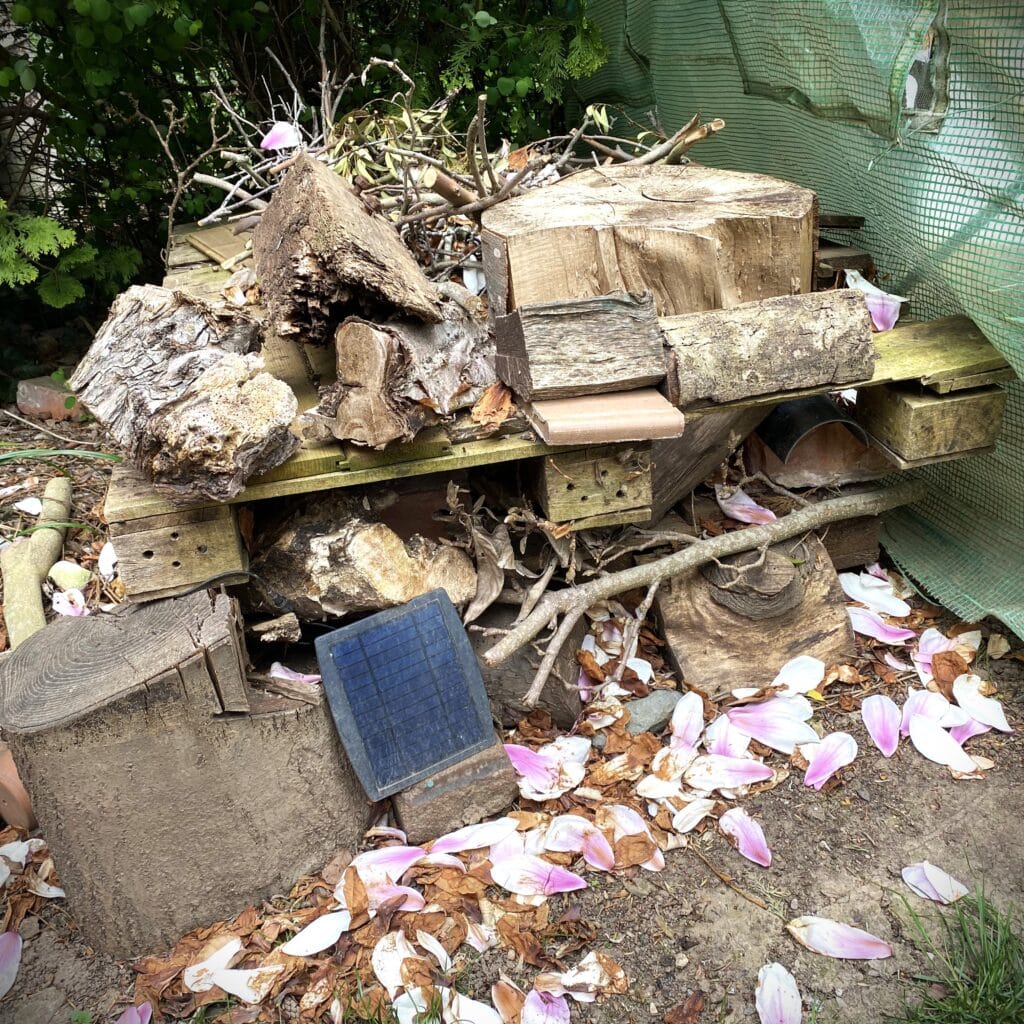
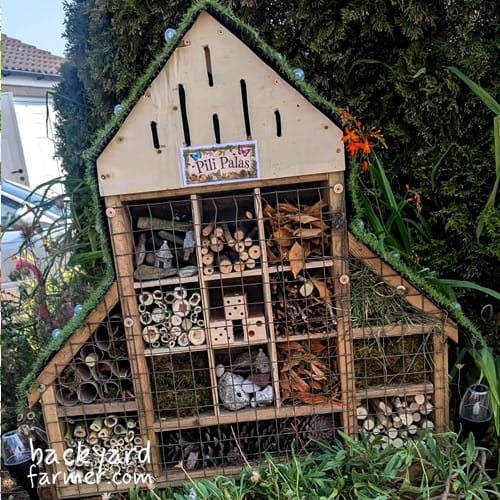
The bug hotel shown in this guide was made using reclaimed pallets, bamboo, logs and garden prunings. Below, I’ll show you how to make your own, which materials work best and where to position it for the insects you want to help.
What Materials to Use for Your Bug Hotel
A useful bug hotel can be built from simple natural and reclaimed materials, many of which may already be available in your garden or shed.
Different insects need different conditions. Solitary bees prefer clean, dry nesting tubes in a sunny position, while beetles, woodlice and centipedes are more likely to use bark, dead wood and sheltered crevices closer to the ground.
| Material | Best for | How to use it |
|---|---|---|
| Bamboo canes | Solitary bees | Use clean hollow canes with openings of different widths. Smooth any rough edges and leave the back closed |
| Hollow plant stems | Solitary bees | Try old raspberry, sunflower or reed stems and keep them dry |
| Drilled untreated wood | Solitary bees | Drill smooth, clean holes of varying widths without passing through the back |
| Pinecones | Ladybirds and other sheltering insects | Pack them into a dry, covered section with twigs and leaves |
| Dry leaves | Ladybirds, beetles and other invertebrates | Place loosely in sheltered gaps where they will remain reasonably dry |
| Bark and twigs | Spiders, beetles, woodlice and centipedes | Create narrow crevices and layered hiding places |
| Rotting wood | Beetles, centipedes and woodlice | Position near ground level in a shaded section protected from heavy rain |
| Straw or hay | Overwintering invertebrates | Pack loosely into a dry, sheltered compartment |
| Bricks, tiles and terracotta pots | Structural gaps and cool shelter | Use them to divide the hotel and create protected cavities |
Dead wood, hollow stems, bark, leaves, straw and dry sticks are all recommended by UK wildlife organisations for creating a mixture of nesting and sheltering spaces.
What to Avoid
Avoid painted, varnished or chemically treated timber, as well as glossy paper, synthetic fibres and materials that remain waterlogged.
Plastic containers are also best avoided as permanent outdoor habitat, particularly where they may overheat, collect condensation or hold rainwater. Use untreated wood, terracotta or other breathable materials wherever possible.
Keep solitary-bee tubes clean, dry and free from splinters. Damp nesting tubes can encourage fungal and bacterial problems, while rough entrances may damage bees’ wings.
Match the Materials to the Location
Rather than mixing everything randomly, divide the hotel into different habitat areas:
- Put bamboo, hollow stems and drilled wood in a dry, sunny upper section.
- Place bark, leaves and dead wood lower down in cooler, more sheltered conditions.
- Add a sloping roof or overhang to prevent rain soaking into the materials.
A smaller hotel with clearly defined habitats is generally more useful than a large decorative structure filled without considering what each insect needs. The Natural History Museum also recommends several smaller bee hotels rather than one very large concentration, because tightly grouped nests can increase pest and disease risks.
Where to Put a Bug Hotel in Your Garden
The best position depends on the insects you want to attract. Solitary bees need a warm, dry nesting site, while beetles, spiders and woodlice prefer cooler, more sheltered conditions.
For Solitary Bees
Position bamboo canes, hollow stems or drilled wood:
- In a sunny, south- or south-east-facing spot
- Around 1 metre or more above the ground
- Securely attached to a wall, fence or sturdy post
- Beneath an overhang or roof that protects the nesting holes from rain
Keep the entrance clear and place the hotel near flowers that provide pollen and nectar.
For Beetles, Spiders and Woodlice
Place bark, leaves, twigs and rotting wood:
- At or close to ground level
- In a shady or partly shaded position
- Beneath a hedge, shrub or tree
- Near a compost heap, log pile or other undisturbed habitat
These sections can be slightly damp, but they should not sit in standing water or be exposed to persistent heavy rain.
How to Make a Bug Hotel: Step by Step
Once you have gathered your materials and chosen a suitable position, you can build the hotel in five simple steps.
Step 1: Choose a Frame
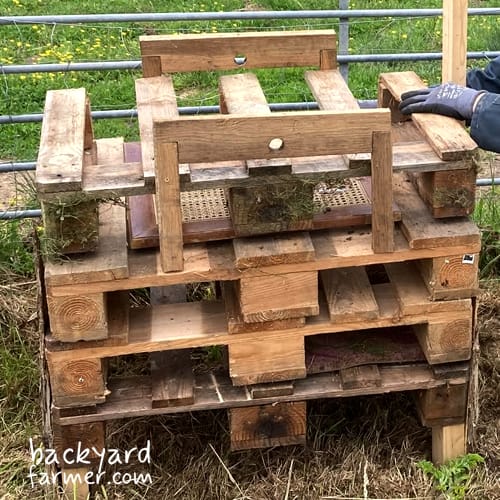
Start with a sturdy structure that will hold the materials securely. Suitable options include:
- Wooden crates or wine boxes
- Stacked bricks or pallets
- An old bird box with the front removed
- Terracotta pots laid on their sides
Use untreated materials wherever possible and make sure the finished structure will not wobble or collapse.
Step 2: Create Separate Sections
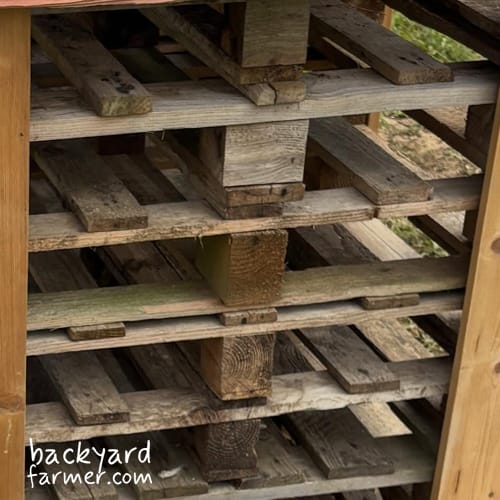
Use bricks, logs, tiles or pieces of untreated timber to divide a larger frame into compartments. This helps support the structure and allows you to create different habitats within the same hotel.
Step 3: Add the Filling Materials
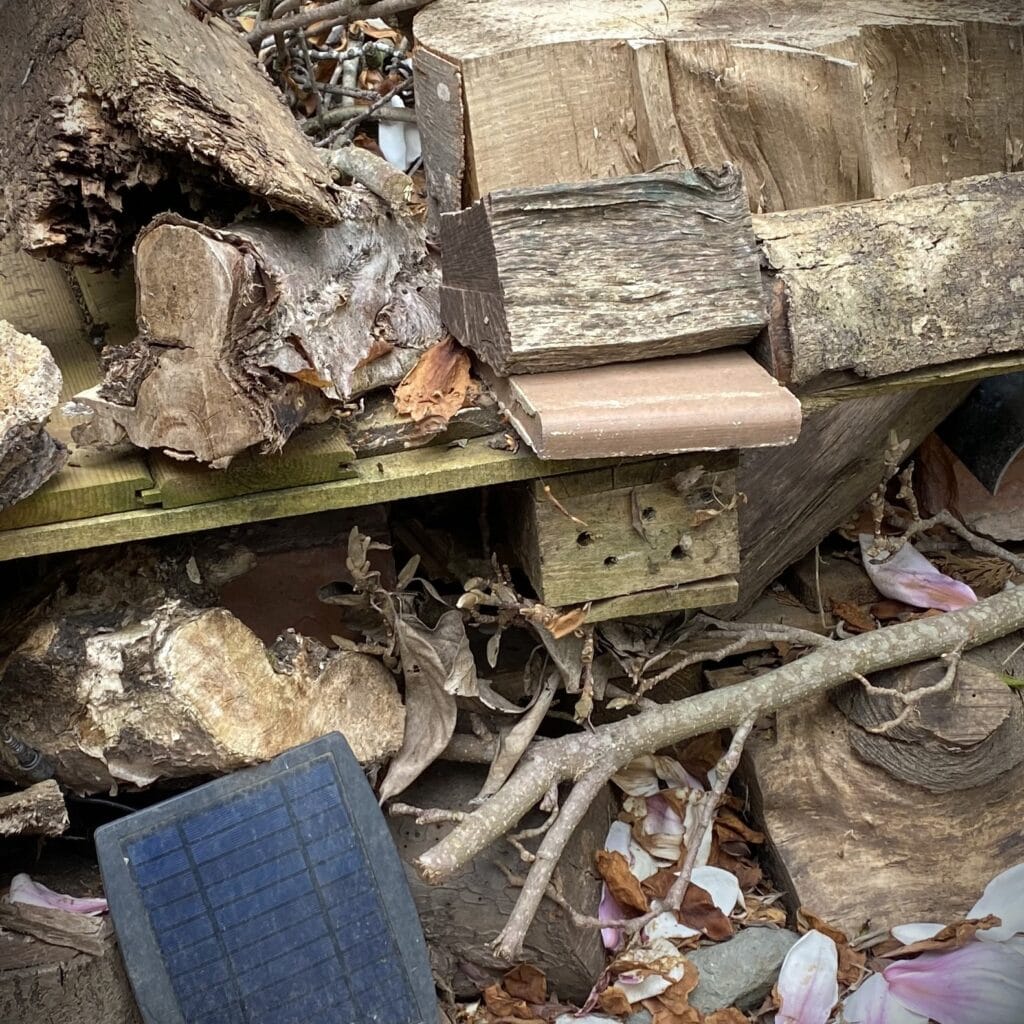
Fill each section with materials suited to the insects you want to attract:
- Bamboo canes and hollow stems for solitary bees
- Pinecones, bark and twigs for ladybirds, beetles and spiders
- Dry leaves and small pieces of dead wood for woodlice and centipedes
- Rotting logs at the base for ground-dwelling insects
Pack the materials firmly enough that they will not fall out, but leave plenty of small gaps and entrances. Keep bee-nesting tubes clean, dry and protected from rain.
Step 4: Position the Hotel
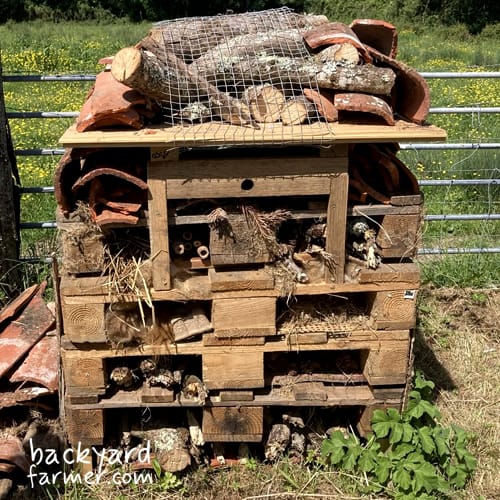
Place the completed hotel according to the habitats it contains.
Raise solitary-bee sections off the ground and face them towards the morning or midday sun. Sections intended for beetles, woodlice and other ground-dwelling insects can be placed lower down in a cooler, more sheltered position.
Secure the frame firmly so that it cannot sway or fall in strong wind.
Step 5: Leave It Undisturbed
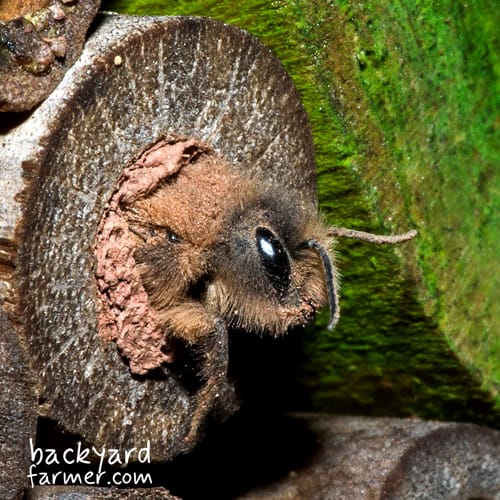
Once the hotel is in place, give insects time to find it. Activity may not appear immediately, particularly if the hotel is installed outside the main nesting season.
Avoid moving it once insects have begun nesting or sheltering inside. Check occasionally for loose materials or rain damage, but otherwise leave the habitat undisturbed.
What Insects Will Use a Bug Hotel?
Which insects use your hotel will depend on its materials, position and moisture levels. A sunny section filled with clean hollow stems may attract solitary bees, while bark, dead wood and leaves placed closer to the ground provide shelter for other garden invertebrates.
| Potential visitor | Useful habitat | Role in the garden |
|---|---|---|
| Solitary bees | Hollow stems, bamboo canes and drilled untreated wood | Pollinate fruit, vegetables and flowers |
| Ladybirds | Dry crevices containing bark, stems or pinecones | Feed on aphids and other small pests |
| Lacewings | Sheltered gaps filled with dry stems or straw | Their larvae feed on aphids and other soft-bodied insects |
| Beetles | Rotting wood, bark and shaded ground-level spaces | Provide pest control and help break down decaying material |
| Woodlice and centipedes | Damp dead wood, leaves and narrow crevices | Break down organic matter or prey on other invertebrates |
| Spiders | Undisturbed gaps between bark, logs and timber | Catch flies and other small insects |
| Earwigs | Dry hollow stems, bark and sheltered crevices | Feed on decaying material and some garden pests |
Not every hotel will attract every species. The most useful approach is to provide a few clearly defined habitats rather than filling the structure randomly.
For help identifying any bees that begin nesting in the hotel, see our bee identification guides.
Bug Hotel Ideas for Kids
Building a small bug hotel is a simple way to help children explore garden wildlife. The project can be made from natural or reclaimed materials and adapted to suit different ages.
Hollow-Stem Bug Hotel
This small hotel is suitable for solitary bees and can be made with adult supervision.
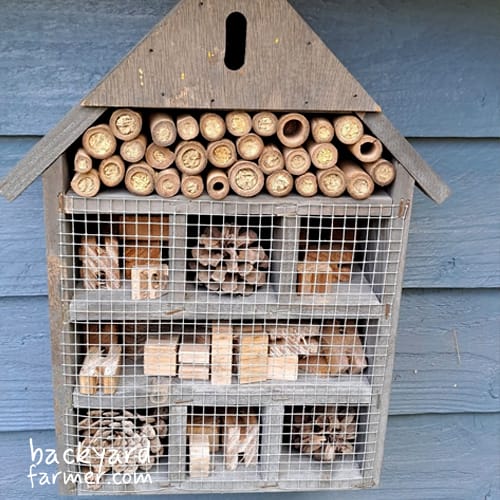
- Find a small untreated wooden box, open-ended tin or terracotta pot.
- Cut hollow bamboo canes or plant stems to the same length as the container.
- Smooth any rough or splintered entrances.
- Pack the stems firmly so they cannot fall out.
- Position the hotel securely in a sunny, sheltered spot.
Keep the stems dry and make sure their rear ends are closed rather than open at both ends.
Small Wooden Bug Hotel
Older children can help build a broader habitat using a wooden crate, offcuts or a small pallet structure.
Fill separate sections with materials such as:
- Bark and twigs
- Pinecones
- Dry leaves
- Hollow stems
- Small pieces of dead wood
Place dry nesting materials higher up and keep damp wood or leaves closer to the ground.
Children can then observe the hotel throughout the year and record which insects visit it. Avoid frequently pulling materials out, as insects may be nesting or overwintering inside.
Frequently Asked Questions
A well-designed bug hotel can provide useful nesting and sheltering spaces for solitary bees, ladybirds, beetles and other garden invertebrates. Its success depends on using suitable materials, keeping them reasonably dry and positioning the hotel for the insects you want to attract.
You can build a bug hotel at any time of year. Putting one in place during autumn or winter gives insects time to discover it before spring, but hotels installed during spring and summer can still attract nesting bees and sheltering insects.
Solitary-bee hotels are usually best positioned around 1 metre or more above the ground in a sunny, sheltered location. Sections containing dead wood, bark and leaves for beetles, woodlice and other ground-dwelling insects should be placed at or close to soil level.
Leave it outside and avoid moving it into a shed or greenhouse. Insects may be overwintering inside, and warmer indoor conditions could cause them to emerge too early. Check that the structure remains secure and protected from persistent rain.
Avoid taking the hotel apart while insects may be nesting or overwintering inside. Remove loose, rotten or mouldy material only when you are confident it is no longer occupied. Hollow stems and bee-nesting tubes can be replaced gradually once the adult bees have emerged.
It can take several months or even a full season for insects to find a new hotel. Check that it is firmly secured, sheltered from heavy rain and positioned correctly. Solitary-bee tubes should face the sun, while dead wood and leaf-filled sections generally work better in cooler conditions near the ground.
Growing plenty of pollen-rich flowers nearby and leaving some areas of the garden slightly undisturbed can also make the habitat more attractive.
Conclusion
A useful bug hotel does not need to be large, complicated or expensive. With a sturdy frame, a few suitable natural materials and the right position, you can provide nesting and sheltering spaces for solitary bees, beetles, ladybirds and other garden invertebrates.
Keep bee-nesting sections sunny and dry, place dead wood and leaf-filled areas closer to the ground, and leave the finished hotel largely undisturbed. It may take time for insects to find it, but even a small, thoughtfully built hotel can add valuable habitat to a wildlife-friendly garden.