
Ground elder (Aegopodium podagraria) is a fast-spreading perennial weed that can quickly move through borders, beds and neglected areas.
Its main strength is an extensive network of underground rhizomes, which can regrow from small fragments left in the soil.
Getting rid of ground elder usually takes persistence rather than a one-off treatment. The most effective approach is to remove as much of the rhizome system as possible, then keep on top of any regrowth until the plant is weakened. This guide covers the most practical ways to control and remove it in UK gardens.
What is Ground Elder?
Ground elder (Aegopodium podagraria) is a fast-spreading perennial weed commonly found in UK gardens, borders and neglected ground. It was originally introduced to Britain as a food plant but is now better known as a persistent garden weed.
It spreads mainly through thin underground rhizomes that run horizontally through the soil. Even small fragments left behind can produce new growth, which is why ground elder can be difficult to remove completely once established.
How to Identify Ground Elder
Ground elder (Aegopodium podagraria) has a few distinctive features that make it easier to recognise once you know what to look for.
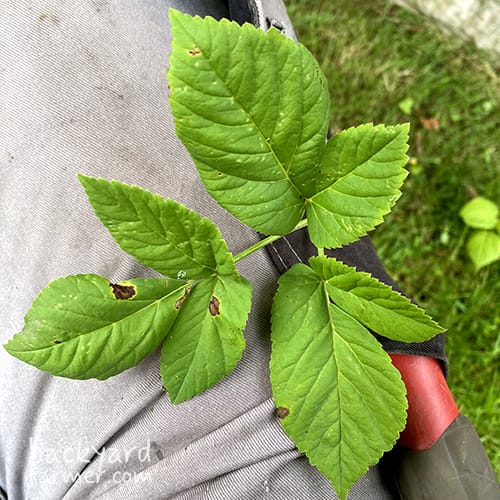
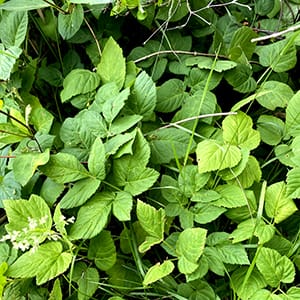
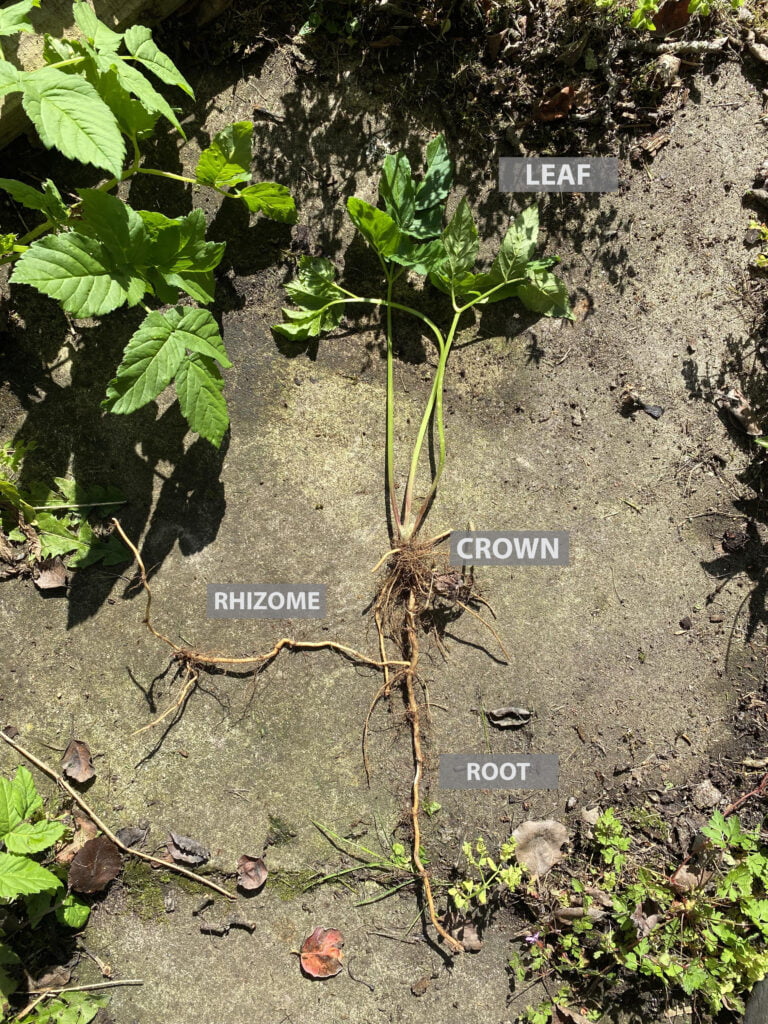
The leaves are bright green and usually divided into three main sections, with each section carrying three to five toothed leaflets. The stems are hollow and slightly ridged, while the plant commonly grows around 30–90 cm tall.
Below ground, look for thin white rhizomes running horizontally through the soil. These spreading roots are one of the clearest signs of ground elder and explain why it can return from small fragments left behind.
In late spring to early summer, ground elder produces small white flowers in umbrella-like clusters.
Common lookalikes include cow parsley, elder and angelica, but ground elder is generally lower-growing and has the characteristic three-part leaf arrangement combined with creeping white rhizomes.
Why is Ground Elder Hard to Remove?
Ground elder is difficult to control because it spreads through a network of thin underground rhizomes. These creep horizontally through the soil and can quickly colonise large areas. Even small fragments left behind can regrow into new plants, so incomplete digging often leads to fresh shoots.
This also means careless hoeing or digging can make the problem worse by breaking the rhizomes into smaller pieces and spreading them through the bed. Once established, ground elder grows vigorously and competes with surrounding plants for space, water and nutrients.
The key to control is persistence: remove as much of the rhizome system as possible, then deal with any regrowth before it has time to rebuild its reserves.
How to Get Rid of Ground Elder: Best Methods That Work
There is no single quick fix for established ground elder. The most effective approach is to remove or weaken the underground rhizomes, then keep on top of any regrowth before the plant can recover.
Manual Removal: Digging Out Ground Elder
Digging is one of the best options where ground elder is growing through beds or borders.
- Use a garden fork rather than a spade to reduce the chance of chopping rhizomes into small pieces.
- Loosen the soil carefully and trace the pale rhizomes through the ground.
- Remove as much of the root system as possible.
- Check the area regularly and remove new shoots as soon as they appear.
You are unlikely to remove every fragment in one attempt, so follow-up weeding is important. Repeatedly removing regrowth gradually weakens any rhizomes left behind.
Smothering Ground Elder
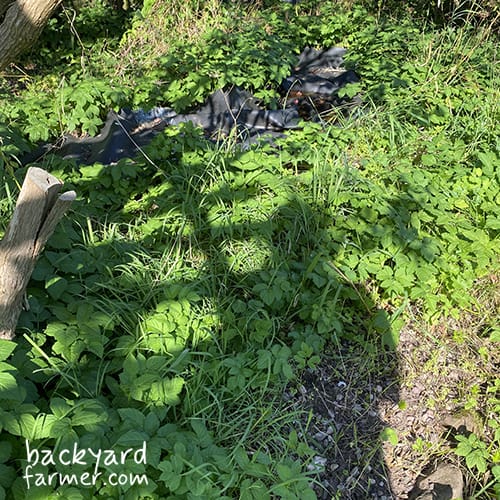
Smothering can work well across larger patches or ground that can be taken out of use for a while. Cover the affected area with an opaque material that blocks light, making sure the edges overlap so shoots cannot easily escape.
Keep the ground covered for a few years, checking around the edges for new growth and topping up the covering where necessary. This method is slower than digging but can be useful where disturbing the soil would spread rhizome fragments further.
Can Other Plants Suppress Ground Elder?
Dense, vigorous planting can help suppress weakened ground elder by reducing the light and space available to it. However, planting alone is unlikely to remove an established network of rhizomes.
It works best after the ground elder has already been reduced by digging, smothering or repeated cutting.
Regular Cutting and Maintenance
Repeatedly cutting ground elder back prevents the leaves from continually replenishing the rhizomes below ground. Over time, this can weaken the plant and make it easier to control.
It is most useful in areas where digging or smothering is impractical, but it requires regular attention and usually works best alongside another control method.
Chemical Treatment
A suitable systemic weedkiller can be considered where other methods are impractical. Treatment needs to reach actively growing foliage so it can be carried into the plant, and repeat applications are likely to be needed for established patches.
Always follow the product label carefully and protect nearby plants from spray or contact. In productive beds and densely planted borders, manual removal or smothering may be easier to control precisely.
Can You Live With Ground Elder?
Not every patch of ground elder needs to be eradicated. In informal areas, woodland edges or parts of the garden where it is not competing with valued plants, it can sometimes be managed rather than removed completely.
If you decide to keep it, the main job is containment. Cut or mow it regularly, remove shoots that spread beyond the chosen area, and stop it creeping into beds and borders.
Where ground elder is growing through vegetable beds, around ornamentals or into areas you want to plant more intensively, removal is usually the better option. The key is deciding whether it is genuinely causing a problem before committing to the work of eradicating it.
Is Ground Elder Edible?
Yes. Ground elder (Aegopodium podagraria) is edible and was historically grown as a food plant. The young leaves are the best part to harvest, as they are softer and milder than older growth.
The flavour is often described as somewhere between parsley and celery, making the leaves useful in both raw and cooked dishes.
You can use young ground elder leaves:
- Raw in salads
- Cooked like spinach
- Added to soups and stews
- Blended into pesto or other green sauces
For the best flavour, pick fresh young leaves before the plant flowers. Avoid harvesting from roadsides or other areas that may be contaminated, and wash the leaves thoroughly before use.
As with any foraged plant, only eat ground elder if you are completely confident of the identification. Its leaf shape and white flowers can resemble other members of the carrot family, including some poisonous species.
Ground Elder FAQs
The most reliable approach is to dig out as much of the underground rhizome system as possible, then keep removing any regrowth. Smothering can also work well for larger patches, while repeated cutting helps weaken plants where digging is impractical.
There is no instant permanent fix. Ground elder can regrow from small rhizome fragments, so long-term control depends on removing or exhausting the underground root system and dealing with new shoots as they appear.
Avoid adding fresh rhizomes to a normal home compost heap, as surviving fragments may regrow when the compost is used. Put them in your council green-waste collection, or bag them until they have fully broken down before adding them to compost.
Yes. Young ground elder leaves are edible and can be used raw or cooked. Only harvest plants you can identify with confidence, as ground elder can be confused with other members of the carrot family.
They may damage the visible leaves, but they are unlikely to kill an established underground rhizome network. Repeated digging, smothering or cutting is generally more useful for long-term control.
A suitable systemic weedkiller may control established ground elder because it is absorbed through actively growing foliage and transported through the plant. Follow the product label carefully, protect nearby plants and expect repeat treatment to be necessary in some cases.