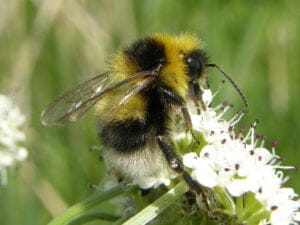

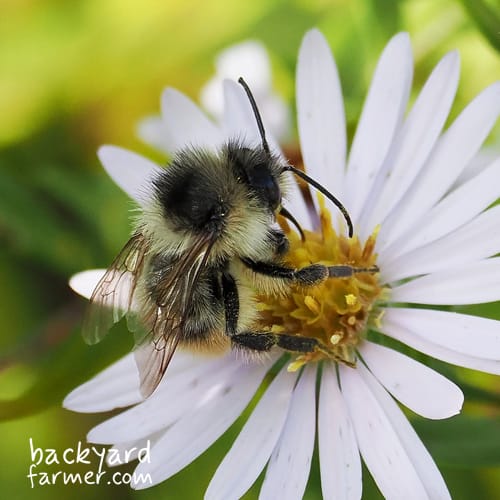
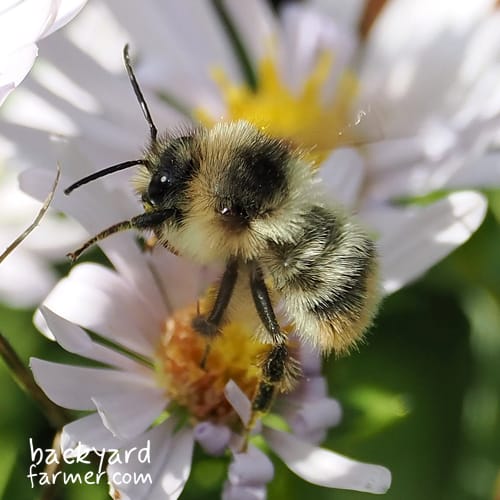
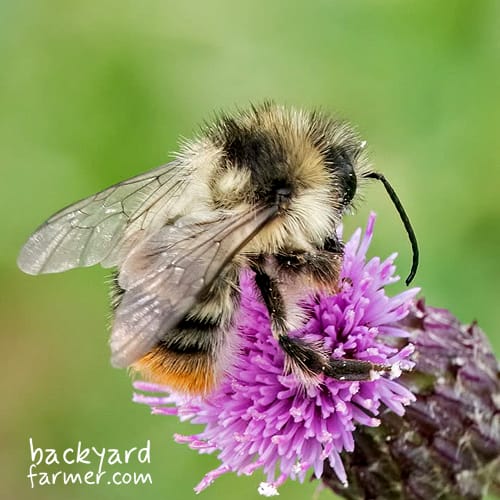
The Shrill Carder Bee (Bombus sylvarum) is a rare UK bumblebee. Look for a pale straw-coloured body, a black band between the wing bases, narrow dark abdominal bands and a reddish-orange tail. Most UK records come from southern England and south Wales, usually on flower-rich grassland, coastal habitat and marshy lowland sites.
The shrill buzz can support the ID, but it should not be used on its own. If the full pattern is not clear, leave it as a possible Shrill Carder Bee and compare it with similar carder bees.
How To Identify A Shrill Carder Bee
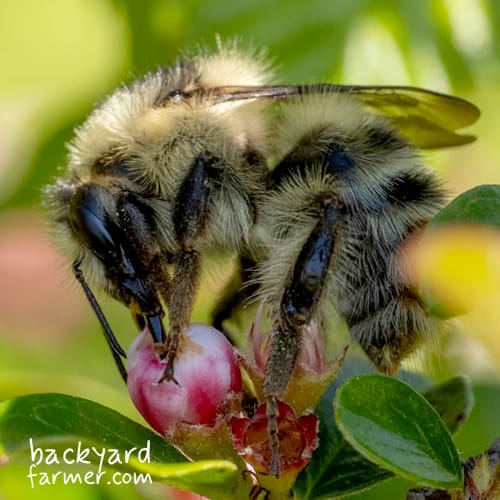
Check for the full pattern:
- pale straw or grey-yellow body
- black band between the wing bases
- one or two narrow dark abdominal bands
- reddish-orange tail
- slim, neat carder bee shape
The safest ID is the whole pattern together, not one mark on its own.
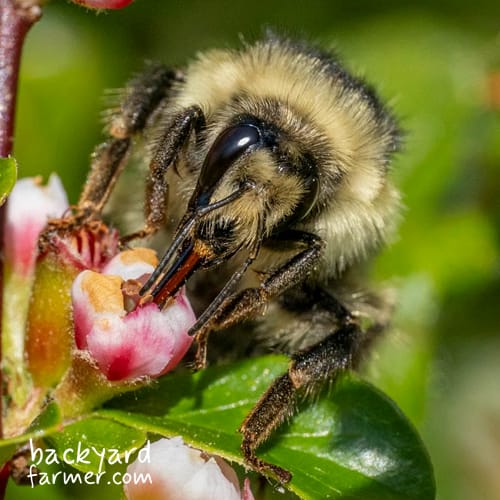
Queen Shrill Carder Bee
Queens are the first caste to appear and the largest. In the UK, they are the most likely Shrill Carder Bees to be seen in spring, when they are feeding up and looking for nest sites.
Check for:
- pale straw-coloured body
- black band between the wing bases
- narrow dark abdominal bands
- reddish-orange tail
- a larger, bulkier build than workers
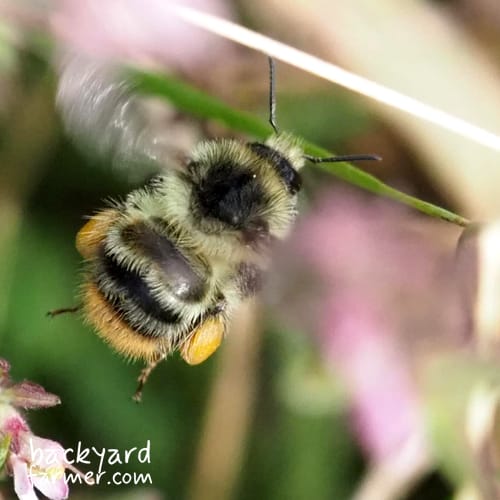
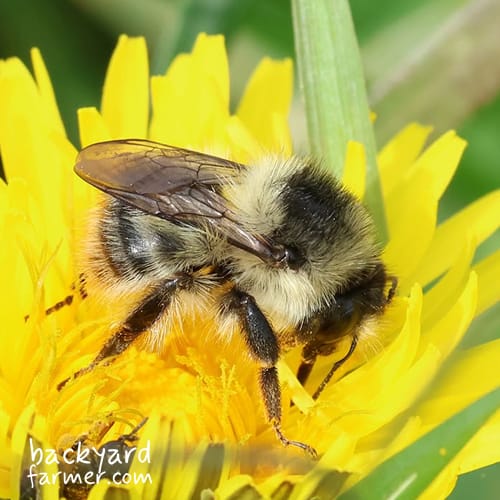
Worker Shrill Carder Bee
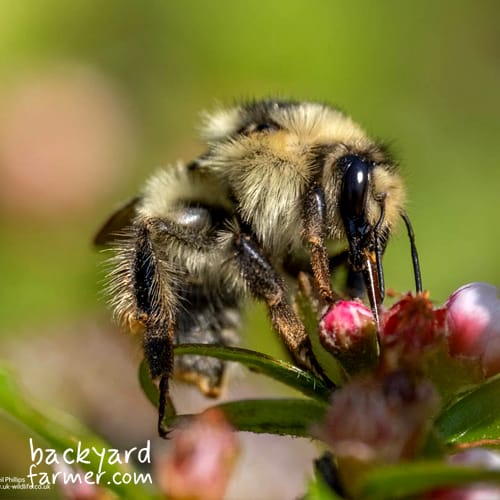
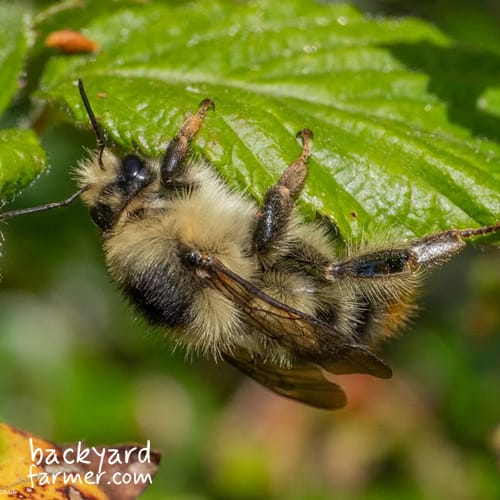
Workers are the caste most people are most likely to see through the main season. They are smaller and neater than queens, but they should still show the same core pattern.
Check for:
- pale straw-coloured body
- black band between the wing bases
- narrow dark abdominal bands
- reddish-orange tail
- a smaller, neater build than queens
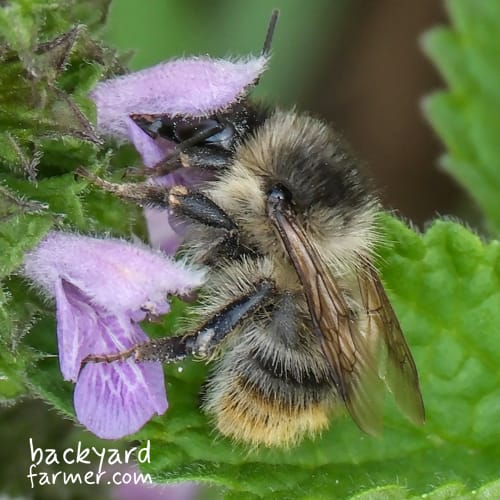
Male Shrill Carder Bee
Males appear later in the season and can look slightly slimmer than females, but the same core pattern still applies.
Check for:
- pale straw-coloured body
- black band between the wing bases
- narrow dark abdominal bands
- reddish-orange tail
- a slightly slimmer build than queens or workers
- longer antennae in a good view
Key Facts
Use this as a quick check, not a final confirmation.
| Feature | What to look for |
|---|---|
| Common name | Shrill Carder Bee |
| Scientific name | Bombus sylvarum |
| Best beginner clue | Pale straw body, black band between the wing bases, narrow dark abdominal bands and a reddish-orange tail |
| Overall size | Small to medium carder bumblebee; queens are the largest, workers smaller, males often slimmer |
| Queens | First to appear in spring |
| Workers | Most likely caste to be seen through the main summer period |
| Males | Appear later in the season and may show longer antennae |
| Tail colour | Reddish-orange to peachy orange |
| Main thorax marking | Black band between the wing bases |
| Main habitats | Flower-rich grassland, coastal sites, marshy lowland habitat and other rough flower-rich ground |
| Typical UK range | Mostly southern England and south Wales |
| Active months | Spring to early autumn, with most sightings in late spring and summer |
| Important forage plants | Red clover, bird’s-foot trefoil, meadow vetchling, red bartsia, white dead-nettle and black horehound |
| UK status | Very rare and local, with a small fragmented range |
The safest approach is still to check the full pattern together, especially the thorax band, abdominal bands and tail colour.
Similar Species
Most mistakes happen when people focus on the tail alone. Check the full pattern first.
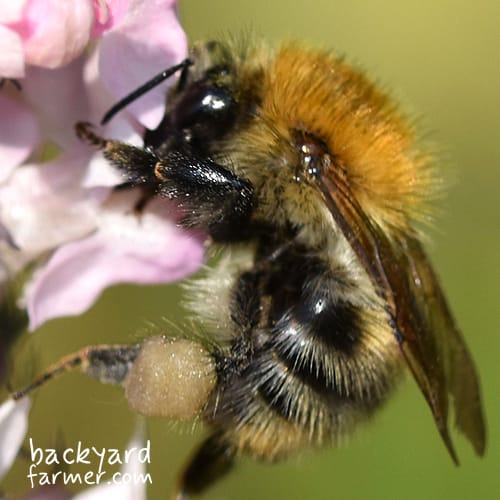
Common Carder Bee
A Common Carder Bee can look pale or warm-toned in bright light, but it is usually more uniformly ginger-brown or buff overall.
Best separator: it usually lacks the clear black thorax band + dark abdominal bands + orange tail combination.
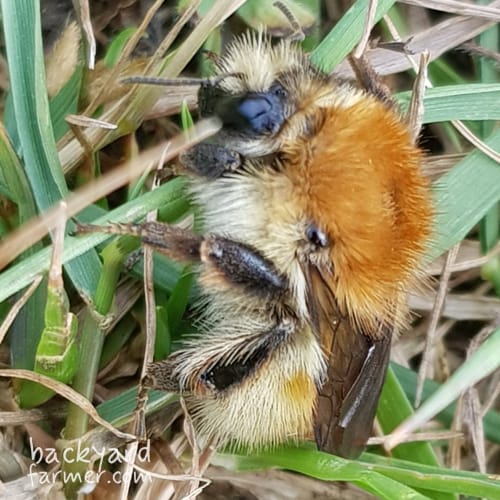
Moss Carder Bee
A Moss Carder Bee is another pale, neat-looking carder bee, but it usually looks more evenly yellow or ginger overall.
Best separator: weaker contrast and less distinct banding.
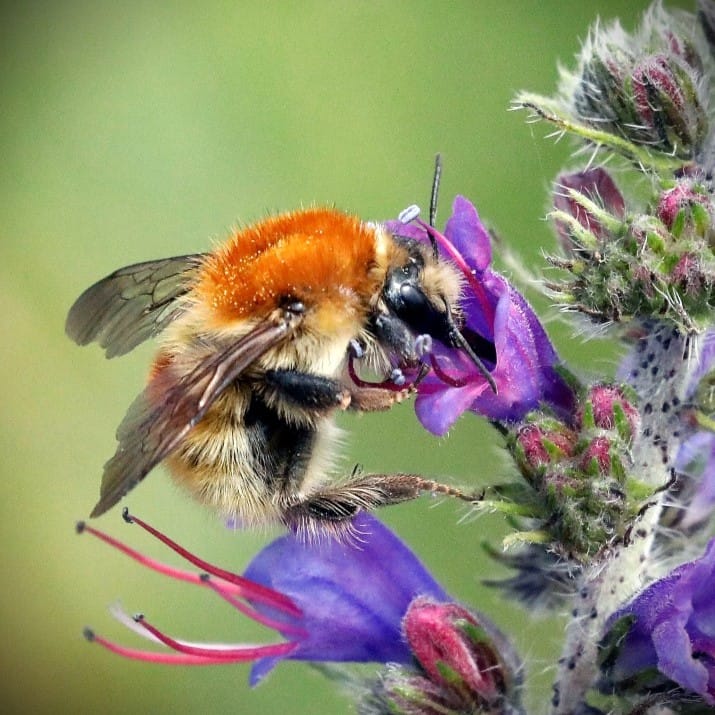
Brown-banded Carder Bee
A Brown-banded Carder Bee can also cause confusion on flower-rich sites, especially at a quick glance.
Best separator: it usually lacks the neat pale straw body + black thorax band + orange tail combination that makes a Shrill Carder Bee worth a second look.
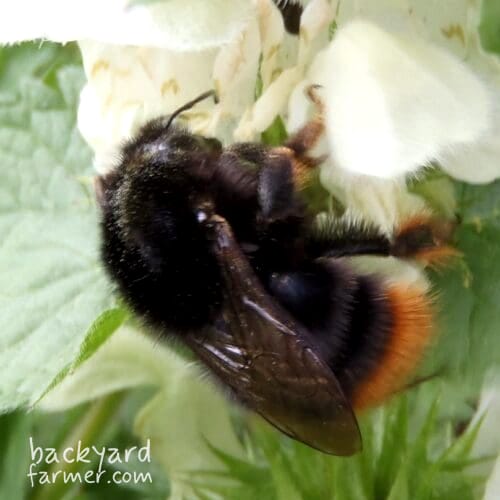
Red-shanked Carder Bee
A Red-shanked Carder Bee is usually a darker, heavier-looking bee, not a pale straw-coloured carder.
Best separator: darker overall, with a much less convincing Shrill Carder pattern.
When To Leave The ID Open
Leave it as possible Shrill Carder Bee when:
- the thorax band cannot be seen clearly
- the tail colour is unclear
- the abdomen is hidden
- the photo is too blurred
- the bee is well outside the known UK range
With a rare species like this, a cautious possible ID is better than a wrong one.
Where To See Shrill Carder Bees In The UK
Shrill Carder Bees are now restricted to a small number of areas in southern England and south Wales.
Main UK strongholds
- Thames Estuary
- parts of Somerset
- the Gwent Levels
- Kenfig and Port Talbot
- parts of Pembrokeshire
Best habitat
- flower-rich grassland
- coastal habitat
- grazing marsh
- brownfield sites
- rough lowland ground with good forage
What this means for ID
- Location is a supporting clue, not proof
- Garden sightings are possible near suitable habitat, but still unusual
- Most UK gardeners should not expect to see this bee regularly
- Records well outside the known range need especially clear photos
Flight Period And Active Months
Shrill Carder Bees are active from spring to early autumn.
Seasonal pattern
- Queens: usually from April or May
- Workers: mainly through late spring and summer
- Males and new queens: usually from mid to late summer into early autumn
In the field
- Best chance of seeing one is late spring and summer
- Season can make a sighting more plausible
- Season does not confirm the species
- Later bees may look more worn and harder to identify
Flowers And Forage Plants
Look for Shrill Carder Bees on flower-rich sites with a long run of forage.
Key forage plants
- red clover
- bird’s-foot trefoil
- meadow vetchling
- red bartsia
- white dead-nettle
- black horehound
In the field
- Flower choice is a supporting clue, not proof
- A pale carder bee on red clover or other key forage is worth checking carefully
- You still need the thorax band, abdominal bands and reddish-orange tail
For wildlife gardeners
- Best chance of helping this bee is near its current range
- Most useful where gardens connect to rough grassland, coastal habitat or other flower-rich ground
- Aim for a long season of forage
Nesting And Behaviour
Shrill Carder Bees usually nest on or just below the ground, often in thick grass, rough vegetation or tussocky cover.
In the field
- More likely to be seen foraging than at the nest
- Often linked with deep, nectar-rich flowers
- The shrill buzz is a supporting clue, not proof
- Do not rely on behaviour or sound alone
If you find a nest
- Leave it alone
- Avoid strimming, digging, mowing or trampling nearby
- Note the location and watch from a distance
- Do not try to inspect the nest closely
Why The Shrill Carder Bee Matters
The Shrill Carder Bee is one of the UK’s rarest and most threatened bumblebees.
Why it declined
- Loss of flower-rich grassland
- Habitat fragmentation
- Changes in land use and management
Why it matters
- It is a sign of healthy flower-rich habitat
- Good records help show where it still survives
- Recovery depends on connected habitat, not isolated flowers or one small border
What To Do If You Think You’ve Seen One
If you think you have found a Shrill Carder Bee, record it carefully before trying to confirm the ID.
Record these details
- a clear side-on photo
- the thorax, abdomen and tail if possible
- date
- exact location or grid reference
- habitat type
- the flower visited
Before you submit it
- Compare it with the main lookalikes
- Check that the thorax band, abdominal bands and tail colour are clear
- Leave it as possible Shrill Carder Bee if the pattern is incomplete
- Do not force a confident ID from a weak photo
Where to record it
A clear photo and a cautious note are more useful than an overconfident record.
Frequently Asked Questions
Yes. The Shrill Carder Bee is one of the UK’s rarest and most threatened bumblebees, with a much smaller range than it once had.
Most current UK records come from southern England and south Wales, especially in a small number of flower-rich coastal, marshy and lowland grassland areas.
The safest beginner clue is the full pattern together: a pale straw-coloured body, a black band between the wing bases, narrow dark abdominal bands and a reddish-orange tail.
No. The high-pitched buzz can support the identification, but it should never be used on its own.
A Common Carder Bee usually looks more uniformly ginger-brown or buff, without the same clean combination of a pale body, black thorax band, dark abdominal bands and orange tail.
Sometimes, but usually only where gardens sit close to suitable habitat and within the current range. For most UK gardeners, it is still an unusual bee to see.
It is often linked with plants such as red clover, bird’s-foot trefoil, meadow vetchling, red bartsia, white dead-nettle and black horehound.
In the UK, it is active from spring into early autumn, with most likely sightings from late spring and summer.
Yes, especially if you have a clear photo and the sighting is in or near the current range. It is better to submit a careful possible Shrill Carder Bee record than an overconfident identification without enough evidence.