
I used Huel for breakfast for a while, and I still think it’s a good product. It’s convenient, nutritionally balanced and takes seconds to prepare. But the cost was adding up, and I wanted something more substantial to eat rather than another liquid meal.
As a professional gardener, I spend much of my working day doing physical work, so breakfast needs to keep me going.
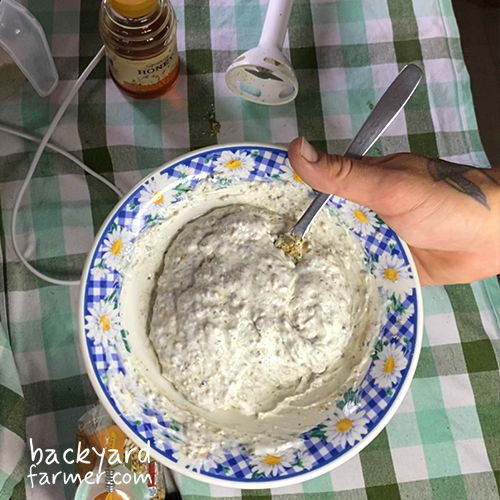
After experimenting with ordinary ingredients, I settled on a homemade Huel alternative using Aldi mixed seeds, authentic Greek yoghurt and honey. It costs around 75p per bowl before honey, takes very little preparation, and I find it keeps me satisfied for longer than Huel did.
Here’s how I make it, what it costs and some of the science behind the ingredients.
My Homemade Huel Alternative Recipe
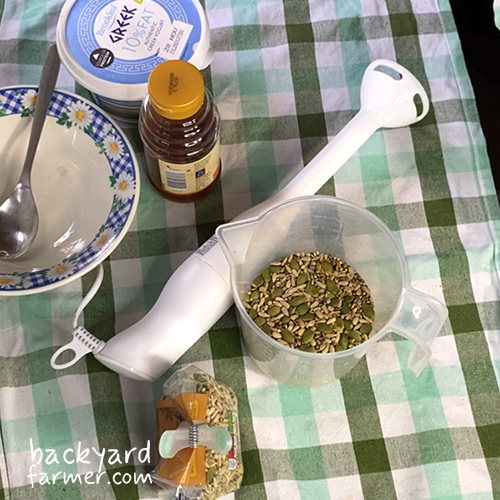
I make four breakfasts at a time using a single packet of Aldi mixed seeds and a 500g tub of Brooklea Greek yoghurt.
The result is a thick, creamy breakfast with a slightly nutty flavour. The honey balances the tanginess of the yoghurt, while grinding the seeds gives everything a consistent texture.
Ingredients
| Ingredient | Four servings | Per serving |
|---|---|---|
| Aldi The Foodie Market Seed Mix | 250g | 62.5g |
| Brooklea Authentic Greek Strained Yoghurt | 500g | 125g |
| Honey | 4 tablespoons | 1 tablespoon |
Servings: 4
Preparation: Approximately 5 minutes for the initial batch, then a minute to mix each breakfast.
How to Make It
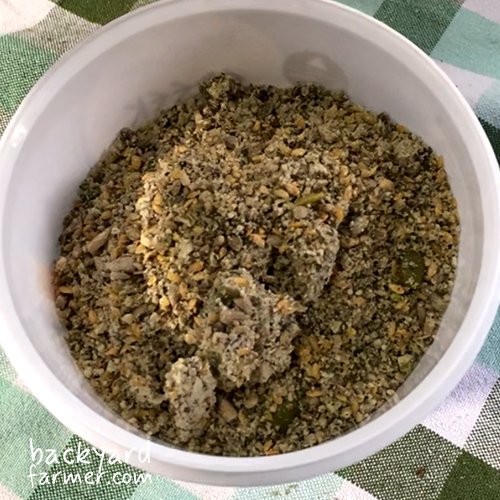
- Grind the seeds. Empty the 250g packet into a suitable container and blitz with a hand blender until the seeds form a coarse meal. They don’t need to become a completely smooth powder.
- Store the mixture. Divide the ground seeds into four portions, keeping those you’re not using in an airtight container in the fridge.
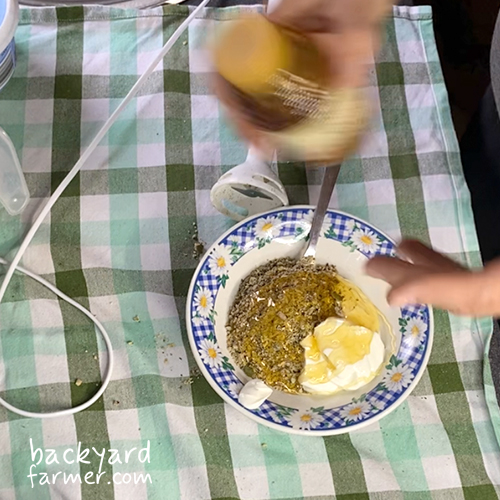
- Add the yoghurt. Mix one portion of ground seeds with approximately 125g of Greek yoghurt.
- Add the honey. Stir in a tablespoon of honey until everything is evenly combined.
- Serve. Eat straight away, adjusting the sweetness to your preference.
I usually prepare the seeds once and use them over the following four mornings. Once the initial grinding is done, it’s almost as convenient as making a shake.
How Much Does My Homemade Huel Alternative Cost?
Cost was one of the main reasons I started looking for an alternative.
Aldi’s four-seed mix costs 99p for 250g, while the 500g Brooklea Greek yoghurt I use costs £1.99. Both last me four breakfasts.
| Ingredient | Pack price | Per breakfast |
|---|---|---|
| Aldi mixed seeds | £0.99 | £0.25 |
| Brooklea Greek yoghurt | £1.99 | £0.50 |
| Honey | Varies | Depends on quantity and brand |
| Total before honey | £2.98 | £0.75 |
That makes the main breakfast approximately 75p per bowl before honey.
For comparison, Huel Original Powder cost £1.59 per 400-calorie serving on subscription in November 2026, although prices and subscription discounts can change.
My homemade breakfast is cheaper than that option, but the two aren’t nutritionally equivalent and contain different amounts of energy.
I also have a small glass of green juice with breakfast, which adds approximately 50p per day. Including that, my four-day shop comes to £4.97 before honey, or £1.24 per morning.
That’s a relatively inexpensive breakfast using ingredients I can pick up during a normal supermarket shop.
Prices are based on my Aldi purchases and Huel’s published UK pricing in November 2026.
Why I Find It More Filling Than Huel
The biggest difference I’ve noticed is how long I feel satisfied afterwards.
Huel was convenient, but I often wanted something more substantial. My yoghurt-and-seed mixture feels like a proper breakfast rather than something I’ve simply drunk.
Part of that may come down to texture. Research suggests that solid and thicker foods can sometimes reduce feelings of hunger more than liquids, although the effects vary between people.
A 2020 systematic review and meta-analysis on food texture and satiety found that solid foods generally produced a greater reduction in reported hunger than liquids.
But there’s another important factor: my breakfast contains more calories than a standard serving of Huel.
The seeds, yoghurt and honey provide approximately 589 calories, compared with 400 calories in a typical Huel Original Powder serving.
That extra energy could explain some of the difference.
The breakfast also contains protein, fats and fibre, which may influence how satisfying it feels.
Given that I spend much of my day gardening, often doing physically demanding jobs, I find this combination works well for my appetite and activity levels.
I wouldn’t suggest everyone will find it more filling than Huel, but it’s certainly been my experience.
Why I Grind the Seeds Before Eating Them
One of the most useful things I’ve learnt while making this breakfast is that how you prepare seeds can affect the nutrients your body can access.
The Aldi mixture contains pumpkin seeds, sunflower seeds, golden linseeds (flaxseeds) and hemp seeds.
Linseeds are particularly interesting because of their tough outer coating. When eaten whole, some can pass through the digestive system without being fully broken down.
Grinding breaks open that coating and makes their contents more accessible.
A 2008 human study published in the Journal of the American College of Nutrition compared whole flaxseed, milled flaxseed and flaxseed oil.
Researchers found that milled flaxseed and flaxseed oil increased blood levels of alpha-linolenic acid (ALA), an omega-3 fatty acid, whereas whole flaxseed didn’t produce the same significant increase.
That gives me a good reason to blitz the mixture rather than simply sprinkle whole seeds over the yoghurt.
Grinding also retains the seeds’ fibre, unlike extracting the oil.
The downside is that breaking seeds open exposes their unsaturated fats to air, making them more vulnerable to deterioration. I therefore grind relatively small batches and keep the remaining mixture sealed in the fridge.
What Makes the Ingredients Nutritious?
Seeds provide a concentrated combination of plant protein, unsaturated fats, fibre and minerals. Using several varieties provides a wider range of nutrients than relying on one type alone.
Pumpkin, Sunflower, Hemp and Flaxseed
Each seed brings something slightly different to the mixture.
- Pumpkin seeds provide protein, unsaturated fats and minerals including magnesium, zinc and iron.
- Sunflower seeds contain vitamin E, alongside unsaturated fats and other nutrients.
- Golden linseeds contain fibre, plant compounds called lignans and the omega-3 fatty acid ALA.
- Hemp seeds contribute plant protein, minerals and a combination of omega-3 and omega-6 fatty acids.
The omega-3 content of hemp and flaxseed was one of the things that originally interested me.
ALA is an essential fatty acid, meaning we need to obtain it through our diet. However, it differs from the longer-chain omega-3 fats EPA and DHA found in oily fish, and the body converts only limited amounts of ALA into those forms.
The seeds are valuable foods in their own right, but shouldn’t be treated as nutritionally identical to oily fish.
Greek Yoghurt Adds Protein and Calcium
I use Brooklea’s full-fat Greek strained yoghurt, which contains approximately 10% fat.
It contributes protein and calcium while giving the breakfast its thick, creamy consistency.
Dietary fat also helps the body absorb fat-soluble vitamins, including vitamins A, D, E and K. That’s relevant because sunflower seeds contain vitamin E.
However, the seed mixture already contains plenty of fat, so full-fat yoghurt isn’t essential for vitamin absorption.
I use it primarily because I enjoy the texture and flavour. Lower-fat Greek yoghurt would work too.
One thing worth considering is saturated fat. My serving of yoghurt contributes approximately 8.4g, so this is something to balance against the rest of the day’s diet.
Fibre and Digestive Health
Seeds also provide dietary fibre, including soluble and insoluble forms.
Soluble fibre can absorb water and influence stool consistency, while insoluble fibre contributes to stool bulk and supports normal bowel movement.
Grinding the seeds doesn’t remove their fibre, although it breaks the larger pieces into smaller particles.
The fibre doesn’t physically scrub or cleanse the intestines, but it helps support normal digestive function.
It’s worth noting that Huel also contains both soluble and insoluble fibre. A liquid meal can still provide meaningful dietary fibre.
My breakfast contains approximately 5.4g of fibre, contributing towards the NHS recommended adult intake of 30g per day.
Honey for Sweetness
I add roughly one tablespoon of honey per bowl.
It softens the tangy flavour of the yoghurt and makes the ground seeds more enjoyable to eat.
Honey contributes carbohydrates and energy, but it also counts as free sugar. I use it for flavour rather than expecting additional health benefits.
The amount is easily adjusted depending on how sweet you like your breakfast.
My Homemade Breakfast vs Huel
Huel and my homemade breakfast serve slightly different purposes.
Huel is formulated to provide a measured combination of macronutrients, vitamins and minerals. My breakfast is a combination of ordinary foods that I enjoy eating.
Here’s how they compare.
| Nutrient | My homemade bowl | Huel Original Powder |
|---|---|---|
| Calories | ~589 kcal | 400 kcal |
| Protein | ~22g | 30g |
| Fibre | ~5.4g | 7.8g |
| Total fat | ~41g | 12g |
| Saturated fat | ~12g | 2.5g |
| Texture | Thick, eaten with a spoon | Liquid shake |
| Added vitamin and mineral blend | No | Yes |
| Cost | ~75p before honey | £1.59* |
Figures are approximate, based on the Aldi ingredients I use and a standard 100g serving of Huel Original Powder v3.1. The green juice is excluded from the homemade bowl’s figures. Huel price is the November 2026 subscription price.
Huel provides more protein and fibre per standard serving, considerably less saturated fat, and a carefully measured range of added vitamins and minerals.
It also has the advantage of convenience, particularly when you’re travelling or don’t have access to a kitchen.
My breakfast contains more calories and fat, although much of the fat comes from the unsaturated fatty acids in the seeds.
It’s cheaper than the standard Huel Powder serving compared here and gives me something substantial to eat.
I wouldn’t call it nutritionally superior or a complete replacement for Huel’s formulation. But as an everyday breakfast, it suits me better.
What I Drink With Breakfast
Alongside the yoghurt and seeds, I usually drink approximately 150ml of COLDPRESS Survive & Thrive juice from Aldi.
The green juice contains apple, kiwi, cucumber, lemon, spinach, banana and ginger. Despite its appearance, it’s predominantly apple juice, with apple accounting for around 82% of the ingredients.
It’s also fortified with several vitamins, including B vitamins and vitamins C, D and E.
A 600ml bottle contains four 150ml servings and costs £1.99. Once opened, it should be refrigerated and consumed according to the manufacturer’s storage instructions.
The manufacturer recommends consuming the juice within 2–3 days of opening for best quality, so it’s worth following the storage instructions on the bottle.
Including the juice, my complete breakfast provides approximately 657 calories, including the tablespoon of honey.
The seeds, yoghurt and juice cost approximately £1.24 per morning before honey, which adds a little extra.
The juice provides additional vitamins, although it doesn’t replace the fibre and other benefits of eating whole fruit and vegetables.
Because fruit juice contains free sugars, the NHS recommends limiting fruit juice and smoothies to a combined 150ml daily.
The juice is optional and separate from the recipe, but it’s part of what I usually have in the morning.
Frequently Asked Questions
You can make an affordable homemade alternative using ordinary food ingredients, but replicating Huel’s complete nutritional formulation is more complicated.
My recipe is a satisfying breakfast alternative, not an exact nutritional copy of Huel or a replacement for a varied diet.
Grinding is particularly beneficial for linseeds because it improves access to the omega-3 fats inside their tough outer coating.
It also creates a more consistent texture for mixing into yoghurt while retaining the fibre.
I store the remaining ground seeds in an airtight container in the fridge and use them over the following few days.
Grinding exposes the oils to more air, so I prefer making small batches rather than preparing large quantities weeks in advance.
If the mixture develops an unpleasant rancid smell or flavour, discard it.
Absolutely. Lower-fat or higher-protein Greek yoghurt can change the nutritional balance, while oats or berries can provide additional fibre and carbohydrates.
You can also reduce the seed portion or honey to suit your appetite and preferences.
My 62.5g serving of seeds is fairly substantial, so there’s no reason everyone needs to use the same amount.
It can form part of a varied diet, but portion sizes and overall nutritional balance matter.
My bowl provides approximately 589 calories, 22g protein and 12g saturated fat. Those quantities may suit some people better than others.
It’s also sensible not to consume excessive quantities of raw ground linseed. The German Federal Institute for Risk Assessment advises adults to limit raw ground linseed to approximately 15–20g daily because of naturally occurring cyanogenic glycosides and potential cadmium exposure.
My serving contains approximately 9.4g of linseed, based on the ingredient proportions in the Aldi mix.
For me, this has become an enjoyable, affordable breakfast that works well alongside a physically active day. The important thing is adjusting the ingredients and quantities to suit your own needs.


