
Haws makes watering cans for very different jobs, from houseplants and seedlings to raised beds, borders and large gardens. Choosing the right one mainly comes down to three things: capacity, reach and where you do most of your watering.
A compact 1-litre can is easier to control around pots and indoor plants, while a larger gallon-sized model makes far more sense for regular outdoor watering. In this guide, we’ll compare the main Haws models by use case so you can quickly find the one that best suits your garden.
Haws Watering Can Quick Comparison
If you already know where you’ll use your watering can, this table should make the choice fairly straightforward. The biggest differences are capacity, reach and the type of watering each model is designed for.
| Model | Best for | Capacity | Main strength | Main drawback |
|---|---|---|---|---|
| Haws Fazeley Flow | Houseplants, seedlings & indoor watering | 1L / 2 pint | Compact and precise | Too small for regular outdoor watering |
| Haws Rowley Ripple | Pots, balconies & small spaces | 1L / 2 pint | Excellent balance with removable rose | Requires frequent refilling |
| Haws Warley Fall | Raised beds, borders & greenhouse watering | 1 or 2 gallon | Long reach and versatile watering | Can become heavy when full |
| Haws Bearwood Brook | Large gardens & high-volume watering | 2 gallon | Large capacity reduces refill trips | Bulky for smaller watering jobs |
For a closer look at each option, the sections below explain who each Haws watering can suits best, why it stands out, and what to consider before buying.
Best Haws Watering Cans by Use Case
The best Haws watering can depends mainly on where you water and how much water you need to carry. These four models cover the most common indoor and outdoor uses.
Best Haws Watering Can for Indoor Plants — Fazeley Flow
The Haws Fazeley Flow is the best fit for houseplants, seedlings and other small indoor watering jobs. Its compact size and long spout make it easy to direct water accurately around pots without carrying more water than you need.

- Best for: Houseplants, seedlings and propagation
- Why it stands out: Compact size and controlled pouring
- What to watch: Limited capacity makes it less practical outdoors
Best Haws Watering Can for Pots & Small Spaces — Rowley Ripple
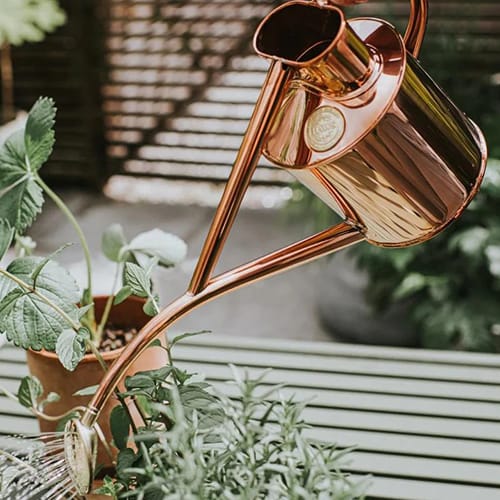
The Haws Rowley Ripple is a compact 1-litre can that works particularly well for patio pots, balcony plants and greenhouse watering. Its balanced design and removable rose give you a choice between a gentle spray and more targeted watering.

- Best for: Pots, balconies, seedlings and greenhouse plants
- Why it stands out: Excellent balance with a removable brass rose
- What to watch: The small capacity means frequent refilling
Best Haws Watering Can for Beds & Greenhouses — Warley Fall
The Haws Warley Fall is better suited to regular outdoor watering, where its larger capacity and long spout reduce the need to keep returning to the tap. It is a strong choice for raised beds, greenhouse plants and borders where extra reach is useful.
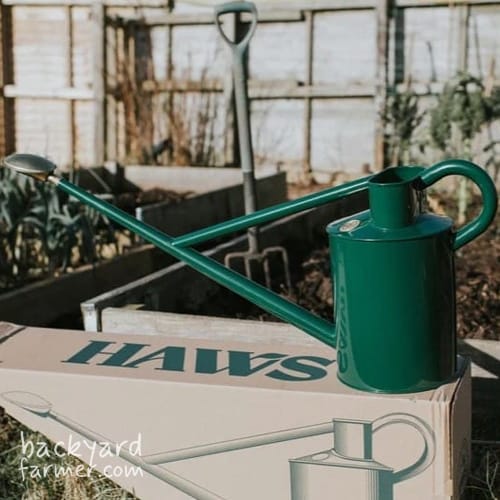
- Best for: Raised beds, borders and greenhouse watering
- Why it stands out: Larger capacity and excellent reach
- What to watch: The larger models become considerably heavier when full
Best Haws Watering Can for Large Gardens — Bearwood Brook
The Haws Bearwood Brook is the high-capacity choice for gardeners who regularly move larger amounts of water. Its 2-gallon capacity makes it better suited to allotments, larger gardens and repeated outdoor watering where fewer refill trips matter.

- Best for: Large gardens, allotments and high-volume watering
- Why it stands out: Large capacity reduces trips back to the tap
- What to watch: Its size and weight make it excessive for smaller watering jobs
What to Consider When Choosing a Haws Watering Can
If you are still deciding between models, focus on capacity, reach, rose type and material. These have a much bigger effect on everyday use than colour or appearance.
Capacity and Weight
Capacity is usually the easiest place to start.
- 1–2 pint cans are best for houseplants, seedlings, pots and smaller greenhouse jobs. They stay light and easy to control, but need refilling more often.
- 1–2 gallon cans make more sense for beds, borders, allotments and larger gardens. You carry more water per trip, but the can will be considerably heavier when full.
Choose based on the amount of watering you normally do rather than simply buying the largest capacity available.
Spout Length
A shorter spout works well for close-range indoor watering and small pots.
A longer spout gives you more reach, making it easier to water behind containers, across greenhouse benches or into beds without leaning over plants.
Rose or Direct Pour?
A watering rose spreads the flow into a gentler shower, which is useful for seedlings, young plants and general watering.
Removing the rose gives a more direct stream, which is better when you want to water at the base of an established plant.
If you regularly do both, a model with a removable rose gives you the most flexibility.
Material & Finish
Haws watering cans are available in several finishes:
- Galvanised steel: Traditional, durable and suited to regular garden use
- Powder-coated steel: Similar durability with a wider choice of colours
- Copper or brass: Premium appearance that naturally develops a patina over time
For most gardeners, capacity and usability should come before finish. Choose the material you prefer once you know which size and style of can suits the job.
Why Choose a Haws Watering Can?
Haws watering cans are a premium choice, so the main reason to buy one is not simply appearance. Their designs focus on balance, controlled pouring and durable construction, with many models using removable or replaceable roses and fittings.
Haws also continues to manufacture its traditional metal watering cans in England, which is part of what separates them from cheaper mass-produced alternatives.
That does not mean everyone needs one. If you only want a basic watering can, cheaper options will do the same fundamental job. Haws makes more sense if you value handling, long-term durability and traditional construction.
Still deciding whether the premium price is justified? Read our guide: Are Haws Watering Cans Worth It?
Which Haws Watering Can Should You Buy?
The right Haws watering can mainly comes down to where you water and how much water you need to carry.
- For houseplants and seedlings: Choose the Fazeley Flow for compact, precise indoor watering.
- For pots, balconies and smaller spaces: Choose the Rowley Ripple for excellent balance and the flexibility of a removable rose.
- For raised beds, borders and greenhouse watering: Choose the Warley Fall for greater capacity and a longer reach.
- For large gardens and allotments: Choose the Bearwood Brook when reducing refill trips matters most.
If you are still undecided, start with capacity. A smaller can is easier to control, while a larger can is more efficient for regular outdoor watering.