
Introduction
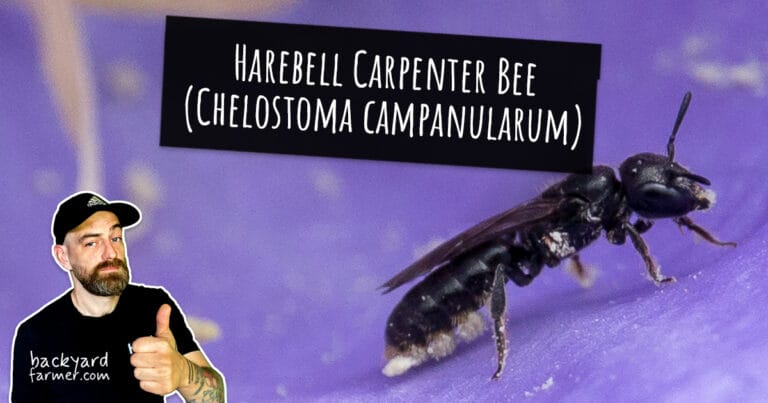
The Harebell Carpenter Bee (Chelostoma campanularum) is a small, specialist solitary bee closely associated with harebells and related bellflowers. Active in early to mid-summer, it is easily overlooked due to its small size and quiet behaviour, but it plays a vital role wherever its favoured plants grow.
In the UK, this species is most often found in grassland, coastal habitats, woodland edges, churchyards, and gardens where harebells are present. Like other carpenter and scissor bees, it nests in narrow cavities rather than in the ground, making it dependent on dead stems, old wood, and insect-friendly garden features.
Although still present across parts of its range, the Harebell Carpenter Bee is sensitive to habitat loss, over-tidying, and the decline of its food plants. In this guide, you’ll learn how to identify Chelostoma campanularum, tell it apart from similar species, and understand how small changes in land and garden management can help support it.
Identification & Key Facts
| Attribute | Details |
|---|---|
| Common Name | Harebell Carpenter Bee |
| Latin Name | Chelostoma campanularum |
| Size | ~6–8 mm |
| Location | Widespread but local across the UK |
| Active Months | June to August |
| Habitat | Grassland, coastal sites, woodland edges, gardens |
| Nesting Behaviour | Nests in hollow stems and narrow cavities |
| Social Behaviour | Solitary |
| Flora | Harebell (Campanula rotundifolia), bellflowers |
| UK Status | Locally common |
How to Identify the Harebell Carpenter Bee
The Harebell Carpenter Bee is a small, slender bee with a dark, smooth body and very little visible hair. Its narrow shape and quick movements mean it can easily be mistaken for a small fly unless seen closely.
In the UK, it is most often spotted visiting harebells, where it forages deep inside the narrow, bell-shaped flowers. Watching for bees repeatedly entering these blooms is often the easiest way to identify this species.
Physical Characteristics
- Female – Slim and dark-bodied, with short body hairs and a pointed abdomen.
- Male – Slightly smaller, with longer antennae and a distinctive jaw shape used during mating.
Similar Species
The Harebell Carpenter Bee can be confused with other small cavity-nesting bees:
- Small Scissor Bee (Chelostoma florisomne) – Very similar but more closely associated with bellflowers rather than harebells.
- Small Carpenter Bee (Ceratina cyanea) – Metallic sheen and different nesting behaviour.
- Yellow-faced Bees (Hylaeus species) – Often show yellow facial markings and carry pollen internally.
If you’re unsure which bee you’ve spotted, our Bee Identification guide can help you narrow down UK species by size, colour, and behaviour.
Why the Harebell Carpenter Bee Matters
The Harebell Carpenter Bee is an important pollinator of harebells, helping ensure the reproduction of this delicate wildflower in grassland and coastal habitats. Its close dependence on a small group of plants makes it a clear example of plant–pollinator specialisation.
By supporting this species, land managers and gardeners also help maintain a wider range of insects that rely on similar flowers and nesting sites, contributing to overall biodiversity.
FAQs
No. This species is very gentle and avoids contact with people. Stings are extremely rare.
It is mainly active in early to mid-summer, usually from June to August.
It is locally common where harebells are present but absent from areas without suitable habitat.
Females can sting, but stings are exceptionally rare and usually only occur if the bee is handled.
How You Can Help
Supporting the Harebell Carpenter Bee focuses on protecting both its food plants and nesting sites:
🌿 Plant Bee-Friendly Flowers
- Harebell (Campanula rotundifolia) and related bellflowers
🚫 Avoid Harmful Pesticides
- Avoid insecticides that contaminate nectar and reduce insect populations
🏡 Provide Nesting Spaces
- Leave hollow stems, dead wood, and bee hotels with small-diameter tubes
By planting harebells and allowing natural nesting features to remain, you help support the Harebell Carpenter Bee and other specialist pollinators.