
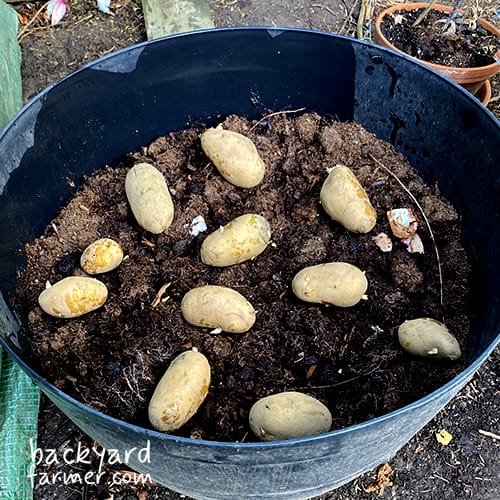
Potatoes are normally planted between late March and May in the UK. First earlies go in first, followed by second earlies and maincrop varieties.
These dates are only a guide. Light, sheltered ground may be ready in March, while cold, wet or heavy soil may need until April or May.
Wait until the soil is workable, free-draining and beginning to warm. Seed potatoes planted slightly later in good conditions will usually establish more reliably than those planted too early into cold, waterlogged ground.
Potato Planting Calendar UK
Potatoes are usually planted between March and May, but soil conditions matter more than a fixed date. Wait until the ground is workable, free-draining and beginning to warm.
| Month | Planting advice |
|---|---|
| February | Usually too early outdoors. Chit seed potatoes and prepare the ground, or start a small container crop under cover in a mild area. |
| March | Possible in sheltered areas if the soil is workable and not cold or waterlogged. Be prepared to protect early shoots from frost. |
| April | The main planting month for most UK gardeners. The soil is warming and potatoes should establish more reliably. |
| May | Still a good time to plant, particularly maincrop varieties. Warmer soil often encourages faster establishment. |
| June | A late option for containers or quick-maturing varieties. A worthwhile crop is still possible, although yields may be smaller. |
When to Plant First Early, Second Early and Maincrop Potatoes
The best planting time depends on the type of potato you are growing.
| Type | Typical planting time | Approximate harvest | Best for |
|---|---|---|---|
| First early | Late March to early April | June to July | Early new potatoes |
| Second early | Early to mid-April | July to August | Summer harvesting |
| Maincrop | Mid-April to early May | August to October | Larger crops and storage |
First earlies are planted first and mature most quickly. If shoots appear while frost is still possible, protect them with fleece or earth them up.
Second earlies normally follow in early April and provide a useful summer crop.
Maincrop potatoes are planted slightly later and need the longest growing season, but they generally produce larger yields and store more successfully.
Treat these dates as a guide. In cold, wet or heavy soil, it is better to wait until conditions improve.
How to Tell If the Soil Is Ready
Before planting, pick up a handful of soil and check its condition. It should:
- Break apart rather than stick together
- Be free from standing water
- Feel cool rather than icy cold
- Be easy to work without forming heavy, wet clods
Light soil may be ready earlier, while heavy clay and exposed plots often need another week or two. If the ground sticks heavily to your boots or tools, wait and check again later.
Can You Plant Potatoes Early or Late?
The main outdoor planting window is March to May, but potatoes can be planted either side of this in the right conditions.
Planting Potatoes Before March
For most UK gardeners, February is too early to plant potatoes directly outdoors. The soil is often cold and wet, increasing the risk of slow growth or rotting seed potatoes.
An earlier planting may work if you have:
- A mild, sheltered garden
- Light, free-draining soil
- Ground that is workable rather than waterlogged
- Protection available for emerging shoots
Containers, grow bags and large pots offer a safer way to start potatoes in February or early March. They warm more quickly than open ground and can be kept under cover until conditions improve.
Planting Potatoes in May or June
May is not too late to plant potatoes. The soil is warmer, frost is less likely, and plants usually establish quickly. It remains a useful planting month, particularly for maincrop potatoes.
June is a later option, but a worthwhile crop is still possible. For the best results:
- Choose a quick-maturing variety
- Use containers or grow bags where possible
- Expect a smaller or later harvest
- Grow for fresh new potatoes rather than long-term storage
Late planting leaves less time for the crop to develop, but warmer conditions can help plants establish quickly.
It is usually better to plant slightly late into good soil than to plant early into cold, waterlogged ground.
Should You Chit Potatoes Before Planting?
Chitting means allowing seed potatoes to develop short shoots before planting. It can give early crops a small head start, particularly first early potatoes, but it is not essential.
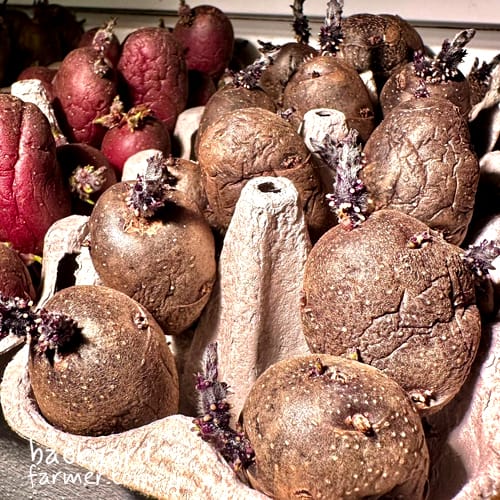
Start in late January or February:
- Place the seed potatoes in egg boxes or trays.
- Keep them somewhere cool, bright and frost-free.
- Allow short, sturdy green shoots to develop before planting.
Chitting is most useful when you want an earlier harvest or are planting into cooler spring conditions. Potatoes planted later into warm, workable soil will usually grow perfectly well without it.
Treat chitting as a useful extra rather than a requirement. Good soil conditions and sensible planting time matter more.
Practical tip: Stagger your planting
If you are growing several rows or containers, plant them one or two weeks apart. This spreads the risk from poor spring weather and gives you a longer harvest rather than everything becoming ready at once.
How to Plant Seed Potatoes
For ordinary rows, plant seed potatoes in a trench or individual holes around 15cm deep.
- Place each seed potato with the strongest shoots or most eyes facing upwards.
- Space first and second earlies about 30cm apart, with 50–60cm between rows.
- Space maincrop potatoes about 40cm apart, with around 70–75cm between rows.
- Cover carefully with soil, taking care not to damage any shoots.
- Water after planting if the soil is dry.
For watering, feeding, earthing up and ongoing care, see our full guide to growing potatoes in the UK.
Once the plants reach around 15cm tall, begin drawing soil around the stems. This protects developing potatoes from light and gives young shoots some protection from late frost.
Frequently Asked Questions
February is usually too early for planting potatoes directly outdoors because the soil is often cold and wet. In mild areas, you may be able to start a small crop in pots or grow bags kept in a greenhouse or sheltered position.
March can work for first early potatoes in mild, well-drained gardens. However, April is often more reliable because the soil has had longer to warm. Check the ground before planting and wait if it is still sticky, waterlogged or very cold.
Yes. Containers warm more quickly than open ground and can be moved under cover when frost is forecast. This makes pots, buckets and grow bags useful for starting an early crop in February or March without planting into cold, wet soil.
Potatoes can still be planted in June, although the remaining growing season will be shorter. Choose a quick-maturing variety and consider using containers or grow bags. The harvest may be smaller, but you can still produce a worthwhile crop of fresh new potatoes.
Chitting can give first early potatoes a small head start, but it is not essential. Place seed potatoes somewhere cool, bright and frost-free until short, sturdy shoots develop. Potatoes planted later into warm, workable soil will normally grow well without chitting.
Plant seed potatoes around 10–15cm deep, with the strongest shoots facing upwards. Space first and second earlies about 30cm apart and maincrop potatoes around 40cm apart. Cover them carefully, then begin earthing up once the shoots are approximately 15cm tall.
Final Thoughts
Most potatoes are planted between late March and May in the UK. First earlies go in first, followed by second earlies and maincrop varieties.
Treat these dates as a guide rather than a deadline. Wait until the soil is workable, free-draining and beginning to warm. Potatoes planted slightly later in good conditions will usually establish more reliably than those planted too early into cold, wet ground.
Once the shoots appear, protect them from late frost and begin earthing up as they grow.
Plan Your Potato Crop
Use the Backyard Farmer Allotment Planner to organise planting dates, crop spacing and bed layouts throughout the season.