
Introduction
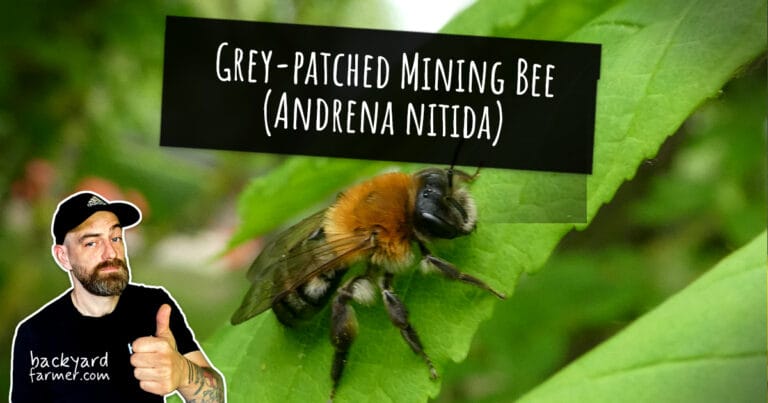
The Grey-patched Mining Bee (Andrena nitida) is a medium-sized solitary bee that is often noticed in spring due to the pale grey patches of hair on its thorax. Active mainly in early to mid-spring, it is a regular visitor to flowering trees and shrubs and can be quite conspicuous when conditions are right.
In the UK, this species is commonly found in gardens, parks, hedgerows, woodland edges, and open countryside where early blossom and suitable nesting ground are available. It is particularly associated with tree and shrub pollen, making it an important spring pollinator.
Although generally common, the Grey-patched Mining Bee is affected by habitat loss, pesticide use, and the reduction of early-flowering plants. In this guide, you’ll learn how to identify Andrena nitida, distinguish it from similar mining bees, and understand why protecting early-season forage is so important.
Identification & Key Facts
| Attribute | Details |
|---|---|
| Common Name | Grey-patched Mining Bee |
| Latin Name | Andrena nitida |
| Size | Females: ~11–13 mm, Males: ~9–11 mm |
| Location | Widespread across the UK |
| Active Months | March to June |
| Habitat | Gardens, parks, hedgerows, woodland edges |
| Nesting Behaviour | Ground-nesting in bare or lightly vegetated soil |
| Social Behaviour | Solitary (often nesting in aggregations) |
| Flora | Willow, fruit blossom, hawthorn, flowering shrubs |
| UK Status | Common |
How to Identify the Grey-patched Mining Bee
The Grey-patched Mining Bee is a fairly robust mining bee with a dark body and distinctive pale grey patches of hair on the thorax, which are usually visible when viewed from above. The abdomen is dark and relatively smooth compared to some other Andrena species.
In the UK, it is most often seen visiting flowering trees and shrubs in spring or flying low over lawns and bare ground near nesting sites.
Physical Characteristics
- Female – Stocky build with dark abdomen and clear grey hair patches on the thorax; pollen carried on the hind legs.
- Male – Smaller and slimmer, often with longer antennae and lighter facial hair.
Similar Species
The Grey-patched Mining Bee can be confused with other spring-flying mining bees:
- Early Mining Bee (Andrena haemorrhoa) – Females show a reddish abdomen rather than grey thoracic patches.
- Buffish Mining Bee (Andrena nigroaenea) – More variable colouring and lacks the clear grey thorax patches.
- Tawny Mining Bee (Andrena fulva) – Much brighter orange-red overall, especially on the thorax.
If you’re unsure which bee you’ve spotted, our Bee Identification guide can help you narrow down UK species by size, colour, and behaviour.
Why the Grey-patched Mining Bee Matters
The Grey-patched Mining Bee is an important pollinator of early-flowering trees and shrubs, including fruit trees and native hedgerow plants. Its activity helps support pollination at a critical time of year when many plants rely on a small number of active insects.
By nesting in gardens and urban green spaces as well as the countryside, it also plays a role in maintaining pollination networks close to where people live.
FAQs
No. This species is calm and focused on foraging and nesting. It is very unlikely to sting.
It is mainly active in spring, typically from March to June.
No. It is a common and widespread species.
Females can sting, but stings are rare and usually only occur if the bee is handled.
How You Can Help
Supporting the Grey-patched Mining Bee is straightforward:
🌿 Plant Bee-Friendly Flowers
- Willow, fruit trees, hawthorn, flowering shrubs
🚫 Avoid Harmful Pesticides
- Avoid insecticides, especially in spring when bees are active
🏡 Provide Nesting Spaces
- Leave patches of bare or lightly vegetated soil undisturbed
By allowing early-flowering plants to thrive and leaving some open ground, you help support the Grey-patched Mining Bee and other spring pollinators.