
Introduction
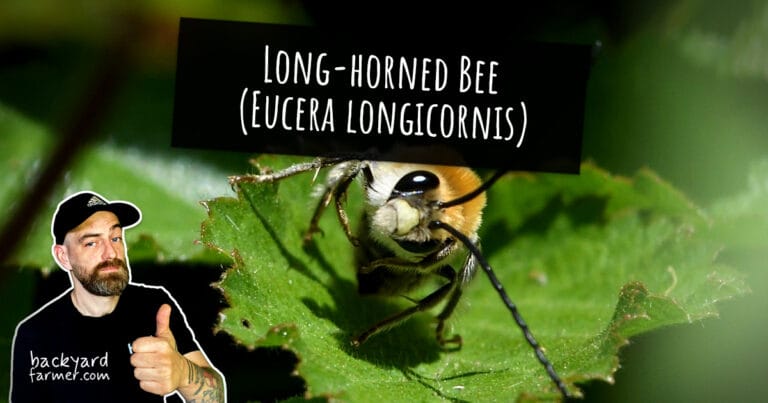
The Long-horned Bee (Eucera longicornis) is one of the UK’s most distinctive solitary bees, best known for the extremely long antennae of the males. Active from late spring into summer, it is most often seen flying low over flower-rich grassland and meadow habitats.
This species has a strong association with traditional farmland, wildflower meadows, and coastal grassland, where it forages on a wide range of legumes and wildflowers. Although it can occasionally appear near gardens close to suitable habitat, it is far more typical of open countryside with abundant flowering plants.
The Long-horned Bee has declined significantly in the UK due to habitat loss, agricultural intensification, and the reduction of flower-rich grasslands. In this guide, you’ll learn how to identify Eucera longicornis, avoid confusion with similar species, and understand why protecting meadow habitats is essential for its survival.
Identification & Key Facts
| Attribute | Details |
|---|---|
| Common Name | Long-horned Bee |
| Latin Name | Eucera longicornis |
| Size | Females: ~14–16 mm, Males: ~11–13 mm |
| Location | Southern England, coastal and lowland areas |
| Active Months | May to July |
| Habitat | Flower-rich grassland, meadows, coastal grassland |
| Nesting Behaviour | Underground nests in bare or lightly vegetated soil |
| Social Behaviour | Solitary |
| Flora | Vetches, clover, bird’s-foot trefoil, legumes |
| UK Status | Rare / Declining |


How to Identify the Long-horned Bee
The Long-horned Bee is a medium-sized solitary bee with a warm brown body and pale hair bands across the abdomen. Females resemble many other solitary bees, but males are unmistakable due to their exceptionally long antennae, which can be almost as long as the body.
In the UK, this species is most often encountered flying low over meadows and grassland, particularly where legumes are abundant. Males are frequently seen patrolling flowers and vegetation in search of females.
Physical Characteristics
- Female – Robust and brownish with pale hair bands; antennae of normal length.
- Male (Drone) – Slightly smaller, with extremely long antennae that curve forward; slimmer appearance overall.
Similar Species
The Long-horned Bee may be confused with other brown solitary bees when females are observed:
- Melitta species – Often similar in size but lack the distinctive long antennae in males.
- Mining Bees (Andrena species) – Generally stockier with different flight behaviour and shorter antennae.
- Common Carder Bee (Bombus pascuorum) – Much fluffier and social, with a slower flight style.
If you’re unsure which bee you’ve spotted, our Bee Identification guide can help you narrow down UK species by size, colour, and behaviour.
Why the Long-horned Bee Matters
The Long-horned Bee is a key pollinator of legumes such as clover and vetch, making it important for both wildflower diversity and traditional grassland ecosystems. Its presence is often a sign of high-quality, low-intensity farmland.
Because it depends on flower-rich meadows and undisturbed nesting sites, this species is particularly vulnerable to habitat loss and changes in land management. Protecting these habitats benefits a wide range of other pollinators.
FAQs
No. This species is gentle and not aggressive, with stings occurring only if the bee is handled.
It is typically active from May to July, with peak activity in early summer.
Yes. It is considered rare and has declined significantly from its former range.
Females can sting, but stings are uncommon and usually occur only in defence.
How You Can Help
Supporting the Long-horned Bee focuses on protecting and restoring flower-rich grasslands:
🌿 Plant Bee-Friendly Flowers
- Vetches, clover, bird’s-foot trefoil, meadow wildflowers
🚫 Avoid Harmful Pesticides
- Avoid insecticides and herbicides that reduce flowering plants
🏡 Provide Nesting Spaces
- Leave areas of bare or lightly vegetated soil undisturbed in sunny locations
By supporting wildflower meadows and low-intensity land management, you help give the Long-horned Bee a chance to recover.