
A wildlife-friendly garden doesn’t need to be wild or complicated. The best designs simply make space for the things wildlife needs most: food, water, shelter and safe routes through the garden.
By combining features such as native planting, a small pond, dense cover and quieter corners, you can create a garden that still works for you while supporting birds, pollinators, amphibians and other wildlife throughout the year.
What Makes a Garden Wildlife-Friendly?
A wildlife-friendly garden gives animals the basic things they need to feed, shelter, breed and move safely through the space. In practice, that means providing four core elements:
- Shelter
- Water
- Food
- Nesting and overwintering space
Shelter: Safe Cover From Weather and Predators
Wildlife needs somewhere to hide from predators and harsh weather. Dense planting also helps smaller species move through the garden without crossing large exposed areas.
Useful shelter can include:
- Native hedging along boundaries
- Dense shrubs and layered planting
- Areas of long grass
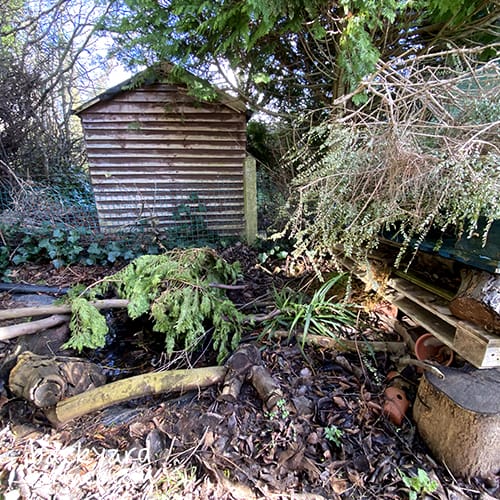
- Log piles and deadwood
Even a small undisturbed corner can provide valuable cover.
Water: A Lifeline for Garden Wildlife
Water is one of the most useful additions you can make. A wildlife pond can support amphibians, insects and birds, but you don’t need a large pond to make a difference.
A container pond, bird bath or shallow water source can also help. Include shallow edges, stones or gently sloping access so wildlife can enter and leave safely.
Food: Provide It Throughout the Year
A good wildlife garden relies mainly on natural food sources rather than feeders alone.
Try to include:
- Nectar-rich flowering plants for pollinators
- Berry-producing shrubs for birds
- Seed heads left standing through autumn and winter
- Planting that supports insects, which in turn feed birds and other wildlife
Using plants that flower and fruit at different times helps provide food across more of the year.
Nesting and Overwintering Spaces
Wildlife also needs safe places to breed, rest and survive colder weather.

You can provide these by:
- Leaving hedgehog access gaps and sheltered areas
- Installing nest boxes or hedgehog houses
- Keeping leaf piles, ground cover and deadwood
- Growing dense shrubs and climbers
When shelter, water, food and nesting spaces are combined, the garden becomes more than a collection of wildlife features. It becomes a connected habitat that species can actually use throughout the year.
Wildlife Garden Layout Ideas by Garden Size
A good wildlife garden depends more on how the space is structured than on its overall size. Even a small garden can provide water, shelter, food and nesting habitat if those features are positioned well.
Small Urban Wildlife Gardens
In a small garden, focus on layering and multifunctional features rather than trying to fit everything in.
Useful ideas include:
- Grow climbers such as ivy or honeysuckle for vertical shelter
- Add a container pond or half-barrel pond
- Leave a narrow strip of longer grass along a boundary
- Tuck a small log pile into a shaded corner
- Position bird feeders close to shrubs so birds have nearby cover
Where possible, leave a small gap beneath fencing so hedgehogs can move between neighbouring gardens.
A few well-positioned features can provide valuable feeding, shelter and nesting opportunities without overwhelming the space.
Medium Suburban Gardens
With more room, you can start dividing the garden into distinct habitat areas.
A simple layout might include:
- Water zone – a pond positioned away from the busiest parts of the garden
- Planting zone – shrubs, flowering plants and longer grass for birds and pollinators
- Relaxation zone – seating closer to the house so you can enjoy the garden without disturbing habitat areas
Replacing part of a lawn with a flower-rich border or meadow patch adds more feeding habitat, while hedging along boundaries can create sheltered routes through the garden.
This approach keeps the space practical while giving wildlife quieter areas of its own.
Large or Rural Wildlife Gardens
With a larger plot, you can move beyond individual features and create larger connected habitats.
Options include:
- A meadow strip or lightly rewilded area
- A larger pond with shallow shelves
- Native hedges linking different parts of the garden
- Woodland-edge planting using trees, shrubs and ground cover
- Compost, leaf-mould and deadwood areas left as active habitat
There is also more scope to leave selected areas less intensively managed rather than tidying every edge.
The aim is to create a garden that feels layered, connected and varied, rather than a series of isolated wildlife features.
The 5-Zone Wildlife Garden Design Method
Rather than scattering individual wildlife features around the garden, it helps to think in connected layers, much like a natural ecosystem.
A simple wildlife garden can be built around five overlapping zones:
- Canopy — trees
- Shrubs
- Flowers and pollinators
- Ground habitat and deadwood
- Water
You don’t need all five on a large scale. Even in a small garden, combining several layers creates more useful habitat than relying on isolated features.
1. The Canopy Layer
Trees add height and structure while providing several forms of habitat at once.
They can offer:
- Nesting sites for birds
- Flowers and pollen for insects
- Shade and shelter from wind
- Cover above lower planting
In a compact garden, choose a tree that suits the available space rather than one that will quickly dominate it. In larger gardens, trees can form the backbone of the overall layout.
2. The Shrub Layer
Shrubs provide dense cover between the tree canopy and ground-level planting.
They can offer:
- Shelter for birds and small mammals
- Berries and other food
- Nectar-rich flowers for pollinators
Where possible, plant shrubs along boundaries or in groups rather than scattering isolated plants around the garden. This creates more continuous cover and helps wildlife move safely through the space.
3. The Flower and Pollinator Layer
Aim for flowering plants across as much of the growing season as possible, using a mixture of early, mid and late-flowering species.
This provides a longer supply of nectar and pollen for bees, butterflies, hoverflies and other insects.
Avoid tidying everything as soon as flowering finishes. Leaving some seed heads standing provides food for birds and additional shelter for insects later in the year.
4. The Ground and Deadwood Layer
Much of a wildlife garden’s habitat is found close to the soil.
Useful features include:
- Log piles and deadwood
- Fallen leaves left in selected areas
- Undisturbed soil
- Longer grass
- Organic mulch around suitable planting
These provide damp, sheltered conditions for beetles, fungi, amphibians and overwintering insects while making use of parts of the garden that might otherwise be kept bare or heavily tidied.
5. The Water Zone
Water can support a wide range of garden wildlife.
A pond with shallow edges and easy access provides drinking, bathing and habitat for birds, insects and amphibians. In a smaller garden, a container pond or other shallow water source can still be useful.
Position the water away from the busiest parts of the garden where possible, and use surrounding planting to provide nearby shelter.
Simple Wildlife Features That Make a Big Difference
You don’t need to add everything at once. One or two well-positioned features can make a noticeable difference, especially when they strengthen the habitat already in place.
A Wildlife Pond
If you add one major feature, water is a strong place to start.
Even a small pond can attract amphibians, insects and birds. To make it more wildlife-friendly:
- Position it in partial sunlight
- Include shallow edges, stones or easy exit points
- Add nearby planting for shelter
A container pond or half-barrel can also work well in smaller gardens.
I built a small pond at the backyard farm — see the full guide: How to Build a Wildlife Pond.
A Hedgehog-Friendly Corner
Hedgehogs benefit from quiet shelter, dense cover and access between gardens.
Useful additions include:
- Leaving a small gap at the base of fencing
- Adding a hedgehog house in a sheltered corner
- Keeping some dense ground-level cover
These simple changes help hedgehogs move through and use the garden more safely.
A Bug Hotel or Deadwood Stack
Insects need places to shelter and overwinter, but you don’t need anything elaborate.
A bug hotel, drilled logs or a simple deadwood pile can provide useful habitat for solitary bees, beetles and other invertebrates.
For best results:
- Place it somewhere sheltered
- Keep it close to flowering plants
- Avoid disturbing it once wildlife starts using it
A basic pile of natural deadwood can be just as useful as a purpose-built structure.
A Long Grass or Wild Patch
Closely mown lawns offer relatively little shelter.
Allowing one strip or corner to grow longer creates cover for pollinators, beetles and other invertebrates. It works particularly well:
- Along boundaries
- Around trees or shrubs
- In less-used corners
Even a small area can add another useful layer of habitat without taking over the garden.
A Thoughtful Bird Feeding Station
Bird feeders can be useful, particularly when natural food is scarce.
Position them carefully:
- Keep feeders near shrubs or hedging so birds have quick access to cover
- Clean feeders regularly
- Grow berry-producing shrubs alongside supplementary feeding
The aim is to combine feeders with natural food and shelter rather than relying on them alone.
What to Avoid in a Wildlife Garden
Creating habitat is only part of the job. Some common garden choices can reduce food, shelter and access for wildlife, even when other wildlife-friendly features are in place.
Artificial Grass
Artificial grass replaces living soil and vegetation, reducing habitat for worms, beetles and other invertebrates that birds and mammals feed on.
A natural lawn — even one that is patchy or allowed to grow longer in places — provides far more wildlife value.
Excessive Paving and Hard Landscaping
Patios and paths can still have a place in a wildlife garden, but covering too much ground reduces planting, shelter and foraging space.
Where possible, balance hard surfaces with:
- Borders and layered planting
- Hedging and shrubs
- Containers in smaller spaces
Permeable surfaces can also help rainwater reach the soil rather than simply running off.
Sterile Gravel-Only Gardens
Gravel can be useful, but large areas of decorative stone provide little food or shelter on their own.
If you use gravel, break it up with:
- Planting pockets
- Deadwood or log features
- Nectar-rich flowering plants
The aim is to keep plenty of living habitat within the space.
Harsh or Excessive Lighting
Bright outdoor lighting can disturb nocturnal wildlife such as bats, moths and hedgehogs.
Where lighting is needed, reduce its impact by using:
- Motion sensors rather than constant lighting
- Warm-toned bulbs
- Low, carefully directed lights
Leaving darker areas of the garden undisturbed gives nocturnal wildlife somewhere to feed and move more naturally.
Over-Tidying
Wildlife gardens benefit from leaving some natural material in place.
Rather than clearing everything away:
- Leave seed heads standing through winter
- Allow leaves to collect in a quiet corner
- Mow less frequently in selected areas
- Avoid unnecessary disturbance of established habitat
A wildlife-friendly garden does not need to look neglected. The aim is simply to leave some areas less intensively managed so insects, birds and small mammals have somewhere to feed and shelter.
How to Start Converting a Regular Garden into a Wildlife Garden
You don’t need to redesign the whole garden at once. A few gradual changes can turn a lawn-and-border garden into a much more useful habitat without losing the parts of the space you still want to use.
Step 1: Reduce Some Lawn
Closely cut grass has limited wildlife value, so start by converting a small section rather than removing the whole lawn.
You could replace part of it with:
- A flower-rich border or wildflower strip
- A shrub bed
- A patch of longer grass
Even a modest change adds more food and shelter.
Step 2: Add Water
A pond is one of the most useful additions you can make, but it does not need to be large.
A container pond, small wildlife pond or shallow water source can provide drinking and habitat for birds, insects and amphibians.
Position it close to planting where possible, with safe access in and out.
Step 3: Add Native Shrubs
Shrubs add structure while providing flowers, berries and dense cover.
Plant them along boundaries or in quieter parts of the garden where they can create sheltered routes between different habitat areas.
Step 4: Leave One Area Less Tidy
Choose one corner where you can reduce routine maintenance.
For example:
- Leave seed heads standing
- Allow fallen leaves to remain
- Mow less frequently
- Leave dead stems or natural material in place
This provides shelter and overwintering habitat without making the whole garden feel unmanaged.
Step 5: Reduce Chemical Use
Avoid routine pesticide and herbicide use where practical.
Insects form an important part of the food chain, so tolerating some chewed leaves, weeds or minor pest damage can help support birds, mammals and other wildlife.
You can always build on these changes later. The aim is to create more habitat gradually, rather than trying to transform the whole garden in one go.
Conclusion: Designing a Wildlife Garden That Works
A wildlife-friendly garden doesn’t need to be perfect or completely wild. The aim is simply to provide food, water, shelter and space for natural processes.
Start with one or two useful changes, see how wildlife responds, and build from there. Over time, those small improvements can turn an ordinary garden into a much more connected and valuable habitat.