Introduction
Summer planting on these grand isles is special, and even beginners will notice the shift straight away.
By June, most beds are producing an abundance of courgettes, peas, beans and tomatoes. Then, by July or August, it almost feels like its time to pause and ask:
“Have I missed my chance to plant more tasty vegetables?”
However, when it comes to planting summer veg in Britain, the answer is surprisingly no.
In fact, summer is nowhere near the end of the planting season. It is in fact, the start of a second wave!

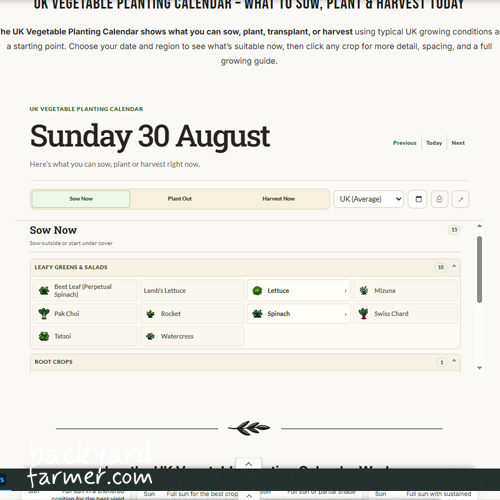
Use our FREE Interactive Planting Calendar!
All you have to do is load the page and the app will tell you what to plant today, tomorrow, next month and even next year! Its free to use and you will know what to plant in seconds.
What Vegetables Can You Plant in Summer in the UK?
If you’re wondering what vegetables to plant in summer in the UK, the answer depends on timing — and, just as importantly, your intention.

During summer, you’re typically:
- Filling gaps after early harvests
- Starting second sowings
- Extending crops into autumn
- Planning ahead for overwintering vegetables
In other words, you’re not starting from scratch — you’re building on momentum.
So, what veg can you grow in summer, in UK gardens? Here’s a quick reference guide for vegetables that grow well throughout the summer season.
Summer Vegetable Planting Calendar (Quick Guide)
For all you skimmers out there, heres a quick reference of what people tend to plant in the summer months, we will go into detail later in the article.
| Month | Direct Sow Outdoors | Start Indoors |
|---|---|---|
| June | French beans, runner beans, beetroot, carrots, lettuce | Courgettes (cooler regions), sweetcorn |
| July | Kale, turnips, beetroot (late), lettuce, rocket | Spring cabbage (for overwintering) |
| August | Spinach (autumn), winter lettuce, spring onions, turnips | Overwintering onions |
Not sure what to sow next? See my full guide on what to plant each month in the UK to stay on track throughout the year.
What Makes Summer Vegetable Planting Different in the UK?
By June, most vegetable beds are already producing. Early potatoes are lifting, salad crops are finishing, and small gaps begin to appear. As a result, summer vegetable planting becomes less about beginnings and more about maintenance and harvests.
Unlike spring when frost risk and soil temperature dominate your choices, summer in the UK is warm and in recent years it has even become quite dry in places. Understanding this shift helps you decide what vegetables to plant in summer UK conditions without second‑guessing yourself.
Warmer Summer Soil Means Faster Germination
By early summer, soil temperatures stay consistently warm across the British isles. As a result, vegetables sown in June often germinate a lot quicker than they did in March or April.
Seeds that might have taken two to three weeks to emerge in early spring, often appear in just a few days during the summer months. This means you benefit from:
- Faster, more reliable germination
- Stronger early root development
- Quicker establishment
- Reduced risk of seed rot
Because of this, summer is ideal for quick‑growing vegetables, late sowings, and second crops.
Water Management Becomes Critical
In summer, water replaces frost as your main risk factor.
Young seedlings are especially vulnerable to:
- Dry topsoil
- Sudden heatwaves
- Inconsistent watering
Instead of watering little and often, water deeply and less frequently so roots grow downwards rather than sitting near the surface. At the same time, mulching around crops helps retain moisture, regulate soil temperature, and stabilise growing conditions.
Bolting and Heat Stress
As daylight hours lengthen and temperatures rise, certain vegetables respond by bolting. Due to stress they flower prematurely instead of producing usable leaves or roots.
To reduce bolting, you should:
- Choose summer or bolt‑resistant varieties
- Provide light shade during extreme heat
- Keep watering consistent
Summer Is the Season of Second Crops
Perhaps the biggest difference in summer vegetable planting is that it’s rarely about first sowings.
Instead, you’re often:
- Replacing harvested crops
- Filling empty spaces
- Sowing for autumn harvest
- Planning overwintering vegetables
This means summer planting becomes more strategic. You’re not just asking what vegetables to plant in summer, you’re deciding how to extend productivity into September and beyond.
Daylight Peaks — Then Begins to Shorten
After the summer solstice in late June, daylight hours slowly begin to shorten. This means choosing vegetables to sow or plant in July or August require careful variety choice and realistic expectations.
This is why:
- Early summer sowings establish quickly
- Mid to late summer crops need faster‑maturing varieties
- Autumn‑focused vegetables become more important from July onward
By understanding warm soil, faster growth, higher water demand, and shortening daylight, you can make confident decisions about what vegetables to plant in summer and avoid wasting valuable growing time.
Vegetables to Sow in Early Summer (June UK)
Early summer is where speed and opportunity come together.
By June in the UK, soil is properly warm, daylight hours are long, and germination happens quickly. Unlike early spring — when caution often slows you down — June allows you to sow with far more confidence.
As a result, this is the ideal time to:
- Fill gaps left by early harvests
- Start second batches of quick crops
- Strengthen your succession planting rhythm
- Make the most of rapid growth
In short, June rewards action — provided you stay consistent.
Root Crops (Late & Second Sowings)
Warm soil dramatically improves germination for many root vegetables. Because temperatures are higher, seeds establish faster and more evenly.

Beans & Courgettes
June is peak sowing time for heat-loving crops.

You can confidently sow outdoors:
- French beans
- Runner beans
- Courgettes (direct sowing works particularly well in warm soil)
Because the ground is warm, these vegetables establish quickly and grow with real momentum. That said, provide support early for climbing beans and stay on top of watering during dry spells.
Salad Crops & Fast Growers
June is also perfect for quick-growing vegetables that you can harvest within weeks.

Strong options include:
- Rocket
- Lettuce (summer varieties)
- Spinach (bolt-resistant types)
- Spring onions
Instead of sowing large batches all at once, keep succession planting every 2–3 weeks. This way, you avoid gluts and keep fresh leaves coming steadily through summer.
Herbs in Early Summer
Many herbs benefit from warm soil and longer days.

In June, you can sow:
- Dill
- Coriander
- Parsley
- Basil (in warmer regions or under cover)
Herbs establish quickly now. However, they can bolt if stressed. Therefore, water consistently and harvest regularly to encourage fresh, leafy growth.
Early Summer Planting Tips
To make the most of vegetables to sow in June in the UK:

- Water deeply before and after sowing
- Mulch around young seedlings to retain moisture
- Choose bolt-resistant summer varieties
- Keep succession planting steady
Ultimately, June isn’t about starting late — it’s about accelerating wisely.
What to Sow in Mid Summer (July UK)
July is where summer vegetable planting becomes properly strategic.
By now, early crops are finishing. Garlic is lifting, early potatoes are out, and salad beds are thinning. As a result, space begins to appear — and that space is your opportunity.
If you’re asking, “What can I still plant in July in the UK?” the honest answer is more than most growers expect.
Mid summer isn’t too late. Instead, it’s a pivot point.
Autumn Brassicas & Leafy Crops
July is the ideal time to start vegetables that will mature into autumn.

Vegetables to sow in July in the UK include:
- Kale
- Spring cabbage (for overwintering)
- Pak choi
- Chinese cabbage
- Mustard greens
Because temperatures are still warm, these crops establish quickly. However, as summer gradually cools, they settle into strong autumn growth.
Quick Root Crops
Fast-maturing root vegetables also perform well when sown in July.

Continued Salad Succession
July is peak succession season.

You can continue sowing:
- Lettuce (bolt-resistant varieties)
- Rocket
- Spinach (summer types)
- Spring onions
Rather than sowing large amounts all at once, keep batches small and regular. This way, you avoid waste and extend harvest steadily into late summer.
Planning for Overwintering Crops
Mid summer is also when forward-thinking growers start planning ahead.
In July, you can:
- Sow spring cabbage for overwintering
- Start hardy greens that tolerate cooler autumn weather
Consequently, summer planting begins to blend into autumn preparation. What you sow now sets the tone for the next season.
Mid Summer Planting Tips
To succeed with vegetables to sow in July in the UK:
- Water deeply before and after sowing
- Provide temporary shade during heatwaves
- Choose faster-maturing varieties
- Protect brassicas from pests
Ultimately, July is less about abundance and more about direction.
You’re using summer warmth to secure your autumn harvest — and, importantly, thinking one step ahead.
Next, let’s look at what shifts again as late summer (August) approaches.
What to Sow in Late Summer (August UK)
August can feel like the closing chapter of the growing season. However, when it comes to summer vegetable planting in the UK, it’s usually more of a transition than an ending.
If you’re wondering, “Is it too late to plant vegetables in August UK gardens?” — in most cases, it isn’t. In fact, late summer vegetable planting UK growers rely on can be one of the smartest moves of the season.
That said, success in August depends on choosing the right vegetables to plant in August UK conditions and managing them carefully.
Fast Leafy Crops
As daylight gradually shortens after the solstice, speed becomes increasingly important.
Vegetables to plant in August in the UK commonly include:
- Spinach (autumn varieties)
- Winter lettuce
- Rocket
- Mizuna and other Asian greens
- Spring onions
Because the soil is still warm, these vegetables to sow in August UK beds germinate quickly and establish well. At the same time, cooler nights begin to favour leafy growth again, which often improves flavour.
Therefore, choose bolt-resistant or autumn-specific varieties wherever possible. This way, you reduce the risk of plants running to seed before harvest — a common issue in summer vegetable planting.
Quick Root Vegetables
Certain root crops also perform well when sown in August, provided you select faster-maturing types.
Strong vegetables to plant in August UK plots include:
- Turnips
- Radishes
- Baby beetroot
The key is choosing varieties with shorter days to maturity so they can size up before cooler autumn conditions slow growth. Otherwise, development stalls and harvest becomes uneven.
As always, keep watering consistent. Late summer soil dries out quickly, and even a short dry spell can disrupt germination — particularly for vegetables to sow in August UK gardens.
Overwintering Crops
August also marks the beginning of overwinter planning.
In late summer you can:
- Sow overwintering onions
- Start hardy spring cabbage
- Sow certain broad bean varieties (late August in milder regions)
These crops establish roots before winter arrives. Then, as temperatures rise again in early spring, they resume growth and deliver early harvests.
In other words, vegetables to plant in August UK beds don’t just feed autumn — they shape next year’s season too.
Making the Most of Late Summer
To succeed with vegetables to sow in August in the UK:
- Prioritise fast-maturing or cold-tolerant crops
- Water deeply before and after sowing
- Use fleece if early cold snaps arrive
- Keep succession sowing small and regular
Ultimately, late summer vegetable planting in the UK isn’t about abundance — it’s about extension and smart timing.
When you choose carefully and stay consistent, August sowings can carry you confidently into autumn and, in many cases, lay the groundwork for spring.
Next, we’ll look at how succession planting in summer UK gardens ties the entire season together.
Succession Planting in Summer (UK Guide)
If spring is about starting crops, then summer vegetable planting in the UK is about keeping them coming.
Succession planting in summer UK gardens is one of the simplest — and most effective — ways to extend harvests, prevent gluts, and make full use of warm soil. Instead of sowing one big batch of vegetables and harvesting everything at once, you stagger smaller sowings every few weeks.
As a result, you spread harvest over time rather than dealing with everything in one rush.
In the UK, summer is actually the easiest time to practise succession planting because:
- Soil is warm and germination is fast
- Growth is rapid in June and July
- Empty space appears after early crops finish
- Autumn harvest is still well within reach
In other words, the conditions naturally support second sowing vegetables UK growers rely on.
What Is Succession Planting?
Succession planting simply means sowing small amounts of the same crop at regular intervals throughout the summer.
For example, instead of planting one long row of lettuce in June, you might sow:
- A small row in early June
- Another in late June
- A third in mid July
Because you spread sowings out, you stretch harvest across months instead of just a few weeks. Consequently, you avoid gluts and maintain steady production.
This approach works particularly well for vegetables to sow in June UK beds and vegetables to sow in July UK plots, where warm soil supports quick establishment.
Best Vegetables for Summer Succession Planting (UK)
Some crops are especially well suited to summer sowing cycles and repeat planting.
Ideal choices include:
- Lettuce (summer or bolt-resistant varieties)
- Rocket
- Spinach (summer types)
- Spring onions
- Radishes
- Beetroot (small batches)
These vegetables grow quickly in warm soil. Therefore, you can harvest within weeks and keep beds turning over steadily.
In addition, many of these crops transition smoothly into late summer vegetable planting UK conditions, particularly when you choose faster-maturing varieties.
How Often Should You Sow?
In early and mid summer (June–July), sow every 2–3 weeks.
However, in late summer (August), adjust your expectations rather than your intervals. Focus on faster or cold-tolerant varieties, because daylight hours are gradually reducing and growth will slow.
Ultimately, succession planting in summer UK gardens is about continuity — not volume.
Using Gaps Efficiently
Summer vegetable planting works best when you treat your beds as flexible rather than fixed.
After lifting crops such as:
You can immediately re-sow that space with quick crops. Because the soil remains warm, new seedlings establish fast, and you avoid leaving ground bare.
As a result, you maximise productivity and keep your late summer vegetable planting UK plans on track.
Why Succession Matters in Summer
Without staggered sowing, you risk:
- Large harvest gluts
- Empty beds by late summer
- Missed autumn opportunities
However, when you plan succession planting properly, you create:
- Continuous salad harvests
- Extended productivity into autumn
- Better use of growing space
So, summer vegetable planting in the UK isn’t just about what you sow — it’s about when you repeat it.
Next, we’ll look at how to manage heat, watering and bolting so your summer crops stay productive.
Managing Heat, Water and Bolting in Summer (UK Guide)
In spring, frost is usually the main problem. In summer, the challenge shifts to heat, dry soil, bolting, and stressed young plants.
Warm soil helps seeds germinate quickly, but high temperatures can also cause seedlings to dry out and leafy crops to run to seed. This is especially important when sowing vegetables in June, July, or August, when conditions can change quickly.
Water Deeply and Consistently
Summer watering is not just about watering often. It is about watering well.
Shallow watering encourages roots to stay near the surface, where they dry out quickly. Instead, water deeply so moisture reaches lower into the soil.
Aim to:
- Water early in the morning or later in the evening
- Soak the soil deeply rather than lightly wetting the surface
- Keep newly sown seed beds moist during germination
- Avoid soaking leaves during strong midday sun
Newly sown seeds are especially vulnerable. If the surface dries out during germination, growth can stall or fail completely.
Use Mulch to Hold Moisture
Mulching helps keep summer growing conditions more stable. A layer of compost, leaf mould, straw, or other organic mulch around established crops can reduce evaporation, suppress weeds, and protect the soil during hot spells.
Mulch does not replace watering, but it helps the soil stay moist for longer. This is particularly useful for late summer sowings that need steady conditions to establish before autumn.
Prevent Bolting in Leafy Crops
Bolting happens when plants flower too early instead of producing usable leaves or roots. It is common in summer, especially with crops such as:
- Lettuce
- Spinach
- Rocket
- Coriander
Heat, dry soil, and long daylight hours can all trigger bolting. To reduce the risk, choose bolt-resistant varieties, water consistently, harvest regularly, and use light shade during very hot weather.
Protect Young Seedlings
Young plants can struggle during hot, dry spells, especially after transplanting. Help them settle by watering thoroughly, using temporary shade if needed, and hardening off indoor-grown plants before moving them outside.
This matters most in July and August, when warm soil can help plants establish quickly, but heat stress can still set them back.
Keep Conditions Steady
Successful summer vegetable planting depends on keeping three things steady:
- Moisture
- Root growth
- Temperature balance
By watering well, mulching, reducing bolting, and protecting young plants, you give summer sowings a much better chance of growing strongly and carrying your harvests into autumn.
Summer Planting Checklist (June–August UK)
By mid summer, the question usually shifts. It’s no longer “What should I start?” — instead, it becomes “How do I stay productive?”
Use this practical checklist to keep your summer vegetable planting in the UK focused, efficient, and one step ahead. Whether you’re working out what vegetables to plant in summer UK conditions or simply filling gaps, this framework keeps things clear and manageable.
1. Identify Empty or Finishing Beds
As early crops come out, act quickly. Summer vegetable planting UK growers manage well depends on momentum.
- Lift early potatoes, garlic or broad beans promptly
- Clear spent salad crops before they bolt
- Add compost and lightly refresh the soil before re-sowing
In summer, empty space isn’t a problem — it’s an opportunity for second sowing vegetables UK gardens can still support.
2. Choose the Right Crops for the Right Stage
Because summer shifts month by month, your crop choices should shift too.
- June: Focus on vegetables to sow in June UK beds while soil is warm and germination is fast
- July: Choose vegetables to sow in July UK plots that will mature into autumn
- August: Prioritise vegetables to plant in August UK gardens that are fast-growing or suited to overwintering
In short, match crop speed to the daylight you have left and the season you’re planting for.
3. Keep Succession Planting Consistent
Rather than sowing everything at once, stay steady.
- Sow small batches every 2–3 weeks
- Avoid single large sowings that create gluts
- Replace harvested crops as soon as space appears
As a result, succession planting in summer UK gardens maintains continuity instead of chasing volume.
4. Manage Water and Heat Proactively
Summer vegetable planting in the UK rewards consistency.
- Water deeply instead of lightly and often
- Mulch to retain soil moisture and stabilise temperature
- Choose bolt-resistant varieties for leafy crops
When moisture and temperature stay stable, vegetables to sow in June, July or even late summer vegetable planting UK crops establish far more reliably.
5. Plan for Autumn — Not Just Summer
While summer still feels busy, start looking ahead.
- Select crops that mature into September and October
- Start overwintering vegetables in July and August
- Check your local frost expectations before late sowings
Consequently, summer vegetable planting becomes more than seasonal maintenance — it becomes strategic extension.
What to Do Next
Ultimately, summer vegetable planting in the UK is about momentum, succession planting in summer UK conditions, and extending harvest into autumn.
If you’re unsure how to balance succession sowing, second crops and autumn planning, treat your summer vegetable planting calendar UK plan as a working tool rather than a static reference. Review your available space, match crop speed to remaining daylight, and keep beds turning over.
When you manage it strategically, June, July and August can be just as productive as spring — and, in many cases, even more efficient.
From here, continue your seasonal growing journey by exploring the autumn harvest guides or refining your month-by-month planting plan so your summer vegetable planting UK strategy stays aligned with the wider cluster.