The best soil for most indoor vegetables is a good-quality peat-free multipurpose compost. It provides the moisture retention, drainage and nutrients needed for growing vegetables in pots. Seeds benefit from a finer compost, while established plants may require additional feeding.
Here’s how to choose the right compost for what you’re growing.
What Soil Should You Use for Indoor Vegetables?
For most indoor vegetable growing, you don’t need a specialist soil mix. A suitable peat-free multipurpose compost will support everything from lettuce and leafy greens to herbs and compact vegetable plants.
The main consideration is what you’re growing and whether you’re starting from seed or growing an established plant.
| What you’re growing | Recommended compost | Main consideration |
|---|---|---|
| Vegetable seeds | Peat-free seed compost | Fine texture and even moisture |
| Young vegetable plants | Peat-free multipurpose compost | Root development and nutrients |
| Lettuce and leafy greens | Peat-free multipurpose compost | Consistent moisture |
| Basil and parsley | Peat-free multipurpose compost | Moisture retention and drainage |
| Rosemary and thyme | Free-draining potting compost | Avoiding prolonged wetness |
| Tomatoes and chillies | Peat-free multipurpose or container compost | Root space and ongoing feeding |
For beginners: Start with a good-quality peat-free multipurpose compost. If you’re sowing lots of seeds, a separate bag of seed compost can make germination and early seedling care easier.
You don’t need a different compost for every vegetable. What matters is choosing a growing medium that works well in containers, where roots have limited space to access water, oxygen and nutrients.
If you’re growing culinary herbs, our guide to growing herbs indoors covers their individual growing requirements.
Seed Compost vs Multipurpose Compost
Seed compost and multipurpose compost are designed for different stages of plant development. Understanding the difference helps you choose a suitable growing medium without buying unnecessary products.
Seed Compost for Germination
Seeds initially rely on their stored energy to germinate. They need moisture, oxygen and suitable temperatures rather than large amounts of fertiliser.
Peat-free seed compost generally has a finer texture and lower nutrient content than multipurpose compost, making it particularly useful for small seeds such as lettuce, basil and leafy vegetables.
A suitable seed compost should:
- Have a fine, relatively even texture.
- Hold moisture without becoming saturated.
- Allow oxygen to reach developing roots.
- Contain an appropriate, relatively low nutrient supply.
You can also use sieved peat-free multipurpose compost for many vegetable seeds. Removing larger pieces creates a more even surface and improves contact between seeds and compost.
Moisten the compost before sowing and keep it appropriately damp during germination. Avoid saturating it, as waterlogged conditions can restrict oxygen around developing roots.
Multipurpose Compost for Growing On
As seedlings develop, their nutrient requirements increase. Peat-free multipurpose compost generally provides a more suitable growing medium for continued development.
Move seedlings into larger pots when they’re sufficiently developed to handle and need more room for their roots. The ideal timing depends on the crop and its growing conditions.
For short-term crops such as baby salad leaves, suitable multipurpose compost may provide enough nutrients for much of their growing period.
Longer-term vegetables, including tomatoes and chillies, need adequate root space and an ongoing nutrient supply. These can grow successfully in suitable multipurpose or container compost, with additional feeding when required.
What to Look for in Indoor Vegetable Compost
You don’t need the most expensive compost available, but it’s worth checking that the product is suitable for growing vegetables in containers.
Not all bags labelled compost are intended for the same purpose.
Choose Peat-Free Compost
Peat-free compost is the preferred option for UK gardeners.
Peat extraction damages important habitats and releases stored carbon. Modern peat-free growing media provide suitable alternatives using ingredients such as composted bark, coir, wood fibre and green compost.
Different formulations can behave differently, particularly when watered, so choosing a suitable product is more important than looking for one specific ingredient.
When buying compost:
- Look for peat-free clearly stated on the packaging.
- Check whether it’s intended for seeds, potting or container growing.
- Read the manufacturer’s guidance about nutrients and feeding.
- Avoid confusing potting compost with products intended primarily as soil improvers.
- Choose reasonably fresh compost that has been stored appropriately.
Words such as organic or natural don’t automatically mean a compost is peat-free.
Check the Texture and Structure
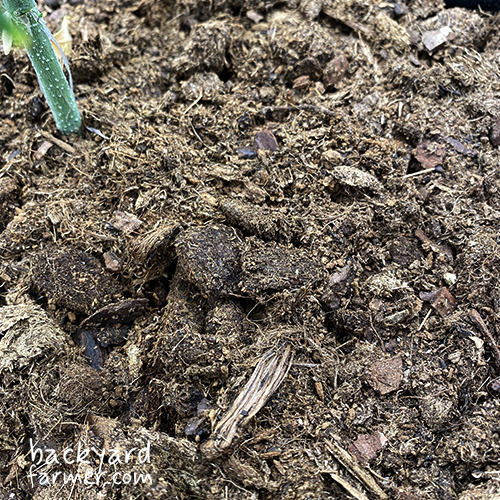
Some peat-free composts contain noticeably more woody material than traditional peat-based mixes.
Composted bark and processed wood fibre are useful ingredients, but excessively large pieces can make a compost difficult to use in small pots or seed trays.
For seed sowing, look for a relatively fine, consistent texture. Established plants can benefit from a more open structure that allows air to reach their roots.
Good compost should retain enough moisture to support growth while allowing excess water to drain.
A compost that holds moisture isn’t necessarily poorly drained. Problems arise when it remains saturated and roots cannot access sufficient oxygen.
Check the Nutrient Content
Many commercial composts contain added nutrients to support plants during their initial growth.
The amount and duration of this supply vary between products.
Seed compost generally contains relatively little fertiliser, while multipurpose and container composts may provide more nutrients for established plants.
Check the packaging for information about the initial feeding period.
A heavily fertilised compost isn’t automatically better, particularly for young seedlings. Choosing a suitable medium and feeding plants according to their needs is more reliable than adding fertiliser unnecessarily.
Common Compost Ingredients Explained
Peat-free compost usually contains a blend of ingredients. Each contributes different properties to the growing medium.
| Ingredient | Main purpose | When useful |
|---|---|---|
| Coir | Moisture retention and structure | Common peat-free compost ingredient |
| Composted bark | Structure and air spaces | Helps maintain an open growing medium |
| Wood fibre | Influences moisture retention and aeration | Commercial peat-free mixes |
| Green compost | Organic matter and some nutrients | Blended growing media |
| Perlite | Helps create air spaces | Adjusting suitable potting mixes |
| Vermiculite | Moisture retention and aeration | Seed sowing and propagation |
| Loam | Stability and nutrient buffering | Longer-term container growing |
| Worm castings | Organic matter and nutrients | Optional compost amendment |
Do You Need to Add Anything?
Usually, no.
A properly formulated multipurpose compost should already contain suitable ingredients for growing plants in containers.
Adding perlite, vermiculite or coir without understanding the existing mix can change how it retains and releases moisture.
For example, adding more free-draining material to a compost that already dries quickly may make watering more difficult.
Worm castings can contribute nutrients and organic matter, but they aren’t essential for indoor vegetable growing. Our guide to worm castings explains their benefits and uses.
Start with a suitable prepared compost and only adjust it when there’s a specific reason to do so.
Can You Use Garden Soil for Indoor Vegetables?
Ordinary garden soil isn’t usually suitable for growing vegetables in indoor pots. It can become compacted, drain unpredictably and introduce weeds or unwanted organisms.
Commercial potting compost is formulated for growing plants in containers, providing a more suitable balance of moisture and air around the roots.
Loam-based potting compost is different from soil dug directly from the garden. It’s a prepared growing medium that can be useful for longer-term container plants.
For most beginners, peat-free multipurpose compost is the simpler and more predictable choice.
How to Prepare and Maintain Indoor Vegetable Compost
Choosing suitable compost is only the first step. How you prepare, water and maintain it has a significant effect on root health.
Preparing Pots and Containers
Always use containers with suitable drainage holes and choose a size appropriate for the plant’s root system.
To prepare a container:
- Check that the drainage holes are clear.
- Add fresh compost, breaking up any compacted lumps.
- Fill the pot without pressing the compost down firmly.
- Position the plant at the correct planting depth.
- Gently firm the compost around its roots.
- Water thoroughly and allow excess water to drain.
- Empty any water collected in the saucer or outer pot.
Avoid placing a layer of gravel or stones at the bottom of the pot.
Despite being common gardening advice, this doesn’t improve drainage. It reduces the space available for compost and roots.
A suitable growing medium and properly draining container are more effective.
Watering Peat-Free Compost
Watering is one of the biggest adjustments when using peat-free compost.
Different formulations retain and release moisture at different rates.
Some mixes can appear dry on the surface while remaining wet deeper down. Others become difficult to rewet after drying excessively, allowing water to run through without soaking in evenly.
This makes watering by appearance alone unreliable.
Instead, check the actual moisture conditions:
- Feel below the surface: The top may be dry while the root zone remains moist.
- Lift the pot: A noticeably lighter pot can indicate that the compost has lost moisture.
- Check drainage: Excess water should be able to escape from the container.
- Consider the plant: Seedlings and established fruiting vegetables have different water requirements.
When watering, apply enough to moisten the rootball evenly and allow surplus water to drain away.
Don’t leave pots standing in water for prolonged periods.
If compost has become very dry and water immediately runs through it, try watering gradually in several passes. For suitable small containers, briefly standing the pot in water can help rewet the compost from below.
Once the compost has absorbed moisture, remove the pot and allow it to drain thoroughly.
Avoid rigid watering schedules such as watering every two days. Frequency depends on the compost, plant size, temperature, light and container.
During a UK winter, lower light levels and slower plant growth often mean compost stays moist for longer.
When to Feed Indoor Vegetables
Commercial potting compost normally contains an initial nutrient supply, but this won’t necessarily last throughout the growing period.
How quickly nutrients become depleted depends on the compost formulation, crop and growing conditions.
Short-term crops such as baby salad leaves may need little or no supplementary feeding when grown in suitable fresh compost.
Longer-term vegetables, particularly tomatoes, peppers and chillies, generally need additional nutrients as they develop and begin producing fruit.
Check the compost packaging for its initial feeding period. When additional nutrients are needed, use a fertiliser appropriate to the crop and follow its instructions.
Don’t automatically feed plants because they’re growing slowly or developing yellow leaves.
Waterlogged roots, insufficient light, low temperatures and restricted root space can produce similar symptoms.
Feeding won’t correct these problems.
During the UK winter, providing sufficient light is particularly important. Our guide to growing vegetables under artificial light explains how to provide suitable indoor growing conditions.
Common Indoor Compost Problems and Solutions
Even good compost can develop problems when watering or growing conditions aren’t suitable.
| Problem | Possible cause | What to do |
|---|---|---|
| Compost stays wet | Overwatering, poor drainage or slow plant growth | Check drainage and allow excess moisture to reduce |
| Compost dries unevenly | Growing-medium characteristics or excessive drying | Rewet gradually and check moisture throughout the pot |
| Fungus gnats | Persistently damp organic growing media | Improve moisture management and monitor affected pots |
| Poor germination | Moisture, temperature, sowing conditions or seed quality | Check growing conditions before blaming the compost |
| Compacted compost | Unsuitable structure or excessive compression | Assess the medium and repot if necessary |
| Yellow leaves and poor growth | Watering, lighting, root or nutrient problems | Identify the cause before adding fertiliser |
Fungus Gnats in Indoor Compost
Fungus gnats are small, dark flies commonly found around damp potting compost.
Their larvae feed mainly on decaying organic material and fungi, although large populations can sometimes damage vulnerable seedlings.
Avoid unnecessary watering and remove decaying plant debris. Yellow sticky traps can help monitor or reduce adult flies, but won’t eliminate larvae already living in the compost.
A few fungus gnats don’t necessarily mean your compost is unsuitable or that your vegetables are unhealthy.
Poor Germination and Damping Off
If seeds fail to germinate or seedlings suddenly collapse, compost conditions may be one contributing factor.
However, poor germination can also result from unsuitable temperatures, excessive moisture, incorrect sowing depth or old seeds.
Damping off involves pathogens that can cause young seedlings to rot or collapse. Using fresh, suitable compost, clean containers and careful watering helps reduce the risk.
See our damping off guide for symptoms and prevention.
For wider issues involving watering, lighting, pests and plant health, visit How to Solve Common Indoor Vegetable Gardening Problems.
Frequently Asked Questions
Yes. A good-quality peat-free multipurpose compost is suitable for many established indoor vegetables, including leafy greens, herbs and compact vegetable plants.
Choose a product intended for potting or container growing and use pots with drainage holes.
For sowing small seeds, a finer seed compost may be easier to use.
Coir can support roots and retain moisture, but plain coir generally contains very little available nutrition.
Seeds may germinate in it using their stored energy, but continued growth requires a suitable nutrient supply.
For beginners, a complete potting compost containing coir and other ingredients is usually simpler than growing in plain coir and managing nutrients separately.
Not necessarily.
Perlite can improve aeration and change the drainage characteristics of suitable growing mixes, but many commercial composts already provide appropriate conditions.
Only consider adding it if the existing compost would benefit from a change in structure.
Yes, provided the compost was previously used for healthy plants and remains in suitable condition.
Remove old roots and plant debris, check its structure and refresh it with suitable organic matter or fresh compost where necessary. Reused compost may also need additional nutrients, depending on the next crop.
Avoid reusing compost affected by significant root disease. Fresh seed compost is generally a safer, more predictable option for starting vulnerable seedlings.
There isn’t a fixed replacement schedule.
For short-term crops, assess the compost after harvesting to decide whether it’s suitable for reuse.
Longer-term plants may benefit from repotting or refreshed compost as their roots develop and the growing medium deteriorates.
Healthy plants don’t need their compost replaced simply because a certain number of months has passed.