
You can grow plenty of culinary herbs indoors, but choosing the right plants matters. Parsley, chives, mint and basil are good places to start, while coriander and dill are better treated as short-lived crops that you sow regularly.
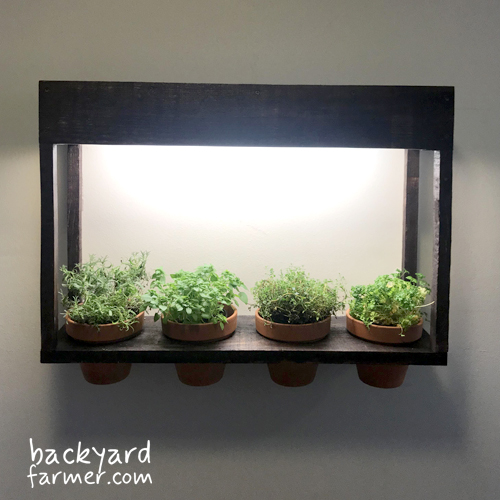
Light is usually the main limitation, particularly during a UK winter. A bright windowsill may be enough through spring and summer, but herbs that naturally prefer full sun can struggle indoors once the days shorten.
This guide focuses on culinary herbs grown in pots of compost. Salad leaves, microgreens and hydroponic growing are separate topics.
Quick answer: Start with two or three herbs you regularly use. Give each one a pot with drainage holes, use fresh peat-free compost and place it beside the brightest suitable window. Water according to the herb rather than following a fixed schedule, and expect to re-sow or replace short-lived plants.
The Best Herbs to Grow Indoors
Some herbs adapt to indoor conditions much better than others. A plant being suitable for a container does not necessarily mean it will grow well on an ordinary kitchen windowsill.
| Herb | Indoor suitability | Best starting method | Realistic approach |
|---|---|---|---|
| Parsley | Reliable | Seed or young plant | Grow for its first leafy year, then replace |
| Chives | Reliable | Division or young plant | Maintain as a clump; expect slower winter growth |
| Mint | Reliable in active growth | Cutting or division | Keep in its own pot and refresh periodically |
| Basil | Good when warm and bright | Seed, cutting or divided supermarket pot | Treat as a seasonal plant and replace when tired |
| Thyme | Good with strong light | Young plant or cutting | Keep relatively dry and avoid cutting into old wood |
| Oregano | Good with strong light | Young plant, cutting or division | Grow in free-draining compost and feed sparingly |
| Marjoram | Good when warm and bright | Seed or young plant | Grow seasonally or overwinter with sufficient light |
| Coriander | Short-term crop | Direct seed | Sow small batches regularly |
| Dill | Short-term crop | Direct seed | Choose a compact variety and succession sow |
| Chervil | Short-term, cool-season crop | Direct seed | Re-sow before older plants flower |
| Rosemary | Demanding indoors | Young plant or cutting | Usually better outside unless indoor light is exceptionally good |
| Sage | Demanding indoors | Young plant or cutting | Needs strong light and airflow; often better outside |
| French tarragon | Seasonal and demanding | Named plant, cutting or division | Protect under cover in winter; expect it to die back |
| Bay | Poor windowsill choice | Established plant | Better in a patio, porch or conservatory container |
For the easiest start, choose parsley, chives or mint. Basil is also worth growing, but it is more sensitive to cold, weak light and waterlogged compost.
Thyme, oregano and marjoram need stronger light and drier conditions. They may be straightforward outdoors, but that does not automatically make them easy indoor plants.
Coriander, dill and chervil are best grown little and often. Once they begin flowering, replacing them is usually more productive than trying to keep the same plants going.
Rosemary, sage, French tarragon and bay can be brought under cover when needed, but they are rarely the best choices for a warm kitchen windowsill.
Does Your Home Have Enough Light for Indoor Herbs?
Before buying pots or sowing seeds, decide whether your intended growing position receives enough usable light. A room can look bright to us while still being too dark for compact, productive herb growth.
Choosing the Best Window
| Window | Practical suitability |
| South-facing | Usually the strongest option, particularly during winter |
| West-facing | Good afternoon light, although it can become hot in summer |
| East-facing | Useful morning sun and often suitable for softer herbs |
| North-facing | Usually too dark for productive herbs without supplementary light |
The direction of the window is only a starting point. Nearby buildings, trees, roof overhangs and glazing can all reduce the light reaching your plants. Light also drops quickly as you move away from the window.
A south-facing window overlooking an open garden may be excellent. The same window beneath a deep porch or facing a neighbouring wall may be much less useful.
Signs That Herbs Need More Light
Watch for:
- Thin stems leaning strongly towards the window
- Large gaps between one set of leaves and the next
- Pale or yellowish new growth
- Smaller leaves
- Slow growth
- Lower leaves dropping
- Compost remaining wet for longer
- Weaker flavour or aroma
Turning a pot can help the plant grow more evenly, but it does not increase the total light available. If the plant continues stretching after being rotated, it needs a brighter position or supplementary light.
Can You Grow Herbs Indoors Without a Grow Light?
Yes, particularly from spring to early autumn. A bright, unobstructed window can support parsley, chives, mint, basil and several other herbs during the main growing season.
It becomes more difficult during winter, on a north-facing windowsill or where buildings and trees obstruct the light. High-light herbs such as thyme, oregano, rosemary and sage are particularly likely to struggle.
When a Grow Light Becomes Worthwhile
Consider a grow light when:
- Seedlings repeatedly become tall and thin
- Your only suitable window faces north
- Herbs must sit well back from the glass
- Natural light is obstructed
- You want compact active growth during winter
- Basil or Mediterranean herbs continually deteriorate indoors
A timer providing around 12-14 total hours of light is a useful starting point for established herbs. Seedlings may need longer.
However, running a weak lamp for more hours will not necessarily provide enough light. “Full spectrum” describes the colours produced by the fixture, not its strength or coverage.
There is also no universal hanging distance for every lamp. Follow the manufacturer’s canopy guidance and adjust for the fixture, growing area and plant response.
For more detail, see our guide to grow lights for indoor vegetables and herbs.
Should You Start Indoor Herbs From Seed, Plants or Cuttings?
The best method depends on the herb and how quickly you want to start harvesting.
| Method | Best for | Main limitation |
| Seed | Basil, parsley, chives, coriander, dill and chervil | Requires patience and good seedling light |
| Young plants | Thyme, oregano, rosemary, sage, bay and tarragon | More expensive with less variety |
| Cuttings | Basil, mint, rosemary, sage and thyme | Requires suitable healthy material |
| Division | Chives, mint, oregano and French tarragon | Only works with established clump-forming herbs |
| Outdoor plants brought inside | Extending selected herbs into autumn or winter | Pests, lower light and natural dormancy |
| Supermarket pots | Quick basil, parsley, chives or mint | Often overcrowded and intended for short-term use |
Young plants are the simplest route if you want usable herbs quickly. They are particularly useful for slow-growing woody herbs such as rosemary and sage.
Seed gives you more choice and makes sense for plants that need replacing regularly. Coriander, dill and chervil are best sown directly into their intended pots because they dislike unnecessary root disturbance.
Cuttings and divisions are useful if you already have healthy plants outdoors. Check them carefully for pests before bringing them into the house.
How to Keep Supermarket Herbs Alive
Supermarket herb pots are grown to look full and immediately useful. Basil, coriander and parsley pots may contain many seedlings packed into a very small space.
Once the plant reaches your kitchen, those seedlings begin competing for root space, water, nutrients and light. The rootball can also swing quickly between being waterlogged and completely dry.
Some supermarket herbs can be divided and grown on, but others are more realistically harvested and replaced.
Dividing Supermarket Basil
Basil is one of the better candidates for division:
- Cut excessively long shoots back above a healthy pair of leaves.
- Ease the complete rootball out of its pot.
- Divide it gently into several small clumps.
- Keep around three or four seedlings in each clump rather than separating every plant.
- Put each clump into a pot approximately 9cm wide.
- Use fresh peat-free potting compost.
- Keep the plants at the same depth as before.
- Water thoroughly and allow the excess to drain.
- Place the pots somewhere warm and bright.
- Move them into slightly larger pots when roots reach the drainage holes.
Avoid moving a small clump straight into a very large pot. The unused compost may stay wet for too long and damage the roots.
Which Supermarket Herbs Can Be Divided?
- Basil: usually the best candidate.
- Chives: clumps can be separated and replanted.
- Mint: can normally be divided or propagated from cuttings.
- Parsley: possible, but minimise root damage.
- Coriander: less dependable because it dislikes disturbance.
- Woody herbs: normally pot on the single established plant rather than dividing it.
Even after division, a supermarket herb is not guaranteed to become a permanent plant. Light, plant age and its original growing conditions still matter.
Choosing Pots and Compost
You do not need specialist equipment to grow herbs indoors, but every container needs drainage holes.
Use a saucer beneath the pot or place the growing pot inside a removable decorative container. Never leave the base standing in water.
Individual Pots or One Large Planter?
Individual pots are usually easier because each herb can be:
- Watered separately
- Moved to a different window
- Repotted when needed
- Replaced without disturbing the others
- Given a different compost mixture
Mint should have its own pot. Its vigorous roots can quickly crowd out nearby plants.
Mixed planters are possible, but only combine herbs with similar needs. Basil and parsley prefer more even moisture than thyme or rosemary, so they are poor companions in a shared container.
Practical Pot Sizes
The right size depends on the plant rather than the word “herb”. Use these measurements as a starting point:
- Seedlings and divided supermarket herbs: 7.5-9cm
- Developing basil, mint and chives: around 20cm
- Mature parsley: around 20-25cm, with useful depth for its roots
- Young thyme, oregano and marjoram: around 15cm, followed by gradual potting-on
- Mature rosemary and sage: up to around 30cm
- French tarragon: around 20cm
- Bay: a stable container only slightly larger than its existing rootball
Do not put a small plant into a large volume of compost to save repotting later. The excess compost dries slowly and can cause root problems.
Terracotta or Plastic?
Plastic and glazed pots retain moisture for longer. They can work well for basil, parsley, mint and chives.
Terracotta allows moisture to evaporate through its sides and dries more quickly. This can be useful for thyme, oregano, rosemary and sage, although it means the pot needs checking more often during warm weather.
Self-watering pots are most suitable for herbs that appreciate even moisture. They are not the safest default for Mediterranean herbs that dislike wet roots.
Which Compost Should You Use?
Use:
- Peat-free seed compost for sowing
- Peat-free potting or multi-purpose compost for soft leafy herbs
- Peat-free soil-based compost for longer-term woody plants
- A freer-draining mixture for thyme, oregano, marjoram, rosemary, sage and tarragon
A soil-based peat-free compost can be mixed with horticultural grit for plants that need sharper drainage. Check the instructions on the compost bag, as peat-free mixtures vary in water retention and added nutrients.
Avoid filling indoor pots with ordinary garden soil. It is usually too dense, may contain pests and drains less predictably in a container.
Do Not Add Gravel to the Bottom
A layer of gravel, pebbles or broken crocks does not improve drainage. It reduces the usable compost depth and moves the saturated layer closer to the roots.
Use a pot with open drainage holes and an appropriate compost mixture instead. A small piece of mesh or a single crock can cover a large drainage hole if compost is falling through, but it should not form a complete layer.
There is also no need to bake ordinary potting compost in a kitchen oven. Use fresh compost and clean pots. If a previous plant suffered from a serious pest or disease, clean and disinfect the container before reusing it.
How to Plant or Repot Indoor Herbs
Once you have chosen a suitable herb and position:
- Inspect the plant carefully for insects, webbing, sticky leaves or damaged growth.
- Select a clean pot with drainage holes.
- Use a container only slightly larger than the current rootball.
- Add the appropriate fresh peat-free compost.
- Position the herb at the same depth as it was growing previously.
- Fill around the roots and firm the compost gently.
- Water the complete rootball.
- Allow the excess water to drain.
- Empty any water collected in the saucer or outer pot.
- Place the herb in suitable light and give it time to settle.
For seeds, follow the sowing depth on the packet. Label each pot with the herb and sowing date, particularly if you are growing several batches of coriander, dill or chervil.
How to Water Indoor Herbs
There is no reliable fixed watering schedule for every indoor herb. A plant beside a warm west-facing window in June will dry much faster than the same plant on a dull winter windowsill.
Check the compost and the weight of the pot before watering.
| Prefer more even moisture | Prefer drier compost |
| Basil | Thyme |
| Parsley | Oregano |
| Chives | Marjoram |
| Mint | Rosemary |
| Coriander | Sage |
| Dill | French tarragon |
| Chervil |
The herbs in the first column still need drainage. Even mint and basil can suffer when their roots remain saturated.
When watering:
- Feel slightly below the compost surface.
- Lift the pot to judge whether it feels unusually light.
- Water thoroughly enough to wet the rootball.
- Let surplus water drain away.
- Empty the saucer.
- Avoid repeated small splashes that only wet the surface.
Watering in the morning is useful, particularly for basil and seedlings, because the plant is less likely to remain cold and wet overnight.
Overwatering or Underwatering?
A wilted plant does not always need more water.
A very light pot with dry compost usually suggests underwatering. Water the rootball thoroughly and allow it to drain.
Wilting in wet compost points towards root stress. Stop watering, check the drainage holes and inspect the roots if the plant continues declining. Healthy roots are generally firm, while badly damaged roots may be dark and soft.
During winter, growth slows and the compost takes longer to dry. Reduce watering rather than continuing the same summer routine.
Feeding, Temperature and Airflow
Fresh potting compost normally contains enough nutrients to support a plant initially. Feeding becomes more useful once the herb is established, growing actively and being harvested regularly.
Feeding Indoor Herbs
Use a balanced fertiliser suitable for leafy growth and follow the instructions on the compost and feed.
Basil and frequently harvested soft herbs are likely to need more feeding than thyme, rosemary or sage. Avoid using potassium-rich tomato feed when leaf production is the aim, as it is formulated to support flowering and fruiting.
Do not feed a pale, stretched plant in an attempt to correct insufficient light. This is more likely to produce additional weak growth.
Woody Mediterranean herbs grow naturally in relatively lean conditions. Excessive feeding can make them soft and reduce the strength of their aroma.
Temperature and Airflow
Most indoor herbs cope with normal household temperatures, but there are important differences:
- Basil needs warmth and dislikes cold, wet compost.
- Coriander and chervil prefer cooler conditions and flower sooner when hot.
- Dill produces better, bushier growth when it receives plenty of light.
- Rosemary, sage, thyme and oregano need airflow as well as strong light.
Keep foliage away from cold glass during winter and avoid placing pots directly above a radiator. Leave some space between plants so air can move around the leaves.
Good airflow does not mean putting tender basil in a cold draught. The aim is to avoid warm, crowded and stagnant conditions.
How to Harvest Herbs Without Damaging Them
Different herbs respond to different cuts. Harvesting every plant when it reaches 15cm or removing the same proportion from each is too simplistic.
| Herb | How to harvest |
| Basil | Pinch shoot tips above a pair of leaves |
| Parsley | Remove complete outer stalks close to the base |
| Chives | Snip leaves just above the base |
| Mint | Pick young shoot tips; cut tired plants back |
| Coriander | Take a few leaves from each plant and allow recovery |
| Dill | Pick limited foliage while leaving plenty of healthy growth |
| Chervil | Pick young leaves before flowering |
| Thyme | Snip young shoots without cutting into bare old wood |
| Oregano | Cut young shoots, ideally before flowering |
| Marjoram | Snip shoots before flowers open for the strongest flavour |
| Rosemary | Remove young shoot sections without cutting hard into old wood |
| Sage | Pick individual leaves or young shoots |
| French tarragon | Pick young shoots and pinch out flower buds |
| Bay | Remove individual mature leaves |
Use clean scissors or secateurs where a cut is needed. Avoid taking a large harvest from a newly repotted, damaged or light-starved plant.
Should Herb Flowers Be Removed?
It depends on the herb and what you want from it.
Remove basil flower stems while leaf production is the priority. Once basil flowers heavily, leaf quality and production begin to decline.
Removing developing coriander flowers may extend the leafy period slightly, but coriander is an annual and will eventually run to seed. Plan another sowing rather than fighting its natural lifecycle.
Chive flowers are edible, but their stalks are tough. Remove spent flower stalks at the base to make leaf harvesting easier.
Pinching out French tarragon flower buds can help prolong leafy growth. Flowering in established thyme, oregano, rosemary or sage is not automatically a problem, although the best-flavoured leafy growth is often harvested before or around flowering.
How to Maintain a Continuing Supply
A continuing supply of herbs rarely comes from keeping one plant indefinitely. A more realistic approach uses different methods for different plants:
- Sow coriander, dill and chervil in small batches.
- Sow or propagate replacement basil plants.
- Divide congested mint and chive clumps.
- Take cuttings from healthy basil, mint, rosemary, sage or thyme.
- Replace woody plants once they become bare and unproductive.
- Keep more than one pot where an herb is used heavily.
- Freeze or dry surplus seasonal growth.
This approach also gives you a backup if one plant suffers from pests, overwatering or poor light.
Growing Herbs Indoors Through Winter
Indoor conditions protect herbs from frost, but they do not replace the light lost during a UK winter.
Move actively growing plants to the brightest suitable south- or west-facing window available. Keep them close enough to benefit from the light, but do not allow leaves to touch cold glass.
During winter:
- Clean the window to maximise available light.
- Reduce watering as growth slows.
- Stop routine feeding if the plant is dormant or barely growing.
- Keep pots away from radiators.
- Watch for fungal problems in crowded, still conditions.
- Use supplementary light if compact active growth is important.
- Accept that some perennial herbs naturally slow down or die back.
Mint, chives and French tarragon may lose their top growth or become much less productive. This does not necessarily mean the roots have died.
Basil is better treated as a replaceable annual. Coriander, dill and chervil can be sown indoors during winter, but the results will be poor without enough light.
Rosemary, sage and bay are often better kept outside in a sheltered position or in a bright porch, conservatory or frost-free greenhouse. Moving a large woody herb into a warm, dim kitchen can create more problems than it solves.
Common Indoor Herb Problems
| Problem | Distinguishing signs | First action |
| Insufficient light | Long, pale growth leaning towards the window | Increase usable light |
| Overwatering | Wet compost, yellow leaves and wilting | Stop watering and check drainage |
| Underwatering | Very light pot, dry compost and wilted leaves | Water thoroughly and drain |
| Radiator damage | Crispy edges, often on the heated side | Move the plant |
| Root damage | Wilting despite wet compost; dark, soft roots | Inspect roots and repot if viable |
| Powdery mildew | White dusty coating on foliage | Isolate, remove affected growth and improve conditions |
| Aphids | Visible colonies, curled tips or sticky leaves | Isolate and wash or remove physically |
| Whitefly | Small white adults fly when disturbed | Isolate, wash and monitor |
| Spider mites | Fine pale mottling and delicate webbing | Isolate and wash repeatedly |
| Fungus gnats | Tiny flies around persistently damp compost | Reduce excessive wetness and clear debris |
| Bolting | Rapid flower-stem formation | Harvest and re-sow short-lived herbs |
| Cold damage | Blackened or translucent growth near glass | Move the plant and remove dead tissue |
| Weak aroma | Soft growth, poor light or excessive feeding | Increase light and reduce unnecessary feed |
A severely rotted annual or heavily infested supermarket plant may not be worth saving. Discarding it can prevent pests from spreading to healthier plants.
UK-Safe Pest Treatment
Because these plants are intended for eating, avoid applying generic homemade sprays or using a product simply because it is described as natural.
Use this order:
- Isolate the affected plant.
- Identify the pest.
- Wash or remove insects physically.
- Remove badly affected foliage.
- Correct overcrowding, excessive moisture or poor airflow.
- Discard a heavily infested, easily replaced plant if necessary.
- Only use a pesticide specifically authorised and labelled for the edible crop and intended use.
The HSE pesticides database explains how to check current UK authorisations. A product being available online does not automatically mean it is authorised for use on edible herbs.
Looking for quicker leafy crops? This guide covers culinary herbs such as basil, parsley and mint. For lettuce, rocket, mizuna and other cut-and-come-again crops, see how to grow salad leaves indoors.
Frequently Asked Questions
Parsley, chives and mint are among the most dependable choices. Basil is also suitable if it receives enough warmth and light, but it is more sensitive to cold and overwatering.
Some herbs can remain alive indoors throughout the year, but that does not guarantee active winter production. Supplementary light, succession sowing, cuttings or replacement plants may be needed.
Most culinary herbs need strong light, although the amount of direct sun varies. Parsley, chives and mint tolerate less than thyme, oregano, rosemary and sage.
Yes, especially beside a bright window from spring to autumn. A grow light becomes more useful during winter, on north-facing windows or where natural light is obstructed.
There is no fixed schedule. Check the compost, pot weight, season and growth rate. Basil and mint prefer more even moisture, while thyme and rosemary need the compost to dry more between waterings.
They can, but individual pots are normally easier. Basil, parsley and mint need more moisture than thyme, oregano and rosemary, and short-lived herbs may need replacing before their neighbours.
Garden soil is generally too dense and unpredictable for indoor pots. Use fresh peat-free potting compost suited to the herb.
Supermarket basil normally contains many crowded seedlings competing for light, water and root space. Dividing the pot into several smaller clumps can improve its chances, provided the plants receive enough warmth and light.
Start With the Herbs You Will Use
Growing herbs indoors works best when you choose plants that suit your available light rather than trying to force every herb onto the same windowsill.
Start with a few herbs you regularly use, keep their watering needs separate and accept that basil, coriander and dill may need replacing. If rosemary, sage or bay struggles indoors, a sheltered outdoor position may simply suit it better.
For more realistic crops and growing methods, visit our Indoor Growing UK hub.