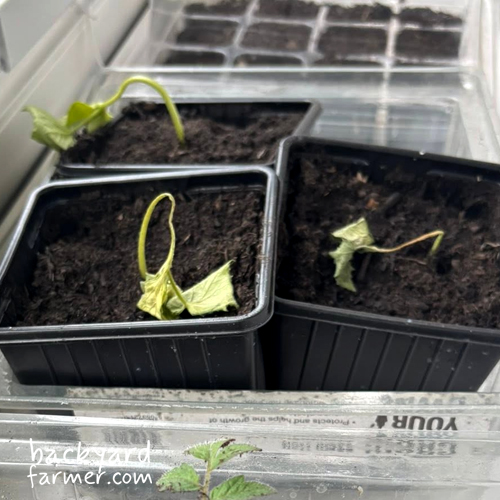
Damping off is a disease that causes germinating seeds to rot or young seedlings to suddenly collapse. It’s particularly common when starting seeds indoors or under cover, where excessive moisture, poor ventilation and unsuitable growing conditions can favour infection.
Not every fallen seedling has damping off, though. Checking the stem for signs of decay can help you distinguish the disease from other growing problems and prevent further losses.
Damping Off at a Glance
| Problem | What to do |
|---|---|
| Seedlings collapse at compost level | Check for narrowed, darkened or decaying stems |
| A few seedlings show stem rot or collapse | Remove visibly affected seedlings and inspect the rest |
| Most of a tray is affected | Discard affected seedlings and compost, then resow |
| Compost remains constantly wet | Improve drainage and adjust watering |
| Propagator stays humid after germination | Remove covers and improve ventilation |
| Seedlings are tall, thin and leaning | Check light levels before assuming damping off |
How to Recognise Damping Off in Seedlings
The most distinctive sign of damping off is a weakened, narrowed or decaying stem at or just below compost level.
A seedling may initially appear healthy before developing a darkened or water-soaked area around its stem base. As the infected tissue deteriorates, the stem loses strength and the seedling collapses.
Common symptoms include:
- Stems becoming thin or pinched at compost level.
- Brown, grey or soft tissue around the stem base.
- Previously upright seedlings suddenly falling over.
- Discoloured or decaying roots.
- Several seedlings collapsing in the same tray.
- Patches of seeds failing to emerge.
White fungal growth may appear around affected seedlings, but its presence or absence alone doesn’t confirm damping off.
Damping off can occur at two stages.
Pre-emergence damping off happens when germinating seeds or developing seedlings decay before reaching the surface. This may appear as poor or patchy germination.
Post-emergence damping off affects seedlings that have already emerged, often causing them to collapse as their stems or roots deteriorate.
Poor germination alone doesn’t confirm damping off. Old seed, unsuitable temperatures and incorrect sowing depth can produce similar results.
Damping Off vs Leggy Seedlings and Other Problems
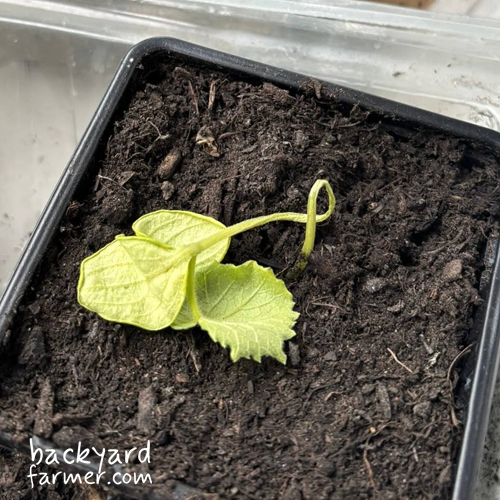
Not every seedling that falls over has damping off.
The most useful first check is the condition of the stem at compost level.
| Problem | What to look for |
|---|---|
| Damping off | Pinched, darkened or rotting stem near compost level |
| Leggy seedlings | Long, stretched stems, usually with intact bases |
| Underwatering | Dry compost, wilting and loss of leaf firmness |
| Heat stress | Wilting or collapse following excessive temperatures |
| Waterlogged compost | Saturated growing medium and stressed roots, without necessarily showing infection |
| Pest damage | Chewed, severed or physically damaged stems |
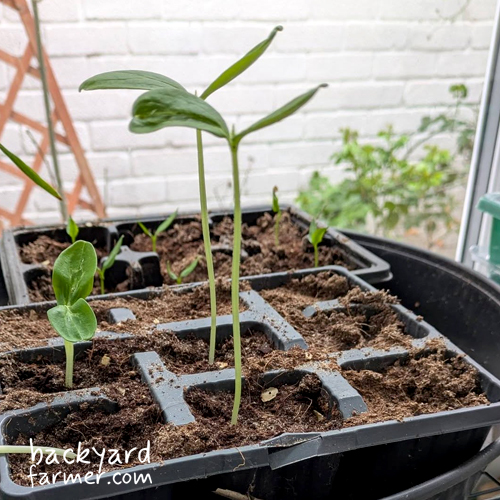
Leggy seedlings are particularly common when seeds are started somewhere warm without sufficient light. Their stems stretch towards the available light, becoming long and weak.
Although these seedlings may lean or fall over, their stem bases often remain healthy.
Damping off is more strongly suggested by visible constriction, discolouration or decay around the stem base.
If seedlings are wilting without obvious stem damage, check moisture, temperature and root condition before assuming disease.
These signs aren’t definitive, and more than one problem can affect the same tray.
What to Do When Seedlings Have Damping Off
Once damping off has seriously damaged a seedling’s stem, recovery is unlikely.
The priority is to remove diseased material, protect unaffected seedlings and correct conditions that may encourage further infection.
If Only a Few Seedlings Have Collapsed
Remove visibly affected seedlings promptly, taking care not to disturb neighbouring plants unnecessarily.
Inspect the remaining seedlings for discoloured stems, wilting or early signs of collapse.
Then check the growing conditions:
- Is the compost excessively wet or draining poorly?
- Are seedlings crowded together?
- Has a propagator lid been left on after germination?
- Are light and ventilation adequate?
- Are temperatures suitable for the crop?
If the compost is saturated, allow excess water to drain and adjust future watering. Don’t deliberately dry out healthy seedlings.
Improving conditions may help protect unaffected plants, although it won’t reverse established stem rot.
Continue monitoring the tray for further losses.
If Most of the Tray Is Affected
Where a large proportion of seedlings have collapsed, starting again is usually the most practical option.
Discard the affected seedlings and growing medium rather than reusing the compost for another sowing.
The RHS advises against reusing containers affected by damping off, so use fresh trays or modules for the replacement sowing where possible.
Clean other reusable equipment thoroughly, removing old compost and plant debris. Suitable equipment can also be disinfected according to the cleaning product’s instructions.
Before resowing, consider whether excessive watering, contaminated equipment, overcrowding or unsuitable growing conditions contributed to the outbreak.
Starting again under the same conditions may produce the same result.
What Causes Damping Off?
Damping off is caused by several soil-borne fungi and fungus-like organisms that infect vulnerable seeds and young seedlings.
The main groups include Pythium, Phytophthora, Rhizoctonia and Fusarium.
Pythium and Phytophthora are oomycetes, sometimes called water moulds, while Rhizoctonia and Fusarium are true fungi.
These pathogens can attack developing roots and stems, causing tissue to decay and disrupting the young plant’s ability to absorb and transport water.
Disease develops when susceptible seedlings, a suitable pathogen and favourable environmental conditions occur together.
The presence of microorganisms in soil doesn’t automatically mean seedlings will become infected.
Why Growing Conditions Matter
Although damping off is an infectious disease, growing conditions strongly influence the risk.
| Condition | Why it matters |
|---|---|
| Excessively wet compost | Favours certain pathogens and restricts oxygen around roots |
| Poor ventilation | Allows humid conditions to persist |
| Crowded sowing | Reduces air movement and makes seedlings harder to manage |
| Unsuitable temperatures | Can slow seedling growth or favour particular pathogens |
| Insufficient light | Produces weak growth and slows healthy development |
| Contaminated compost or trays | Can introduce disease-causing organisms |
Early spring sowings may be vulnerable when seedlings grow slowly in cool conditions with limited natural light.
However, damping off isn’t exclusively a cold-weather problem. Different pathogens favour different temperatures, and warm, humid propagators can also encourage disease.
Overwatering doesn’t create damping off by itself. The disease requires an infectious organism, although excessive moisture can make infection more likely.
How to Prevent Damping Off in Seedlings
Prevention is more reliable than trying to treat seedlings after infection has become established.
The aim is to provide clean growing conditions and maintain the right balance of moisture, oxygen, temperature, light and airflow.
Before Sowing: Clean Trays and Suitable Compost
Start with clean pots, modules and seed trays.
Remove old compost and plant debris, then wash reusable containers thoroughly. Where appropriate, disinfect equipment using a product suitable for that purpose.
If damping off has previously affected a container, the RHS recommends avoiding its reuse.
Choose fresh peat-free seed compost or a suitable peat-free multipurpose compost with an appropriate texture for propagation.
Commercial growing media provide a more controlled starting environment than ordinary garden soil or homemade compost, which may contain disease organisms.
Check that containers have drainage holes and avoid compressing the compost excessively when filling them.
Sow seeds at the recommended depth and avoid unnecessary overcrowding.
During Germination: Manage Moisture and Temperature
Seeds need moisture to germinate, but saturated compost can restrict oxygen around emerging roots and favour disease.
Water gently after sowing and check the compost before watering again.
Some peat-free mixes can appear dry on the surface while remaining moist underneath, so check below the surface rather than relying on appearance alone.
Watering from above or below can both work well.
If bottom watering, allow the compost to absorb sufficient moisture, then remove the tray from the water and let excess drain away.
Don’t leave seed trays standing in water continuously.
Water quality also matters. The RHS recommends mains water for seed trays where practical. If using collected rainwater, keep water butts covered and clean to reduce the risk of contamination.
Temperatures should suit the crop. Tomatoes, peppers and cucumbers generally need more warmth for germination than hardy brassicas and many salad crops.
A heated propagator can be useful, but it isn’t necessary for every vegetable.
After Germination: Provide Light and Ventilation
Once seedlings begin to emerge, remove unnecessary propagator lids or clear covers promptly.
Covers help retain moisture during germination, but leaving young plants enclosed can create excessively humid conditions.
Move seedlings into suitable light and maintain appropriate ventilation.
Light is particularly important during late winter and early spring, when warm indoor conditions can encourage faster growth than a windowsill can support.
Seedlings grown with insufficient light often become stretched and weak.
Ventilate greenhouses and growing spaces appropriately while protecting young plants from damaging cold draughts.
Monitor temperatures inside propagators and mini-greenhouses, too.
Even unheated structures can become surprisingly hot in direct sunshine, creating additional stress for developing seedlings.
During Early Growth: Avoid Overcrowding
Give developing seedlings enough space, light and airflow to grow strongly.
Thin crowded sowings where appropriate or prick out seedlings into individual modules once they are large enough to handle.
Continue checking compost moisture instead of following a fixed daily watering schedule.
Different peat-free growing media retain and release moisture differently, so adjust watering to the compost, container size and growing conditions.
For densely sown crops such as microgreens, where thinning isn’t normally practical, clean trays, suitable moisture levels and adequate ventilation become especially important.
Our guide to growing microgreens indoors in the UK covers their specific growing requirements.
Prevention at a Glance
| Growing stage | Main priority |
|---|---|
| Before sowing | Clean containers and fresh, suitable compost |
| During germination | Appropriate moisture and temperature |
| After emergence | Adequate light and ventilation |
| Early seedling growth | Avoid overcrowding and prolonged saturation |
| After an outbreak | Remove affected material and correct conditions before resowing |
A consistent propagation routine is generally more useful than attempting to treat seedlings after they have collapsed.
Common Damping Off Mistakes to Avoid
Many homemade remedies are promoted for damping off, but reliable evidence for their use in ordinary seed propagation is often lacking.
| Common advice | Why it can be misleading |
|---|---|
| Sprinkle cinnamon on compost | Not established as a reliable damping-off treatment |
| Water with chamomile or garlic tea | Insufficient evidence for dependable disease control |
| Apply homemade hydrogen peroxide mixtures | Effectiveness and plant safety depend on formulation and concentration |
| Assume every fallen seedling is infected | Leggy growth, heat and water stress can produce similar symptoms |
| Reuse compost from an affected tray | May introduce pathogens to the next sowing |
| Keep compost continually saturated | Can favour pathogens and damage developing roots |
A substance showing antifungal activity in laboratory conditions doesn’t necessarily mean a homemade preparation will prevent damping off in seed trays.
The RHS currently lists no fungicides available to UK amateur gardeners for controlling damping off.
Good hygiene, fresh growing media, sensible watering and appropriate growing conditions remain the most dependable approach.
Frequently Asked Questions
Seedlings with severely rotted or collapsed stems are unlikely to recover. Once the stem base has decayed, improved growing conditions cannot reliably repair it. Seedlings that are simply leggy or temporarily stressed may recover when the cause is corrected.
Yes. The pathogens responsible can affect neighbouring seedlings through shared growing media, water and contaminated equipment. Removing affected plants, monitoring the rest and correcting favourable growing conditions can help reduce further losses.
Overwatering doesn’t directly cause the infectious disease, but saturated compost can favour certain pathogens and restrict oxygen around roots. Damping off develops when susceptible seedlings encounter disease-causing organisms under suitable conditions.
Yes. Peat-free compost isn’t necessarily free of disease organisms, and excessive moisture can still encourage infection. Use fresh, suitable growing media and adjust watering to the characteristics of the compost rather than following a fixed schedule.
Avoid reusing compost from an affected tray for new seedlings. Disease-causing organisms may remain in the growing medium and infect another sowing. Discard affected material and begin again with fresh compost and clean equipment.
Yes. Microgreens can develop damping off, particularly where dense sowing, excessive moisture and poor airflow favour infection. However, the fine white root hairs commonly seen on healthy microgreens are sometimes mistaken for mould.