
Introduction
If you’re growing autoflowers with BioBizz soil, most problems don’t come from which nutrients you’re using. Instead, they usually come from starting in the wrong soil strength.
BioBizz Light-Mix, All-Mix, and standard potting soils behave very differently with autoflowers. However, they’re often treated as interchangeable. As a result, growers following the same advice can end up with very different outcomes.
In practice, this often looks like:
- Seedlings that stall early
- Leaves that darken too quickly
- Plants that flower early and stay small
Importantly, this confusion isn’t caused by bad growing — it’s caused by unclear guidance around BioBizz soil for autoflowers. Because autoflowers have a fixed lifecycle, they have very little time to recover from early stress. If the root zone is too rich, or too restrictive, right at the start, the plant often carries that setback all the way through to harvest.
In this guide, we’ll:
- Break down the main BioBizz soil choices for autoflowers
- Explain the real differences between BioBizz Light-Mix vs All-Mix
- Show how soil strength affects when feeding should begin — before you ever reach for a bottle
By the end, you’ll know which BioBizz soil is best for autoflowers in your setup and, just as importantly, why starting lighter usually leads to stronger, more consistent plants overall.
Continue your indoor growing and soil care journey
If you’re exploring Biobizz soil for autoflowers, these guides will help you refine feeding schedules, understand nutrient needs, and pair soil choice with lighting for healthier plants.
- Budget-friendly LED grow lights for indoor gardening – Lighting solutions that work well alongside soil-based systems, helping you get the most out of your indoor grow space.
- Biobizz autoflower feeding schedule – A practical guide on how frequently and how much to feed autoflowers when using Biobizz soil and organic nutrients.
- How much Biobizz for autoflowers – A companion article that fine-tunes your nutrient amounts and timing for optimal autoflower growth.
Why substrate strength matters more for autoflowers
Autoflowers don’t behave like photoperiod plants. Their lifecycle is genetically fixed, which means there’s very little time to recover from early stress — especially when growing autoflowers in soil.
With photoperiods, a slow start can often be corrected later by extending veg or easing off feeding. However, autoflowers don’t have that option. Instead, if growth is interrupted in the first few weeks, the plant will still flower on schedule — just at a smaller size.
Because of this, substrate strength and soil choice for autoflowers matter far more than many growers realise.
What happens when soil is too strong
Soils with a high nutrient charge — such as heavily amended mixes or BioBizz All-Mix for autoflowers — can overwhelm young autoflower roots. Rather than expanding freely, the root zone comes under stress almost immediately.
As a result, common early signs include:
- Dark green leaves very early on
- Leaf clawing or stiffness
- Slowed vertical growth
- Early signs of pre-flower on small plants
At this stage, the plant isn’t “feeding well” — it’s defending itself. Instead of building roots and structure, energy is diverted into stress responses, which limits growth from that point on.
What happens when soil is too light
On the other end of the scale, very light or nutrient-poor soils rarely cause direct damage. However, they can slow things down if feeding is delayed for too long.
Typically, this shows up as:
- Pale green leaves after the first couple of weeks
- Slower overall growth
- Plants that look healthy but lack vigour
The key difference is important: mild underfeeding is easy to correct, whereas early root stress caused by overly strong soil is not.
Why autoflowers prefer a gentler start
Autoflowers perform best when their roots can expand freely during the first 10–14 days. A lighter substrate — such as BioBizz Light-Mix for autoflowers — makes that possible by providing:
- Faster root establishment
- Better oxygen availability
- More predictable water uptake
- Greater control over nutrition later on
For this reason, many experienced growers deliberately choose a lighter soil and introduce nutrients gradually. As a result, they reduce early stress and support steadier growth without risking an early setback.
In the next sections, we’ll look at how this plays out in practice by comparing BioBizz Light-Mix vs All-Mix, and when each one does — or doesn’t — make sense for autoflowers.
BioBizz Light-Mix for autoflowers (most forgiving option)
For most growers, BioBizz Light-Mix for autoflowers is the safest and most forgiving place to start.
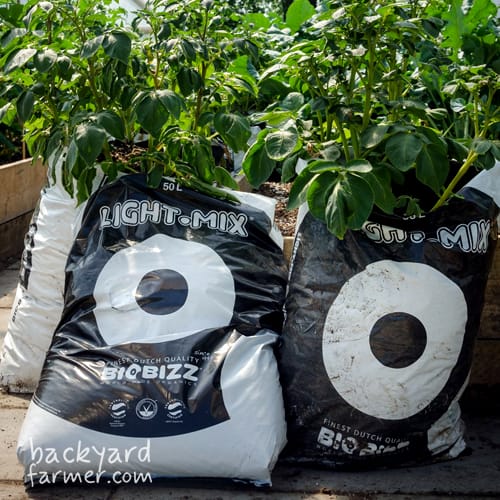
It’s lightly pre-fertilised, free-draining, and designed to support early root development without overwhelming young plants. Because of that, it suits autoflowers particularly well, as they benefit from a smooth, stress-free start in soil.
Why BioBizz Light-Mix works so well with autoflowers
BioBizz Light-Mix contains just enough nutrition to carry seedlings through their first phase of growth, while still leaving you firmly in control of feeding later on.
As a result, the main benefits include:
- Low initial nutrient charge
- Reduced risk of early nitrogen toxicity
- Faster root expansion in the first couple of weeks
- More predictable autoflower growth overall
Because the soil isn’t doing the feeding for you, changes in leaf colour or growth rate are easier to spot. In turn, this makes it simpler to adjust early, before small issues turn into bigger problems.
When feeding usually begins in BioBizz Light-Mix
When growing autoflowers in BioBizz Light-Mix, plants will usually need light feeding from around week 2–3. However, the exact timing depends on a few key factors, including:
- Pot size and root volume
- Plant vigour and growth rate
- Environmental conditions
- Whether perlite has been added to the mix
At this stage, feeding should support steady growth rather than push it. Therefore, gentle and gradual inputs work far better than trying to “catch up” later with stronger doses.
BioBizz Light-Mix doesn’t feed the plant — you do. That level of control is exactly what makes it such a reliable soil for autoflowers.
Who BioBizz Light-Mix is best for
BioBizz Light-Mix is an excellent choice if you:
- Are new to growing autoflowers in soil
- Want to avoid early nutrient burn or root stress
- Prefer a simple, low-risk setup
- Grow indoors in pots, air pots, or fabric containers
It’s also well suited to outdoor and seasonal growers who want flexibility without constantly adjusting their feeding approach.
In the next section, we’ll look at whether adding perlite to BioBizz Light-Mix is worthwhile — and when it makes the biggest difference.
Should you add perlite to BioBizz Light-Mix?
In most cases, yes — adding perlite to BioBizz Light-Mix for autoflowers is a good idea, especially if you’re growing in containers.
Although BioBizz Light-Mix already drains better than many standard potting soils, autoflowers tend to perform best when the root zone stays light, oxygen-rich, and evenly moist. Because of that, adding perlite helps create those conditions more consistently, rather than relying on watering technique alone.
What adding perlite actually does
Perlite doesn’t feed the plant. Instead, it improves the physical structure of the soil, which directly affects root health and early autoflower growth.
In practical terms, adding perlite to BioBizz Light-Mix soil for autoflowers helps to:
- Increase oxygen around the roots
- Improve drainage and reduce waterlogging
- Speed up wet–dry cycles between waterings
- Lower the risk of accidental overwatering
Because autoflowers rely heavily on strong early root development, these structural improvements often show up later as steadier growth and better overall plant structure.
How much perlite should you add?
A simple, reliable guideline when growing autoflowers is:
- 10–20% perlite mixed into BioBizz Light-Mix
This range is enough to noticeably improve soil structure without causing the mix to dry out too quickly. In most setups, heavier additions aren’t needed unless you’re growing in cooler or more humid conditions.
When adding perlite makes the biggest difference
Extra perlite is particularly helpful if:
- You’re using larger pots (10–15L or more)
- You tend to overwater or water generously
- Your grow space runs cool or humid
- You want faster, more predictable dry-back between waterings
On the other hand, in smaller pots or very warm environments, BioBizz Light-Mix on its own is often perfectly sufficient for autoflowers.
Do you need perlite with BioBizz All-Mix?
Although perlite can improve drainage in BioBizz All-Mix for autoflowers, it doesn’t reduce the soil’s nutrient strength. Therefore, if your goal is to avoid early nutrient stress, starting with a lighter substrate is usually more effective than trying to dilute a richer mix.
For that reason, perlite is most useful when paired with Light-Mix, rather than used as a fix for an overly strong soil.
In the next section, we’ll look at BioBizz All-Mix for autoflowers, when it can work, and why it requires a more cautious approach.
BioBizz All-Mix for autoflowers (use with care)
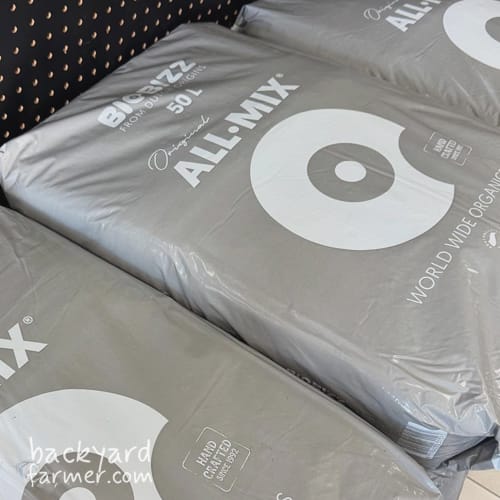
BioBizz All-Mix for autoflowers is a richer, more heavily amended soil designed to support plants for their first few weeks without bottled nutrients. While this works well for many photoperiod grows, it can be less forgiving when growing autoflowers in soil.
That doesn’t mean BioBizz All-Mix can’t be used. However, it does mean you need to approach this substrate more carefully, especially during the early stages of an autoflower’s life.
Why BioBizz All-Mix can be challenging for autoflowers
BioBizz All-Mix contains a higher initial nutrient charge, particularly nitrogen. Because autoflower seedlings are still developing their root systems, this extra richness can slow early root growth and introduce stress at a point when the plant has very little time to recover.
As a result, common early signs include:
- Dark green, shiny leaves soon after emergence
- Leaf clawing or stiffness
- Slower vertical growth
- Plants entering pre-flower while still small
In these situations, the plant isn’t benefiting from “extra food”. Instead, it’s reacting to soil that’s simply too rich, too early in the autoflower lifecycle.
When BioBizz All-Mix can work for autoflowers
That said, some growers do get solid results with BioBizz All-Mix and autoflowers, particularly when they take steps to soften the start and reduce early root stress.
All-Mix tends to work better if:
- Seeds are started in a lighter medium, such as BioBizz Light-Mix
- Plants are transplanted into All-Mix once roots are established
- Feeding is delayed for 2–3 weeks or longer
- Larger containers are used (12–15L or more)
By doing this, the plant has time to build a healthy root system before it encounters the richer BioBizz All-Mix soil.
Direct-sowing autoflowers into BioBizz All-Mix
Directly sowing autoflowers into BioBizz All-Mix is where most problems tend to appear. When a very young root system meets a strong, pre-fertilised soil, early stress is common — and unfortunately, it’s stress the plant often can’t fully recover from later on.
For this reason, BioBizz All-Mix is generally not recommended for direct-sown autoflowers, especially for newer growers or those still learning to read early stress signals.
Who BioBizz All-Mix is best suited for
BioBizz All-Mix may suit you if you:
- Have experience growing autoflowers in soil
- Are comfortable spotting early nutrient stress
- Prefer a more hands-off feeding approach at the start
- Use larger pots and maintain stable environmental conditions
For everyone else, starting with a lighter substrate and feeding gradually is usually the safer and more predictable option.
In the next section, we’ll compare BioBizz Light-Mix vs All-Mix for autoflowers side by side, to help you decide which soil is the better fit for your setup.
BioBizz All-Mix vs Light-Mix for autoflowers
Choosing between BioBizz All-Mix vs Light-Mix for autoflowers mainly comes down to how much control you want early on.
Both BioBizz soils can produce healthy autoflower plants. However, they behave very differently — especially in the first few weeks, which is exactly when soil choice for autoflowers matters most.
Side-by-side comparison
| Feature | BioBizz Light-Mix | BioBizz All-Mix |
|---|---|---|
| Initial nutrient strength | Low | High |
| Risk of early nutrient stress | Very low | Moderate–high |
| Feeding required early on | Yes (light, controlled) | No |
| Margin for error | Wide | Narrow |
| Best for beginners | ✅ Yes | ❌ No |
| Best pot sizes | 8–15L | 12–15L+ |
| Direct sow suitability | Excellent | Not recommended |
How to interpret this comparison
BioBizz Light-Mix for autoflowers gives you control. You decide when feeding starts and how quickly it ramps up. As a result, small mistakes are easier to spot and correct before they turn into real problems. This makes Light-Mix a strong choice for most growers, particularly those growing autoflowers indoors.
BioBizz All-Mix for autoflowers, on the other hand, offers convenience — but it comes at the cost of flexibility. Because the soil is already feeding the plant, there’s less room to adjust if the autoflower reacts badly early on.
For autoflowers — where timing matters far more than abundance — that trade-off is important.
Which one should you choose?
If you want the safest and most predictable results when growing autoflowers in soil:
- Choose BioBizz Light-Mix
- Add perlite if needed
- Introduce nutrients gradually
If you’re more experienced and prefer a hands-off start:
- BioBizz All-Mix can work
- Delay feeding for the first few weeks
- Avoid direct sowing autoflower seeds
When in doubt, it’s usually best to err on the side of the lighter option. Autoflowers recover far more easily from mild underfeeding than they do from early root stress caused by overly rich soil.
In the next section, we’ll look at how standard or alternative soils for autoflowers behave with BioBizz nutrients, and what to watch out for if you’re not using a branded mix.
Using “normal soil” with BioBizz nutrients
Not everyone starts with a branded mix. In practice, many growers use standard potting soil, compost blends, or garden-centre soil, and then add BioBizz nutrients on top.
This approach can work when growing autoflowers with BioBizz soil alternatives. However, it usually requires more patience, closer observation, and a lighter hand than growing in BioBizz Light-Mix or All-Mix.
Why standard soils are less predictable
Most off-the-shelf soils already contain fertilisers or composted organic matter. The issue isn’t that they’re unusable — rather, it’s that their nutrient strength and release rate are rarely clear or consistent.
With autoflowers, this uncertainty often leads to:
- Feeding too early without realising the soil is already active
- Mistaking nutrient excess for deficiencies
- Inconsistent growth between plants following the same feeding plan
Because of this, using standard soil for autoflowers makes it harder to control the root environment during the most sensitive early stages.
How to use BioBizz safely with non-BioBizz soil
If you’re growing autoflowers in standard soil with BioBizz nutrients, a slower, more conservative approach usually works best:
- Delay feeding longer than most charts suggest
- Start with very light doses once growth clearly demands it
- Watch leaf colour and overall growth closely
- Avoid sticking to a fixed feeding schedule early on
In many cases, growers using standard soil don’t need to add nutrients until clear signs of demand appear, such as lighter new growth or slowed vigour.
When standard soil makes sense
Using non-branded soil may suit you if:
- You’re growing autoflowers outdoors or seasonally
- You already have a soil blend you trust
- You prefer to feed minimally rather than follow charts
- You’re comfortable adjusting based on how the plant responds
However, for indoor autoflower grows — especially in containers — starting with a lighter, known substrate like BioBizz Light-Mix for autoflowers usually leads to calmer, more predictable results.
In the next section, we’ll summarise which BioBizz soil is best for autoflowers, based on experience level and growing style.
Which BioBizz soil is best for autoflowers?
The best BioBizz soil for autoflowers is the one that supports steady early growth without adding unnecessary stress. In practice, that usually means starting with a lighter substrate and then adding nutrition gradually, rather than beginning in a heavily pre‑fertilised mix.
Because autoflowers have a short, fixed lifecycle, early root conditions matter more than pushing nutrients quickly. As a result, soil choice plays a much bigger role than many growers expect.
Quick recommendations by experience level
- New growers
BioBizz Light-Mix + 10–20% perlite
A low‑risk, forgiving option that makes it easier to correct small mistakes while learning. - Hands‑off growers
BioBizz Light-Mix for autoflowers with gentle early feeding
Predictable growth, while still keeping control over when nutrients begin. - Experienced growers only
BioBizz All-Mix for autoflowers (with delayed feeding)
Works best once roots are established, often via transplanting rather than direct sowing.
If you’re not quite sure which category you fall into, it’s usually safer to err on the lighter option. Autoflowers recover far more easily from mild underfeeding than they do from early root stress caused by overly strong soil.
One simple rule to remember
If the soil is already doing the feeding, you’ve given up some control.
Because of that, autoflowers tend to perform best when you decide when feeding starts, instead of relying on soil that’s already pushing nutrients from day one.
In the next section, we’ll look at how soil choice affects your BioBizz autoflower schedule, and why following the same feeding chart can lead to very different results depending on the substrate you start with.
How soil choice affects your BioBizz autoflower schedule
One of the most common points of confusion when growing autoflowers with BioBizz comes down to a simple question:
Why can two growers follow the same BioBizz autoflower feeding chart and still get completely different results?
In most cases, the answer isn’t the nutrients themselves — it’s soil choice for autoflowers.
Soil strength determines when feeding should begin
BioBizz feeding charts assume a certain starting point. However, BioBizz Light-Mix, BioBizz All-Mix, and standard soils all release nutrients at very different rates. Because of this, timing matters just as much as quantity when feeding autoflowers.
- BioBizz Light-Mix for autoflowers contains very little nutrition, so feeding usually needs to begin earlier — although it should always be gentle and controlled.
- BioBizz All-Mix for autoflowers is already active, so feeding needs to be delayed to avoid nutrient overload and early root stress.
- Standard soils for autoflowers vary widely, which makes fixed feeding schedules far less reliable.
When these differences aren’t taken into account, problems can appear even when growers follow BioBizz charts correctly.
Why feeding charts alone don’t tell the full story
Feeding charts are useful guidelines, but they’re not rules. They simply can’t account for:
- Pot size and root volume
- Environmental conditions
- Individual watering habits
- Nutrients already present in the soil or substrate
As a result, two autoflower plants of the same strain, grown under similar lights, can behave very differently depending on the soil or substrate they’re growing in.
A more reliable way to think about feeding autoflowers
Rather than asking “How much BioBizz should I feed?”, it’s often more helpful to ask:
- Has the autoflower had time to establish its roots?
- Is new growth steady, upright, and healthy?
- Is leaf colour beginning to lighten naturally?
When those signals start to appear, light feeding usually makes sense — regardless of what week the chart suggests.
Linking soil choice to the full BioBizz feeding plan
Soil choice doesn’t replace a feeding schedule — instead, it sets the timing for it.
For a simple, step-by-step BioBizz autoflower feeding schedule that matches each soil type and growth stage, see the full guide:
👉 BioBizz Autoflower Schedule (Beginner-Safe Feeding Plan)
In the final section, we’ll pull everything together and highlight the key takeaway, so you can avoid the most common mistakes growers make when choosing soil for autoflowers.
Frequently asked questions
It can be. BioBizz All-Mix for autoflowers has a higher initial nutrient charge. As a result, if you start autoflower seeds directly in it, young roots can come under stress. Growers often notice dark green leaves, slowed growth, or early flowering. However, starting in a lighter soil or delaying feeding usually reduces this risk.
For most growers, yes. BioBizz Light-Mix for autoflowers offers a gentler start and, more importantly, lets you decide when feeding begins. Because of that, it’s far more forgiving — especially for beginners or indoor growers using containers.
In most cases, yes. Adding 10–20% perlite to BioBizz Light-Mix improves drainage and oxygen around the roots. As a result, overwatering is less likely, and early root development tends to be stronger, which is particularly important when growing autoflowers in soil.
Yes, at least for the first few weeks. BioBizz All-Mix soil is designed to feed plants early on, so bottled nutrients should be delayed. In fact, feeding too soon in All-Mix is one of the most common causes of autoflower stress.
Generally, yes. Autoflowers have a fixed lifecycle, so they have less time to recover from early stress. Because of this, lighter soils — such as BioBizz Light-Mix — reduce the risk of nutrient overload and lead to more predictable autoflower growth.
You can, but results are often less predictable. Many standard soils already contain fertilisers, so feeding should be delayed and kept very light. In this situation, careful observation usually matters more than sticking to a fixed BioBizz feeding schedule.
Because charts don’t take soil strength into account. BioBizz Light-Mix, BioBizz All-Mix, and standard soils all release nutrients differently, which changes when feeding should begin. In the end, soil choice for autoflowers sets the timing — not the chart alone.
Final takeaway
When growing autoflowers with BioBizz soil, success is often decided before feeding ever begins.
In reality, many issues blamed on nutrients start earlier than that. More often than not, they come from choosing soil that’s simply too strong at the beginning. Because autoflowers have a short, fixed lifecycle, they don’t have much time to recover from early stress. As a result, soil choice for autoflowers and early root conditions matter far more than anything that happens later on.
For most growers, BioBizz Light-Mix for autoflowers delivers the safest and most predictable results. It gives roots the space they need to establish properly, reduces early nutrient stress, and, just as importantly, lets you decide when feeding should begin. By comparison, BioBizz All-Mix for autoflowers can work as well; however, it usually suits growers with more experience who are comfortable delaying feeds and managing a stronger substrate.
If there’s one principle worth remembering, it’s this:
Control early, feed gradually, and let the plant set the pace.
Choose the right BioBizz soil for autoflowers, and everything else tends to fall into place. As a result, the grow feels calmer, decisions feel clearer, and autoflower results become more consistent from start to finish. For more detail on their products, philosophy, and organic growing approach, you can explore the full range directly on the BioBizz official website.