
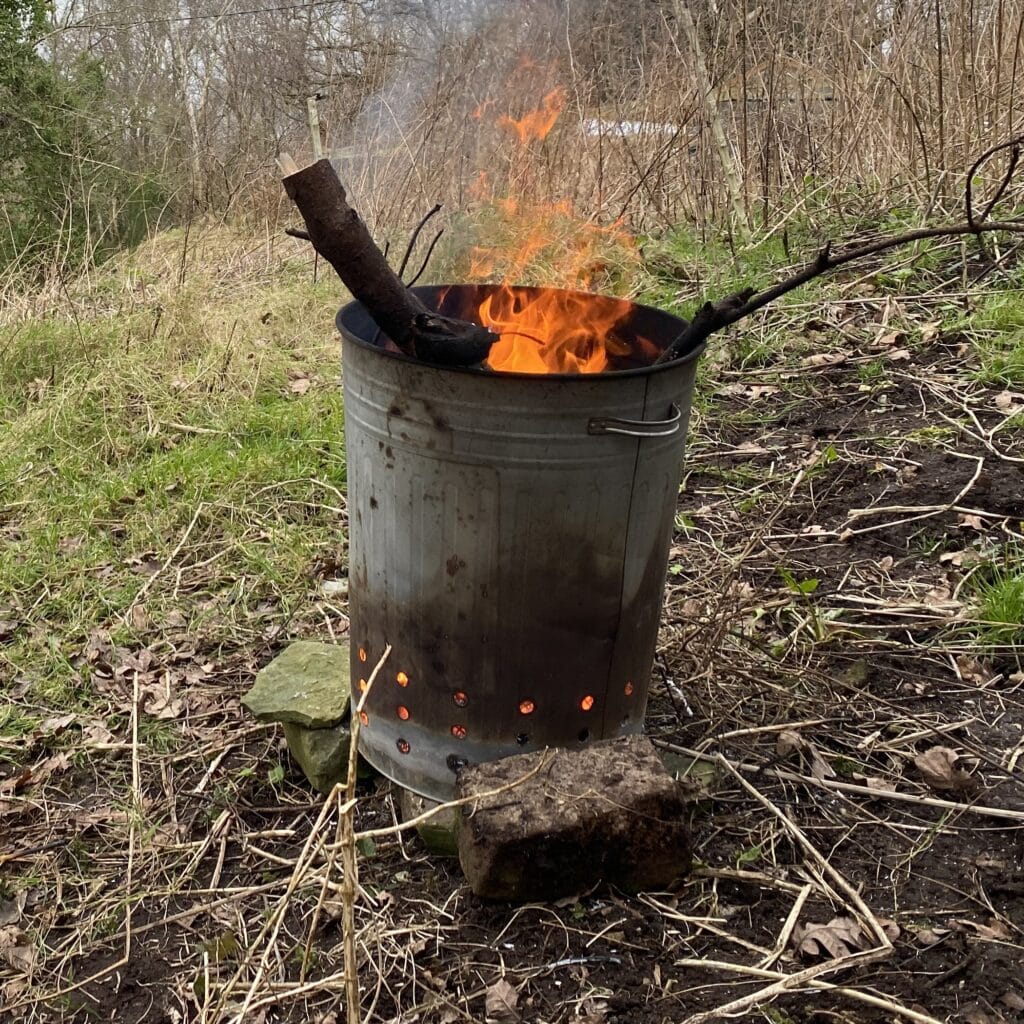
Most low-cost garden incinerators share the same lightweight galvanised-bin design, while larger drums and heavier steel models offer clearer differences in capacity, portability and durability. They are only suitable for limited amounts of dry, untreated material, so read our guide to dealing with difficult garden waste first if you are unsure whether burning is appropriate.
Best Garden Incinerators: Quick Picks
Best Overall — Apollo 90L Galvanised Incinerator
Best Tested Value — CrazyGadget 90L
Best Extra-Large — Simpa 180L XXL
Garden Incinerator Comparison Table
| Product | Capacity | Construction | Best for | Main limitation |
| Apollo Galvanised Incinerator | 90L | Lightweight galvanised steel | Most UK gardens | Not designed for intensive use |
| CrazyGadget Galvanised Incinerator | 90L | Lightweight galvanised steel | Tested low-cost option | May deteriorate if stored outside |
| Simpa XXL Incinerator | 180L | Galvanised steel | Large gardens and bulky clear-ups | Harder to assemble, move and store |
| Sait’s Steel Drum | 200L | Recycled-steel drum | Maximum capacity | Basic design and undisclosed steel thickness |
| Volcann Garden Incinerator | 124.6L | Heavy bare British steel | More regular use | Expensive and difficult to move |
How we chose: We compared each model for UK availability, capacity, construction, stability, usability and owner feedback. The CrazyGadget 90L has been used and photographed by Backyard Farmer; the remaining recommendations are based on product specifications, retailer information and owner feedback unless direct testing is stated.
Apollo 90L Galvanised Incinerator — Best Overall
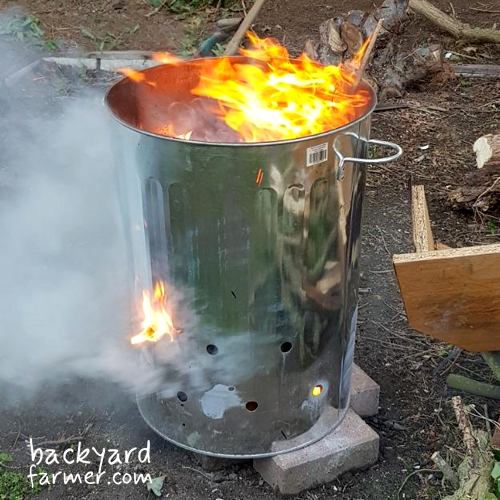
The Apollo 90L Galvanised Incinerator offers the strongest balance of useful capacity, straightforward construction and UK availability for most gardeners.
It is widely stocked by established retailers, which also makes collection, returns and replacement easier than with many marketplace-only models. The traditional design includes a chimney lid, raised legs and ventilation holes around the body.
| Specification | Detail |
|---|---|
| Capacity | 90L |
| Construction | Lightweight galvanised steel |
| Best for | Most UK gardens and occasional clear-ups |
Best For
- Typical UK gardens
- Occasional garden waste
- Buyers wanting easy UK retailer support
Pros
- Practical 90L capacity
- Reasonable purchase price
- Widely available
- Lightweight and easy to store
- Straightforward returns and replacement
Cons
- Lightweight rather than genuinely heavy-duty
- Some owner reports mention thin metal
- Leg stability can vary
- Better suited to occasional than intensive use
Best choice for: Most gardeners who want a straightforward, widely available incinerator for occasional garden clear-ups.
CrazyGadget 90L — Best Tested Value
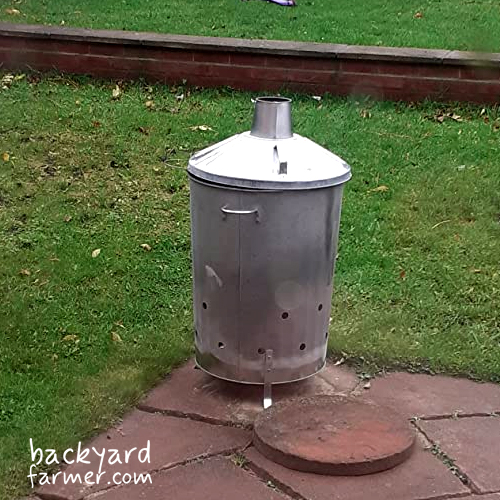
The CrazyGadget 90L has been used and photographed by Backyard Farmer. It arrives flat-packed, assembly is straightforward, and the tripod base feels stable when correctly fitted on firm ground.
Its 90L body, side ventilation and locking chimney lid make it a practical choice for occasional domestic clear-ups rather than frequent heavy use.
| Specification | Detail |
|---|---|
| Capacity | 90L |
| Construction | Lightweight galvanised steel |
| Best for | Occasional domestic clear-ups |
| BYF tested | Yes |
Best For
- Occasional garden waste
- Buyers wanting a low-cost option
- Smaller and medium UK gardens
Pros
- Affordable purchase price
- Useful 90L capacity
- Straightforward assembly
- Stable tripod base when fitted correctly
- Compact and easy to store
Cons
- Lightweight steel construction
- May rust or deteriorate if stored outdoors
- Less substantial than heavier models
Best choice for: Gardeners who want a simple, affordable incinerator backed by direct BYF use rather than claims of exceptional durability.
Simpa 180L XXL — Best Extra-Large Garden Incinerator
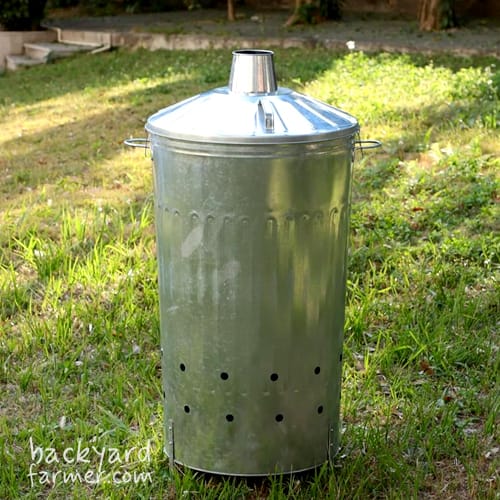
The Simpa 180L XXL offers roughly twice the capacity of a standard 80–90L model while retaining the familiar domestic-bin design.
Its wide opening and locking chimney lid make it particularly useful for larger gardens and seasonal clear-ups where a smaller incinerator would fill too quickly.
| Specification | Detail |
|---|---|
| Capacity | 180L |
| Construction | Galvanised steel |
| Best for | Larger gardens and bulky seasonal waste |
Best For
- Larger gardens
- Bulky seasonal clear-ups
- Gardeners regularly filling smaller bins
Pros
- Large 180L capacity
- Wide opening for bulky material
- Locking chimney lid
- Well suited to seasonal clear-ups
Cons
- Harder to move and store
- Legs can be fiddly to assemble
- Some customer feedback mentions rust
- Extra capacity does not mean heavier construction
Best choice for: Larger gardens where a standard 80–90L incinerator simply fills too quickly.
Sait’s 200L Steel Drum — Best for Maximum Capacity
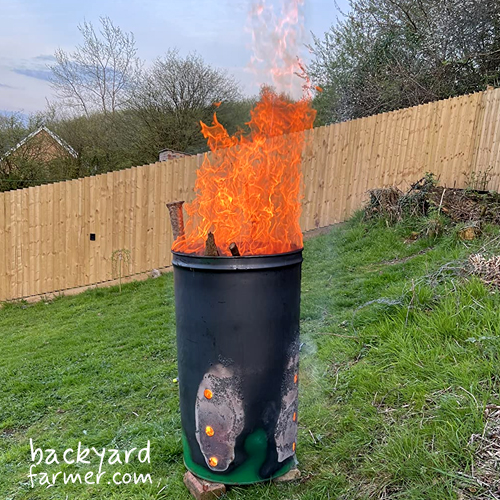
The Sait’s 200L Steel Drum offers considerably more capacity than a standard domestic garden incinerator.
Its larger recycled-steel drum format is better suited to substantial clear-ups where an 80–100L model would require repeated loading.
| Specification | Detail |
|---|---|
| Capacity | 200L |
| Construction | Recycled-steel drum |
| Best for | Large quantities of garden waste |
Best For
- Large seasonal clear-ups
- High volumes of garden waste
- Buyers prioritising capacity over portability
Pros
- Very large 200L capacity
- More substantial drum construction
- Better suited to large quantities than standard bins
- Simple, practical design
Cons
- Requires more storage space
- Harder to move
- Lacks raised legs and a conventional chimney lid
- Steel thickness is not disclosed
- Included lids and accessories may vary by seller
Best choice for: Gardeners who prioritise maximum capacity and simple drum construction over compact storage and convenience.
Volcann Garden Waste Incinerator — Best Heavy-Duty Option
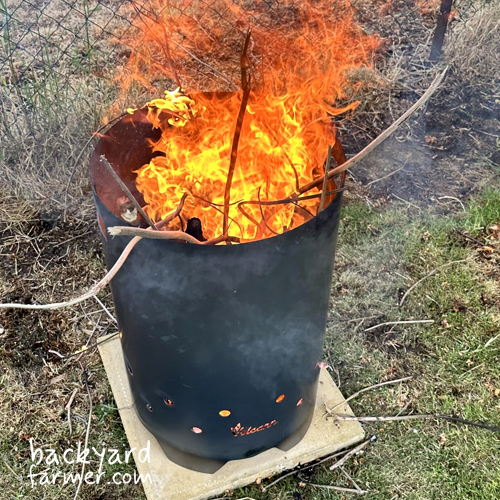
The Volcann Garden Waste Incinerator is materially different from the lightweight galvanised bins that dominate this category.
It weighs around 20kg compared with roughly 3–5kg for many standard models, uses a substantial bare-steel body, is manufactured in the UK and arrives assembled. That makes its heavy-duty positioning more credible than a simple marketing label.
| Specification | Detail |
|---|---|
| Capacity | 124.6L |
| Construction | Heavy-gauge British steel |
| Best for | Regular use and stronger construction |
| Manufactured | UK |
Best For
- More regular use
- Buyers prioritising substantial construction
- Gardeners who do not need maximum portability
Pros
- Substantial steel construction
- Stable, heavy body
- Manufactured in the UK
- Arrives fully assembled
- No lightweight bolt-on legs
- Clearly different from standard galvanised bins
Cons
- Considerably more expensive
- Much harder to move
- Bare steel develops a rust patina
- Limited independent long-term feedback
- Final price can depend on lid configuration
Best choice for: Regular users who value heavier construction and stability more than portability or a low purchase price.
Other Garden Incinerators Considered
| Product | Why It Missed the Shortlist |
| Draper 85L | A credible branded option with warranty cover, but too similar to the Apollo and CrazyGadget models to justify another award. |
| Woodside 100L Square Incinerator | Its wide opening may help with awkward stems, but there is little evidence that the square design improves durability. |
| KetoPlastics 210L | Offers substantial capacity at a low price, but its specifications and long-term owner evidence are weaker than those for the Sait’s 200L drum. |
| Kelly’s Welding Industrial Incinerator | A genuine commercial-scale model, but its size and price place it outside the needs of most gardeners and allotment holders |
Garden Incinerator Buying Guide
What Size Do You Need?
| Garden use | Suggested capacity |
|---|---|
| Small or occasional clear-ups | 60–80L |
| Typical garden or allotment | 80–100L |
| Large seasonal clear-ups | 150–200L |
These are practical categories rather than formal standards. Larger models hold more material but require more storage space and are harder to move.
Capacity also does not indicate durability. A well-built smaller model may outlast a lightweight 200-litre drum.
What Construction and Features Matter?
Most affordable garden incinerators are lightweight galvanised bins weighing around 3.5–5kg. They are portable and generally sufficient for occasional use. Larger steel drums may weigh around 10kg, while substantial solid-steel models can approach 20kg.
Weight can suggest more substantial construction, but it does not guarantee lifespan. Look for:
- A stable base and secure supports
- Ventilation around the lower body
- A practical opening size
- Manageable weight and dimensions
- A fitted lid, legs and fixings
- Established retailer or warranty support
More ventilation holes do not make an incinerator smokeless. Stability, usable capacity and construction quality matter more than minor accessories.
How Much Should You Spend?
Expect to pay around:
- £20–£30: Standard domestic galvanised bin
- £35–£60: Extra-large model or steel drum
- £100–£200+: Substantial heavy-steel incinerator
Most occasional users only need a standard galvanised model. Paying more makes sense when you need significantly greater capacity or genuinely stronger construction.
Before Using a Garden Incinerator
A garden incinerator is only suitable for limited amounts of dry, untreated material. Read how to deal with difficult garden waste before deciding whether burning is appropriate. For positioning, supervision and practical use, see how to use a garden incinerator safely.
Frequently Asked Questions
An 80–100L model suits most domestic gardens and allotments. Larger 150–200L options are better for bulky seasonal clear-ups but need more storage space and are harder to move.
They can be worthwhile for regular use, particularly if lightweight bins have repeatedly rusted, warped or failed. Occasional users will usually get better value from a standard galvanised model.
There is no fixed lifespan. Construction quality, frequency of use, outdoor exposure and leaving damp ash inside can all affect how quickly the metal deteriorates.
Many lightweight galvanised models require the legs and handles to be fitted. Heavier welded or solid-steel incinerators may arrive fully assembled.