
Introduction
The Buffish Mining Bee (Andrena nigroaenea) is a common and widespread solitary bee in the UK, most often noticed in spring when it emerges to take advantage of early flowers. Its slightly variable colouring and busy activity make it a familiar sight in gardens, parks, and hedgerows during warmer days.
This species is highly adaptable and can be found in both urban and rural environments, provided there is access to flowering plants and suitable nesting ground. As a ground-nesting solitary bee, each female works independently, digging her own nest and provisioning it with pollen for her offspring.
Although the Buffish Mining Bee is currently doing well in the UK, it still faces pressures from habitat loss, soil disturbance, and pesticide use. In this guide, you’ll learn how to identify Andrena nigroaenea, tell it apart from similar mining bees, and understand its role in early-season pollination.
Identification & Key Facts
| Attribute | Details |
|---|---|
| Common Name | Buffish Mining Bee |
| Latin Name | Andrena nigroaenea |
| Size | Females: ~11–14 mm, Males: ~9–12 mm |
| Location | Widespread across the UK |
| Active Months | March to June |
| Habitat | Gardens, parks, hedgerows, woodland edges |
| Nesting Behaviour | Underground nests in bare or lightly vegetated soil |
| Social Behaviour | Solitary |
| Flora | Willow, hawthorn, fruit blossom, dandelion |
| UK Status | Common |
How to Identify the Buffish Mining Bee
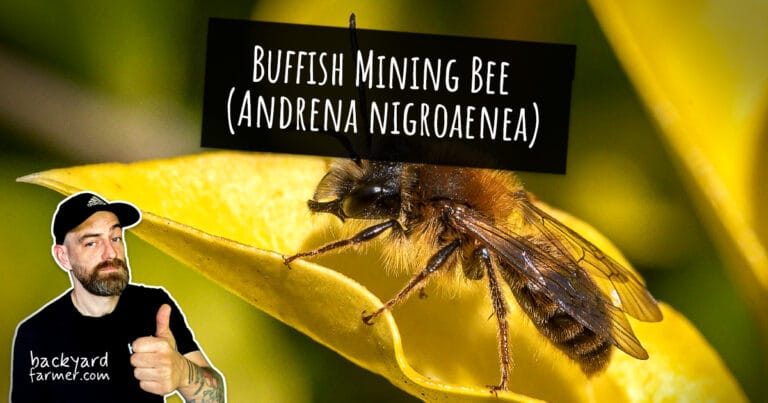
The Buffish Mining Bee is a small to medium-sized solitary bee with variable colouring, which can make identification tricky. Females often have a dark thorax and abdomen with buff or brownish hair, while males appear slimmer and lighter.
In the UK, this species is most often seen flying low over lawns, flowerbeds, and bare soil in spring. It is an energetic forager and may be observed repeatedly visiting the same patches of blossom.
Physical Characteristics
- Female – Compact and sturdy, with dark body colouring and buff-coloured hair, especially on the thorax.
- Male – Smaller and slimmer, often paler overall, with longer antennae and lighter facial hair.
Image source: {source}
Similar Species
The Buffish Mining Bee is commonly confused with other early-flying mining bees:
- Early Mining Bee (Andrena haemorrhoa) – Females have a more distinct reddish-brown abdomen.
- Tawny Mining Bee (Andrena fulva) – Much brighter orange-red, especially on the thorax.
- Ashy Mining Bee (Andrena cineraria) – Grey and black with bold pale hair bands.
If you’re unsure which bee you’ve spotted, our Bee Identification guide can help you narrow down UK species by size, colour, and behaviour.
Why the Buffish Mining Bee Matters
The Buffish Mining Bee is an important early-season pollinator, visiting a wide range of trees and wildflowers. Its activity helps support fruit production and the reproduction of spring-flowering plants.
By emerging early and foraging widely, this species provides resilience in pollination networks, ensuring plants receive visits even before larger bees become active.
FAQs
No. This species is gentle and non-aggressive, and it is very unlikely to sting unless handled.
It is mainly active from March to June, with peak activity in spring.
No. It is a common and widespread species.
Females can sting, but stings are rare and usually occur only if the bee is trapped or mishandled.
How You Can Help
Supporting the Buffish Mining Bee is easy and well-suited to gardens and green spaces:
🌿 Plant Bee-Friendly Flowers
- Willow, hawthorn, fruit trees, dandelion, spring wildflowers
🚫 Avoid Harmful Pesticides
- Avoid insecticides, especially during spring when bees are most active
🏡 Provide Nesting Spaces
- Leave small patches of bare or lightly vegetated soil for nesting
By allowing early flowers to bloom and leaving undisturbed ground, you help support the Buffish Mining Bee and many other solitary pollinators.