

Knowing when to harvest carrots in the UK mostly comes down to timing, size, and a quick look at the root shoulder. Pull them too early and they’ll be thin and underdeveloped. Leave them too long and they can become woody, split, or lose some of their sweetness.

Most carrots are ready around 70–80 days after sowing, with UK harvests usually running from early summer through to late autumn depending on when they were sown. The easiest sign is the top of the root: if the shoulder is visible above the soil and around 2–3 cm wide, it’s usually ready to lift.
In this guide, I’ll cover when carrots are ready to harvest, the signs to look for, and how to lift them without snapping the roots.
If you’re still planning your crop, see my complete guide on how to grow carrots in the UK, which covers sowing, thinning, pests, and general carrot care.
Quick Carrot Harvest Calendar (UK)
One of the easiest ways to work out when to harvest carrots is to look back at the sowing date. Most carrot varieties take around 70–80 days to reach harvest size, although early varieties may be ready a little sooner and larger storage types can take longer.
| Sowing Time | Harvest Window | Days to Maturity |
|---|---|---|
| February–March | June–July | 70–80 days |
| April–May | July–September | 70–80 days |
| June–July | September–November | 70–80 days |
Because carrots can be sown in batches through spring and summer, the harvest season can stretch from early summer into late autumn. Succession sowing also means you can pull a few carrots at a time rather than lifting the whole crop at once.
These timings are only a guide. Weather, soil quality, watering, and variety can all affect how quickly carrots mature. If you’re unsure, check the root shoulder at soil level or pull one test carrot before harvesting the rest.
Signs Carrots Are Ready to Harvest
Carrots grow mostly underground, so it can be hard to judge them by sight alone. Rather than relying only on the calendar, check the root where it meets the soil.
The clearest sign is the shoulder of the carrot — the top of the root that sometimes shows above the soil surface.
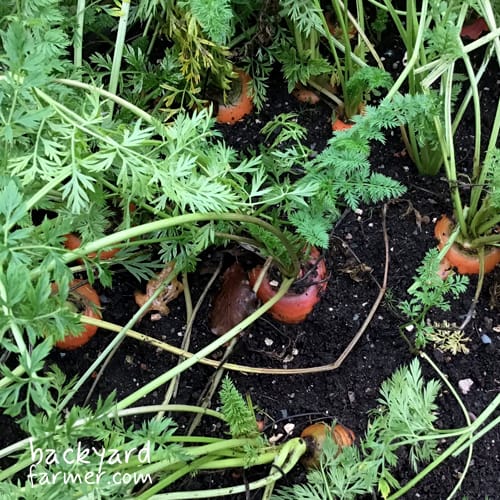
Here are the main signs carrots are ready to harvest:
- Visible shoulder: The top of the root is showing slightly above the soil.
- Good size: For most main-crop carrots, the shoulder is around 2–3 cm wide, or roughly thumb width.
- Strong colour: The exposed shoulder has developed a rich colour for that variety.
- Healthy foliage: The leafy tops look well established, not weak or newly formed.
- Good flavour: If you’re unsure, pull one test carrot. If it is crisp and sweet, the rest are likely close.
Carrots do not all mature at the same time. Even in the same row, some roots will be bigger than others. Pull the largest carrots first and leave smaller ones to grow on for another week or two.
Carrot Harvest Stages and Sizes
Carrots do not have to be harvested all at once. You can pull them young for tender baby carrots, harvest them at full size for everyday cooking, or leave selected roots slightly longer if you want carrots for winter storage.
Use the shoulder of the carrot — the top of the root where it meets the soil — as your main guide.
| Harvest Stage | Size / Timing | Best Use |
|---|---|---|
| Baby carrots | 1–1.5 cm wide / around 50–60 days | Salads, snacking, light cooking |
| Main crop carrots | 2–3 cm wide / around 70–80 days | Roasting, soups, stews, everyday meals |
| Storage carrots | 3–4 cm wide / early autumn | Winter storage and larger harvests |
For most gardeners, 2–3 cm across the shoulder is the best sign that carrots are ready for the main harvest. If the roots are still pencil-thin, leave them to swell a little longer.
Carrots rarely mature evenly, even in the same row. Pull the largest roots first and leave smaller ones in the ground for another week or two. This gives you a steady supply and avoids harvesting the whole crop before it is ready.
Try not to leave carrots too long once they are fully mature. Oversized roots can become woody, split, or lose some of their sweetness, especially in dry, heavy, or unevenly watered soil.
How to Harvest Carrots Without Breaking Them
Carrots are easy to harvest, but they can snap if the soil is dry, heavy, or compacted. In loose soil, you may be able to pull them by hand. In clay or dry ground, loosen the soil first.
Follow these steps to lift carrots cleanly:
- Check the soil moisture
Carrots lift more easily from slightly damp soil. If the ground is very dry, water the row a few hours before harvesting. - Loosen the soil
Push a fork or hand fork into the soil a short distance away from the row. Lift gently to loosen the ground without stabbing the roots. - Grip the carrot at the crown
Hold the carrot where the leafy top meets the root. - Pull slowly
Use steady upward pressure rather than yanking. Once the soil is loose, most carrots should slide out cleanly. - Remove loose soil
Shake or brush off excess soil gently. Avoid banging carrots together, as this can bruise them and shorten storage life.
If you are harvesting a full row, loosen the soil along the line first, then pull the carrots one by one. This helps prevent snapped roots and makes the job much quicker.
Can Carrots Be Left in the Ground Over Winter?
Yes, carrots can often be left in the ground over winter in milder parts of the UK, especially if the soil drains well. Cold weather can even improve their sweetness, but the crop still needs protection from hard frost, waterlogging, and pests.
If you want to leave carrots in the ground, add a 10–15 cm layer of mulch over the row before hard frosts arrive. Good options include:
- Straw
- Dry leaves
- Compost
- Grass clippings
Harvest winter carrots little and often during mild spells. Once the soil freezes hard, they become much harder to lift without snapping.
Leaving carrots in the ground works best in free-draining soil. If your plot gets very wet, or you have problems with rodents, it is usually safer to lift the main crop in late autumn and store the roots somewhere cool, dark, and frost-free.
What to Do After Harvesting Carrots
Once carrots are lifted, handle them gently so they stay crisp and store well.
- Store long-term: For larger harvests, pack carrots in damp sand and keep them somewhere cool, dark, and frost-free, such as a shed, garage, or cellar.
- Remove the foliage: Cut the leafy tops back to about 1–2 cm above the root. This stops the leaves drawing moisture from the carrot.
- Brush off loose soil: For storage, brush soil off gently rather than washing the roots straight away. Extra moisture can encourage rot.
- Wash only before use: If you’re eating the carrots within a day or two, washing them straight away is fine.
- Store short-term: Keep carrots in the fridge in a bag, tub, or vegetable drawer to stop them drying out.
Common Carrot Harvest Questions
Below are some of the most common questions gardeners ask about harvesting carrots.
Most carrot varieties take around 70–80 days from sowing to harvest. Early varieties can sometimes be ready in about 60 days, while larger storage varieties may take slightly longer to mature.
Carrots are usually harvested once the shoulder of the root reaches around 2–3 cm across and the colour is fully developed. In the UK this typically falls between June and November, depending on sowing time.
Look for the top of the root (the shoulder) pushing above the soil surface. If it is about thumb width and the foliage is healthy, the carrot is usually ready. Pulling one test carrot is often the easiest way to check.
Yes, carrots can often remain in the soil during winter if the ground drains well and the crop is protected with mulch. Many gardeners harvest them gradually through winter rather than lifting the whole crop at once.
Small carrots are usually caused by crowded seedlings, poor soil, or harvesting too early. Thinning seedlings properly and allowing enough growing time will help roots reach their full size.
Conclusion
Knowing when to harvest carrots in the UK mostly comes down to checking the root shoulder and using your sowing date as a guide. Most carrots are ready around 70–80 days after sowing, usually from June to November, depending on when they were planted.
Look for shoulders around 2–3 cm wide, pull one test carrot if you’re unsure, and harvest gradually rather than lifting the whole row at once. Smaller roots can be left to grow on, while larger ones should be lifted before they become woody or split.
If you’re planning the rest of your growing season, you may also find these useful: