
Introduction
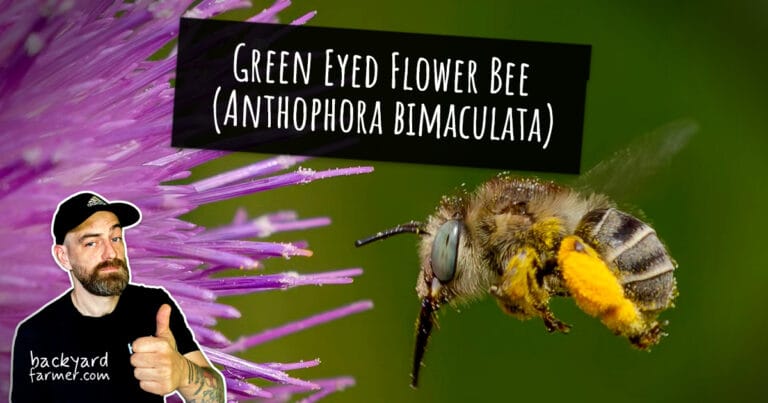
The Green Eyed Flower Bee (Anthophora bimaculata) is a fast-flying and distinctive solitary bee, best known for its striking green eyes and early appearance in the year. It is one of the UK’s more eye-catching spring bees and is often noticed darting rapidly between flowers on warm, sunny days.
This species is most commonly found in gardens, parks, allotments, sandy banks, and open countryside where early flowers and suitable nesting sites are available. Its energetic foraging style and preference for spring blossoms make it an important pollinator at a time when relatively few insects are active.
Although still present in parts of the UK, the Green Eyed Flower Bee is sensitive to habitat loss, soil disturbance, and reduced availability of early flowers. In this guide, you’ll learn how to identify Anthophora bimaculata, avoid confusion with similar bees, and understand why protecting early-season pollinators is so important.
Identification & Key Facts
| Attribute | Details |
|---|---|
| Common Name | Green Eyed Flower Bee |
| Latin Name | Anthophora bimaculata |
| Size | Females: ~12–14 mm, Males: ~10–12 mm |
| Location | Southern and central UK (localised) |
| Active Months | March to May |
| Habitat | Gardens, parks, sandy banks, open countryside |
| Nesting Behaviour | Burrows in sandy or light soil, banks, walls |
| Social Behaviour | Solitary |
| Flora | Lungwort, bugle, dead-nettle, fruit blossom |
| UK Status | Locally scarce |
How to Identify the Green Eyed Flower Bee
The Green Eyed Flower Bee is a medium-sized solitary bee with a compact body and exceptionally bright green eyes, particularly noticeable in males. Its flight is rapid and darting, often more reminiscent of a hoverfly than a bumblebee.
In the UK, it is most often seen visiting early spring flowers in sunny, sheltered locations. It rarely lingers on blooms, instead moving quickly from plant to plant.
Physical Characteristics
- Female – Slightly larger and darker overall, with less vivid eye colour but a sturdy, purposeful appearance.
- Male – Smaller and slimmer, with unmistakable bright green eyes and a more agile flight.
Similar Species
The Green Eyed Flower Bee may be confused with other fast-flying spring bees:
- Hairy-footed Flower Bee (Anthophora plumipes) – Much larger and fluffier, with strong sexual dimorphism.
- Early Mining Bee (Andrena haemorrhoa) – Slower flight and lacks the bright green eyes.
- Hoverflies – Often similar in flight behaviour but lack body hair and pollen-collecting structures.
If you’re unsure which bee you’ve spotted, our Bee Identification guide can help you narrow down UK species by size, colour, and behaviour.
Why the Green Eyed Flower Bee Matters
The Green Eyed Flower Bee plays an important role in pollinating early-flowering plants, including garden flowers and fruit tree blossom. By emerging early in the season, it helps bridge the gap before many other pollinators become active.
Its presence also highlights the importance of sandy soils, bare banks, and early nectar sources—habitats that are increasingly lost through development and intensive land management.
FAQs
No. This species is not aggressive and is very unlikely to sting unless handled.
It is mainly active in early spring, typically from March to May.
It is locally scarce and has a patchy distribution, particularly in southern areas.
Females can sting, but stings are rare and usually only occur if the bee is trapped or mishandled.
How You Can Help
Supporting the Green Eyed Flower Bee is particularly effective in gardens and urban green spaces:
🌿 Plant Bee-Friendly Flowers
- Lungwort, bugle, dead-nettle, fruit tree blossom
🚫 Avoid Harmful Pesticides
- Avoid insecticides, especially during early spring flowering
🏡 Provide Nesting Spaces
- Leave areas of sandy or light soil exposed, or maintain sunny banks and walls
By protecting early flowers and nesting sites, you help support the Green Eyed Flower Bee and other vital spring pollinators.