
Introduction
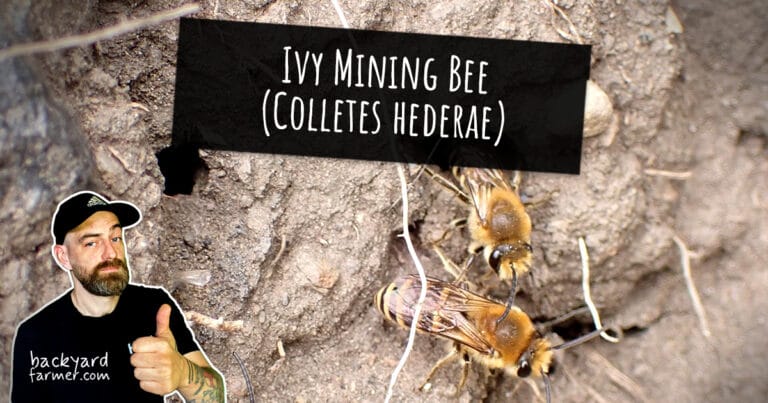
The Ivy Mining Bee (Colletes hederae) is a distinctive late-season solitary bee that has become increasingly familiar across the UK in recent decades. Unlike most bees, which peak in spring and summer, this species is most active in early autumn, closely timed with the flowering of ivy.
You’re most likely to see the Ivy Mining Bee in gardens, parks, churchyards, hedgerows, and urban green spaces where ivy is allowed to flower. Its arrival often coincides with a noticeable buzz of activity around ivy plants at a time of year when many people assume bees have disappeared.
Although currently expanding its range, the Ivy Mining Bee still relies heavily on specific plants and suitable nesting ground. In this guide, you’ll learn how to identify Colletes hederae, distinguish it from similar autumn-flying bees, and understand why late-season pollinators are vital to UK ecosystems.
Identification & Key Facts
| Attribute | Details |
|---|---|
| Common Name | Ivy Mining Bee |
| Latin Name | Colletes hederae |
| Size | Females: ~11–13 mm, Males: ~10–12 mm |
| Location | Widespread across England and Wales; spreading north |
| Active Months | September to November |
| Habitat | Gardens, parks, hedgerows, urban green spaces |
| Nesting Behaviour | Ground-nesting, often in large aggregations |
| Social Behaviour | Solitary (nesting in aggregations) |
| Flora | Ivy (primary), autumn flowers |
| UK Status | Increasing / Common |
How to Identify the Ivy Mining Bee
The Ivy Mining Bee is a medium-sized solitary bee with a bold, banded appearance. It has a dark brown to black abdomen with pale hair bands and a ginger-brown thorax, giving it a slightly bumblebee-like look at a glance.
In the UK, it is most often seen flying around ivy flowers in autumn, sometimes in large numbers. Its timing is one of the strongest identification clues, as very few other bees are active so late in the year.
Physical Characteristics
- Female – Slightly larger, with a robust body, ginger-brown thorax, and clear pale bands on the abdomen.
- Male – Similar in size but slimmer, often with longer antennae and a paler overall appearance.
Similar Species
The Ivy Mining Bee may be confused with other autumn-flying insects:
- Honey Bee (Apis mellifera) – More slender with a smoother appearance and different flight behaviour.
- Common Wasp (Vespula species) – Less hairy, brighter yellow markings, and more aggressive behaviour.
- Late-flying hoverflies – Have large eyes and no pollen-carrying hairs.
If you’re unsure which bee you’ve spotted, our Bee Identification guide can help you narrow down UK species by size, colour, and behaviour.
Why the Ivy Mining Bee Matters
The Ivy Mining Bee is a key pollinator of ivy, one of the most important late-flowering plants in the UK. Ivy provides vital nectar and pollen for many insects in autumn, supporting food chains as the year draws to a close.
By pollinating ivy, this bee helps sustain a wide range of wildlife, including other insects and birds that rely on ivy berries later in the season.
FAQs
No. Despite sometimes appearing in large numbers, this species is not aggressive and rarely stings.
It is mainly active from September through to November, making it one of the UK’s latest-flying bees.
No. It is now common in many areas and continues to spread its range.
Females can sting, but stings are very rare and usually only occur if the bee is handled.
How You Can Help
Supporting the Ivy Mining Bee is especially important in autumn:
🌿 Plant Bee-Friendly Flowers
- Allow ivy to flower; also plant late-season flowers such as sedum and ivy-leaved plants
🚫 Avoid Harmful Pesticides
- Avoid insecticide use in autumn when bees are still active
🏡 Provide Nesting Spaces
- Leave areas of bare or lightly vegetated soil undisturbed for ground nesting
By allowing ivy to flower and leaving natural ground undisturbed, you help support the Ivy Mining Bee and other late-season pollinators.