
Introduction
The Northern White-tailed Bumblebee (Bombus magnus) is a large, striking bumblebee most strongly associated with cooler climates and upland or northern parts of the UK. It is active through spring and summer and is often seen foraging on a wide range of flowers in open countryside.
Although it can sometimes be found in gardens near suitable habitat, this species is more closely tied to moorland edges, rough grassland, heathland, and flower-rich farmland. As a strong and persistent forager, it plays an important role in pollinating both wild plants and crops, particularly in less intensively managed landscapes.
However, like many bumblebees, the Northern White-tailed Bumblebee is affected by habitat loss, agricultural intensification, and changes in climate. In this guide, you’ll learn how to identify Bombus magnus, distinguish it from similar species, and understand why it remains an important part of the UK’s pollinator community.
Identification & Key Facts
| Attribute | Details |
|---|---|
| Common Name | Northern White-tailed Bumblebee |
| Latin Name | Bombus magnus |
| Size | Queens: ~22–24 mm, Workers: ~14–18 mm |
| Location | Northern England, Scotland, upland and western regions |
| Active Months | March to September |
| Habitat | Moorland, heathland, rough grassland, flower-rich farmland |
| Nesting Behaviour | Ground-nesting, often in old rodent burrows |
| Social Behaviour | Social |
| Flora | Bramble, thistles, clover, knapweed |
| UK Status | Locally common |
How to Identify the Northern White-tailed Bumblebee
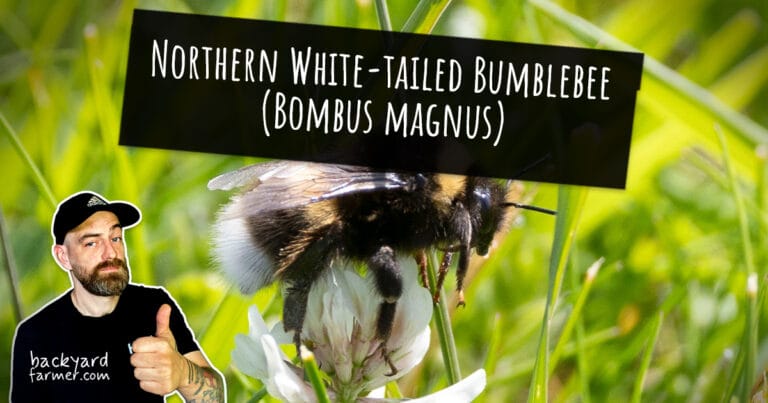
The Northern White-tailed Bumblebee is a large, robust species with a black body, yellow collar, and a clean white tail. Compared to some similar species, it often appears slightly longer-haired and less sharply contrasted.
In the UK, it is most often encountered in open countryside rather than built-up areas. It flies steadily and confidently between flowers and is commonly seen feeding on bramble, thistle, and clover in mid to late summer.
Physical Characteristics
- Queen – Very large with a broad yellow collar and a clearly white tail; body hair often appears long and dense.
- Worker – Smaller than the queen but similarly marked, with a white tail and less bulky appearance.
- Male (Drone) – Typically larger than workers, often with longer antennae and additional yellow facial hair.
Similar Species
The Northern White-tailed Bumblebee is frequently confused with other white-tailed bumblebees:
- White-tailed Bumblebee (Bombus lucorum) – Very similar in appearance but more common in lowland and urban areas.
- Buff-tailed Bumblebee (Bombus terrestris) – Has a buff-coloured tail rather than a clean white one, especially in queens.
- Garden Bumblebee (Bombus hortorum) – Slimmer with more pronounced yellow banding and a longer face.
If you’re unsure which bee you’ve spotted, our Bee Identification guide can help you narrow down UK species by size, colour, and behaviour.
Why the Northern White-tailed Bumblebee Matters
The Northern White-tailed Bumblebee is an effective pollinator of a wide range of wildflowers and crops, particularly in cooler and upland environments. Its ability to forage in less favourable weather makes it especially valuable in northern and western regions.
By supporting plant reproduction in these landscapes, this species helps maintain biodiversity and the resilience of ecosystems that many other insects and animals depend on.
FAQs
No. This species is generally calm and focused on foraging, with stings occurring only if the bee is handled or threatened.
It is typically active from early spring through to late summer, depending on weather and local conditions.
No, it is locally common in northern and upland areas, though less frequently seen in the south.
Yes, females can sting, but this is uncommon and usually only happens in defence.
How You Can Help
Supporting the Northern White-tailed Bumblebee means protecting flower-rich habitats and reducing pressures on wild pollinators:
🌿 Plant Bee-Friendly Flowers
- Bramble, clover, knapweed, thistles, wildflowers
🚫 Avoid Harmful Pesticides
- Avoid insecticides and weedkillers that reduce flowering plants
🏡 Provide Nesting Spaces
- Leave areas of rough grass, undisturbed ground, and natural field margins
By encouraging diverse, flower-rich landscapes, you help support the Northern White-tailed Bumblebee and many other important pollinators.