
Introduction
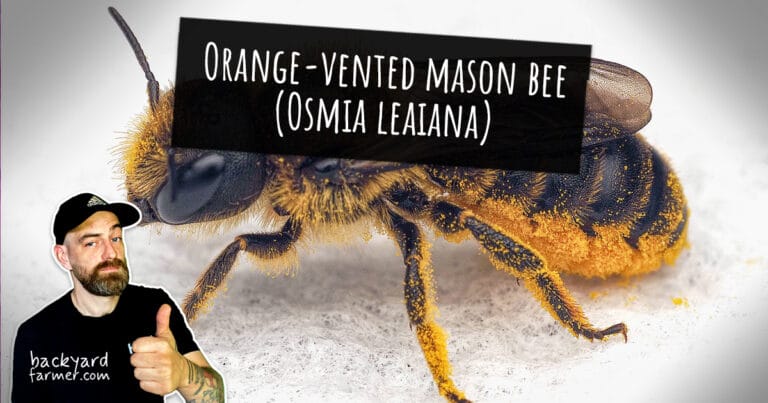
The Orange-vented Mason Bee (Osmia leaiana) is a small but distinctive solitary bee found in parts of the UK, most active during late spring and early summer. It gets its common name from the warm orange colouring on the underside of the abdomen, which is sometimes visible in flight or when the bee is foraging.
This species is most often encountered in gardens, woodland edges, hedgerows, and flower-rich areas where suitable nesting sites are available. Like other mason bees, it uses mud or similar materials to seal its nest cells, making it an important pollinator that is closely tied to both flowering plants and natural nesting features.
Although not currently considered threatened, the Orange-vented Mason Bee is sensitive to habitat loss, the removal of dead wood, and a lack of suitable nesting opportunities. In this guide, you’ll learn how to identify Osmia leaiana, distinguish it from similar mason bees, and understand how gardeners and landowners can help support it.
Identification & Key Facts
| Attribute | Details |
|---|---|
| Common Name | Orange-vented Mason Bee |
| Latin Name | Osmia leaiana |
| Size | Females: ~8–10 mm, Males: ~7–9 mm |
| Location | Southern and central UK (localised) |
| Active Months | May to July |
| Habitat | Gardens, woodland edges, hedgerows |
| Nesting Behaviour | Uses cavities in wood, stems, walls; nests sealed with mud |
| Social Behaviour | Solitary |
| Flora | Bramble, hawthorn, rose, garden flowers |
| UK Status | Locally common |
How to Identify the Orange-vented Mason Bee
The Orange-vented Mason Bee is a small, compact bee with a dark metallic body and subtle colour contrasts. While the orange vent is not always obvious, it can sometimes be seen when the bee is in motion or bending into flowers.
In the UK, this species is most likely to be seen foraging on bramble, hedgerow flowers, or garden plants in late spring. Its steady, purposeful flight and tendency to revisit the same nesting sites can help with identification.
Physical Characteristics
- Female – Slightly larger, dark-bodied with a metallic sheen and an orange-coloured underside of the abdomen.
- Male – Smaller and slimmer, often paler, with longer antennae and less visible orange colouring.
Similar Species
The Orange-vented Mason Bee can be confused with other small mason bees:
- Red Mason Bee (Osmia bicornis) – Larger, with bright ginger hair and a much fluffier appearance.
- Blue Mason Bee (Osmia caerulescens) – Metallic blue-green overall and lacks orange abdominal colouring.
- Other Osmia species – Often differ subtly in size, colour, and nesting preferences.
If you’re unsure which bee you’ve spotted, our Bee Identification guide can help you narrow down UK species by size, colour, and behaviour.
Why the Orange-vented Mason Bee Matters
The Orange-vented Mason Bee contributes to the pollination of hedgerow plants, shrubs, and garden flowers. By visiting a range of flowering species, it helps support both wild plant reproduction and food sources for other wildlife.
As a cavity-nesting bee, it also highlights the importance of dead wood, hollow stems, and natural features that are often removed from gardens and managed landscapes.
FAQs
No. This species is very gentle and rarely stings. It is not aggressive towards people.
It is mainly active from late spring into early summer, typically between May and July.
No. It is locally common in suitable habitats but not widespread everywhere.
Females can sting, but stings are extremely rare and usually only occur if the bee is handled.
How You Can Help
Supporting the Orange-vented Mason Bee is straightforward and well suited to gardens:
🌿 Plant Bee-Friendly Flowers
- Bramble, hawthorn, roses, open garden flowers
🚫 Avoid Harmful Pesticides
- Avoid insecticides that contaminate nectar and pollen
🏡 Provide Nesting Spaces
- Leave dead wood, hollow stems, or install bee hotels suitable for mason bees
By preserving natural nesting features and planting a variety of flowering plants, you help support the Orange-vented Mason Bee and other cavity-nesting pollinators.