
Introduction
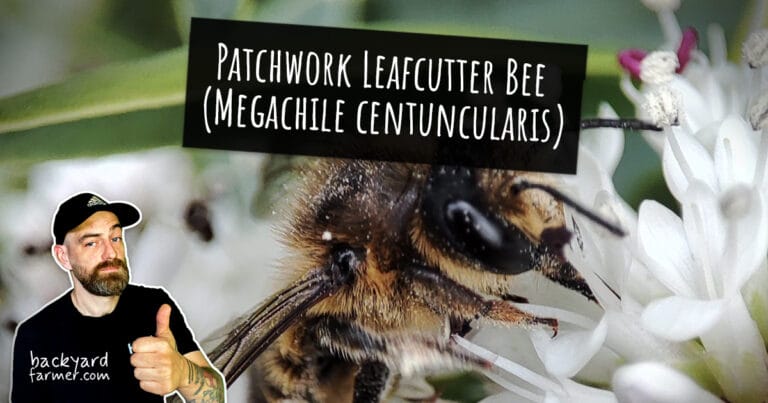
The Patchwork Leafcutter Bee (Megachile centuncularis) is a distinctive and increasingly familiar solitary bee in the UK, best known for its habit of cutting neat, oval pieces from leaves to line its nest. Active through the warmer months, it is often noticed in gardens where roses, lilac, or other broad-leaved plants show tell-tale cut-outs.
This species thrives in gardens, allotments, hedgerows, and urban green spaces, particularly where flowers are plentiful and nesting cavities are available. Although it may draw attention for its leaf-cutting behaviour, this causes little harm to plants and is part of a fascinating nesting strategy.
While currently widespread and doing well, the Patchwork Leafcutter Bee still depends on flower-rich habitats and suitable nesting sites. In this guide, you’ll learn how to identify Megachile centuncularis, distinguish it from similar leafcutter bees, and understand how simple garden actions can support it.
Identification & Key Facts
| Attribute | Details |
|---|---|
| Common Name | Patchwork Leafcutter Bee |
| Latin Name | Megachile centuncularis |
| Size | Females: ~12–14 mm, Males: ~10–12 mm |
| Location | Widespread across the UK |
| Active Months | June to September |
| Habitat | Gardens, allotments, hedgerows, urban areas |
| Nesting Behaviour | Uses leaf pieces to line cavities in wood, stems, walls |
| Social Behaviour | Solitary |
| Flora | Thistles, knapweed, bramble, garden flowers |
| UK Status | Common |
How to Identify the Patchwork Leafcutter Bee
The Patchwork Leafcutter Bee is a medium-sized, robust solitary bee with a dark body and pale hair bands across the abdomen. Females are particularly distinctive because they carry pollen on dense hairs on the underside of the abdomen rather than on the legs.
In the UK, it is most often seen flying purposefully between flowers and nesting sites. Freshly cut leaf sections on garden plants are a strong clue to its presence.
Physical Characteristics
- Female – Stocky build, dark body, and a bright pollen load carried on the underside of the abdomen.
- Male – Slightly smaller and slimmer, often with lighter facial hair and longer antennae.
Similar Species
The Patchwork Leafcutter Bee may be confused with other Megachile species:
- Red-tailed Leafcutter Bee (Megachile willughbiella) – Larger, with a more obvious reddish tail.
- Small Leafcutter Bee (Megachile versicolor) – Smaller overall and less robust.
- Mason Bees (Osmia species) – Use mud rather than leaf pieces to seal nests.
If you’re unsure which bee you’ve spotted, our Bee Identification guide can help you narrow down UK species by size, colour, and behaviour.
Why the Patchwork Leafcutter Bee Matters
The Patchwork Leafcutter Bee is an effective pollinator of many wildflowers and garden plants, particularly during mid to late summer. Its foraging helps support plant reproduction at a time when some other pollinators are less active.
Its unique nesting behaviour also highlights the importance of dead wood, hollow stems, and insect-friendly garden structures in supporting biodiversity.
FAQs
No. This species is not aggressive and is very unlikely to sting unless handled.
It is mainly active from early summer through to early autumn, typically June to September.
No. It is a common and widespread species.
Females can sting, but stings are rare and usually only occur if the bee is trapped.
How You Can Help
Supporting the Patchwork Leafcutter Bee is easy and garden-friendly:
🌿 Plant Bee-Friendly Flowers
- Thistles, knapweed, bramble, open garden flowers
🚫 Avoid Harmful Pesticides
- Avoid insecticides that contaminate nectar and pollen
🏡 Provide Nesting Spaces
- Install bee hotels or leave hollow stems, drilled wood, and crevices available
By tolerating leaf-cutting and providing nesting sites, you help support the Patchwork Leafcutter Bee and other cavity-nesting pollinators.