
Introduction
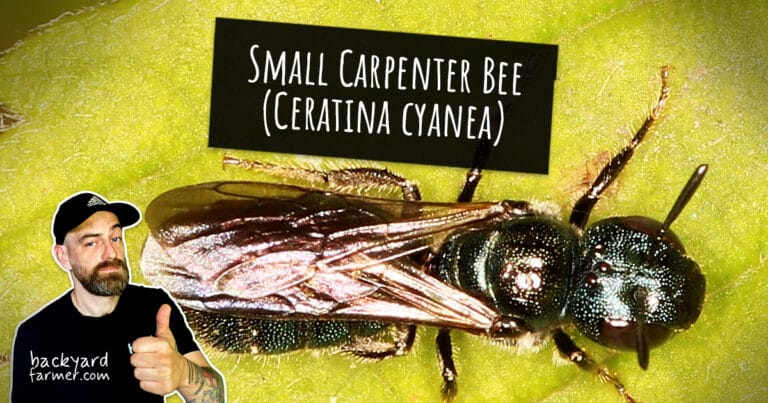
The Small Carpenter Bee (Ceratina cyanea) is a small, slender solitary bee with a distinctive metallic blue-black sheen. Unlike many of the UK’s more familiar bees, it is often mistaken for a fly or a small wasp due to its smooth body and subtle colouring.
This species is most commonly found in gardens, hedgerows, woodland edges, and flower-rich areas, particularly where dead plant stems are left standing. Rather than nesting in the ground, the Small Carpenter Bee excavates soft, pithy stems, making it closely tied to natural and lightly managed habitats.
Although currently considered locally common, the Small Carpenter Bee is sensitive to habitat tidying, loss of wild vegetation, and pesticide use. In this guide, you’ll learn how to identify Ceratina cyanea, distinguish it from similar insects, and understand why leaving stems and wild corners can make a real difference.
Identification & Key Facts
| Attribute | Details |
|---|---|
| Common Name | Small Carpenter Bee |
| Latin Name | Ceratina cyanea |
| Size | ~6–8 mm |
| Location | Southern and central UK (localised) |
| Active Months | May to September |
| Habitat | Gardens, hedgerows, woodland edges |
| Nesting Behaviour | Nests in hollow or pithy plant stems |
| Social Behaviour | Solitary |
| Flora | Bramble, hogweed, thistle, garden flowers |
| UK Status | Locally common |
How to Identify the Small Carpenter Bee
The Small Carpenter Bee is a very slim, wasp-like bee with a smooth, metallic blue-black body and little visible hair. Its narrow waist and fast, direct flight can make it easy to overlook or misidentify.
In the UK, it is most often seen resting on leaves, stems, or visiting open flowers in warm weather. Its habit of flying close to vegetation rather than hovering over blooms is a useful identification clue.
Physical Characteristics
- Female – Slightly larger, with a glossy dark body and pale markings on the face.
- Male – Similar in appearance but often slimmer, with lighter facial markings and longer antennae.
Similar Species
The Small Carpenter Bee can be confused with several other insects:
- Small wasps – Wasps lack pollen-carrying hairs and usually show brighter yellow markings.
- Furrow Bees (Lasioglossum species) – Furrow bees are hairier and usually fly lower over flowers.
- Small hoverflies – Hoverflies have large eyes and often hover rather than fly directly.
If you’re unsure which bee you’ve spotted, our Bee Identification guide can help you narrow down UK species by size, colour, and behaviour.
Why the Small Carpenter Bee Matters
The Small Carpenter Bee plays a valuable role in pollinating a range of wildflowers and garden plants. Its stem-nesting behaviour also highlights the importance of leaving natural plant material in place, rather than over-tidying gardens and green spaces.
By using hollow stems for nesting, this species supports a wider network of insects that rely on similar microhabitats, contributing to overall biodiversity.
FAQs
No. This species is very gentle and rarely stings. It avoids contact with people.
It is typically active from late spring through to early autumn, usually between May and September.
It is locally common in parts of southern and central Britain but not widespread everywhere.
Females can sting, but stings are extremely rare and usually only occur if the bee is handled.
How You Can Help
Supporting the Small Carpenter Bee is straightforward and well suited to wildlife-friendly gardens:
🌿 Plant Bee-Friendly Flowers
- Bramble, hogweed, thistle, open garden flowers
🚫 Avoid Harmful Pesticides
- Avoid insecticides that contaminate nectar and reduce insect populations
🏡 Provide Nesting Spaces
- Leave hollow or pithy plant stems standing over winter and spring
By resisting the urge to over-tidy and allowing natural plant structures to remain, you help support the Small Carpenter Bee and many other beneficial insects.