
Introduction
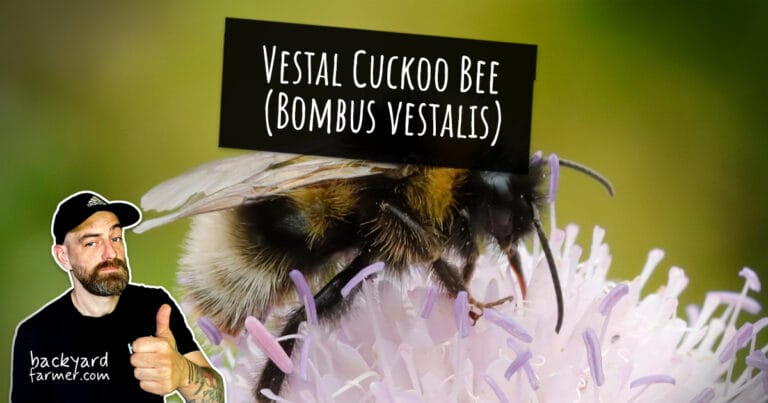
The Vestal Cuckoo Bee (Bombus vestalis) is a striking and unusual bumblebee species found across much of the UK. Unlike most bumblebees, it does not build its own nest or raise workers. Instead, it is a cuckoo bee, meaning it takes over the nests of other bumblebee species to reproduce.
You’re most likely to encounter the Vestal Cuckoo Bee in gardens, parks, hedgerows, and open countryside, often in the same places where its host species are active. Its bold black-and-yellow colouring makes it stand out, particularly when seen flying purposefully low to the ground in search of a host nest.
Because cuckoo bees rely entirely on healthy populations of other bumblebees, they are closely tied to the overall condition of pollinator habitats. In this guide, you’ll learn how to identify the Vestal Cuckoo Bee, recognise similar species, and understand why this unusual lifestyle still plays an important role in the wider ecosystem.
Identification & Key Facts
| Attribute | Details |
|---|---|
| Common Name | Vestal Cuckoo Bee |
| Latin Name | Bombus vestalis |
| Size | Females: ~18–22 mm |
| Location | England, Wales, southern Scotland |
| Active Months | April to August |
| Habitat | Gardens, grassland, hedgerows, countryside |
| Nesting Behaviour | Parasitic – takes over host nests |
| Social Behaviour | Cuckoo (no workers) |
| Flora | Bramble, thistles, dead-nettle, garden flowers |
| UK Status | Locally common |
How to Identify the Vestal Cuckoo Bee
The Vestal Cuckoo Bee closely resembles some of the UK’s white-tailed bumblebees but has a more polished, less hairy appearance. Its body is robust, with a yellow collar, black abdomen, and a clean white tail.
A useful field clue is behaviour rather than colour alone. This species is often seen flying deliberately close to the ground or inspecting nest entrances, particularly in areas where its host species are present.
Physical Characteristics
- Female – Large and solid-looking with a yellow collar, black body, and white tail; noticeably less hairy than non-cuckoo bumblebees.
- Male (Drone) – Similar in size to females but often with more yellow facial hair and slightly longer antennae.
Image source: {source}
Similar Species
The Vestal Cuckoo Bee is most often confused with white-tailed bumblebees:
- Buff-tailed Bumblebee (Bombus terrestris) – Has a buff or off-white tail in queens and workers and is generally hairier.
- White-tailed Bumblebee (Bombus lucorum) – Very similar in colour but lacks the sleek, polished appearance of cuckoo bees.
- Northern White-tailed Bumblebee (Bombus magnus) – Typically larger and more strongly associated with upland or northern habitats.
If you’re unsure which bee you’ve spotted, our Bee Identification guide can help you narrow down UK species by size, colour, and behaviour.
Why the Vestal Cuckoo Bee Matters
The Vestal Cuckoo Bee is an important part of healthy bumblebee ecosystems. Its presence indicates strong populations of its host species, as it cannot survive without them.
Although it does not contribute to pollination as extensively as worker-based species, it still plays a role in maintaining natural population balance and diversity within bumblebee communities.
FAQs
No. While females can sting, this species is not aggressive and usually avoids conflict unless disturbed.
It is most active from spring through summer, often appearing slightly later than its host species.
No. It is locally common where suitable host species are present.
Yes, females can sting, but stings are uncommon and usually occur only if the bee is handled.
How You Can Help
Helping the Vestal Cuckoo Bee means supporting healthy populations of its host bumblebees:
🌿 Plant Bee-Friendly Flowers
- Bramble, thistles, dead-nettle, garden wildflowers
🚫 Avoid Harmful Pesticides
- Avoid insecticides that harm host bumblebee species
🏡 Provide Nesting Spaces
- Create conditions suitable for ground-nesting bumblebees by leaving undisturbed areas
By supporting diverse, flower-rich habitats, you help sustain both the Vestal Cuckoo Bee and the bumblebees it depends on.