
More people are choosing composting toilets for off-grid homes, cabins, RVs and van life, offering a practical way to manage waste without relying on conventional plumbing or a sewer connection. But the right choice depends on how permanent your setup is, the space available and how much maintenance you’re comfortable with.
For this guide, I’ve narrowed it down to three clear options: Separett Villa for permanent installations, Nature’s Head for RVs and tiny homes, and BOXIO for simple portable use.
Best Overall – Separett Villa
Best for RVs & Tiny Homes – Nature’s Head
Best Portable Option – BOXIO
| Model | Best For | Type | Power | Installation | Typical Emptying |
|---|---|---|---|---|---|
| Separett Villa | Homes & cabins | Urine-diverting | 12V | Vent + drain | 4–6 weeks |
| Nature’s Head | RVs & tiny homes | Self-contained | 12V | Vent | Around 60–80 uses |
| BOXIO | Camping & vans | Portable dry toilet | None | None | 8–10 uses |
Separett Villa – Best Overall for Home & Cabin Use
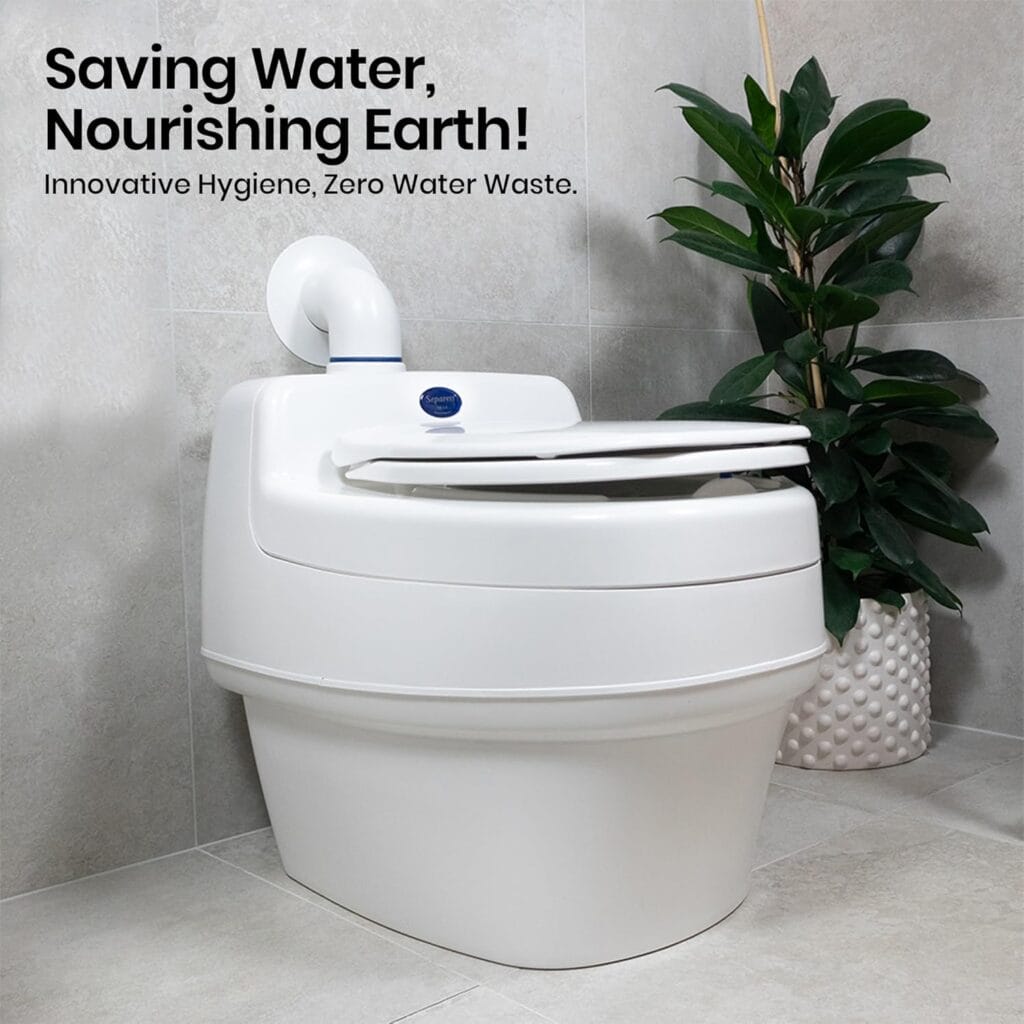
The Separett Villa is the strongest option here for a more permanent off-grid installation. It uses urine diversion to separate liquids from solids, helping reduce moisture and odour while giving it considerably more capacity than a simple portable toilet.
It is particularly suited to cabins, off-grid homes and other installations where you want something closer to a conventional toilet experience without connecting to a sewer system.
| Feature | Separett Villa |
|---|---|
| Best for | Homes, cabins and permanent off-grid setups |
| Type | Urine-diverting |
| Power | 12V ventilation fan |
| Typical emptying | Around 4–6 weeks |
| Installation | Ventilation and urine drainage required |
| Main advantage | High capacity and low maintenance |
Best For
- Off-grid homes
- Cabins
- Permanent installations
Pros
- Excellent odour control
- Large waste capacity
- Comfortable conventional-style seat
Cons
- Requires ventilation and power
- More installation work
- Larger than portable systems
BYF Pick: If I were fitting a composting toilet as a permanent part of an off-grid cabin or home, the Separett Villa would be my pick of these three.
Nature’s Head – Best for RVs & Tiny Homes
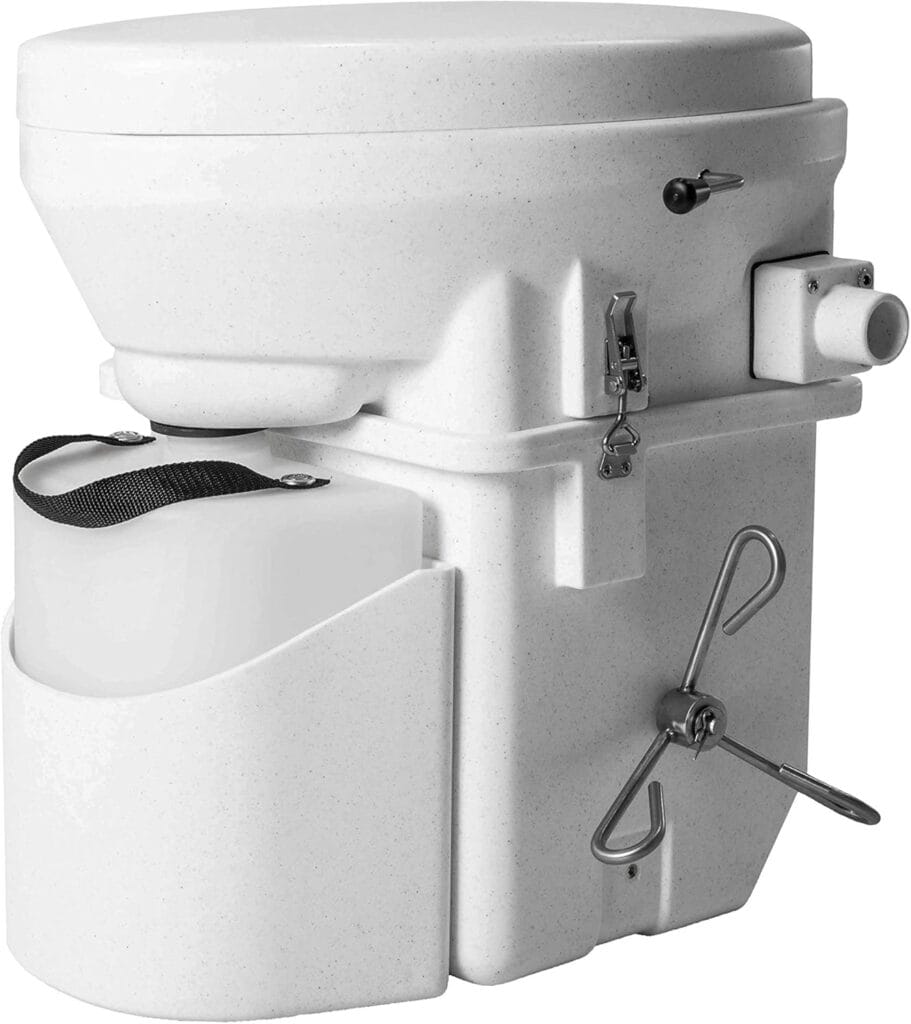
The Nature’s Head sits between a permanent composting toilet and a basic portable system. Its relatively compact design makes it particularly useful where space matters, including RVs, boats and tiny homes.
It separates liquids from solids and uses a manually operated agitator to mix the solid waste with bulking material. A small ventilation fan helps control moisture and odours.
| Feature | Nature’s Head |
|---|---|
| Best for | RVs, boats and tiny homes |
| Type | Self-contained urine-diverting |
| Power | 12V ventilation fan |
| Typical capacity | Around 60–80 uses |
| Installation | Ventilation required |
| Main advantage | Compact but relatively capable |
Best For
- RVs
- Boats
- Tiny homes
Pros
- Compact design
- Built-in ventilation
- No conventional plumbing required
Cons
- Solids need manual mixing
- Urine container needs frequent emptying
- Still requires ventilation
BYF Pick: Nature’s Head makes the most sense where space is limited but you still want something more substantial than a basic camping toilet.
BOXIO – Best Portable Dry Toilet
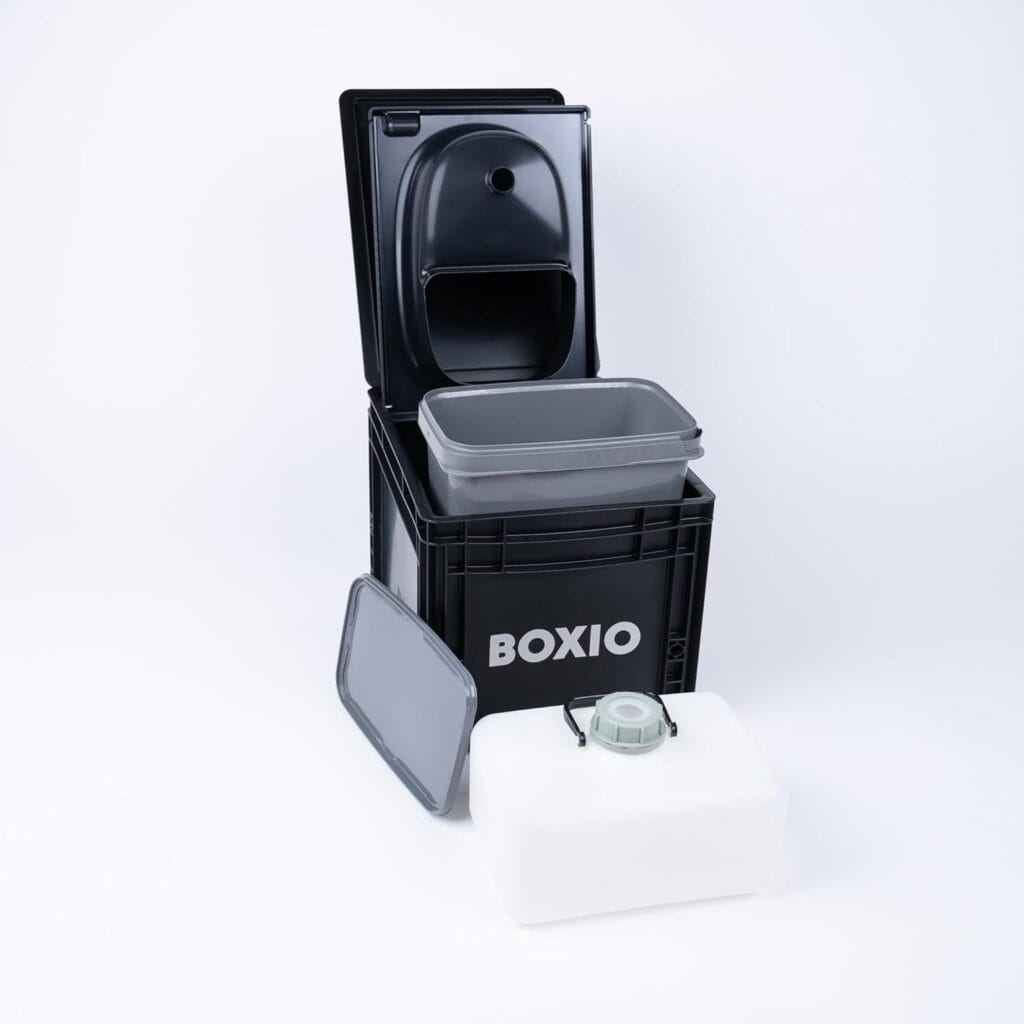
The BOXIO is the simplest option of the three. Rather than trying to replicate a permanent composting toilet system, it provides a compact dry toilet that separates waste and can be transported easily.
That makes it much better suited to camping, van life, short trips and occasional use than to replacing a household toilet permanently.
| Feature | BOXIO |
|---|---|
| Best for | Camping, vans and occasional use |
| Type | Portable separating dry toilet |
| Power | None |
| Capacity | Around 8–10 uses |
| Installation | None |
| Main advantage | Lightweight and portable |
Best For
- Camping
- Van life
- Emergency toilet use
Pros
- Extremely portable
- No electricity required
- No permanent installation
Cons
- Small capacity
- Needs frequent emptying
- Less effective odour control than ventilated systems
BYF Pick: BOXIO is the one I’d choose for portability rather than permanence — particularly for camping, vans or somewhere that only needs an occasional toilet.
How Composting Toilets Work
Most composting toilets manage waste by separating liquids and solids, controlling moisture and providing ventilation. Some use a fan and urine diversion, while simpler portable models rely on removable containers and absorbent material.
The main differences between models are capacity, ventilation, power requirements, emptying frequency and whether they need permanent installation — which is why the best option for a cabin can be very different from the best one for an RV or camping.
Composting Toilet FAQs
A well-managed composting toilet should produce very little noticeable odour. Good ventilation and keeping excess moisture out of the solids container are particularly important. Models such as the Separett Villa and Nature’s Head use active ventilation to help control smells.
Not always. Some permanent and self-contained models use a small 12V fan for ventilation, while simple portable toilets such as the BOXIO require no electricity at all.
It depends on the toilet, number of users and how frequently it is used. Larger systems may go several weeks between emptying, while compact portable toilets can require emptying after only a handful of uses.
Generally, yes. Standard toilet paper can usually go into the solids container, although faster-breaking-down toilet paper can help reduce bulk. Always follow the instructions supplied with your particular toilet.
For a more permanent cabin installation, the Separett Villa is the strongest option in this guide. Its larger capacity, urine-diverting design and powered ventilation make it better suited to regular use than a simple portable toilet.
BOXIO is the most portable option covered here. It requires no electricity or permanent installation, making it particularly well suited to camping, vans and occasional off-grid use.