
Intro: Why This Planner Exists
I’m a working gardener based in the UK, and I built this free vegetable garden planner for a simple reason: I needed a practical, reliable way to plan real food growing — not just tidy diagrams that look good on screen, but plans that actually hold up once the season gets going.
Like many people, I grow in limited space. I juggle seasons, weather, and time, and ultimately I want my vegetable garden to actually feed me, not just look good in a photo. That’s where a clear garden layout planner makes all the difference.
Continue your vegetable planning and growing journey
If you’re planning your Oregon vegetable garden, these guides will help you with planting timing, seasonal calendars, and practical growing advice suited to North American growers.
- Low-energy food preservation & zero-waste pantry – Great paired content for planners who want to not only grow but preserve harvests efficiently and sustainably.
- Biodynamic planting calendar — best planting days for UK & US – A full biodynamic calendar with planting dates you can use for Oregon climates, companion planting, and seasonal timing.
- What vegetables are good to grow – A foundational guide to productive and rewarding vegetable varieties that do well in a wide range of climates, including the Pacific Northwest.
Different words, same challenge
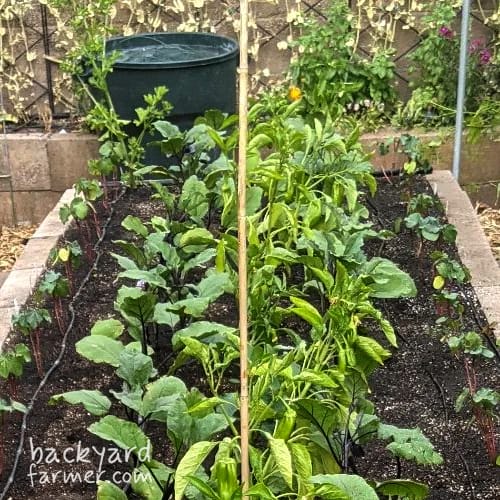
In the UK, we usually call this kind of growing space an allotment. In the US, it’s more commonly a vegetable garden, raised bed garden, or community garden plot.
Although the language changes, the challenge stays the same everywhere: making the most of the space you’ve got.
Why this matters in Washington
Over time, gardeners outside the UK — especially in the US — started using the planner as well. Naturally, that meant it was being used across a much wider range of climates. In Washington State, that variation is especially important.
Growing conditions can change dramatically across relatively short distances, largely because the Cascade Mountain Range splits the state into two very different growing regions:
- Western Washington, with its maritime climate, mild temperatures, higher rainfall, and longer cool seasons
- Eastern Washington, which is generally drier, with colder winters, hotter summers, and noticeably shorter growing windows in many areas
Because of this contrast, planning a vegetable garden in Washington isn’t about following a single planting calendar or copying generic layouts from elsewhere. Instead, it’s about understanding how moisture, temperature, elevation, and season length affect your garden — and planning around those realities.
A planner built for real conditions
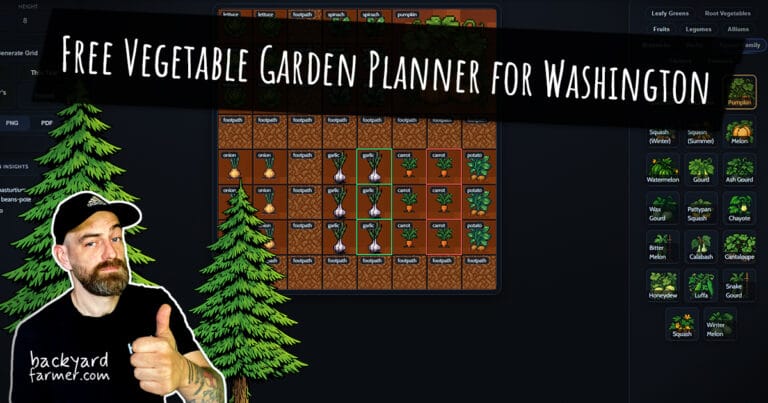
This Washington vegetable garden planner is designed to help you think clearly about garden layout, crop spacing, and seasonal flow, so you can plan a garden that fits your region, your space, and the food you actually want to grow.
Whether you’re working with raised beds, a backyard plot, or a community garden, the same planning principles apply.
It’s flexible, free to use, and built to support good decision-making — not to lock you into rigid rules or paid subscription software.
Gardening in Washington Is Diverse – Planning Matters
Washington is often thought of as a great place to grow food — and in many ways, it is. However, anyone who gardens here quickly learns that Washington growing conditions vary far more than they first appear.
The biggest divide is created by the Cascade Mountain Range, which splits the state into two very different growing regions. A vegetable garden in Western Washington, influenced by a maritime climate with mild temperatures and higher rainfall, behaves very differently from one in Eastern Washington, where conditions are generally drier, winters are colder, summers can be hotter, and growing seasons are often shorter.
Because of this contrast, planning a vegetable garden in Washington becomes less about following a single planting calendar and more about making informed, location‑specific decisions that reflect where you’re growing.
With that in mind, a vegetable garden planner helps you:
- Choose crops that suit your region’s temperature range and season length
- Plan garden layouts that improve airflow and drainage in wetter western areas
- Time sowing and succession planting realistically across very different growing windows
- Avoid overcrowding that can lead to disease, stress, and disappointing yields
Generic gardening advice often assumes fairly consistent conditions across a state. In Washington, however, that approach can leave you planting too early into cold soils, misjudging moisture levels, or running out of time later in the season — particularly east of the Cascades.
With that context in mind, using a Washington vegetable garden planner gives you space to think things through before you plant anything. Whether you’re working with raised bed gardens, a backyard vegetable garden, or a community garden plot, you can map out your garden layout, visualise crop spacing, and adjust your plan to reflect how your garden actually behaves.
Over time, that flexibility is what turns vegetable gardening from something you constantly react to into something you feel far more confident and in control of.
What This Free Vegetable Garden Planner Helps You Do
This free vegetable garden planner is designed to help you think clearly before you ever put plants in the ground — which is especially useful in Washington, where growing conditions can shift quickly across the state. Rather than chasing perfection or sticking to rigid schedules, it gives you a practical way to plan a vegetable garden that works in real, varied conditions.
At its core, this vegetable garden planner for Washington helps you do a few key things well:
- Visualise your garden layout before planting, whether you’re working with raised bed gardens, a backyard vegetable garden, or a community garden plot
- Plan realistic crop spacing, giving plants room for airflow and access — particularly important in wetter parts of Western Washington
- Think through seasonal flow, including succession planting that fits both longer, cooler western seasons and shorter, more intense growing windows east of the Cascades
- Make better use of limited space, which matters just as much in small urban gardens as it does in rural or shared plots
With the Cascade Divide in mind — separating Western and Eastern Washington — the planner is intentionally flexible by design. You can adapt your garden layout, move crops around, and fine‑tune spacing to suit your local climate, soil, and season length, rather than forcing your garden into a fixed template.
Instead of guessing or copying a generic plan, you end up with a clear visual garden planning tool you can adjust as the season progresses, without needing to start from scratch each time. Over time, as you learn how your garden responds to moisture, temperature, and timing, the planner grows with you.
Whether you’re just getting started or already have a few seasons under your belt, using a free vegetable garden planner for Washington helps turn experience into insight — and insight into healthier plants and more reliable harvests.
How to Use the Planner for Washington Gardens
This online vegetable garden planner is designed to be straightforward, flexible, and easy to adapt — which suits the way many Washington gardens actually behave. Rather than entering endless data or following strict rules, use it as a garden planning tool to shape a plan that fits your space, your region, and how you grow food.
1. Set up your growing space
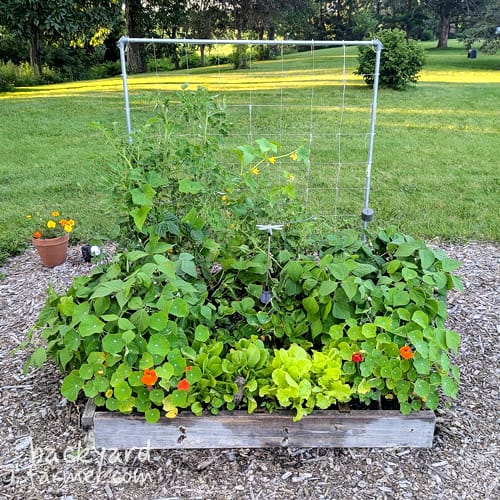
First, define the growing space you’re working with. That might be:
- A raised bed garden in a backyard
- Multiple vegetable beds with paths between them
- A single plot in a community garden (including P‑Patch style plots)
At this stage, you don’t need millimetre‑perfect accuracy. However, getting the proportions roughly right makes planning your vegetable garden layout much easier later on — especially when drainage, access, and airflow matter.
2. Add crops and test layouts
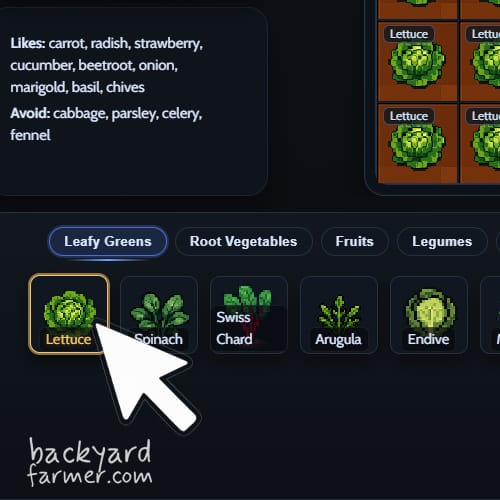
Next, start placing the crops you want to grow. As you do, think about:
- How much space each plant will need once it matures
- Airflow and spacing, which are particularly important in wetter parts of Western Washington
- Grouping crops you tend to water, feed, or harvest at the same time
Here, the goal isn’t a perfect design — it’s a realistic garden layout that reflects how your vegetable garden behaves through the season.
3. Think seasonally, not just once
Washington’s growing seasons can feel long and forgiving in some areas, and very tight in others. Because of that, it’s easy to plan for spring and underestimate how quickly conditions change later on.
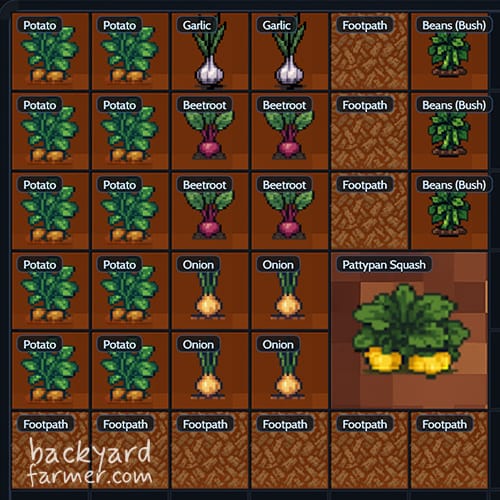
Use this vegetable garden planner to:
- Visualise succession planting across the season
- Avoid overcrowding beds early on when soils are still cool
- Leave space for later plantings that fit shorter growing windows east of the Cascades
This approach is especially helpful if you garden in Eastern Washington, at higher elevations, or anywhere late frosts and early autumn cold limit planting time.
4. Adjust for your local conditions
Finally, let your own observations guide your decisions from season to season. Every Washington vegetable garden behaves a little differently:
- In Western Washington, spacing and airflow help manage damp conditions and steady growth
- In Eastern Washington, shorter seasons, temperature swings, and lower rainfall favour simpler, efficient layouts
- In coastal or higher‑elevation areas, timing and protection often matter more than variety choice
The planner gives you a clear structure. In turn, you bring the local knowledge.
Used this way, a free vegetable garden planner for Washington becomes a practical companion rather than a set of instructions. Over time, it helps you plan with intention, learn from each season, and steadily improve how your vegetable garden performs.
Washington-Specific Considerations
Washington offers excellent growing potential, but success here depends heavily on timing, moisture management, and a clear understanding of your region. A vegetable garden that thrives in one part of the state can struggle in another, sometimes even within a short drive. That’s why using a vegetable garden planner is especially valuable for Washington growers.
Moisture, drainage, and airflow
In Western Washington, regular rainfall, higher humidity, and heavier soils are often a bigger challenge than heat. When plants are packed too closely together, damp conditions can quickly lead to disease, slow growth, and poor airflow.
With that context in mind, planning your garden layout ahead of time helps you:
- Improve airflow between plants
- Reduce fungal and moisture-related issues
- Space crops realistically for wet springs and mild summers
This is where a well-planned raised bed garden layout really comes into its own, helping soil drain more effectively and warm earlier in the season.
Soil warmth and spring timing
Across much of Washington, soil can stay cold well into spring — particularly west of the Cascades and in heavier, slower-warming soils. Planting too early often leads to stalled growth or crop failure, even when daytime temperatures feel encouraging.
Using a vegetable garden planner allows you to:
- Delay planting sensitive crops until soil conditions improve
- Stagger plantings rather than putting everything in at once
- Leave room to adjust plans if spring arrives later than expected
Shorter seasons east of the Cascades and at elevation
In Eastern Washington and higher-elevation areas, the growing season is often noticeably shorter and less forgiving. Late frosts in spring, early frosts in autumn, and large temperature swings make careful planning essential.
With a clear garden plan, you can:
- Focus on crops that mature reliably within the season
- Plan succession planting that fits tighter growing windows
- Avoid overcommitting bed space early on
Planning around variability
Even within the same part of the state, Washington gardens can behave very differently depending on slope, exposure, soil type, elevation, and proximity to the Cascades.
When you take these regional factors into account, a generic layout becomes a Washington vegetable garden plan that actually works where you live — not just on paper. A free vegetable garden planner for Washington gives you the structure to think this through once — and then refine your vegetable garden layout season after season, as you learn what works best in your own garden.
Free Vegetable Garden Planner for Washington
Why Planning Matters for Washington Gardens
Washington has a strong food‑growing culture, but it’s also a state where planning really pays off. From the mild, moisture‑rich conditions west of the Cascades to the drier climate, colder winters, and hotter summers found in Eastern Washington, growing conditions can change dramatically over relatively short distances.
Because of that contrast, gardening in Washington isn’t about following a single planting calendar or copying generic layouts from elsewhere. Instead, it’s about understanding your local climate, your soil, and how your garden behaves through the season.
This guide introduces a free vegetable garden planner for Washington — a practical online tool designed to help you plan layouts, spacing, and seasonal flow in a way that suits real‑world Washington growing conditions.
Washington‑Specific Considerations
Washington’s climate is often described as favourable for growing food, which is true in many areas — but it only tells part of the story. The Cascade Mountain Range splits the state into very different growing regions, each with its own challenges.
Moisture, drainage, and airflow
In Western Washington, regular rainfall, higher humidity, and heavier soils are often a bigger challenge than heat. When plants are packed too closely together, damp conditions can quickly lead to disease and poor airflow.
Planning your garden layout ahead of time helps you:
- Improve airflow between plants
- Reduce fungal and moisture‑related issues
- Space crops realistically for wet springs and mild summers
This is where a well‑planned raised bed garden layout really comes into its own, helping soil drain more effectively and warm earlier in the season.
Soil warmth and spring timing
Across much of Washington, soil can stay cold well into spring — particularly west of the Cascades and in heavier soils. Planting too early often leads to stalled growth or crop failure, even when daytime temperatures seem encouraging.
Using a vegetable garden planner allows you to:
- Delay planting sensitive crops until soil conditions improve
- Stagger plantings rather than putting everything in at once
- Leave room to adjust plans if spring arrives later than expected
Shorter seasons east of the Cascades and at elevation
In Eastern Washington and higher‑elevation areas, the growing season is often noticeably shorter. Late frosts in spring, early frosts in autumn, and larger temperature swings make careful planning essential.
With a clear garden plan, you can:
- Focus on crops that mature reliably within the season
- Plan succession planting that fits tighter growing windows
- Avoid overcommitting bed space early on
For region‑specific growing advice, the Washington State University Extension Service provides trusted, well‑researched guidance for vegetable gardening across the state.
The Planner
The free vegetable garden planner is a standalone online garden planning app, built for real‑world growing in Washington rather than tidy diagrams that fall apart once the season starts.
This is the same tool I use to plan my own gardens. I built it to help you slow things down and think clearly about garden layout, crop spacing, and seasonal flow before you plant anything — which is especially useful in a state where moisture, soil temperature, and season length can vary so widely.
You can use this vegetable garden planner for Washington to:
- Sketch out clear garden layouts for raised bed gardens, backyard plots, or community gardens
- Test realistic crop spacing, allowing for airflow and access in wetter western regions
- Plan succession planting that fits both longer, cooler western seasons and shorter inland growing windows
- Adjust and refine your garden plan as you observe how your garden responds to weather and timing
There’s no signup, no subscription, and no pressure to get everything right first time. Because the planner runs as a separate web app, you can open it in a new tab, experiment freely, and return here whenever you need context or guidance.
Once you’ve sketched out a layout that feels realistic, you can come back to this guide to sense‑check decisions, adapt your plan for your region, and explore the related Washington‑specific guides below.
Who This Planner Is For
This free vegetable garden planner for Washington is a good fit if you want a clear, practical way to plan your garden — without being boxed into rigid rules or generic advice.
It works especially well if you:
- Grow food in a backyard, raised bed, or community garden
- Deal with damp springs, cool nights, or shorter growing seasons
- Want a clear, visual way to plan beds before planting anything
- Prefer flexible tools over planting calendars or paid garden software
You don’t need to be an expert, and you don’t need perfect conditions. The planner is designed to support experimentation, learning, and steady improvement — helping you build confidence and consistency season after season.
A Note on Terminology
In Washington, most people simply talk about vegetable gardens, raised beds, community gardens, or local systems such as P‑Patch plots. Regardless of the label, the challenge stays the same: making good use of space, timing plantings well, and growing food that fits your local conditions.
Related Guides for Washington Gardeners
These guides pair well with this Washington vegetable garden planner:
- What to plant this month in Washington
- Raised bed gardening for wet climates
- Planning a productive vegetable garden layout in the Pacific Northwest
Conclusion
A productive Washington vegetable garden doesn’t come from rigid schedules or guesswork alone. It comes from understanding your space, your climate, and how your garden changes through the season.
This free vegetable garden planner for Washington is here to help you slow things down and think clearly before you plant. By planning layouts, spacing, and seasonal flow ahead of time, you give yourself the flexibility to adapt — whether you’re dealing with wet springs, short seasons, or year‑to‑year variation.
Start simple, adjust as you go, and let experience guide your decisions. Over time, that approach leads to healthier plants, better use of space, and harvests that actually reflect where you live and how you grow.