
Introduction
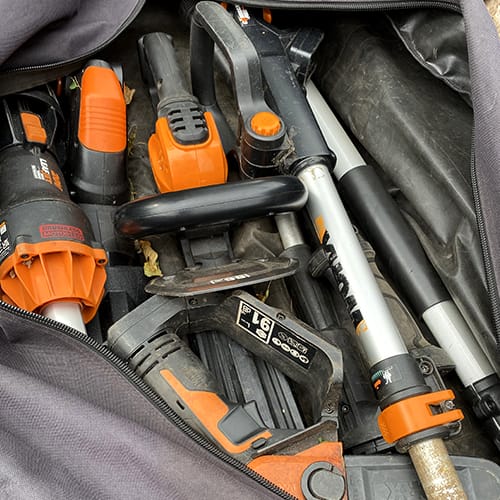
Choosing between manual and powered pruning tools is not simply a question of cutting strength. The right choice depends on the type of growth, the number of cuts and how much control the job requires. In many gardens, the most practical setup is a combination of both.
Manual or Powered? The Quick Answer
Manual pruning tools are best for individual, selective cuts where control matters. Powered tools become worthwhile when a large amount of similar growth must be cut repeatedly. Most gardeners should begin with secateurs, loppers and a pruning saw, adding a hedge trimmer or powered pruner only when the workload justifies it.
| Choose manual tools when… | Choose powered tools when… |
|---|---|
| Each cut must be selected carefully | The same cutting action must be repeated |
| Precision matters more than speed | Speed and coverage matter |
| The job is occasional | The job returns regularly |
| Growth varies in thickness | Growth is mostly consistent |
| Low weight and simplicity matter | Repeated squeezing or cutting is the problem |
Use the lightest and simplest tool that can complete the job cleanly and comfortably.
Which Pruning Tool Do You Need for Each Job?
The best starting point depends on the type of growth, the number of cuts and how much control the job requires.
| Garden job | Best starting tool |
|---|---|
| Deadheading and soft stems | Garden snips or secateurs |
| Roses and routine shrub pruning | Bypass secateurs |
| Stems too demanding for secateurs | Bypass loppers |
| Occasional thicker branches | Pruning saw |
| Small hedge, box or topiary | Hand hedge shears |
| Long, regularly maintained hedge | Battery or corded hedge trimmer |
| Overgrown woody hedge | Loppers and a pruning saw, followed by a hedge trimmer |
| Repetitive orchard-style pruning | Powered secateurs may help |
| Dense brambles and rough growth | Brushcutter or wider clearance setup |
| High, unstable or major tree work | Qualified tree surgeon |
The maximum cutting capacity shown on a tool is a limit, not a target. If a cut requires excessive force, causes the tool to twist or leaves the stem crushed, move up to the next suitable tool instead.
When Manual Pruning Tools Are Better
Hand tools provide greater control and feedback, making them the best starting point for most selective garden pruning. They are also lighter, quieter and easier to use around crowded plants.
Secateurs
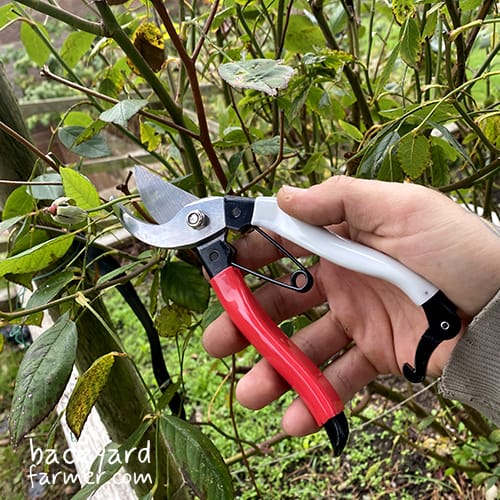
Secateurs are best for:
- deadheading
- roses
- fruit-tree shoots
- young shrub growth
- choosing individual stems
Bypass secateurs use two blades that pass each other, making them the better choice for healthy live growth. Anvil secateurs press the stem against a flat surface and are generally more suitable for dead or dry material.
For suitable options, see Everyday Pruning and Light Cutting.
Loppers
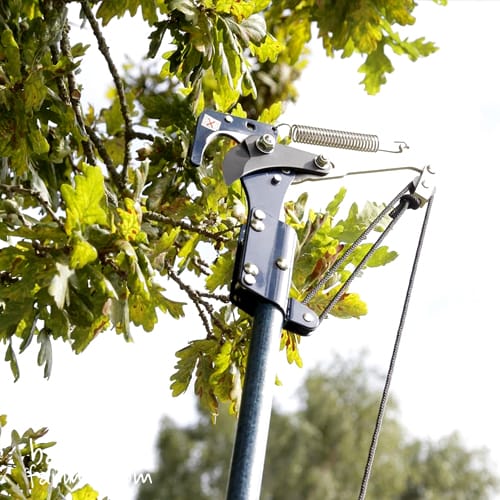
Loppers are best for:
- stems beyond comfortable secateur capacity
- old shrub growth
- woody climbers
- thicker rose stems
- renovation pruning
Their longer handles provide extra leverage, allowing thicker stems to be cut without adding a motor, battery or cable. They are the natural next step when secateurs require too much force.
For heavier manual cutting, see Thick Branches and Woody Growth.
Pruning Saws
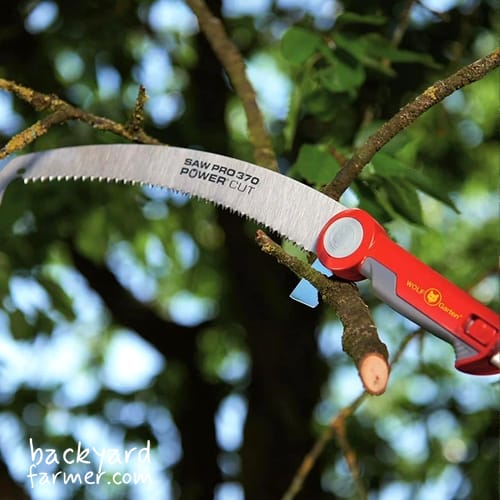
Pruning saws are best for:
- occasional thicker branches
- cuts inside crowded shrubs
- branches that require too much force with loppers
- woody work that does not justify a powered saw
A sharp pruning saw is often the overlooked middle ground between loppers and chain-powered equipment. For occasional branches, it can provide all the extra cutting ability you need without batteries, charging or chain maintenance.
Hand Hedge Shears
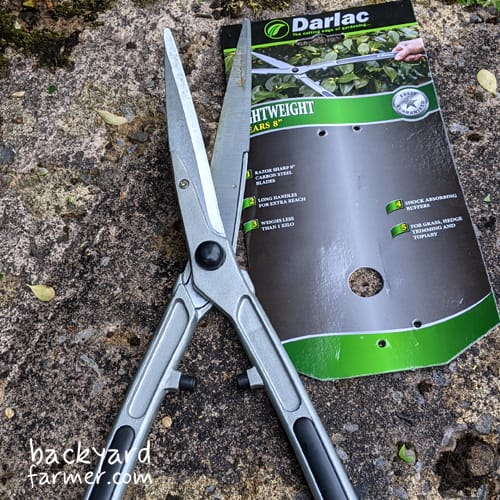
Hand hedge shears are best for:
- small hedges
- box and topiary
- light seasonal trimming
- crisp edges and detailed shaping
- quiet work in smaller gardens
They provide excellent control and a neat finish, but become tiring across long hedges or large amounts of growth. Once the job involves repeated cutting over a wide area, a powered hedge trimmer may be the more practical option.
When Powered Pruning Tools Are Worth Buying
Powered tools are most useful when they solve a clear workload or physical problem. They are not automatically better than hand tools, but they can save considerable time and effort when:
- The job involves hundreds of similar cuts
- The same work returns several times each year
- The area is too large for comfortable hand cutting
- Limited grip strength makes repeated squeezing difficult
- Completing the work manually would take an unreasonable amount of time
- Batteries can be shared with other tools already owned
A long hedge, repeated orchard pruning or regular clearance work may justify the extra speed. For a small job carried out once or twice a year, however, a powered tool may add more cost, storage, charging and maintenance than real value.
Hand Shears or a Hedge Trimmer?
Hand shears are better for small, detailed jobs where control matters. A hedge trimmer becomes more useful when the hedge is large enough for speed and coverage to outweigh the extra weight, cost and setup.
| Choose hand shears when… | Choose a hedge trimmer when… |
|---|---|
| The hedge is small | The hedge is long or broad |
| Detailed shaping matters | Speed and coverage matter |
| The growth is light | Seasonal growth is extensive |
| Noise needs to be minimal | Regular maintenance would be tiring by hand |
| You are trimming box or topiary | You are maintaining a continuous hedge face |
Many gardeners benefit from owning both. A hedge trimmer can deal with the main surface quickly, while hand shears or secateurs are better for corners, final shaping and damaged stems that need a cleaner individual cut.
For regular domestic hedge maintenance, see my Worx WG264E hedge trimmer review.
Can a Hedge Trimmer Cut Thick Branches?
A hedge trimmer is designed to sweep through large numbers of relatively thin stems. It works well for:
- fresh seasonal growth
- maintaining hedge faces
- shaping long runs of similar material
- removing large volumes of light growth
It is less suitable for:
- old internal hedge frameworks
- isolated thick branches
- woody laurel, privet or conifer stems
- branches that only just fit between the teeth
- material that causes the blades to stall, jam or tear
For an overgrown or woody hedge, use a staged approach:
- Identify the thicker structural stems.
- Remove them with loppers or a pruning saw.
- Check for wire, fencing and other hidden obstacles.
- Use the hedge trimmer on the remaining lighter growth.
- Finish torn or awkward stems individually with secateurs or a saw.
Tooth spacing and quoted cutting capacity vary between machines, but these figures should be treated as limits rather than targets. Never force a branch through the blades simply because it appears to fit.
For more suitable options, see Shrubs, Roses and Seasonal Cutbacks, Thick Branches and Woody Growth and the relevant hedge-trimmer buying guides.
Are Electric Secateurs Worth It?
Battery-powered electric secateurs can be worthwhile for repetitive pruning or reduced grip strength, but they are unnecessary for most occasional garden work.
They may be useful for:
- pruning many fruit trees or shrubs
- repeated orchard-style work
- gardeners who struggle to close manual secateurs
- large seasonal pruning sessions
However, they also bring some drawbacks:
- higher purchase cost
- extra weight and bulk
- batteries that need charging
- less tactile feedback at the blade
- The powered blade makes it especially important to keep the free hand well clear
- slower positioning for occasional selective cuts
For most home gardeners, a sharp pair of manual secateurs remains the best starting point. Electric models make more sense when repeated squeezing is genuinely difficult or the volume of pruning justifies the extra cost and weight.
Pruning Saw or Mini Chainsaw?
A pruning saw is usually the better choice for occasional branch cutting, while a powered pruning saw or mini chainsaw becomes more useful when there is a larger volume of woody material to process.
Choose a pruning saw when:
- Only a few branches need cutting
- Control matters more than speed
- The branches are accessible from firm ground
- You want a simple tool with little maintenance
- Setting up a powered tool would take longer than making the cut
Consider a powered pruning saw or mini chainsaw when:
- Many woody branches need cutting
- Removed material must be processed into shorter lengths
- The same clearance work returns regularly
- Manual sawing causes excessive fatigue
- You understand chain maintenance and safe handling
A compact chain-powered tool is still capable of causing serious injury. Its smaller size does not remove the need for careful handling, a clear cutting area and firm footing.
A mini chainsaw should not be treated as the automatic next step after loppers. For many home gardeners, a sharp pruning saw provides all the cutting ability needed without batteries, charging or chain maintenance.
Are Powered Tools Really Less Tiring?
Powered tools remove much of the cutting effort, but they can introduce different physical demands. The motor and battery add weight, while vibration, continuous gripping and holding the tool away from the body can become tiring over time. Long-reach tools are especially demanding because the weight must be balanced at the end of a pole, and control often reduces as fatigue develops.
The best choice depends on what is actually making the job difficult.
Is repeated squeezing the problem?
Sharper secateurs, ratchet secateurs, geared loppers or powered secateurs may reduce the strain on your hands.
Is repeated squeezing the problem?
Sharper secateurs, ratchet secateurs, geared loppers or powered secateurs may reduce the strain on your hands.
Are there simply too many cuts?
A powered tool can save significant time and reduce the effort involved in repeating the same action across a large area.
Is the tool heavy at arm’s length?
A lighter manual tool or smaller battery may be easier to use than a more powerful machine, particularly for overhead or detailed work.
Is reach the main difficulty?
Use a purpose-built long-reach tool from firm ground, or bring in professional help when the cut cannot be made safely and under control.
Power is most effective at solving repetition. It does not always solve weight, balance or awkward reach, so the most powerful option is not necessarily the easiest to use.
Battery, Corded or Petrol?
Once a powered tool makes sense, the next choice is how it should be powered.
| Power type | Best suited to | Main drawback |
|---|---|---|
| Battery | Most domestic gardens | Runtime, battery cost and working weight |
| Corded | Predictable work near the house | Cable management and restricted movement |
| Petrol | Prolonged, demanding or remote work | Noise, weight and maintenance |
Battery is normally the most convenient choice for domestic gardens, but check the complete working weight, realistic runtime and whether the battery and charger are included.
Corded tools can offer good value for predictable work near the house, provided the cable can be managed safely. They are less convenient around trees, obstacles or dense growth where the cable can snag or disappear beneath cut material.
Petrol is mainly justified by prolonged, demanding work away from convenient mains power or charging. It brings more noise, weight and maintenance, so it should not be treated as the natural upgrade for an ordinary home garden.
For a fuller comparison, see What Type of Hedge Trimmer Do I Need? Cordless, Corded or Petrol?
Clearing an Overgrown Garden Usually Takes Both
Neglected growth rarely calls for one machine. Overgrown areas often contain a mixture of soft vegetation, woody stems and hidden obstacles, so the safest and most effective approach is usually to combine hand and powered tools.
A Sensible Staged Approach
- Check carefully for active bird nests, wire, fencing, stones and other hidden objects. Postpone cutting if an active nest is found.
- Open the growth gradually with secateurs or loppers.
- Remove thick woody stems with loppers or a pruning saw.
- Use a hedge trimmer or brushcutter on the remaining lighter growth.
- Cut and clear the removed material in manageable sections.
Hand tools help reveal the structure of the garden and expose anything hidden beneath the growth. Powered tools are most useful once you understand the area and need to deal with the remaining volume quickly.
For more suitable equipment, see Best Tools for Overgrown Gardens.
A Sensible Tool-Buying Progression
Most gardeners can begin with bypass secateurs, followed by loppers and a pruning saw as stems become thicker. Add hand shears or a hedge trimmer only where the size and frequency of the work justify them.
Powered secateurs, pruning saws and petrol equipment should solve a clear recurring need rather than being treated as automatic upgrades. Building your toolkit gradually helps avoid buying heavier and more expensive equipment for jobs that simpler hand tools already handle well.
When to Stop and Call a Professional
Some pruning jobs are beyond the safe limits of normal garden tools. Seek professional help when:
- branches are large, unstable or storm-damaged
- The cut cannot be controlled from firm ground
- A ladder would be needed with a chain-powered tool
- branches are close to overhead cables
- The tree has splits, decay or other structural defects
- Falling material could damage buildings or injure someone
- You cannot clearly see where the blade will make contact
- You are unsure how the branch will move once cut
Do not rely on a more powerful tool to make an unsafe job manageable. Where height, branch weight or structural damage creates uncertainty, a qualified tree surgeon is the safer option.
For manageable overhead work from firm ground, see Trees, Height and Awkward Reach.
Match the Tool to Your Job
Once you know whether the job calls for manual or powered equipment, these guides will help you choose the right tool for the work.
Everyday Pruning and Light Cutting
For secateurs, pruning snips and routine selective cuts around the garden.
Shrubs, Roses and Seasonal Cutbacks
For borders, roses, herbaceous plants and mixed shrub growth that needs regular cutting back.
Thick Branches and Woody Growth
For loppers and pruning saws when stems have become too demanding for secateurs.
Trees, Height and Awkward Reach
For manageable overhead pruning and long-reach tools that can be used safely from firm ground.
Overgrown Gardens
For brambles, rough vegetation, woody regrowth and neglected areas that need a staged clearance approach.
My Tool Shed
For the tools I use and recommend based on practical gardening experience.
Frequently Asked Questions
No. Powered tools are faster for repeated cutting, while manual tools usually provide better control for individual pruning cuts.
Only within the machine’s stated capacity. Old or isolated woody stems are usually better removed with loppers or a pruning saw.
They can be worthwhile for repetitive pruning or limited grip strength, but sharp manual secateurs remain more practical for most occasional gardeners.
Usually not for one or two branches. A quality pruning saw can handle many occasional jobs without batteries, charging or chain maintenance.
They can reduce repeated squeezing, but the extra weight may create a different problem. Consider the tool’s complete working weight and balance.
Final Thoughts: Choose for the Job, Not the Motor
The choice between manual and powered pruning tools comes down to the work in front of you:
- Use manual tools when individual cuts need to be selected and controlled.
- Add powered tools when scale, repetition or reduced grip strength justifies them.
- Combine both when growth contains thin outer material alongside thicker woody stems.
The best pruning tool is not necessarily the most powerful one. It is the lightest, simplest option that lets you complete the work cleanly, comfortably and safely.