
Introduction
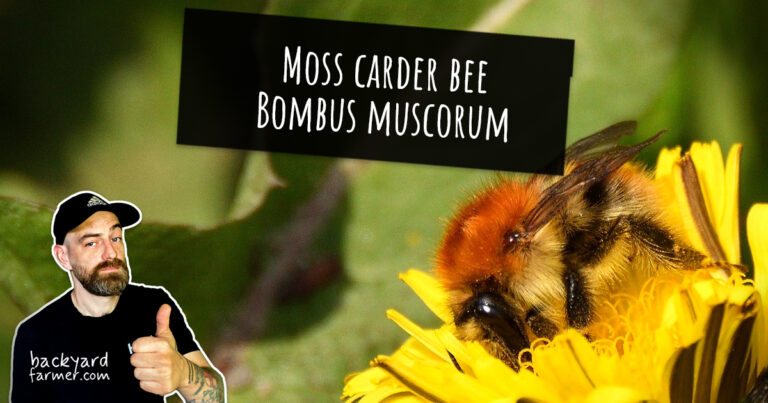
The Moss Carder Bee (Bombus muscorum) is a softly coloured, shaggy bumblebee best known for its warm ginger-brown coat and gentle appearance. It is active from late spring through summer and is particularly associated with flower-rich coastal and grassland habitats.
In the UK, this species is most often found in coastal dunes, marshes, rough grassland, and traditionally managed countryside. It is less common in gardens than some bumblebees, but where suitable wildflowers are present it can still be seen feeding steadily across meadows and coastal sites.
The Moss Carder Bee has declined in parts of its range due to habitat loss, agricultural intensification, and changes in land management. In this guide, you’ll learn how to identify it, distinguish it from similar carder bees, and understand why protecting flower-rich habitats is essential for its survival.
Identification & Key Facts
| Attribute | Details |
|---|---|
| Common Name | Moss Carder Bee |
| Latin Name | Bombus muscorum |
| Size | Queens: ~16–18 mm, Workers: ~11–15 mm |
| Location | Coastal areas, western and northern UK |
| Active Months | May to September |
| Habitat | Coastal dunes, marshes, rough grassland, meadows |
| Nesting Behaviour | Surface nests in long grass or moss |
| Social Behaviour | Social |
| Flora | Red clover, knapweed, vetches, thistles |
| UK Status | Scarce and declining in parts of its range |
How to Identify the Moss Carder Bee
The Moss Carder Bee is a medium-sized bumblebee with long, shaggy hair that gives it a soft, fluffy appearance. Its colouring is usually uniform ginger-brown or yellowish-brown, without the bold black-and-yellow banding seen in many other bumblebees.
In the UK, it is most often encountered in open, flower-rich habitats, particularly near the coast. Its slow, deliberate flight and preference for clover-rich areas are useful identification clues.
Physical Characteristics
- Queen – Large and shaggy, with a warm ginger-brown coat and no clear colour bands.
- Worker – Smaller but similarly coloured, maintaining the same soft, carder-like appearance.
- Male (Drone) – Similar to workers but often slimmer, with longer antennae and slightly paler hair.
Similar Species
The Moss Carder Bee can be confused with other carder bumblebees:
- Common Carder Bee (Bombus pascuorum) – More widespread and often has darker facial hair and variable colouring.
- Shrill Carder Bee (Bombus sylvarum) – Slimmer with more contrasting banding and a distinctive high-pitched buzz.
- Brown-banded Carder Bee (Bombus humilis) – Shows clearer banding and prefers dry grassland.
If you’re unsure which bee you’ve spotted, our Bee Identification guide can help you narrow down UK species by size, colour, and behaviour.
Why the Moss Carder Bee Matters
The Moss Carder Bee is an important pollinator of wildflowers such as clover, vetches, and knapweed, particularly in coastal and semi-natural grassland habitats. Its foraging helps maintain plant diversity and supports other wildlife that depend on these ecosystems.
Because it relies on flower-rich landscapes and surface nesting sites, the Moss Carder Bee is especially sensitive to habitat loss, making it a valuable indicator of healthy grassland environments.
FAQs
No. It is a gentle species and very unlikely to sting unless directly handled.
It is active from late spring through summer, usually from May to September.
It is locally scarce and has declined in parts of its range, particularly away from coastal areas.
Females can sting, but stings are rare and usually only occur if the bee is trapped or handled.
How You Can Help
Supporting the Moss Carder Bee focuses on protecting flower-rich habitats:
🌿 Plant Bee-Friendly Flowers
- Red clover, knapweed, vetches, bird’s-foot trefoil
🚫 Avoid Harmful Pesticides
- Avoid insecticides that reduce flowering plants or harm bees directly
🏡 Provide Nesting Spaces
- Leave areas of long grass, tussocks, and moss undisturbed
By allowing wildflowers to flourish and leaving natural nesting areas intact, you help support the Moss Carder Bee and other grassland pollinators.