
Introduction
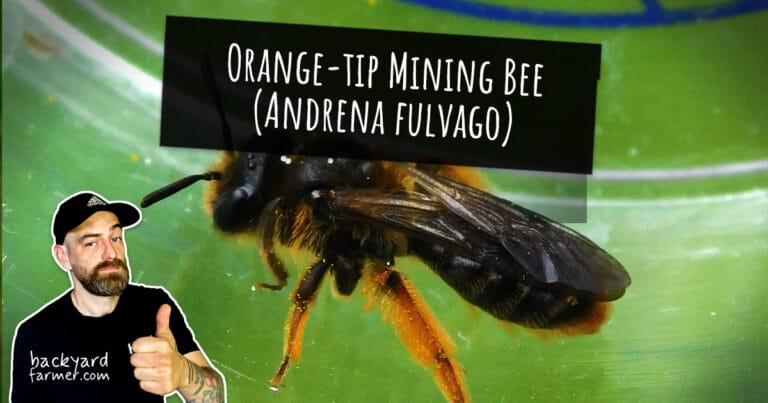
The Orange-tip Mining Bee (Andrena fulvago) is a small, early-flying solitary bee best known for the subtle orange colouring on the tips of the males’ antennae. Active mainly in spring, it is a specialist of open grassland and lightly managed habitats where early flowers are abundant.
In the UK, this species is most often encountered in grassland, roadside verges, coastal sites, and open countryside. It can also appear in gardens that support early-flowering plants and areas of undisturbed soil suitable for nesting.
Although not one of the UK’s most familiar bees, the Orange-tip Mining Bee plays an important role in early-season pollination. Like many mining bees, it is vulnerable to habitat loss, intensive land management, and pesticide use. In this guide, you’ll learn how to identify Andrena fulvago, tell it apart from similar spring bees, and understand how to support it.
Identification & Key Facts
| Attribute | Details |
|---|---|
| Common Name | Orange-tip Mining Bee |
| Latin Name | Andrena fulvago |
| Size | Females: ~10–12 mm, Males: ~8–10 mm |
| Location | Localised but widespread across the UK |
| Active Months | April to June |
| Habitat | Grassland, coastal areas, roadside verges, open countryside |
| Nesting Behaviour | Ground-nesting in bare or lightly vegetated soil |
| Social Behaviour | Solitary |
| Flora | Buttercups, dandelion relatives, spring wildflowers |
| UK Status | Locally common |
How to Identify the Orange-tip Mining Bee
The Orange-tip Mining Bee is a small to medium-sized mining bee with a dark body and relatively short hair. Males are distinctive due to the orange or reddish tips of their antennae, a useful feature when seen up close.
In the UK, it is most often seen flying low over grassland or visiting spring flowers in open, sunny locations. Females lack the orange-tipped antennae and are more difficult to separate from other Andrena species without careful observation.
Physical Characteristics
- Female – Dark-bodied with pale facial hairs and pollen carried on the hind legs; antennae uniformly dark.
- Male – Slightly smaller and slimmer, with clearly orange-tipped antennae and longer facial hair.
Similar Species
The Orange-tip Mining Bee can be confused with other spring-flying mining bees:
- Buffish Mining Bee (Andrena nigroaenea) – More variable in colour and lacks orange-tipped antennae.
- Early Mining Bee (Andrena haemorrhoa) – Larger, with a reddish abdomen in females.
- Grey-patched Mining Bee (Andrena nitida) – Shows grey thoracic hair patches rather than antenna colour cues.
If you’re unsure which bee you’ve spotted, our Bee Identification guide can help you narrow down UK species by size, colour, and behaviour.
Why the Orange-tip Mining Bee Matters
The Orange-tip Mining Bee contributes to pollination in spring by visiting a wide range of early wildflowers. Its activity helps support plant reproduction at a time when relatively few pollinators are active.
By nesting in open ground and grassland, it also highlights the importance of lightly managed habitats that provide both flowers and exposed soil.
FAQs
No. This species is gentle and very unlikely to sting unless handled.
It is mainly active in spring, typically from April to June.
It is locally common but can be patchy in distribution.
Females can sting, but stings are rare and usually only occur if the bee is trapped.
How You Can Help
Supporting the Orange-tip Mining Bee focuses on maintaining open habitats:
🌿 Plant Bee-Friendly Flowers
- Buttercups, dandelion relatives, spring wildflowers
🚫 Avoid Harmful Pesticides
- Avoid insecticides, particularly in spring when bees are active
🏡 Provide Nesting Spaces
- Leave patches of bare or lightly vegetated soil undisturbed
By allowing grassland to flower and leaving some open ground, you help support the Orange-tip Mining Bee and other spring-flying pollinators.