
Introduction
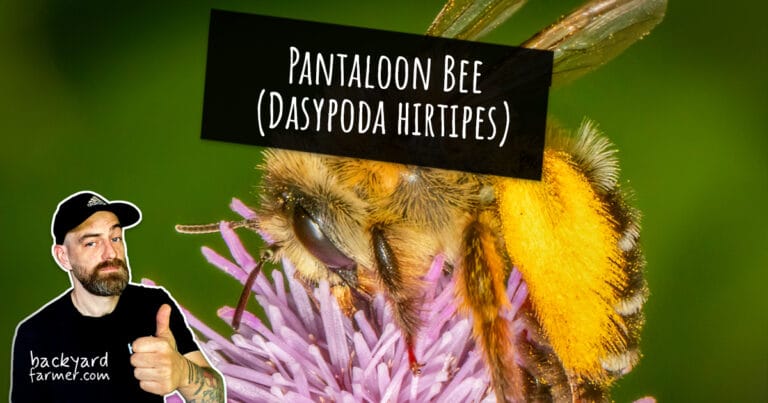
The Pantaloon Bee (Dasypoda hirtipes) is one of the UK’s most eye-catching solitary bees, instantly recognisable by the enormous, bright orange pollen brushes on the hind legs of the females. These oversized “pantaloons” make it a favourite among photographers and a memorable sight in late summer.
This species is most often found in sandy, open habitats such as coastal dunes, heathland, quarries, and sandy grassland. It is a fast, purposeful flyer and is usually seen close to the ground as it forages or returns to its nest.
Although still locally common in suitable habitats, the Pantaloon Bee is sensitive to habitat loss, vegetation encroachment, and disturbance of sandy ground. In this guide, you’ll learn how to identify Dasypoda hirtipes, recognise similar species, and understand why protecting open sandy habitats is vital for its survival.
Identification & Key Facts
| Attribute | Details |
|---|---|
| Common Name | Pantaloon Bee |
| Latin Name | Dasypoda hirtipes |
| Size | Females: ~13–15 mm, Males: ~10–13 mm |
| Location | Southern and eastern UK; coastal and sandy inland sites |
| Active Months | July to September |
| Habitat | Coastal dunes, sandy grassland, heathland, quarries |
| Nesting Behaviour | Ground-nesting in loose, sandy soil |
| Social Behaviour | Solitary (often nesting in aggregations) |
| Flora | Hawkbits, dandelion relatives, yellow composites |
| UK Status | Locally common |
How to Identify the Pantaloon Bee
The Pantaloon Bee is a medium-sized solitary bee with a dark body and extremely conspicuous orange pollen brushes on the hind legs of females. These oversized pollen loads are unlike anything seen on other UK bees.
In the UK, it is most often seen flying low over sandy ground or visiting yellow, daisy-like flowers in late summer. Its fast flight and frequent trips between flowers and nest sites are useful identification clues.
Physical Characteristics
- Female – Dark-bodied with huge, bright orange pollen brushes on the hind legs, giving the species its name.
- Male – Smaller and slimmer, lacking the exaggerated pollen brushes and appearing much plainer overall.
Similar Species
The Pantaloon Bee is rarely confused with other UK bees due to its distinctive appearance, but possible comparisons include:
- Large Mining Bees (Andrena species) – Lack the oversized orange pollen brushes.
- Leafcutter Bees (Megachile species) – Carry pollen under the abdomen, not on enlarged leg hairs.
- Honey Bee (Apis mellifera) – Smaller pollen baskets and very different flight behaviour.
If you’re unsure which bee you’ve spotted, our Bee Identification guide can help you narrow down UK species by size, colour, and behaviour.
Why the Pantaloon Bee Matters
The Pantaloon Bee is a specialist pollinator of yellow, daisy-like flowers, particularly in late summer when many other bees are declining in number. Its activity helps sustain plant reproduction in sandy and coastal ecosystems.
Because it relies on open, sparsely vegetated ground for nesting, it is also an indicator species for healthy, unmanaged sandy habitats that support a wide range of insects.
FAQs
No. Despite its size and busy appearance, this species is gentle and very unlikely to sting.
It is mainly active from mid-summer into early autumn, typically July to September.
It is locally common in suitable sandy habitats but absent from much of the country.
Females can sting, but stings are extremely rare and usually only occur if the bee is handled.
How You Can Help
Supporting the Pantaloon Bee focuses on protecting sandy habitats:
🌿 Plant Bee-Friendly Flowers
- Hawkbits, cat’s-ear, dandelion relatives, yellow composites
🚫 Avoid Harmful Pesticides
- Avoid pesticide use near sandy habitats and wildflower areas
🏡 Provide Nesting Spaces
- Leave areas of bare, sandy soil undisturbed, especially in sunny locations
By allowing sandy ground and wildflowers to remain open and undisturbed, you help support the Pantaloon Bee and other specialist pollinators.