
Introduction
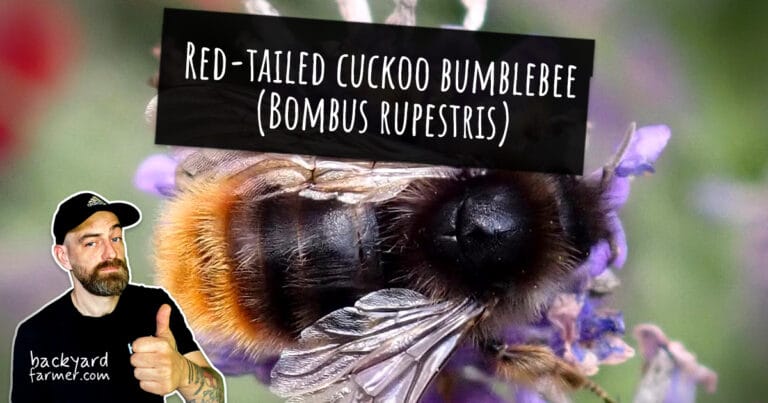
The Red-tailed Cuckoo Bumblebee (Bombus rupestris) is a striking parasitic bumblebee recognised by its bold black body and vivid red tail. Active from late spring through summer, it is most often seen feeding on flowers rather than nesting, as it relies on other bumblebee species to raise its young.
In the UK, this species is typically found in gardens, parks, hedgerows, grassland, and open countryside where its host species occurs. Although it can look similar to some social bumblebees at first glance, its behaviour and lack of pollen-carrying structures set it apart.
Like other cuckoo bumblebees, the Red-tailed Cuckoo Bumblebee is vulnerable to habitat loss, pesticide use, and declines in its host populations. In this guide, you’ll learn how to identify it confidently, distinguish it from similar species, and understand its role within healthy bumblebee communities.
Identification & Key Facts
| Attribute | Details |
|---|---|
| Common Name | Red-tailed Cuckoo Bumblebee |
| Latin Name | Bombus rupestris |
| Size | ~15–20 mm |
| Location | Widespread across England and Wales; local in Scotland |
| Active Months | May to August |
| Habitat | Gardens, grassland, hedgerows, open countryside |
| Nesting Behaviour | Parasitic – invades host bumblebee nests |
| Social Behaviour | Parasitic (no workers) |
| Flora | Thistles, knapweed, clover, meadow flowers |
| UK Status | Locally common |
How to Identify the Red-tailed Cuckoo Bumblebee
The Red-tailed Cuckoo Bumblebee has a robust, mostly black body with a bright red tail that is usually clean-edged and highly visible. Unlike many bumblebees, it lacks pollen baskets on the hind legs, giving the legs a smooth, shiny appearance.
In the UK, it is most often seen visiting nectar-rich flowers during summer. It does not collect pollen and is rarely seen entering nests, which can help separate it from similar-looking social bumblebees.
Physical Characteristics
- Female – Large and powerful, with a black body, vivid red tail, and smooth hind legs lacking pollen baskets.
- Worker – None present (cuckoo bumblebees do not produce workers).
- Male (Drone) – Similar in colour to the female but slightly slimmer, often with longer antennae and lighter facial hair.
Similar Species
The Red-tailed Cuckoo Bumblebee is most often confused with:
- Red-tailed Bumblebee (Bombus lapidarius) – Has workers and pollen baskets; usually seen carrying pollen.
- Vestal Cuckoo Bumblebee (Bombus vestalis) – Lacks a red tail and is usually paler overall.
- Barbut’s Cuckoo Bumblebee (Bombus barbutellus) – Paler with yellow banding and a light tail.
If you’re unsure which bee you’ve spotted, our Bee Identification guide can help you narrow down UK species by size, colour, and behaviour.
Why the Red-tailed Cuckoo Bumblebee Matters
Although it does not collect pollen for its offspring, the Red-tailed Cuckoo Bumblebee still contributes to pollination as an adult while feeding on nectar-rich flowers. Its presence also indicates healthy populations of its host species, making it an important ecological indicator.
As part of the cuckoo bumblebee group, it highlights the complexity of pollinator relationships and the need to conserve entire bumblebee communities rather than focusing on single species.
FAQs
No. It is not aggressive towards people and rarely stings.
It is mainly active from late spring through summer, typically May to August.
It is locally common but dependent on the presence of its host species.
Females can sting, but stings are uncommon and usually only occur if the bee is handled.
How You Can Help
Supporting the Red-tailed Cuckoo Bumblebee means supporting bumblebee diversity overall:
🌿 Plant Bee-Friendly Flowers
- Thistles, knapweed, clover, meadow wildflowers
🚫 Avoid Harmful Pesticides
- Avoid insecticides that reduce nectar sources or harm host bumblebees
🏡 Provide Nesting Spaces
- Leave rough grass, undisturbed areas, and natural nesting sites for bumblebees
By encouraging flower-rich habitats and low-intensity land management, you help support the Red-tailed Cuckoo Bumblebee and the wider pollinator network.