

Introduction
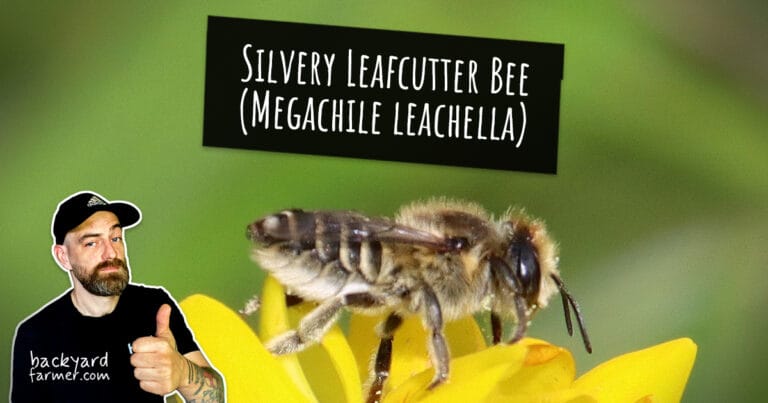
The Silvery Leafcutter Bee (Megachile leachella) is a compact, coastal specialist that becomes active in early to mid-summer. It is best known for its pale, silvery appearance and its habit of nesting in sandy ground near the coast, making it a distinctive sight on dunes and sandy paths.
In the UK, this species is most often encountered along coastal dunes, shingle, and sandy grassland, though it can occasionally appear inland where suitable sandy substrates exist. It forages on a range of low-growing flowers and is particularly well adapted to exposed, windswept environments.
Although locally common in the right habitats, the Silvery Leafcutter Bee is vulnerable to habitat disturbance, dune stabilisation, and coastal development. In this guide, you’ll learn how to identify Megachile leachella, tell it apart from other leafcutter bees, and understand why protecting sandy coastal habitats is essential for its survival.
Identification & Key Facts
| Attribute | Details |
|---|---|
| Common Name | Silvery Leafcutter Bee |
| Latin Name | Megachile leachella |
| Size | Females: ~10–12 mm, Males: ~8–10 mm |
| Location | Coastal areas of England and Wales; localised inland |
| Active Months | June to August |
| Habitat | Coastal dunes, sandy grassland, shingle |
| Nesting Behaviour | Ground-nesting in sand; uses leaf pieces to line nests |
| Social Behaviour | Solitary |
| Flora | Sea holly, bird’s-foot trefoil, daisy relatives |
| UK Status | Locally common |
How to Identify the Silvery Leafcutter Bee
The Silvery Leafcutter Bee is a small, stocky bee with a noticeably pale, silvery-grey appearance caused by dense body hairs. Females carry pollen on the underside of the abdomen, a key feature of leafcutter bees.
In the UK, it is most often seen flying low over sandy ground or visiting coastal flowers on warm, sunny days. Its preference for exposed coastal sites and pale colouring help distinguish it from darker leafcutter species.
Physical Characteristics
- Female – Compact and pale, with dense silvery hairs and a bright pollen load carried beneath the abdomen.
- Male – Smaller and slimmer, often with longer antennae and a slightly darker appearance.
Image source: {source}
Similar Species
The Silvery Leafcutter Bee can be confused with other Megachile species:
- Patchwork Leafcutter Bee (Megachile centuncularis) – Larger and darker, usually found inland.
- Red-tailed Leafcutter Bee (Megachile willughbiella) – More robust with a distinctive reddish tail.
- Mason Bees (Osmia species) – Use mud rather than leaf pieces to seal nests.
If you’re unsure which bee you’ve spotted, our Bee Identification guide can help you narrow down UK species by size, colour, and behaviour.
Why the Silvery Leafcutter Bee Matters
The Silvery Leafcutter Bee plays an important role in pollinating coastal and dune plants, many of which are specially adapted to harsh, salty environments. Its activity supports plant reproduction in habitats where relatively few pollinators can thrive.
As a coastal specialist, this species is also a useful indicator of healthy dune systems and sandy grassland, habitats that support a wide range of rare and specialised wildlife.
FAQs
No. This species is calm and focused on foraging, and is very unlikely to sting.
It is typically active during early to mid-summer, usually from June to August.
It is locally common in suitable coastal habitats but absent from many inland areas.
Females can sting, but stings are rare and usually only occur if the bee is handled.
How You Can Help
Supporting the Silvery Leafcutter Bee focuses on protecting coastal habitats:
🌿 Plant Bee-Friendly Flowers
- Sea holly, bird’s-foot trefoil, daisy relatives
🚫 Avoid Harmful Pesticides
- Avoid pesticide use near dunes and coastal grassland
🏡 Provide Nesting Spaces
- Leave sandy areas undisturbed; avoid stabilising dunes unnecessarily
By protecting open sandy ground and coastal wildflowers, you help support the Silvery Leafcutter Bee and other specialist pollinators.