
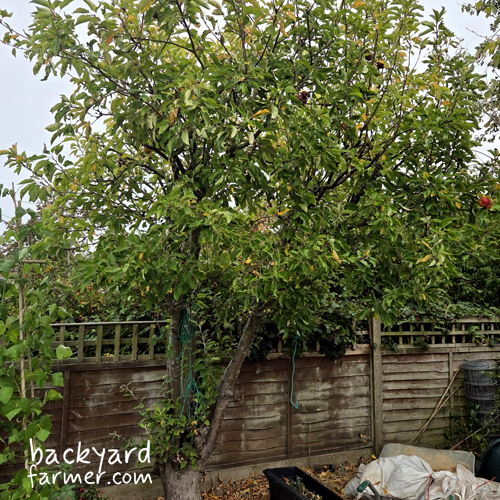
A struggling apple, pear, plum or cherry tree isn’t necessarily beyond saving. Dead branches, yellowing leaves and poor fruit production can result from problems that are relatively straightforward to manage.
However, extensive root damage, serious trunk decay or structural instability can make removal the safest option. The key is knowing what to look for before deciding whether your fruit tree can recover.
How to Tell if a Fruit Tree Is Beyond Saving
A fruit tree may be beyond saving when its roots, trunk or main supporting branches are too badly damaged to recover or remain structurally safe.
A few dead branches or a poor harvest don’t automatically mean the whole tree is dying.
| Warning sign | What it could mean | What to do |
|---|---|---|
| A few dead branches | Localised damage or disease | Investigate and prune appropriately |
| Yellowing or sparse leaves | Drought, waterlogging or root problems | Check soil conditions |
| Canker on one branch | Potentially manageable infection | Assess and remove affected growth |
| Extensive trunk decay | Possible structural weakness | Seek professional assessment |
| Loose or unstable tree | Root or structural failure | Keep clear and seek urgent advice |
| Widespread root disease | Recovery may be unlikely | Confirm the cause before removal |
The most concerning signs are progressive dieback across the canopy, extensive decay around the trunk and evidence that the roots are no longer supporting the tree properly.
Importantly, a tree can remain alive even when its structure has become unsafe.
Check the Tree Before Deciding to Remove It
Before cutting down a declining fruit tree, examine its condition and growing environment.
- Check the canopy. Dead branches on one side may suggest localised disease, root damage or environmental stress. Sparse growth throughout the canopy can indicate a wider problem.
- Inspect the bark and branches. Look for sunken cankers, cracks, peeling bark and dead patches. Note whether damage is limited to smaller branches or affects the main trunk.
- Examine the trunk and base. Extensive decay, fungal growth around the root flare or visible movement at ground level can indicate serious problems. Don’t attempt to test an unstable tree by pushing it.
- Check the soil. Waterlogged ground can suffocate roots, while prolonged drought produces similar symptoms above ground. Consider whether the soil drains properly.
- Think about recent changes. Building work, root disturbance, severe pruning, flooding and unusually dry weather can all cause a tree to decline.
A gentle scratch on a small twig can sometimes reveal green living tissue beneath the bark. However, this only shows that part of the tree remains alive. It doesn’t confirm that the roots are healthy or the trunk is structurally sound.
If a large tree has developed a sudden lean, visible root movement or serious structural damage, keep clear and arrange a professional assessment.
Common Diseases That Can Seriously Damage Fruit Trees
Several diseases affect fruit trees in UK gardens and allotments. Some can be managed through careful pruning, while others cause lasting damage to roots or supporting wood.
Apple Canker
Apple canker causes sunken, cracked areas of dead bark, often with raised edges. It commonly affects branches but can spread into the main framework.
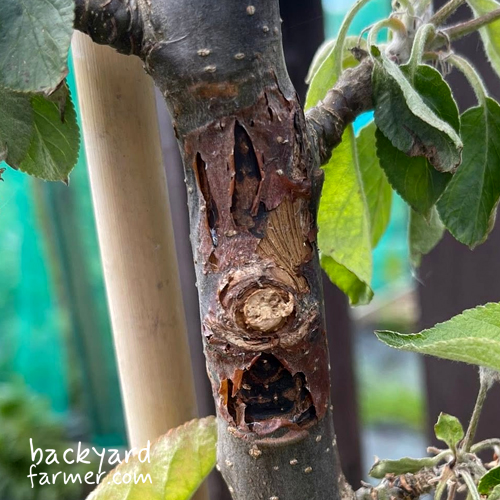
Small, isolated infections can often be removed through appropriate pruning. Extensive cankers surrounding the trunk or major branches are much more serious.
A tree with limited canker may remain productive for years. The RHS guidance on apple canker explains how to recognise and manage affected growth.
Honey Fungus
Honey fungus attacks woody roots and can cause poor growth, branch dieback and eventual death.
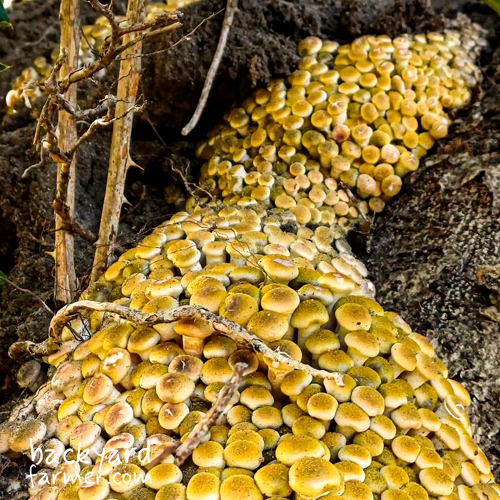
Warning signs include creamy-white fungal growth beneath bark near the base, sometimes accompanied by black, bootlace-like structures.
Some species are considerably more destructive than others, so not every suspected infection requires removal. Where aggressive honey fungus is confirmed, removing infected stumps and roots may help limit further spread.
Phytophthora Root Rot
Phytophthora damages roots, causing sparse foliage, wilting and progressive dieback. Wet, poorly drained ground can increase the risk of infection.
However, waterlogging and drought can produce similar symptoms, so these signs alone cannot confirm the disease.
Trees with extensive root damage are unlikely to recover, even if drainage is subsequently improved.
Silver Leaf and Bacterial Canker
Plums and cherries are particularly susceptible to these diseases.
Silver leaf may cause silvery foliage, internal wood staining and branch dieback. Bacterial canker produces sunken bark, dying shoots and sometimes gummy deposits.
Neither condition should be diagnosed from one symptom alone. Physical damage and environmental stress can cause similar problems.
Can a Dying Fruit Tree Be Saved?
Many declining fruit trees can recover if their main structure remains sound and the underlying problem is addressed.
Depending on the cause, the following measures may help:
- Remove localised disease. Prune infected or dead branches at an appropriate time, following advice for the specific disease.
- Improve watering. Established trees can suffer during prolonged drought, particularly on shallow or free-draining soils.
- Correct drainage problems. Waterlogged roots struggle to function. Improving drainage and reducing compaction may prevent further damage.
- Renovate neglected trees. Old apple and pear trees can often be restored through gradual pruning over several winters.
- Reduce competition. Keep vigorous weeds and grass away from the base, and mulch without covering the root flare.
Avoid heavily cutting back an old apple or pear tree in one season. The RHS recommends removing no more than around a quarter of the canopy annually during major renovation.
Plums and cherries are generally pruned during suitable dry conditions in spring or summer rather than winter, helping reduce the risk of silver leaf infection.
Older fruit trees don’t need perfect shapes to remain productive. Even a tree with some damaged branches may continue producing worthwhile harvests.
However, pruning and improved care cannot reliably repair extensive trunk decay or restore a severely damaged root system.
When Removing a Fruit Tree Is the Better Option
Removal may be the most sensible choice when a tree has suffered extensive damage that cannot realistically be managed.
This includes severe structural decay, failing roots, widespread progressive disease or a weakened trunk that presents an unacceptable risk.
A dead tree doesn’t always need removing immediately. Where it can be retained safely, standing dead wood provides valuable habitat for insects, birds and other wildlife.
The important distinction is whether the tree can remain in place without presenting a danger to people, buildings or neighbouring plots.
Removing a Diseased Fruit Tree Safely
Large or unstable fruit trees should be assessed by a qualified tree surgeon. Decayed limbs can break unpredictably, while weakened roots may make a tree difficult to dismantle safely.
Professional removal is particularly important where a tree stands close to buildings, boundaries or other established plants.
Professional assessment is equally important elsewhere. In Australia’s Central West NSW region, homeowners can arrange specialist tree removal where a large or unstable tree cannot be dismantled safely.
In England, check whether a Tree Preservation Order or conservation-area restrictions apply before removal. Requirements differ elsewhere in the UK, and fruit trees aren’t automatically exempt from protection.
Active bird nests and protected bat roosts must also be considered before any tree work begins.
What to Do After Removing a Diseased Fruit Tree
If disease contributed to the tree’s decline, removing the trunk and branches may not eliminate the underlying problem.
Some pathogens can survive in infected roots, stumps or surrounding soil.
After removal:
- Clear infected material. Remove diseased wood and affected roots where recommended for the identified pathogen.
- Clean equipment. Soil and infected plant material can transfer certain diseases between growing areas.
- Dispose of waste appropriately. Some diseased material shouldn’t be home composted. Follow guidance for the specific disease and local disposal requirements.
- Check the stump. Removing infected stumps and roots can be important where destructive honey fungus is present.
- Investigate the original cause. Poor drainage, compacted soil or repeated root damage should be addressed before planting anything new.
Avoid moving potentially contaminated soil and roots across vegetable beds or other growing areas.
The aim is to reduce the risk of further infection, not to remove every trace of organic material from the soil.
Can You Plant Another Fruit Tree in the Same Spot?
You can sometimes replace a dead fruit tree in the same area, but reusing the original planting hole isn’t always advisable.
One concern is replant disease, which can affect apples, pears, cherries and other fruit trees when the same or a closely related type is planted into soil previously occupied by a similar tree.
Young trees affected by replant disease may establish poorly, develop weak roots and produce disappointing growth. The RHS guidance on replant disease explains the risks and available precautions.
Where practical, choose a different planting position, particularly if the previous tree suffered from a serious soil-borne disease.
Before replanting:
- Remove infected woody material where necessary.
- Improve drainage and investigate any soil problems.
- Consider replacing soil where replant disease is a concern.
- Choose a suitable rootstock and varieties with useful disease resistance.
- Buy healthy nursery stock from a reputable supplier.
There is no universal waiting period that guarantees the soil will be suitable for another fruit tree. The best approach depends on what caused the original tree to decline.
If you’re planning a replacement, our guide to planting bare-root fruit trees in the UK covers planting times, positioning and helping new trees establish.
For particularly old or valued apple trees, consider taking suitable healthy scion wood for grafting before removal. This may allow you to preserve a favourite variety even when the original tree cannot be saved.
Frequently Asked Questions
Yes, depending on the cause. Apple trees suffering from drought, poor drainage, localised canker or neglected pruning may recover with appropriate care. Extensive root failure or severe structural decay makes recovery much less likely.
Yes. Some hollow fruit trees remain alive and productive for many years. However, the remaining wood may not provide sufficient structural support. Larger trees or those showing instability should be assessed by a qualified arborist.
Yes, although choosing a different position is often preferable. Replant disease and persistent soil-borne pathogens can affect replacement trees. Identify the original problem and assess soil conditions before planting.
Not always. A stump can be left to decay where it presents no practical or disease-related problem. However, removing infected stumps and roots can be important where destructive root diseases such as honey fungus are present.