
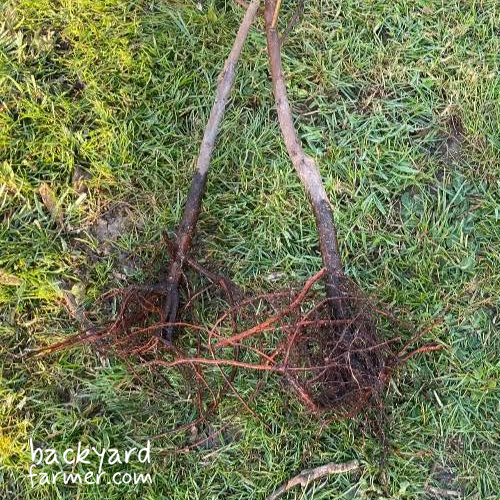
Bare-root fruit is sold dormant without a container of compost, with the roots wrapped for transport. In the UK, it is usually planted from late autumn to early spring while the plant is still dormant.
Plant it as soon as practical, but do not force it into frozen or waterlogged ground. Keep the roots moist until planting.
The main aim is simple: keep the roots moist, plant at the correct depth and help the plant establish before spring growth begins.
Bare-Root Fruit Quick Guide
| Question | Quick answer |
|---|---|
| When to plant? | Usually November to March, while dormant |
| Frozen or waterlogged ground? | Wait until conditions improve |
| Plant immediately? | Ideally yes; keep roots cool and damp if delayed |
| Soak roots? | Around 30 minutes if dry |
| Planting hole | Wide enough to spread roots naturally; not unnecessarily deep |
| Grafted fruit trees | Keep the graft union above soil level |
| Water after planting? | Yes, thoroughly |
| Mulch? | Yes, but keep it clear of stems and trunks |
| First summer | Water during dry spells |
When to Plant Bare-Root Fruit in the UK
The main bare-root planting season runs from late autumn to early spring, with November to March the practical window for most fruit.
Dormant plants can begin establishing roots before strong spring growth starts.
Do not plant into frozen soil or ground that is saturated with water. If your delivery arrives during a cold snap or very wet spell, keep the roots protected and wait until the soil becomes workable.
Bare-root season is winter, but workable soil matters more than the date on the calendar.
What to Do When Bare-Root Fruit Arrives
Unpack bare-root plants promptly and check the roots.
They should be kept cool and damp and should never be left exposed to wind or drying air while you prepare the planting site.
If you can plant within a few days, keep the roots wrapped and moist somewhere cool.
For a longer delay, heel the plant in — temporarily cover the roots with soil until you can plant it properly.
Avoid storing bare-root fruit somewhere warm enough to encourage early growth.
Should You Soak Bare-Root Fruit Before Planting?
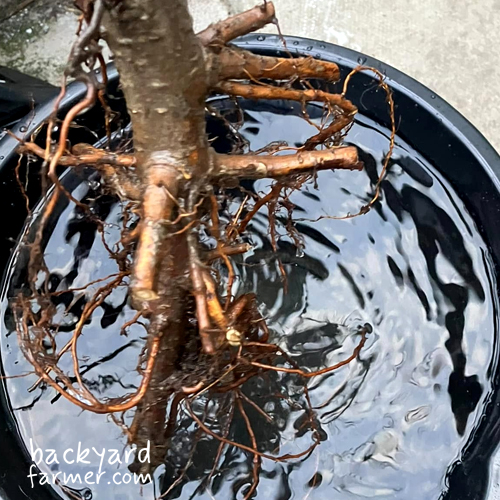
If the roots look dry, soak them in clean water for around 30 minutes before planting.
If they are already moist and freshly unpacked, there is no need for a long soak.
Do not leave bare-root plants submerged in water for days.
Choose the Right Spot
Most fruit performs best in good light with free-draining soil and some shelter from strong wind.
Avoid permanently waterlogged ground and obvious frost pockets where possible, and allow enough room for the plant to reach its mature size.
If you are planting fruit trees on an allotment, check the site rules first. Some associations restrict tree height or require smaller rootstocks.
How to Plant Bare-Root Fruit
- Dig a hole wide enough for the roots to spread naturally.
- Avoid digging much deeper than the root system needs.
- Loosen compacted sides and surrounding soil.
- Spread the roots without bending or forcing them into the hole.
- Position the plant at the correct depth.
- Backfill with the excavated soil.
- Work soil carefully around the roots to remove large air pockets.
- Firm the soil gently around the roots.
- Water thoroughly after planting.
Improve poor soil if needed, but do not sit the roots directly on a rich layer of compost, manure or fertiliser.
A soft layer beneath the roots can settle later and leave the plant sitting too deeply.
How Deep Should You Plant Bare-Root Fruit?
Planting depth varies by fruit — do not assume every bare-root plant goes back at the old soil mark.
| Fruit | Planting depth |
|---|---|
| Apple, pear and other grafted fruit trees | Root flare or first roots around soil level; graft union above ground |
| Gooseberries | Usually around the previous soil mark |
| Redcurrants/whitecurrants | Usually at the previous soil level |
| Blackcurrants | Around 5cm deeper than previously grown |
| Raspberries | Use the previous soil mark; avoid deep planting |
The graft union on a fruit tree should remain clearly above the soil.
Blackcurrants are the main exception in this group because slightly deeper planting encourages fresh shoots from the base.
Planting Bare-Root Fruit in Clay Soil
On heavy clay, dig wide rather than excessively deep and avoid planting where water sits after rain.
Loosen the surrounding soil so roots can spread outwards, but do not fill the hole with loose compost if the surrounding clay cannot drain properly.
A deep compost-filled hole in heavy clay can behave like a sump and leave roots sitting in water.
Improve the wider soil where practical rather than creating an isolated pocket around the roots.
Staking, Watering and Mulching
Newly planted fruit trees may need staking, particularly on exposed sites or where the root system needs support. Install the stake during planting where possible so you do not damage roots later.
Bushes and canes usually use their normal support systems instead.
Water thoroughly after planting, then check soil moisture during dry weather rather than watering automatically every day.
Add an organic mulch around the root area to help conserve moisture and suppress weeds, but leave a clear gap around the trunk or stems.
Can You Plant Bare-Root Fruit in a Pot?
Yes, if the fruit and rootstock are suitable for container growing.
Use a large pot with proper drainage holes and an appropriate loam-based compost. Dwarfing fruit trees and compact varieties are generally better suited to containers than vigorous plants.
Bare-root fruit planted in pots usually needs more regular watering than the same plant growing in open ground.
Bare-root does not mean it has to go in the ground, but the container still needs to suit the mature plant.
First-Year Aftercare
The first growing season is mostly about helping the root system establish.
Water deeply during dry spells and check the soil rather than watering by habit. Keep grass and weeds away from the root area, check tree ties and supports, and top up mulch if necessary.
Do not panic if the plant appears to do very little at first.
A newly planted bare-root tree, bush or cane can look like a dead stick for weeks before growth begins.
Common Bare-Root Planting Mistakes
| Mistake | Why it causes problems |
|---|---|
| Letting roots dry out | Damages the root system before planting |
| Planting grafted fruit too deeply | Can bury the graft union and weaken establishment |
| Planting into waterlogged ground | Roots may struggle or rot |
| Adding lots of fertiliser to the hole | Unnecessary and can cause problems around new roots |
| Mulching against the trunk | Holds moisture against the bark |
| Incorrect watering after planting | Letting roots dry out or keeping the soil constantly saturated can both cause problems |
| Ignoring weeds and grass | They compete with the new plant for moisture |
FAQs
Yes, provided the plant is dormant and the ground is workable rather than frozen or waterlogged.
Plant as soon as practical. For a short delay, keep the roots cool, wrapped and damp. For a longer delay, heel the plant temporarily into soil.
Around 30 minutes is generally enough if the roots are dry. If they are already moist, a long soak is unnecessary.
It depends on the crop and the form you have bought. Raspberries, blackcurrants and fruit trees can require different treatment, so follow crop-specific pruning guidance rather than using one rule for everything.
Yes, if the variety or rootstock is suitable and the container is large enough with good drainage.