

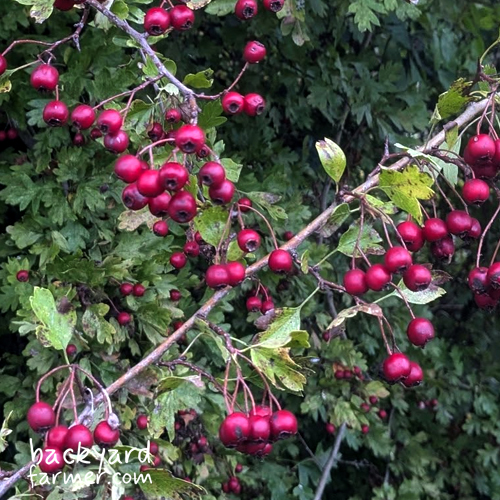
Hawthorn berries, or haws, are the red autumn fruits of hawthorn trees commonly found in UK hedgerows, woodland edges and field boundaries. They’re edible when correctly identified and have traditionally been used for jellies, syrups, teas and preserves. This guide covers how to identify hawthorn, when and where to forage the berries, how to use them, and the important safety points to know before eating them.
How to Identify Hawthorn Trees and Berries
Hawthorn trees (Crataegus spp.) are small to medium-sized deciduous trees or shrubs, commonly found in hedgerows, forests, and open fields. Their bright red fruits, known as hawthorn berries, are a favourite among foragers and herbalists. Learning to identify these trees ensures safe and successful foraging.
Tree Characteristics
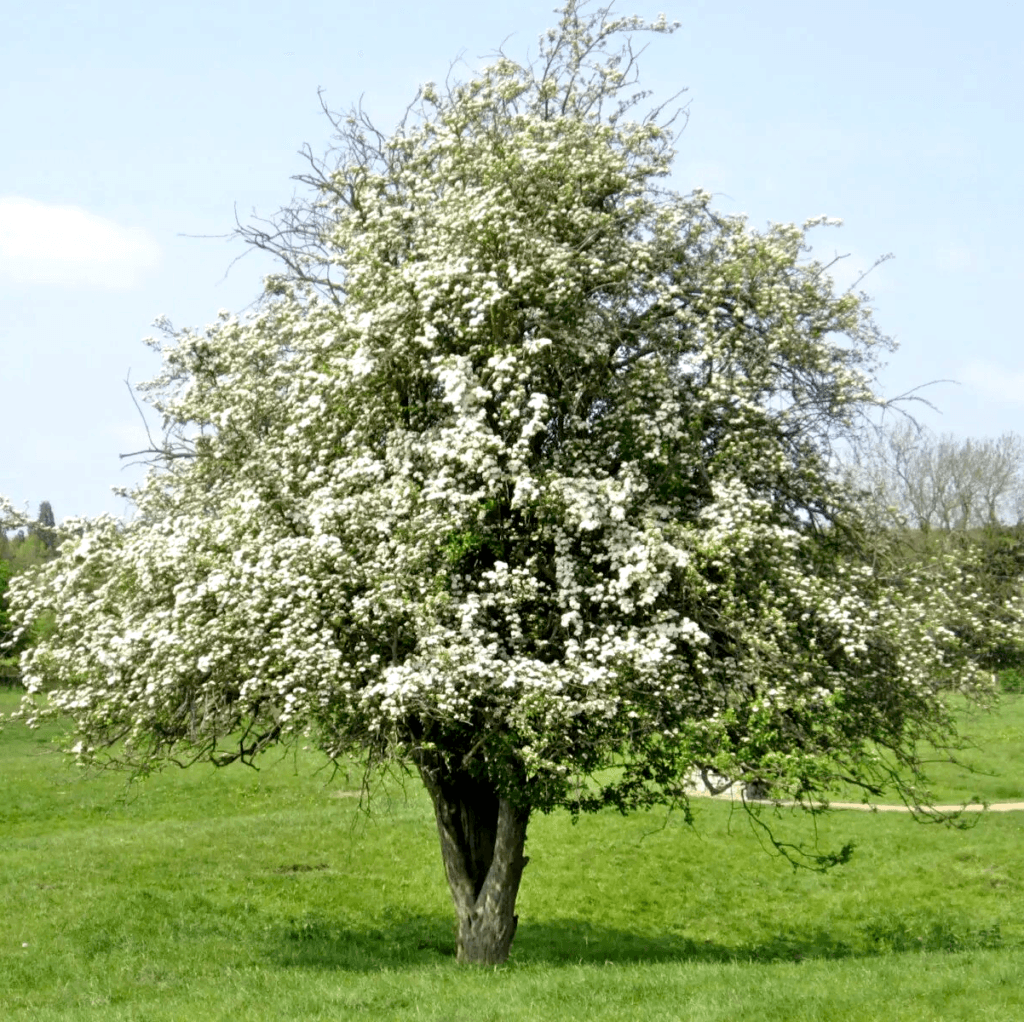
- Size & Shape: These trees typically grow between 15-30 feet tall and develop a dense, rounded crown.
- Bark: Young trees have smooth, grey bark, which becomes rough and fissured as they mature.
- Thorns: One of the most distinctive features of hawthorn trees is their sharp, rigid thorns, measuring 0.5 to 3 inches long, growing along the branches.
Hawthorn Leaves
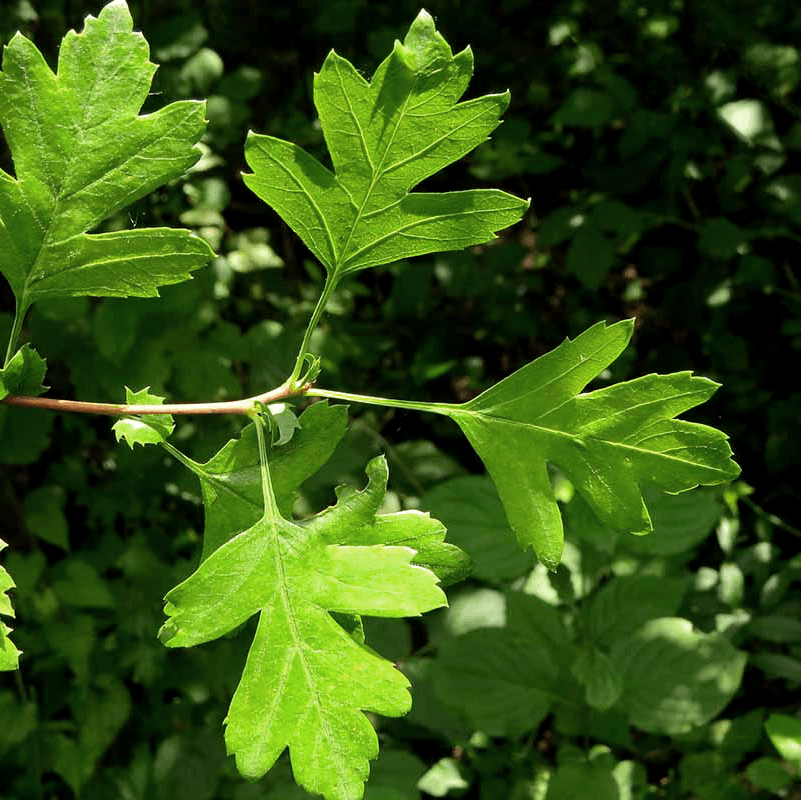
- Shape: The leaves vary by species but are generally lobed, toothed, and small (1-3 inches long).
- Colour: They emerge bright green in spring and summer, before transitioning to yellow, orange, or red in autumn.
Hawthorn Flowers
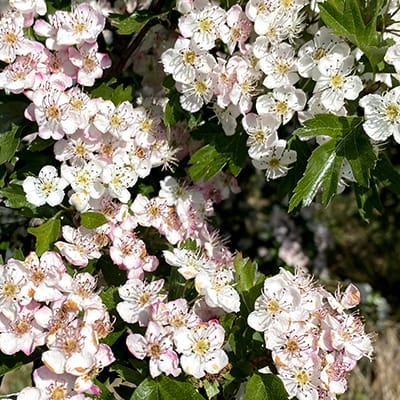
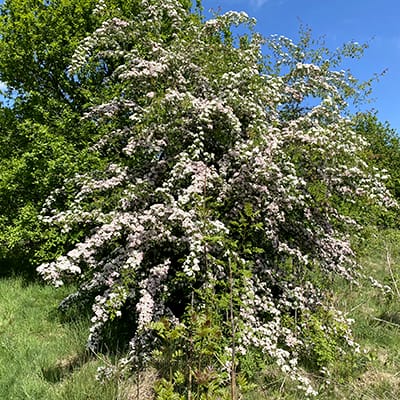
- Appearance: Clusters of small, white or pink flowers bloom in late spring to early summer.
- Fragrance: These flowers have a slightly sweet scent, attracting pollinators like bees and butterflies.
Hawthorn Berries: Appearance, Taste & Seeds
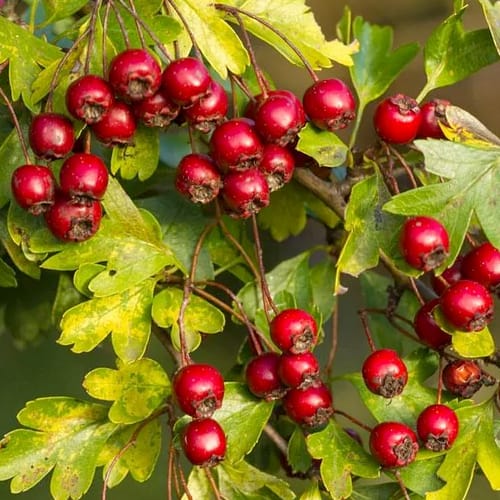
- Colour & Size: These small, round, wild edible berries ripen in autumn, turning red, deep orange, or even dark purple, depending on the species.
- Seeds: Each berry contains 1-5 seeds, which should not be consumed due to their cyanogenic compounds.
- Texture & Taste: The berries have a mealy texture and a mildly sweet yet tart flavour, similar to crabapples.
The berries of commonly foraged hawthorn species are edible, although flavour, sweetness and texture vary between species.
For trusted botanical details about the most common hedgerow species, see the RHS profile of Crataegus monogyna, which covers its growth habits, fruiting period, and horticultural insights.
Regional Variations in Hawthorn Species
Hawthorn species vary depending on the region, with different types dominant in the UK, EU, and US:
UK & EU:
- Crataegus monogyna (Single-Seeded Hawthorn) – The most common species, found in hedgerows and woodlands.
- Crataegus laevigata (Midland Hawthorn) – Similar to monogyna but with broader leaves and more than one seed per berry.
USA & Canada:
- Crataegus phaenopyrum (Washington Hawthorn) – Grows in the eastern and central US, producing small, sweet berries.
- Crataegus douglasii (Black Hawthorn) – Native to the Pacific Northwest, recognised by its dark purple to black berries.
- Crataegus crus-galli (Cockspur Hawthorn) – Notable for its long, curved thorns and large red berries.
Comparison of Common Hawthorn Species
| Feature | Washington Hawthorn (Crataegus phaenopyrum) | Single-Seeded Hawthorn (Crataegus monogyna) | Midland Hawthorn (Crataegus laevigata) |
| Leaf Shape | Lobed, slightly serrated | Deeply lobed, more distinct | Broader, less deeply lobed |
| Thorn Size | Up to 3 inches | Smaller, 0.5-1 inch | Shorter, more numerous |
| Berry Seeds | 3-5 seeds | Single seed | 2-3 seeds |
| Bloom Time | Late spring | Late spring | Late spring |
| Fruit Ripening | Late October | Mid-October | Mid-October |
By familiarising yourself with these characteristics and regional variations, you can confidently identify hawthorn berries and safely forage for them in the wild. Now that you know how to recognise them, let’s explore when and how to harvest these nutritious berries!
Where to Find Hawthorn Berries
Hawthorn is especially common in hedgerows, field boundaries, woodland edges, scrub and old pasture. In the UK, it is one of the most widespread hedgerow trees, so you rarely need to travel far to find it.
Good places to check include:
- Mature hedgerows and field boundaries
- Woodland edges and old pasture
- Country lanes and footpaths
- Parks and larger gardens where foraging is permitted
Look for mature trees carrying dense clusters of ripe berries, usually from late summer into autumn.
Avoid picking from:
- Busy roadsides or heavily polluted areas
- Land that may have been treated with pesticides or herbicides
- Places where collecting wild plants or fruit is restricted
Choose clean, healthy berries and take only what you need, leaving plenty for birds and other wildlife.
In the UK, ripe haws are usually available from September into November. They are generally ready when they have developed a deep red colour and feel ripe rather than hard.
If you’re new to wild food, our Beginner’s Guide to Foraging in the UK covers the basics of safe and responsible foraging before you head out.
How to Use Hawthorn Berries
Hawthorn berries are surprisingly versatile once harvested. In the UK they are most commonly used for jellies, syrups, teas and preserves, although they also have a long history of use in traditional herbal preparations.
Popular Ways to Use Hawthorn Berries
| Use | How They’re Used |
|---|---|
| Hawthorn jelly | Cooked with sugar and pectin to make a tart preserve for toast, cheese and desserts. |
| Hawthorn tea | Fresh or dried berries can be steeped in hot water, often with honey, ginger or cinnamon. |
| Hawthorn syrup | Cooked down into a concentrated syrup for drinks, desserts or traditional herbal preparations. |
| Dried hawthorn | Berries can be dried for later use in teas or other recipes. |
| Tinctures and extracts | Traditionally prepared by steeping hawthorn in alcohol as a concentrated herbal extract. |
Hawthorn is used differently around the world. In Britain and Europe, jellies, syrups, fruit leathers and alcoholic drinks are common traditional uses. In China and other parts of East Asia, hawthorn is also widely used in sweets, drinks and teas.
Traditional Herbal Uses of Hawthorn
Hawthorn also has a long history in European herbal medicine and Traditional Chinese Medicine.
Traditionally, preparations made from hawthorn have been associated with:
- Heart and circulation support
- Digestive complaints
- Use as a source of naturally occurring flavonoids and other plant compounds
In Traditional Chinese Medicine, hawthorn fruit is known as Shan Zha and has traditionally been used particularly in connection with digestion.
These are traditional uses rather than a reason to self-treat a medical condition. Hawthorn can interact with some medicines, particularly those affecting the heart, circulation or blood pressure.
If you’re interested in the wider historical use of plants like hawthorn, see our history of herbal medicine.
Using Hawthorn SafelyF
For normal culinary use, the most important point is to remove the seeds before crushing, grinding or processing the fruit, as they contain cyanogenic compounds.
If you intend to use hawthorn regularly or in concentrated preparations such as tinctures or supplements — particularly if you take medication — read the safety section below first.
Safety and Precautions When Using Hawthorn Berries
Hawthorn berries are generally used safely as food when correctly identified and properly prepared, but there are a few important precautions to keep in mind — particularly around the seeds, medicines and concentrated herbal preparations.
Don’t Eat or Crush the Seeds
Hawthorn seeds contain cyanogenic compounds, similar to those found in apple seeds.
For normal culinary use:
- Avoid crushing or grinding the seeds during preparation, and strain or remove them before eating
- Avoid crushing, grinding or chewing the seeds
- Use the fleshy outer part of the berry for food and drink preparations
Take Care With Medicines and Supplements
Hawthorn has traditionally been used in connection with the heart and circulation, which also means concentrated preparations may interact with certain medicines.
If you take medication for heart conditions, blood pressure or circulation, speak to a healthcare professional before using hawthorn tinctures, extracts or supplements regularly.
The same caution applies if you are pregnant or breastfeeding, as evidence around concentrated medicinal use is limited.
Possible Side Effects
Food-sized amounts are generally well tolerated, but concentrated hawthorn preparations may cause side effects in some people, including:
- Dizziness or low blood pressure
- Digestive upset or nausea
- Allergic reactions, particularly in people sensitive to plants in the rose family
If you feel unwell after taking a hawthorn preparation, stop using it.
Forage Responsibly
As with any wild food, where you pick matters as much as what you pick.
- Avoid berries growing beside busy roads or polluted areas
- Avoid sites that may have been treated with herbicides or pesticides
- Only pick where you have permission and where local rules allow it
- Take a small proportion of the crop and leave plenty for birds and other wildlife
In the UK, foraging for wild fruit for personal use is generally permitted in many places, but access rights, land ownership and local restrictions still apply.
Storing Hawthorn Berries
Use fresh berries soon after picking, or preserve them for later use:
- Drying: Keep fully dried berries in an airtight container somewhere cool and dark
- Freezing: Freeze cleaned berries for later use in cooking or syrups
- Syrups and preserves: Store according to the recipe and sterilisation method used
If you are planning to make tinctures, extracts or other concentrated preparations, treat them differently from ordinary culinary use and follow appropriate herbal safety guidance.
Frequently Asked Questions
Yes. Hawthorn berries, or haws, are edible when the tree has been correctly identified. The flesh can be eaten raw or used in cooked preparations, but avoid chewing or crushing the seeds.
Hawthorn berries usually ripen from September to November in the UK. Look for berries that have developed their characteristic deep red colour and are fully mature before picking.
Yes, hawthorn berries can be eaten raw, although many people prefer them cooked, dried or made into preserves. Raw haws can have a fairly mealy texture and contain relatively little flesh around the seeds.
Hawthorn berries are generally mildly tart with a little sweetness. Their exact flavour varies depending on the species and how ripe the fruit is.
Look for a combination of:
– Lobed leaves with toothed edges
– Sharp thorns along the branches
– Clusters of white or pale pink flowers in spring
– Clusters of small red berries in autumn
Never rely on the berries alone when identifying a plant for eating.
Fresh berries can be used soon after picking or preserved for later:
– Freeze cleaned berries for cooking and syrups
– Dry them thoroughly for use in teas or other preparations
– Turn them into jellies, syrups or preserves for longer-term storage
Conclusion
Hawthorn is one of the easiest wild foods to find in UK hedgerows once you know what to look for. The combination of lobed leaves, sharp thorns, spring flowers and red autumn berries makes it a useful species for beginner foragers to learn.
The berries can be used in jellies, syrups, teas and preserves, but always identify the tree confidently, avoid crushing the seeds, and pick responsibly from clean, permitted areas. Leave plenty behind for birds and other wildlife, and if you’re new to gathering wild food, continue with our Beginner’s Guide to Foraging in the UK before heading out.