
Introduction
When I first started gardening for work, I did not see it as some grand life plan.
It was temporary. A side hustle. A practical way to bring money in while I worked out what I was really meant to be doing.
The odd part was this:
I enjoyed it.
That caused a bit of friction in my head. I had a BTEC in games design, and for years I thought I should be chasing something more creative, more modern, or more impressive. Something that sounded like progress when you explained it to people.
Gardening was supposed to be the thing I did on the side. Not the thing that quietly started making the most sense.
But the more I worked outside, the harder that idea became to hold onto.
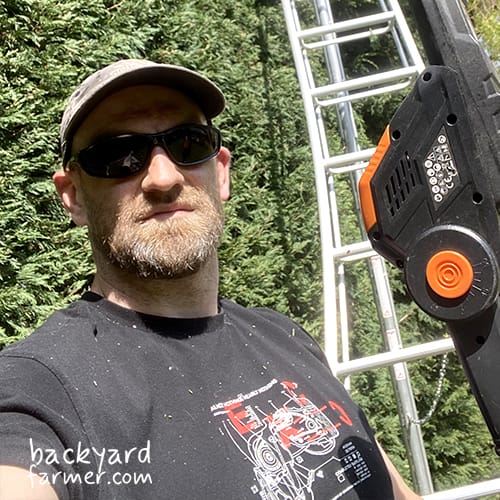
Gardening gave me things I had not found in many other jobs:
- Fresh air
- Rhythm
- Physical work
- Visible progress
- A feeling of usefulness
- Proper satisfaction at the end of the day
That last one mattered more than I expected.
At the end of a day’s gardening, I could look back and see what I had done. A border was clearer. A lawn was cut. A tired space looked cared for again. It was simple, but it felt real.
Around that time, I started listening to The Wisdom of Insecurity by Alan Watts while I worked.
I have always loved learning, but I have never found it easy to sit still and read for long periods. Audiobooks fitted the way my mind worked. I could listen while pruning, mowing, cycling between jobs, cooking, or doing the slow repetitive tasks that give your thoughts room to move.
The book did not magically solve everything.
But it did help me put words to something I was already starting to feel.
I had spent years chasing a version of success that was becoming less relevant to the life I actually wanted. I was waiting for some future point where things would finally feel right, while ignoring the fact that the work in front of me was already giving me something real.
Gardening is often treated as unskilled work, but that has never matched my experience of it. Good gardening takes observation, timing, patience, stamina, people skills, plant knowledge, and practical judgement.
More than that, it connects you to the seasons, the weather, the land, and the small improvements that build up over time.
As someone who came from the country as a boy, I slowly realised I had not failed to move forward.
In a strange way, I had found my way back.
Gardening was not me settling for less. It was me realising what actually gave me more. For more about how I set up my gardening business, see the article ‘How to Start a Gardening Business in the UK: My Real-Life Experience’.
Why I Started Listening Instead of Reading
I have always liked learning.
That has never been the problem.
The problem is that I do not always learn well by sitting still with a book in front of me.
I can read a page, get to the bottom, and realise I have no idea what I have just read. My eyes have carried on moving, but my mind has wandered off somewhere else completely.
So I go back and read it again.
And sometimes again after that.
After a while, even a good book can start to feel like a fight. Not because the subject is boring, but because the way I am trying to learn does not quite fit how my mind works.
That is where audiobooks changed things for me.
They let me learn while my hands were busy. I did not need to force myself into a chair, stare at a page, and hope my attention stayed where it was supposed to. I could listen while doing the kind of practical work that already gave my day some structure.
That suited gardening perfectly.
I could listen while doing jobs like:
- Weeding beds
- Mowing lawns
- Pruning shrubs
- Cycling between jobs
- Potting plants on
- Cooking after work
- Cleaning tools
- Tidying the shed
Those jobs still need care, of course. You cannot drift off when you are using sharp tools or working near people.
However, a lot of gardening has a steady rhythm to it. Your body is occupied, but your mind still has room to take things in.
For me, that made learning feel natural again. I was not trying to force myself into someone else’s version of reading, studying, or self-improvement. I was simply taking in ideas while doing real work.
That is how I came to listen to The Wisdom of Insecurity while working as a gardener.
It was not a polished morning routine or some grand productivity plan.
It was just me finding a way to learn that actually worked.
Gardening Was Supposed to Be Temporary
Gardening was not the original plan.
At least, not in my head.
When I first started doing gardening work, I saw it as something practical. A way to bring money in. A side hustle. A bit of honest work while I figured out the next move.
I still had this idea that I was supposed to be heading somewhere else.
I had studied games design. I had creative interests. I liked music, websites, design, ideas, and all the things that felt connected to the modern world.
So there was a strange tension there.
On one side, I had this thought:
Surely I should be doing something more impressive than gardening?
But on the other side, I was spending my days outside, working with my body, solving real problems, and coming home feeling like I had actually done something useful.
That confused me more than I expected.
Gardening was supposed to be the thing I did while I waited for the “proper” thing to happen. It was meant to be temporary. Something to keep me going while I worked out the real plan.
But slowly, the temporary thing started to feel more solid than the dream I was chasing.
It made me ask some uncomfortable questions:
- Was I wasting my skills?
- Was gardening a step backwards?
- Was I meant to want something more impressive?
- Or was I ignoring the fact that this work actually suited me?
I think a lot of people hit that point in some form.
You start with an idea of what your life should look like. Then real life starts showing you what actually feels right. Sometimes those two things do not match.
For me, gardening was only meant to be temporary.
But it kept giving me reasons to stay.
The Strange Part Was That I Enjoyed It
The strange part was not that gardening was hard.
I expected that.
It was physical work. Some days were wet, cold, muddy, awkward, or just plain repetitive. That is part of the job, and there is no point pretending otherwise.
But that was not the problem.
The problem was that I enjoyed it more than I thought I was supposed to.
There was something about the rhythm of the work that suited me. You turn up, look at the garden, work out what needs doing, and then slowly bring it back under control.
A messy border becomes clear.
A lawn gets cut.
A hedge gets shaped.
A neglected space starts looking cared for again.
That visible progress mattered to me.
In some jobs, you can work all day and still feel like nothing real has changed. With gardening, there is usually something to show for your effort. You can stand back at the end and see the difference.
That gave me a kind of satisfaction I had not found in the jobs I thought I was meant to want.
It also gave my days a better shape.
There was weather. There were seasons. There were tools to look after, plants to understand, customers to deal with, and small problems to solve as you went along.
It was not glamorous.
But it was real.
And I think that was what caught me off guard.
I had spent years thinking I needed to find something more impressive. Something that sounded better when you explained it to people. Something that looked more like the version of success I had built in my head.
Then I found myself doing a job that many people overlook, and somehow it made me feel more useful, more grounded, and more like myself.
That was hard to ignore.
The problem was not that gardening was bad. The problem was that I enjoyed it more than the things I thought I was supposed to want.
Listening to The Wisdom of Insecurity
Around the same time, I started listening to The Wisdom of Insecurity by Alan Watts.
I did not pick it up because I was trying to become a gardener.
I picked it up because I was trying to understand myself a bit better.
At that point, I still had one foot in the old idea of success. I thought I should be chasing something bigger, more impressive, or more obviously creative. Something that sounded better on paper.
However, my actual life was telling me something different.

- I was happier outside.
- I liked the physical work.
- I liked the rhythm of the day.
- I liked being useful.
- And I liked coming home tired in a way that felt earned.
Listening to Alan Watts did not suddenly give me all the answers. It was not some dramatic moment where everything clicked into place and I suddenly knew what I was doing with my life.
It was slower than that.
The book gave words to something I was already feeling. It made me question how much time I had spent chasing a future version of myself, instead of paying attention to the life I was already living.
That hit me at the right time.
Because I had been treating gardening as a temporary stopgap while I worked out the “real” plan. But the more I listened, and the more I worked outside, the less sense that old plan seemed to make.
I started to realise that I was not just chasing a career.
I was chasing permission.
Permission to feel successful. Permission to feel like I had done enough. Permission to enjoy my life once I had reached some imaginary point in the future.
But gardening was already giving me something real in the present.
It was not perfect. No job is. There are wet days, awkward jobs, difficult customers, and plenty of moments where you wonder why you chose outdoor work in the first place.
Even so, it gave me fresh air, movement, independence, practical problems to solve, and a direct sense of progress. It gave me a life that felt more grounded than the one I thought I was supposed to be chasing.
That was the shift.
The Wisdom of Insecurity did not tell me to become a gardener.
It helped me see that the goal I was chasing was becoming less relevant to the life I actually wanted.
The Goal I Was Chasing Stopped Making Sense
For a long time, I think I was chasing an idea more than a life.
I wanted proof that I was getting somewhere.
A better title.
A more impressive answer when someone asked what I did.
The feeling that I had finally become the version of myself I was supposed to be.
But that kind of goal has a habit of moving further away every time you get close to it.
There is always another step.
Another thing to prove.
Another version of success sitting just out of reach.
And while you are chasing that, it is very easy to miss what is already working.
That was what gardening started to show me.
It was not glamorous. It was not the kind of work people usually hold up as a dream career. But it gave me something immediate and real.
I could earn money.
I could work outside.
I could build my own rhythm.
I could make tired, messy spaces look cared for again.
And I could finish the day knowing my effort had changed something.
That mattered.
The more I listened to Alan Watts, the more I started to question the idea that life was something I had to earn later. I had been waiting for a future version of myself to arrive before I allowed myself to feel settled.
But that future version kept changing.
Gardening made me realise I did not want to postpone my life until I had achieved the “right” career. I wanted work that fitted the life I actually wanted to live.
That did not mean giving up on ambition.
If anything, it made my ambition more honest.
I still wanted to build things. I still wanted to create. I still wanted independence, stability, and a sense of progress.
However, I stopped aiming those things at a life that did not suit me.
I did not stop being ambitious.
I just stopped aiming my ambition at a life I did not actually want.
Gardening Is Treated as Unskilled — But That Has Never Felt True
One thing that has always bothered me is the way gardening is often treated as unskilled work.
I understand why people think that.
Most people can cut a lawn, pull weeds, or trim a hedge well enough to say the job is done. But doing gardening properly is a different thing altogether.
A good gardener is constantly reading the space in front of them.
You are looking at the weather, the season, the soil, the plant, the client, the tools, the time available, and what the garden actually needs.
You are making small decisions all day.
What should be cut now?
What should be left alone?
What needs feeding?
What is struggling?
What can be saved?
What has gone too far?
What will this look like in a month?
Those decisions come from experience, not just effort.
Good gardening takes more skill than people often give it credit for. It asks for:
- Plant knowledge
- Timing
- Observation
- Patience
- Tool control
- Physical stamina
- Problem solving
- Seasonal judgement
- Customer skills
- Practical common sense
And because every garden is alive, the work is never exactly the same twice.
You cannot just follow one fixed rule and expect the same result every time. A wet spring, a dry summer, a shady border, tired soil, an overgrown hedge, or one awkward customer can change the whole job.
That is part of what makes it satisfying.
Gardening is not just labour.
It is attention.
It is noticing what is happening and responding properly. It is knowing when to push on, when to leave something alone, and when a garden needs time rather than more interference.
A garden does not care what certificate you have. It responds to what you notice, what you understand, and what you do consistently.
That is why I never really accepted the idea that gardening was “less than” other work.
It may not always be valued properly by society, but it is useful, skilled, and real.
And for me, that mattered far more than whether it sounded impressive.
As a Boy From the Country, I Went Back to My Roots
There was another part of it too.
I came from the country as a boy.
So although gardening felt like a new job in one sense, it also felt strangely familiar. The weather, the mud, the seasons, the physical work, and the practical problem solving did not feel alien to me.
It felt like something I recognised.
Not in a romantic, picture-book way.
Country life is not all sunsets, baskets of veg, and peaceful mornings. It is work. It is weather. It is mess, broken tools, sore backs, and things not going to plan.
But there is something grounding about it.
You are dealing with real things:
- Soil
- Plants
- Water
- Wood
- Weather
- Growth
- Decay
The more I gardened, the more I realised that part of me had probably been there all along. I had just spent years trying to move away from it because I thought progress meant becoming something else.
Something more modern.
Something more impressive.
Something further removed from the land.
But maybe that was never really the point.
Maybe progress is not always about moving further away from where you started. Sometimes it is about coming back with more understanding.
That was how gardening began to feel for me.
It was not me failing to make something of myself.
It was not me going backwards.
It was me reconnecting with a part of life that actually made sense.
The land. The seasons. The work. The simple satisfaction of doing something useful with your hands.
In a strange way, I had not failed to move forward.
I had found my way back.
What This Taught Me About Work and Success
The biggest thing gardening taught me is that success has to be personal.
It cannot just be borrowed from other people.
For years, I had absorbed a version of success built around status, job titles, money, and how impressive something sounded from the outside.
But that version did not really fit me.
It looked good in theory. However, it did not answer the more important question:
What kind of life do I actually want to live every day?
Gardening helped me ask that question properly.
Not through some big dramatic moment.
Just through the ordinary rhythm of the work.
Turning up. Doing the job. Solving problems. Working outside. Earning money. Going home tired, but satisfied.
That made me realise that practical work can be meaningful in a way people often overlook.
A small business does not have to become an empire to be worthwhile. It does not have to impress everyone. It does not have to turn you into some polished business guru with a rented sports car and a podcast microphone.
It just has to support a life that feels honest to you.
For me, that meant:
- Working outside
- Having more control over my time
- Building something of my own
- Doing work that felt useful
- Staying connected to the seasons
- Having enough money without chasing endless more
- Creating space for music, writing, growing, and the rest of my life
That last part matters.
Work is important, but it is not the whole of life. If your idea of success costs you your health, your peace, your time, your relationships, or your ability to enjoy ordinary days, it is worth questioning.
That does not mean everyone should become a gardener.
It just means the work that suits you may not be the work you were told to chase.
If you are thinking about starting a gardening business, or any small practical business, do not only ask whether it looks impressive from the outside.
Ask whether you can build a life around it that actually suits you.
Can you live with the rhythm of it?
Can you handle the hard parts?
Can you find satisfaction in the ordinary days?
Can it give you enough without taking too much?
Those questions matter more than people admit.
Because the goal is not just to build a business.
The goal is to build a life you do not constantly need to escape from.
Why Audiobooks Fit This Way of Life
Gardening is obviously visual and practical.
You learn a lot by seeing, doing, making mistakes, and paying attention to what happens in front of you.
No audiobook can show you exactly how a plant looks when it is struggling. It cannot show you how soil feels when it is ready to work, or how much to take off a shrub when you are pruning it.
Some things have to be learned by doing.
However, audiobooks fit around that kind of life really well.
They are not a replacement for practical experience. They sit alongside it.
For me, they work because gardening gives you a lot of thinking space. Not every job needs your full creative attention every second. Some work is steady, repetitive, and physical.
That is when listening makes sense.
Jobs like:
- Weeding
- Mowing
- Sweeping up
- Clearing beds
- Watering
- Potting on
- Tidying tools
- Walking or cycling between jobs
Those are good times for ideas to settle in.
Technical gardening advice can be harder in audio form because you often need pictures, diagrams, or someone showing you the job properly.
But philosophy, history, biography, nature writing, business ideas, and real-life stories can work brilliantly as audiobooks.
You can listen to someone talk about life, work, failure, purpose, money, history, or creativity while doing something simple and physical with your hands.
That combination suits me.
It lets me keep learning without forcing myself into a version of learning that feels unnatural. I do not have to sit at a desk, stare at a page, and fight my own attention span.
I can move.
I can work.
I can listen.
Often, the ideas land better because I am not trying too hard to force them in.
That is why audiobooks became part of my working life. Not because I wanted another productivity hack, but because they fitted the rhythm of the life I was already building.
If you learn better by listening, Audible can be worth trying, especially if you spend a lot of time working outside, walking, driving, cooking, or doing practical jobs where your hands are busy but your mind is free.
For me, it has never been about replacing books.
It has been about finding a way to learn that actually works.
Final Thoughts
Looking back, gardening was never really the fallback I thought it was.
At first, I treated it as temporary work. Something useful to do while I figured out the next step.
But sometimes the thing you pick up on the side turns out to be the thing that shows you what you actually need.
For me, gardening gave shape to my days. It gave me work I could see, feel, and understand. It gave me fresh air, movement, independence, and a connection to the seasons that I had not realised I was missing.
Listening to Alan Watts did not make that happen on its own.
But The Wisdom of Insecurity helped me see it more clearly.
It helped me question the idea that life was always somewhere ahead of me. That I had to become something else before I could enjoy where I was. That success had to look impressive from the outside before it counted.
I do not believe that anymore.
Or at least, I try not to.
I still want to build things. I still care about progress. I still have ambitions, ideas, and plans for the future.
But I no longer think ambition has to mean chasing a life that does not suit me.
Sometimes, it means building more honestly around the life that does.
That is what gardening became for me.
Not an escape from work.
Not a failure to use my skills.
Not a step backwards.
A way back to something real.
The same is true for learning. It does not always have to look like sitting still with a book. For some of us, learning works better when we are moving, working, walking, cooking, or doing something practical with our hands.
That is why audiobooks became part of this story. They helped me keep learning in a way that suited my mind and my life.
If there is one thing I took from that period, it is this:
You do not have to spend your whole life chasing someone else’s version of success.
You are allowed to notice what actually gives you peace, purpose, and satisfaction.
For me, gardening was not me settling for less.
It was me realising what actually gave me more.