Best Off-Grid Solar Kits UK

Best Off-Grid Solar Kits UK (Comparison After Sizing)

This post may contain affiliate links, which means I earn a small commission at no extra cost to you, that helps fund quality content.

Introduction

Off-grid solar systems are becoming increasingly popular across the UK, as more people look for reliable, realistic ways to power homes, cabins, and backup setups without relying entirely on the national grid. As energy prices rise and grid reliability becomes less predictable, interest in off-grid solar kits UK wide continues to grow.

In particular, rural properties, cabins, and homeowners planning for resilience are turning to complete off-grid solar systems, rather than piecing together individual components and hoping they work well together. For many buyers, choosing a ready-built kit is a simpler and more dependable starting point.


System size comes before brand

Once you start comparing off-grid solar kits in the UK, one thing becomes clear very quickly: system size matters far more than brand.

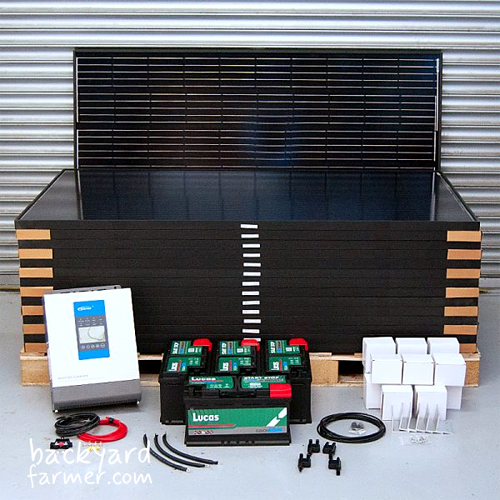
off-grid solar kit

In UK conditions — especially through winter — it’s:

  • battery capacity that determines how usable an off-grid solar system really is
  • realistic energy expectations that prevent frustration later on
  • not small differences between solar panel or inverter brands

In short, having enough stored energy almost always matters more than chasing marginal gains on individual components when choosing the best off-grid solar kit for your needs.


Who this page is for

This page is written for readers who have already:

  • worked out roughly how much power they need from an off-grid solar system
  • decided they want an off-grid or off-grid-capable setup
  • reached the point of choosing which off-grid solar kit actually fits those numbers

If you haven’t sized your system yet, it’s worth doing that first. Otherwise, it’s very easy to end up with an off-grid solar kit that looks good on paper but falls short once winter arrives.

You can calculate the right system size using our UK off-grid solar sizing guide, then come back here once your numbers are clear.


What you’ll find below

From here on, the focus shifts away from theory and onto practical off-grid solar kit comparisons.

Below, you’ll find:

  • which Renogy Premium Kit tiers suit different real-world uses, from cabins to homes and backup power
  • where each off-grid solar system works well — and where it doesn’t
  • how easy each off-grid solar kit is to expand as your energy needs grow

Once your system size is clear, the sections below are designed to help you choose the best off-grid solar kit UK users can realistically rely on, using grounded advice rather than guesswork.


Continue your off-grid & sustainable living journey


Best Off-Grid Solar Kits for Cabins & Small Buildings (200W–400W Tier)

For many people, this tier is the most common and sensible starting point for off-grid solar power in the UK. It suits cabins, huts, workshops, garden offices, and other small buildings that aren’t occupied full time and don’t run heavy electrical loads all day.

Rather than pointing to a single “best” product, this section covers Renogy Premium off-grid solar kits in the 200W–400W range. As a result, you can choose an off-grid solar system that genuinely matches the system size you’ve already worked out, instead of forcing a one-size-fits-all solution.


Who this tier is for

These off-grid solar kits tend to work best if you:

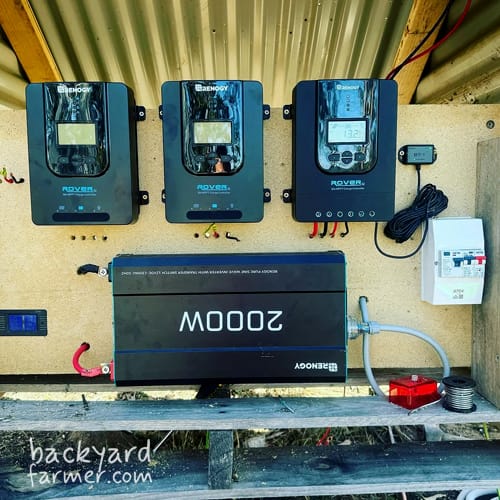
Renogy off-grid solar kits
  • own a small cabin, hut, or outbuilding
  • use electricity intermittently rather than continuously
  • mainly need power for lighting, device charging, small appliances, or tools
  • are comfortable managing energy use during winter months

Because these systems are relatively straightforward, this tier is also popular for DIY off-grid solar installations, particularly where future upgrades are likely.


Where 200W–400W off-grid solar kits work well

In real-world UK conditions, this off-grid solar kit tier performs best when:

  • the building is used seasonally or part-time
  • electrical loads stay modest and predictable
  • winter energy use is reduced or managed consciously
  • battery capacity is sized sensibly, rather than pushed to the bare minimum

At this scale, a well-sized battery bank will usually make more difference than adding extra solar panels, especially during the darker winter months.


Where expectations need managing

That said, this tier isn’t designed for every situation.

It’s not a good fit if you expect to:

  • live in the space full time
  • run electric heating, kettles, or cookers regularly
  • operate several high-draw appliances at the same time
  • rely on hands-off performance throughout winter without compromise

Trying to push a small off-grid solar system beyond its realistic limits is one of the quickest ways to end up frustrated with off-grid power.


Expandability and upgrade paths

One of the key advantages of Renogy’s Premium off-grid solar kits in this range is their modular design.

Depending on the configuration you choose, you can usually:

  • add more solar panels later if roof or ground space allows
  • increase battery storage as budgets permit
  • upgrade inverter capacity if your electrical loads grow

As a result, the 200W–400W tier works well as a starting point when needs are modest now but likely to increase over time.


Bottom line for cabins and small buildings

If your off-grid solar system sizing places you in the 200W–400W range, these Renogy Premium off-grid solar kit tiers offer a practical and realistic entry point into off-grid power in the UK.

They perform best when expectations stay grounded in UK conditions and battery capacity is treated as a priority. Used within their limits, these off-grid solar kits provide reliable power for small spaces without unnecessary complexity.


Best Off-Grid Solar Kits for Homes & Larger Setups (600W–800W, 24V Tier)

This tier is designed for people whose system sizing goes beyond occasional use and into reliable, day-to-day off-grid solar power. In practice, this is where off-grid homes, larger cabins, smallholdings, and multi-room buildings in the UK usually land.

Rather than pointing to a single product, this section covers Renogy Premium off-grid solar kits in the 600W–800W range, most often built around 24V off-grid solar systems. As a result, these setups offer better efficiency, more inverter headroom, and battery options that are far more realistic for UK conditions.


Who this tier is for

These off-grid solar kits tend to make sense if you:

Renogy off-grid solar system
  • live off-grid full time or for extended periods
  • need electricity available throughout the day, not just occasionally
  • regularly run several low-to-moderate electrical loads together
  • want an off-grid solar system that copes more reliably with winter variation

At this stage, most users have already realised that solar panel wattage alone isn’t the limiting factor. Instead, battery capacity and system voltage become far more important as energy use increases.


Where 600W–800W off-grid solar systems work well

In real-world UK conditions, this off-grid solar kit tier performs best when:

  • battery storage is sized conservatively rather than pushed to the minimum
  • energy-intensive appliances are used selectively
  • winter solar output has been factored into expectations from the outset
  • electrical loads are spread across the day, rather than stacked into peak periods

Moving up to a 24V off-grid solar system at this level improves overall efficiency and, at the same time, reduces strain on components compared to smaller 12V setups.


Where expectations still need managing

Even so, these off-grid solar kits are not a direct replacement for an unlimited grid connection.

It’s worth being cautious if you expect to:

  • run electric heating or immersion heaters freely
  • use high-draw kitchen appliances without thinking about timing
  • ignore winter solar performance altogether
  • keep adding electrical loads without upgrading battery storage

In most cases, performance issues at this tier come from underestimating battery requirements, rather than a lack of solar panel capacity.


Expandability and system growth

One of the key strengths of the 600W–800W Renogy Premium off-grid solar kit tiers is their scalability.

Depending on the configuration, you can usually:

  • add extra battery storage as your energy needs grow
  • increase solar panel capacity where space allows
  • upgrade inverter capacity to handle higher peak loads

Because of this flexibility, this tier works well not just for current requirements, but also as a solid foundation for gradual off-grid solar system expansion over time.


Bottom line for homes and larger setups

If your off-grid solar system sizing places you in the 600W–800W range, these Renogy Premium off-grid solar kits represent a sensible step up from smaller systems.

They offer better efficiency, more headroom, and stronger winter resilience — provided battery capacity remains the priority and expectations stay grounded in real UK conditions.


Best Off-Grid Solar Kits for Backup Power & Resilience (Battery‑First Tier)

This tier is aimed at people who want reliable backup power in the UK, rather than full off‑grid living. In most cases, it suits grid‑connected homes, workshops, and small businesses that want extra resilience during power cuts — or a straightforward way to keep essential circuits running without committing to a permanent rooftop solar installation.

Instead of being panel‑heavy, this section focuses on battery‑first off‑grid solar kits, specifically Renogy Premium Kit options built around inverters and modular battery storage. Importantly, you can add solar panels later to recharge from the sun. However, the system doesn’t rely on them to deliver backup power when it’s needed most.


Who this tier is for

These off‑grid solar backup kits tend to make sense if you:

Power kit by Renogy

As a result, this tier is often chosen by people who value simplicity, control, and reliability, rather than maximum solar generation.

  • want protection against power cuts and grid instability
  • only need to run essential loads, not an entire property
  • prefer a flexible backup system over a fixed solar install
  • like the option of adding solar panels gradually over time


What backup‑focused off‑grid solar kits do well

In real‑world UK use, battery‑first off‑grid solar systems perform best when:

  • loads are clearly prioritised (lighting, refrigeration, routers, device charging)
  • runtime expectations remain realistic
  • battery storage is sized for duration rather than peak output
  • any added solar panels are treated as a recharge source, not the primary supply

Used this way, these off‑grid solar backup systems provide dependable short‑to‑medium‑term power during outages, without the complexity of a full off‑grid setup.


Where expectations need managing

That said, it’s important to be clear about what this tier isn’t designed to do.

Backup‑focused off‑grid solar kits aren’t suitable if you expect to:

  • power an entire home indefinitely
  • run high‑draw appliances without managing load
  • replace a full off‑grid solar system with no compromises

In practice, runtime is determined almost entirely by battery capacity and load discipline, rather than inverter size alone.


Expandability and future upgrades

One of the biggest advantages of battery‑first off‑grid solar kits is how easily they can grow.

Depending on the configuration, you can usually:

  • add extra battery modules to extend backup runtime
  • integrate solar panels later for recharging
  • gradually scale the system toward partial or full off‑grid solar use

Because of this flexibility, battery‑first kits work well as an entry point for resilience today, while keeping options open for future expansion.


Bottom line for backup power and resilience

If your main goal is keeping essential power available during power cuts, the battery‑first Renogy Premium off‑grid solar kit tier offers a practical, low‑commitment solution for UK homes and businesses.

It works best when loads are well understood and expectations stay realistic — delivering peace of mind without the cost or complexity of a full off‑grid solar installation.


Comparison Table: Off-Grid Solar Kits UK

The table below compares off-grid solar kits available in the UK, using Renogy Premium Kit tiers as clear reference points. It breaks each option down by typical use case, overall system size, and real‑world flexibility.

Crucially, this comparison is designed to be used after you’ve already sized your off-grid solar system. As a result, it focuses on suitability rather than planning.

The systems below suit different use cases once your system size is known.

Renogy Premium Kit TierBest forTypical system size rangeBattery suitabilityExpandable?Notes
Cabins & Small BuildingsCabins, huts, workshops, garden offices200W–400W (12V)Small–medium LiFePO₄ battery banksYesSimple off-grid solar setups; in winter, battery capacity matters more than adding extra panels
Homes & Larger SetupsFull‑time or extended off‑grid living600W–800W (24V)Medium–large LiFePO₄ battery banksYesMore efficient off-grid solar systems with better inverter headroom; prioritise batteries
Backup & ResilienceEssential loads during power cutsBattery‑firstMedium–large modular battery storageYesSolar panels are optional; runtime depends mainly on load discipline

How to read this comparison table

To get the most value from this off-grid solar kit comparison, keep the following points in mind:

  • System size range refers to the solar panel tier your sizing calculations point to, not a single fixed kit or SKU.
  • Battery suitability reflects realistic UK performance — undersized battery storage is one of the most common reasons off-grid solar systems underperform.
  • Expandable shows whether you can add solar panels or batteries later as your energy needs change.

In short, start by matching the tier to your calculated system size and use case. From there, choosing the right off-grid solar kit configuration within that range on Renogy’s UK store becomes a simpler and more confident decision.


Choosing the Right Off-Grid Solar Kit After Sizing

Once you’ve worked out your system size, choosing the right off-grid solar kit becomes much simpler. At this stage, the goal isn’t to fine-tune every component. Instead, it’s to match the right off-grid solar kit tier to your calculated needs, while still leaving enough headroom to cope with real UK conditions.


Match the kit to your calculated range

First and foremost, start with the off-grid solar kit tier that lines up with your sizing, rather than focusing on brand names or the biggest headline wattage.

As a general guide:

  • If your calculations fall in the 200W–400W range, off-grid solar kits for cabins and small buildings are usually the best fit
  • If you’re closer to 600W–800W, a 24V home-scale off-grid solar system will make far more sense
  • If runtime during power cuts matters more than generation, a battery-first off-grid solar kit is often the better option

In most cases, trying to stretch a smaller off-grid solar system to cover a larger job only creates compromises further down the line.


Prioritise battery capacity over panel wattage

In the UK, battery capacity is often the real bottleneck, particularly through winter.

Although it’s tempting to focus on solar panel wattage, a slightly smaller array paired with properly sized battery storage will usually outperform a large array feeding an undersized battery bank. This becomes especially clear when dealing with:

  • short winter days
  • patchy sunshine
  • overnight and early-morning energy demand

As a result, if you’re weighing up panel upgrades versus battery upgrades, increasing battery storage is usually the smarter investment at this stage.


Leave room for expansion

Even if your current energy needs are modest, it still pays to choose an off-grid solar kit that can grow with you.

Look for off-grid solar systems that allow you to:

  • add extra solar panels later if space allows
  • increase battery capacity without replacing core components
  • upgrade inverter capacity as electrical loads change

That flexibility helps you avoid replacing the entire off-grid solar system if your usage gradually increases over time.


Keep expectations grounded

No off-grid solar kit offers unlimited power. In practice, real-world performance always comes down to a few simple factors:

  • how much electricity you actually use each day
  • how much battery storage is available
  • seasonal UK conditions
  • how deliberately loads are managed

If an off-grid solar system only works when everything goes perfectly on paper, it’s probably undersized in real use.


Final check before buying

Before settling on a specific off-grid solar kit configuration, it’s worth doing one last sense check:

  • Does this kit comfortably cover my calculated daily energy use?
  • Is there enough battery capacity for winter and overnight demand?
  • Can the system expand later without replacing major components?

If you can answer yes to all three, you’re looking at the right off-grid solar kit tier. From there, choosing the exact configuration becomes a confident, straightforward decision, rather than a gamble.

Common Buying Mistakes to Avoid

Even when system sizing is done properly, a few common mistakes can still catch people out when choosing an off-grid solar kit. Fortunately, spotting these issues early can save a lot of frustration — and, just as importantly, help you avoid unnecessary upgrades to your off-grid solar system later on.


Buying too small for winter conditions

One of the most common problems is choosing an off-grid solar kit that looks fine on paper in summer, but then struggles once winter arrives.

In UK conditions, that usually means:

  • much shorter daylight hours
  • inconsistent solar output
  • heavier reliance on battery storage

As a result, if an off-grid solar system only just meets your needs in ideal conditions, it’s very likely undersized for reliable, year-round use.


Focusing on panel wattage instead of batteries

Solar panel wattage is easy to compare, which is why it often gets more attention than it deserves when people shop for off-grid solar kits.

In reality:

  • solar panels only generate power when sunlight is available
  • batteries determine how long you can actually use that power

Because of this, undersized battery capacity causes far more real-world problems than having too few panels in an off-grid solar setup.


Assuming all off-grid solar kits are directly comparable

At first glance, two off-grid solar kits with similar headline wattage can look interchangeable. However, real-world performance can vary significantly depending on:

  • system voltage (12V vs 24V)
  • inverter capacity and efficiency
  • battery chemistry and usable storage

That’s why looking at off-grid solar kits as tiers rather than individual SKUs gives a much clearer picture of what you’re actually buying.


Expecting grid-style convenience from an off-grid solar system

Off-grid solar systems work best when energy use is intentional rather than automatic.

Problems tend to arise when people expect to:

  • run multiple high-draw appliances without planning
  • ignore seasonal variation in solar output
  • treat an off-grid solar system as unlimited power

Even well-sized off-grid solar setups benefit from a basic awareness of what’s running, and when.


Not planning for future growth

Choosing an off-grid solar kit that only just covers current needs leaves very little room to adapt later.

In most cases, it’s far more cost-effective to:

  • choose a system that allows battery expansion
  • leave headroom for additional solar panels
  • avoid replacing core components further down the line

A small amount of flexibility at the start often prevents a full off-grid solar system overhaul later.


Bottom line

Most off-grid solar problems don’t come from faulty equipment — instead, they come from mismatched expectations.

By choosing a realistic off-grid solar kit tier, prioritising battery storage, and planning around UK conditions, you can avoid the majority of common pitfalls and end up with an off-grid solar system that works the way you actually expect it to.


Conclusion: Choose a Kit That Matches Your Sized Needs

There isn’t a single “best” off-grid solar kit for everyone. Instead, the right choice is the off-grid solar kit that fits the system size you’ve already worked out, performs realistically in UK conditions, and still leaves you room to grow as your energy needs change.

As a general guide:

  • If your requirements sit in the 200W–400W range, off-grid solar kits for cabins and small buildings tend to be a sensible, low-complexity starting point.
  • Meanwhile, for larger or more consistent use, 600W–800W, 24V off-grid solar systems offer better efficiency, more battery headroom, and stronger winter resilience.
  • And if your main concern is keeping essential power available during outages rather than living fully off-grid, battery-first off-grid solar kits provide dependable backup without committing to a permanent solar installation.

Before settling on a specific off-grid solar kit configuration, it’s worth taking a final moment to sense-check the basics:

  • Does the kit comfortably cover your calculated daily energy use?
  • Is there enough battery storage for winter and overnight demand?
  • Can the off-grid solar system expand later without replacing core components?

If any of those answers feel uncertain, it’s a good idea to revisit the UK off-grid solar sizing guide, confirm your numbers, and then return here to compare the right off-grid solar kit tier.

Used this way, the comparisons above are designed to help you choose the best off-grid solar kit for your needs with confidence rather than guesswork — and end up with an off-grid solar system that performs realistically for how you actually use power. For more practical tips, product insights, and real-world off-grid solar advice, check out the Renogy UK blog.

Facebook
X
Pinterest
Reddit

Related Articles

Scroll to Top