
An off-grid solar system generates, stores and supplies electricity without relying on the National Grid. A typical setup combines solar panels, a charge controller, battery storage and an inverter — but getting the system size right is more important than choosing a particular brand.
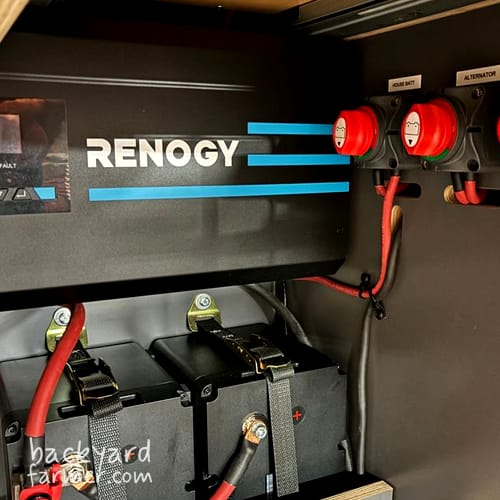
In the UK, that means working out your daily electricity demand, allowing for much lower solar generation in winter, and making sure the battery and inverter can handle the loads you actually want to run.
This guide explains how the main components fit together, how to plan the right system size and when a complete solar kit or modular setup makes more sense.
Start by Working Out Your Energy Needs
Before choosing panels, batteries or an inverter, work out what you actually need to power.
Our free Solar System Sizing Tool uses your appliances and expected usage to estimate:

- Solar panel capacity
- Battery storage
- Inverter size
This gives you a practical starting point before comparing complete systems or individual components.
What Is an Off-Grid Solar System?
An off-grid solar system produces and stores electricity independently of the National Grid. Instead of relying on a grid connection, the system has to generate enough power for your needs and store enough energy to keep essential loads running when the panels are not producing.
A typical off-grid setup includes:
- Solar panels to generate electricity
- A charge controller to manage power going into the battery
- Battery storage to hold electricity for later use
- An inverter to convert stored DC electricity into AC power for normal appliances
The basic energy flow is:
Solar panels → charge controller → battery → inverter → appliances
The main difference from a grid-connected solar system is that an off-grid setup cannot fall back on mains electricity when solar generation is low. That makes system sizing and battery storage much more important, particularly during the UK winter.
If you want a refresher on the electricity-generation side, see our guide to How Solar Panels Work.
What Components Does an Off-Grid Solar System Need?
A typical off-grid solar system is built around four main components. Each has a different job, and the system only works properly when they are sized to suit each other.
| Component | What It Does | Why Sizing Matters |
|---|---|---|
| Solar panels | Generate DC electricity from sunlight | The array needs to produce enough energy to replace what you use |
| Charge controller | Regulates electricity flowing from the panels into the battery | It must be compatible with the panel voltage and current |
| Battery storage | Stores electricity for use when the panels are not generating | Capacity determines how long the system can run without fresh solar input |
| Inverter | Converts DC electricity into AC power for normal appliances | It must handle both normal running loads and startup surges |
Solar Panels
The solar array is the main source of energy. Its job is to generate enough electricity to cover your daily use and recharge the battery.
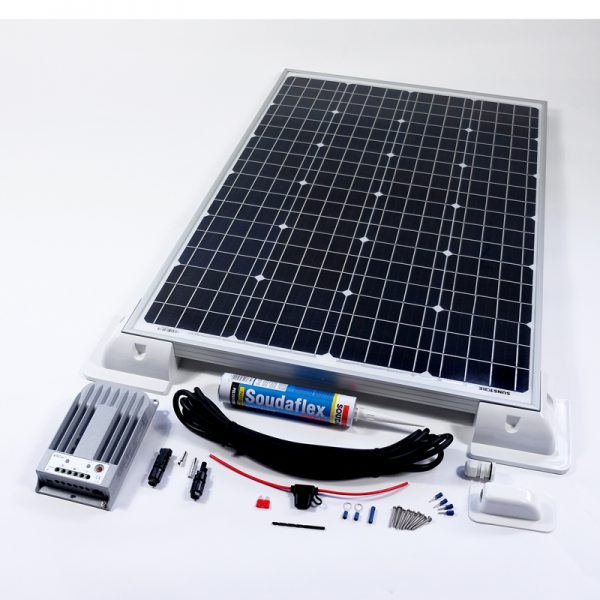
In an off-grid system, panel capacity should not be based on summer performance alone. UK winter conditions can reduce solar generation significantly, so the array usually needs more headroom than a simple grid-connected setup.
Charge Controller
The charge controller sits between the solar panels and the battery. It manages the charging process and helps prevent the battery from being overcharged or damaged.
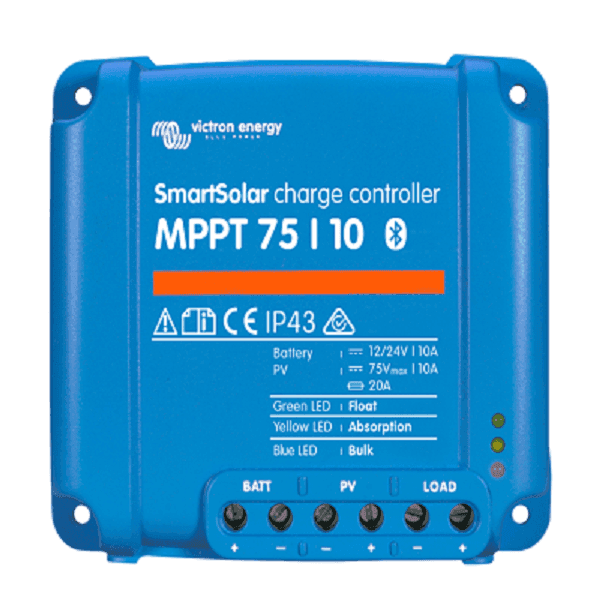
Many off-grid systems use an MPPT charge controller, which can make better use of the available solar input, particularly when panel voltage is higher than battery voltage.
The controller must be sized correctly for the panel array and battery system.
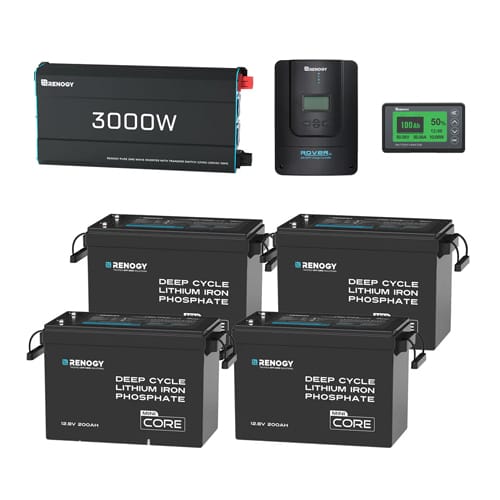
Battery Storage
The battery stores surplus solar energy so it can be used at night, during poor weather or whenever demand is higher than current solar generation.
The important figure is not just the battery’s headline capacity, but its usable capacity. The amount of storage you need depends on:
- daily energy use
- how many hours or days of backup you want
- battery type
- how deeply the battery can be discharged
- expected winter conditions
Inverter
The inverter converts the battery’s DC electricity into the AC electricity used by most household appliances.
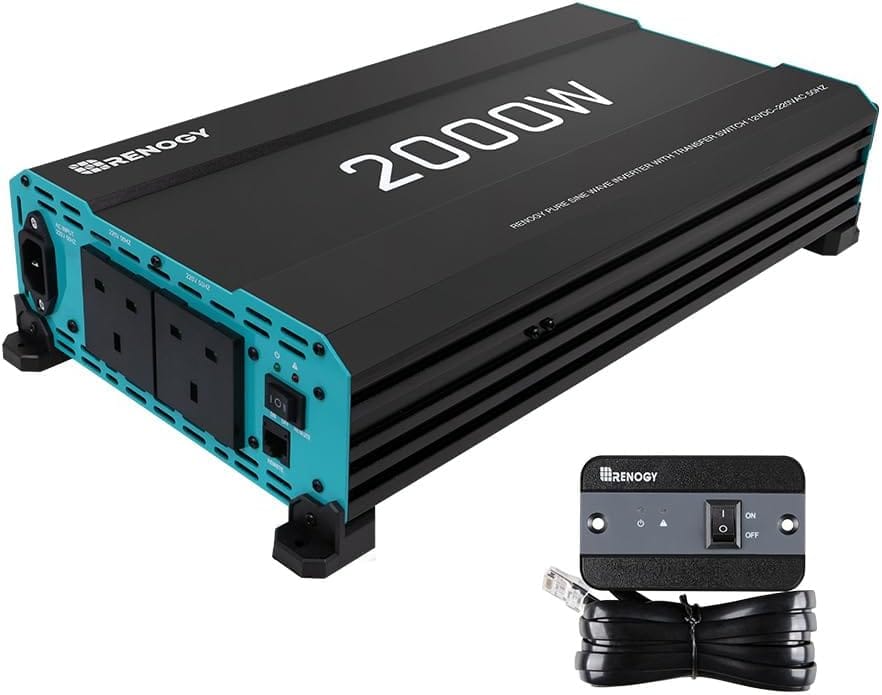
It needs to be large enough to handle:
- the total load being used at one time
- short startup surges from appliances such as pumps, fridges and power tools
An inverter that is too small may shut down under load, while an unnecessarily large inverter can add cost and increase standby consumption.
The next step is working out how large each of these components actually needs to be, which is where system sizing becomes important.
How Big Does an Off-Grid Solar System Need to Be in the UK?
There is no single off-grid solar system size that suits every UK home, cabin or garden building. The right setup depends on how much electricity you use, when you use it and how long the system needs to keep running without strong solar generation.
The easiest way to plan it is in four stages.
1. Work Out Your Daily Energy Use
Start with the appliances you actually want to power and estimate how much electricity they use each day.
Energy use is normally measured in watt-hours (Wh) or kilowatt-hours (kWh).
For example, your total might include:
- lighting
- fridge or freezer
- router and electronics
- pumps
- laptops and chargers
- TVs
- kitchen appliances
- tools or other occasional loads
Off-grid sizing becomes much easier once you know your approximate daily energy demand. Trying to size a system from appliance wattage alone can be misleading because a 1,000W appliance running for five minutes uses far less energy than a 100W appliance running all day.
2. Size the Solar Panel Array
The solar array needs to generate enough electricity to cover your daily use and recharge the battery.
A larger daily energy demand generally means more panel capacity, but location, panel orientation, shading and the time of year also affect how much electricity those panels actually produce.
This is particularly important in the UK because a system that comfortably meets demand during summer may generate much less during the darker winter months.
So panel sizing should be based on the energy the system needs to replace, not simply on how many watts of solar panels will physically fit on the roof.
3. Work Out How Much Battery Storage You Need
The battery keeps the system running when the panels are producing less electricity than you are using — including overnight and during poor weather.
The amount of storage required depends on:
- your daily electricity use
- the battery’s usable capacity
- how much reserve you want to keep
- how long you want to operate without significant solar input
- whether the system powers essential loads or almost everything
A small setup might only need enough stored energy to get through the night. A more independent system may need considerably more capacity to cover poor-weather periods.
This period of stored backup is often described as autonomy.
4. Size the Inverter for the Loads You Will Run
Battery capacity tells you how much energy you can store. The inverter determines how much AC power you can supply at one time.
It needs to handle your expected simultaneous loads as well as short startup surges from equipment such as:
- fridges and freezers
- pumps
- motors
- some power tools
For example, several low-power appliances running together may create a higher total load than expected, while a motor can briefly require considerably more power when it starts.
This means inverter sizing should consider both continuous power demand and surge demand, rather than simply matching the largest appliance.
Bring the Four Parts Together
A properly planned off-grid system balances all four:
Daily energy use → solar generation → usable battery storage → inverter capacity
Oversizing every component can make a system unnecessarily expensive, while undersizing one part can create a bottleneck even if the rest of the setup is capable.
Our Solar System Sizing Tool can do the initial calculations from the appliances and usage you enter, giving you a practical estimate of panel capacity, battery storage and inverter size.
The next consideration is especially important for UK systems: how much solar generation falls during winter.
Why UK Winter Conditions Matter
UK winter is often the hardest part of off-grid solar planning.
During the darker months, days are shorter, the sun sits lower in the sky and extended periods of cloud can reduce solar generation significantly. A system that easily keeps up with demand in summer may struggle to replace the same amount of energy in December or January.
This matters because an off-grid system cannot simply fall back on the National Grid when generation drops. The system has to rely on a combination of:
- Enough solar panel capacity to make the most of limited winter daylight
- Sufficient battery storage to cover nights and poor-weather periods
- Sensible energy use when generation is low
- Good panel positioning to reduce avoidable losses from shading or poor orientation
Do Not Size an Off-Grid System From Summer Output Alone
One of the easiest mistakes is to look at strong summer generation and assume the same system will perform similarly throughout the year.
For a system that needs to operate reliably all year, winter should be treated as a major sizing constraint.
That does not necessarily mean massively oversizing every component. It means being realistic about:
- which loads are genuinely essential
- how much battery autonomy you need
- whether some high-energy appliances can be avoided during poor solar periods
- whether additional panel capacity is worth adding
For seasonal cabins, sheds or systems used mainly in spring and summer, winter performance may matter much less.
For year-round off-grid use, it becomes one of the most important parts of the design.
Panel Positioning Matters More in Winter
The lower winter sun also makes orientation, tilt and shading more important.
Trees, buildings and other obstructions can cast much longer shadows when the sun is low, while a panel angle that works well for annual generation may not maximise winter output.
If winter performance is important, see our guide to the Best Orientation for Solar Panels in the UK for more detail on direction, tilt and seasonal positioning.
Common Off-Grid Solar System Types
Off-grid systems can range from small setups for basic loads to much larger systems capable of supporting several appliances. The right size depends on how much electricity you use and how reliably you need the system to operate.
Small Off-Grid System
Typical setup:
- Lighting
- Phones and tablets
- Routers
- Laptops
- Small pumps
- Occasional emergency backup
Medium Off-Grid System
Typical setup:
- Cabins
- Garden offices
- Workshops
- Sheds with several electrical loads
- Small seasonal off-grid setups
Larger Off-Grid System
Typical setup:
- Multiple appliances
- Extended backup
- More demanding year-round use
- Larger battery storage
- Higher inverter capacity
- Greater winter-generation allowance
Larger does not automatically mean better. A system matched to realistic loads is usually more practical and cost-effective than simply oversizing every component.
Once you know which general category your requirements fall into, the next decision is whether to build the system from individual components or use a complete solar kit.
Complete Solar Kit or Modular System?
Once you know roughly how much solar capacity, battery storage and inverter power you need, the next decision is whether to buy a complete solar kit or build the system from individual components.
| Approach | Best For | Main Trade-Off |
|---|---|---|
| Complete solar kit | Straightforward first systems | Easier component matching, but less flexibility |
| Modular system | Custom or expandable setups | More control, but requires more planning |
Complete Solar Kits
A complete kit can simplify the process because the main components are selected to work together.
This can be useful for:
- cabins and garden buildings
- backup systems
- straightforward off-grid setups
- first-time buyers who want fewer compatibility decisions
The downside is that you have less freedom to change individual components or tailor the system around unusual loads.
Modular Off-Grid Systems
A modular system lets you choose the panels, charge controller, battery and inverter separately.
This gives you more control over:
- battery capacity
- inverter size
- future expansion
- panel layout
- component quality and specification
The trade-off is that each component needs to be compatible with the rest of the system.
If your requirements are fairly straightforward, a complete kit can be the simpler option. If you expect the system to grow or have unusual power requirements, a modular setup usually offers more flexibility.
Once you know your required system size, see our Best Off-Grid Solar Kits UK guide to compare suitable complete systems.
DIY or Professional Installation?
How much of an off-grid solar system you can install yourself depends on the size of the setup, the electrical work involved and how confident you are working with solar equipment.
DIY Installation
Best suited to:
- Small cabin, shed or garden systems
- Low-voltage setups
- Simple panel mounting
- Users comfortable with basic solar wiring
Professional Installation
Best suited to:
- Larger fixed systems
- Complex AC wiring
- Structural roof mounting
- Systems where certification or compliance is required
Hybrid Approach
Often the most practical option:
- Plan and size the system yourself
- Choose the main components
- Complete straightforward mounting work
- Use a qualified professional for final electrical connections or more complex installation
For small systems, DIY installation can keep costs down. As system size and complexity increase, professional input becomes increasingly worthwhile for safety, reliability and compliance.
Planning for Reliability and Future Expansion
A well-sized off-grid solar system should also be easy to monitor, maintain and expand if your energy needs change.
Keep the basics simple:
- Keep solar panels reasonably clear of dirt, leaves and heavy debris
- Monitor battery charge and health, particularly during periods of low winter generation
- Check cables, connectors and mounting points periodically for damage or loosening
- Leave room for expansion if you expect to add more appliances, battery storage or solar panels later
When planning the system, it is worth choosing components that can accommodate some future growth rather than designing everything around the absolute minimum requirement.
Regular monitoring is especially useful with off-grid solar because falling battery performance, unexpected energy use or reduced solar generation can become noticeable much sooner when there is no grid connection to fall back on.
FAQs
Yes, but normal rules around planning permission, building regulations, electrical safety and land use can still apply.
Yes, but whole-house systems need much more solar capacity, battery storage and inverter power than smaller cabin or backup setups.
Yes, but winter is the hardest period to design for because shorter days, lower sun angles and cloudy weather reduce generation.
It depends on your daily energy use, usable battery capacity and how long you want the system to run without strong solar input.
Use the Solar System Sizing Tool for a practical estimate.