
Introduction
If you’re growing plants indoors and the top leaves are turning pale, white, or crispy, it’s natural to think something’s gone badly wrong. In most cases, growers immediately blame:
- nutrients
- watering
- heat
That reaction makes sense — especially when the room itself doesn’t feel hot at all. However, this is exactly why one of the most common causes gets overlooked.
A very common cause (that’s easy to miss)
In many indoor grows, sudden leaf damage comes down to something much simpler: grow lights that are too close to plants.
Modern LED grow lights are extremely efficient. Because of that, they can deliver very high light intensity without producing much noticeable heat. As a result, plants can suffer light stress even when:
- the air temperature feels comfortable
- the leaves don’t feel hot to the touch
In other words, a cool room doesn’t always mean safe light levels.
What light stress from grow lights looks like
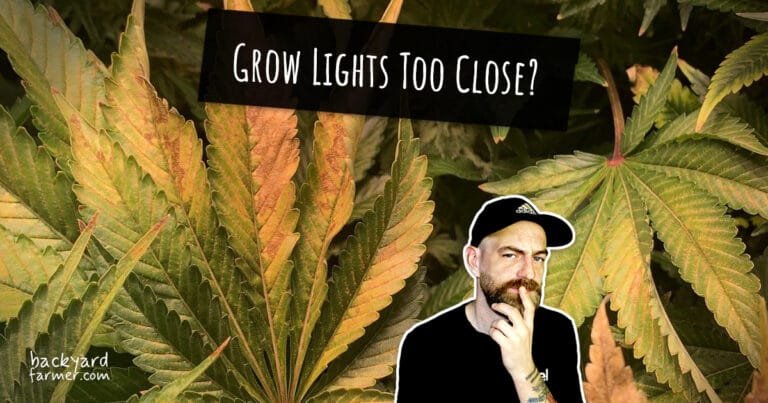
When grow lights are placed too close, plants tend to respond in a clear and recognisable way. Common signs of excess light intensity include:
- bleaching or whitening of leaves
- leaves curling upward toward the light source
- dry, crispy, or brittle leaf edges
- patchy leaf damage strongest directly under the grow light
Individually, these symptoms are easy to misread. However, when they appear together — especially on the upper leaves — they usually point to light‑intensity stress, rather than nutrient burn, watering issues, or heat stress.
What this guide will help you do
This guide is designed to help you identify when grow lights are too close, using clear visual clues rather than guesswork. Along the way, you’ll learn:
- which leaf symptoms matter most when diagnosing light stress
- how quickly light damage can appear after lights are positioned too close
- why light‑intensity problems are so common with modern LED grow lights
All of this is covered without diving into charts, measurements, or complicated setup advice.
If the symptoms below match what you’re seeing, you’re not alone. Light stress caused by grow lights being too close is common — and fixable. Spotting it early makes all the difference.
Continue your indoor lighting and plant care journey
If you’re troubleshooting lights that are too close, these guides will help you choose, position, and optimise grow lights for healthy plants and better yields.
- Advanced tips for using LED grow lights – Techniques and best practices for positioning, scheduling, and getting the most efficiency from your lighting setup.
- Growing vegetables under artificial light — the ultimate guide – A complete overview of indoor lighting principles, including how intensity and distance affect plant health.
- How to choose the right LED grow lights for your indoor garden – A practical guide to selecting LED lights that fit your space, plant types, and budget.
What Happens When Grow Lights Are Too Close
When grow lights are too close to plants, the issue usually isn’t heat — instead, it’s excess light intensity hitting the leaves.
Plants can only use a limited amount of light at any one time. However, when too much light energy reaches the leaf surface, the plant can’t process it safely. As a result, that overload begins to stress the leaf tissue directly.
Because of this, light stress symptoms can appear even when everything else in the grow seems fine.
Too much light, too quickly
Modern LED grow lights are designed to deliver a high level of usable light very efficiently. Because of that, placing LED grow lights too close to the canopy can create a flood of photons hitting the same small area of leaf surface.
Rather than driving healthy growth, this level of light-intensity stress overwhelms the leaf’s ability to photosynthesise properly. In response, the plant shifts into a self‑protection mode. This is why visible damage usually shows up first on the most exposed leaves.
Why the damage starts at the top of the plant
Light intensity is always strongest:
- at the top of the canopy
- directly under the centre of the grow light
- on leaves facing upward toward the fixture
Because of this, damage from grow lights placed too close almost always appears first on the upper leaves. Meanwhile, lower growth can look completely healthy at the same time.
Over time, this creates a directional pattern of damage — one that clearly lines up with the position of the grow light rather than spreading evenly across the plant.
Bleaching happens before burning
In many indoor grows, excess light causes leaf bleaching rather than immediate burning.
This happens when chlorophyll — the pigment responsible for a leaf’s green colour — breaks down faster than the plant can replace it. As a result, affected leaves may develop:
- faded or washed‑out green areas
- pale yellow or white patches
- a drained, bleached look rather than a scorched one
Because this process is driven by light intensity, not heat, leaves can bleach without ever feeling hot to the touch. Research from University of California Agriculture and Natural Resources shows that plants can suffer light stress and bleaching from excess light intensity even when leaf temperatures remain relatively low.
Why this is especially common with LED grow lights
Compared to older lighting types, modern LED grow lights:
- produce far less radiant heat
- deliver very intense, focused light
- create strong central hot spots directly under the fixture
As a result, it’s easy for plants to receive too much light intensity even when the grow space feels cool and well ventilated.
The key takeaway
When grow lights are too close, plants aren’t being cooked — they’re being overloaded with light.
That distinction matters. Light stress caused by excess intensity looks different from heat damage or nutrient problems, and it needs to be identified in a different way.
The next section breaks down the clear visual signs that indicate your grow light is too close.
Clear Signs Your Grow Light Is Too Close
When grow lights are too close, light‑intensity stress leaves a clear visual trail. Instead of focusing on a single symptom in isolation, it’s far more helpful to look at where the damage appears and how it’s patterned across the plant.
If several of the signs below appear together — particularly on the upper canopy — there’s a strong chance your grow light is placed too close to the plants.
Leaf tips turning pale, yellow, or white
One of the earliest signs of excess light intensity is a loss of colour at the tips and edges of upper leaves.
Rather than deepening in green, new growth may:
- fade to a lighter green
- shift toward pale yellow
- develop white or near‑white tips
Importantly, this doesn’t look like classic nutrient burn. Instead of dark, scorched tips, the damage appears bleached, pale, and washed out, which is typical of light stress from grow lights.
Bleached or washed‑out patches on leaves
As light stress from grow lights continues, leaves often develop patchy pale areas that look drained of colour.
These patches usually:
- appear uneven rather than uniform
- show up on the side of the leaf facing the grow light
- range from very light yellow to white
Because of this repeated exposure pattern, leaf bleaching is a strong sign that too much light is hitting the same area of leaf tissue over and over.
Crispy, dry, or papery leaf edges
With ongoing exposure to grow lights that are too close, affected leaves often start to feel noticeably different.
They may become:
- dry
- brittle
- papery to the touch
Typically, the edges and tips change first, while the rest of the leaf can still look fairly normal — especially in the early stages of light‑intensity stress.
Leaves curling upward toward the light
Another very common sign of excess light intensity is upward leaf curl or cupping, where the edges of the leaf lift toward the light source.
This is a protective response. Essentially, the plant is trying to:
- reduce how much light reaches the leaf surface
- limit further stress to already exposed tissue
When this upward curl appears mainly on the top leaves, it strongly points to grow lights being too close.
Leaves feel brittle rather than soft
As light stress builds, leaves often lose their usual flexibility.
Instead of feeling supple, they may:
- crease or snap more easily
- feel stiff or fragile
- tear along already damaged areas
Notably, this texture change usually comes after colour changes, not before. Because of that, it helps separate light stress from other plant problems.
Damage concentrated directly under the grow light
Perhaps the most telling clue is where the damage is located.
With light‑intensity stress caused by grow lights, damage typically:
- affects the highest leaves first
- is strongest directly under the centre of the grow light
- fades toward the edges of the canopy
Meanwhile, lower leaves often stay green and healthy at the same time.
Because of this, the directional pattern of damage is one of the clearest ways to separate light stress from nutrient deficiencies or environmental issues.
A quick visual check
Ask yourself:
- Are the worst symptoms on the top leaves?
- Is the damage strongest directly under the grow light?
- Do lower leaves look mostly unaffected?
If the answer is yes, light intensity — not feeding or watering — is the most likely cause.
The next section compares these signs directly with nutrient burn, deficiencies, and heat stress, helping you rule out other problems with confidence.
Light Stress vs Other Common Problems (Visual Comparison)
When leaf damage appears suddenly, it’s easy to jump to the wrong conclusion — especially in an indoor grow.
Light stress caused by grow lights being too close is often mistaken for nutrient burn, deficiencies, or heat stress because a few surface symptoms overlap. However, the differences become much clearer once you focus on leaf colour, leaf texture, and — most importantly — where the damage appears on the plant.
The comparison below looks only at visible leaf symptoms. It deliberately avoids feeding, soil, or wider environmental causes, so you can focus on what the plant itself is showing you.
Visual symptom comparison
| Feature | Light intensity stress (grow lights too close) | Nutrient burn | Nitrogen deficiency | Heat stress |
|---|---|---|---|---|
| Leaf colour | Pale green, yellow, or white bleaching | Dark green leaves with yellow or brown tips | Uniform yellowing | Dull green to yellowing |
| Bleaching / whitening | Common and distinctive | Rare | Not present | Uncommon |
| Leaf tips | Pale or dry; not always brown | Crisp, brown “burnt” tips | Yellowing along with rest of leaf | May dry or curl |
| Leaf texture | Dry, brittle, papery | Dry and crisp at edges | Soft, thin, weak | Dry or leathery |
| Leaf curl | Upward curl or cupping toward the grow light | Minimal | Drooping | Edges curl upward or inward |
| Where damage appears | Top leaves first, directly under the grow light | Often older leaves first | Older or lower leaves first | Often affects the whole plant |
| Pattern across plant | Directional and patchy | More uniform | Even spread | Broad, non-directional |
How to read this table
When diagnosing light stress versus nutrient or heat problems, it helps to look for patterns rather than isolated symptoms.
For example:
- Directional damage directly under the grow light is the strongest indicator of light-intensity stress
- White or bleached leaf patches usually rule out nutrient deficiencies
- Even yellowing that starts on lower leaves points to nitrogen deficiency, not excess light
- Whole-plant stress is far more typical of heat-related problems
Because of this, if most of your symptoms line up in the first column, feeding or watering issues are very unlikely to be the root cause.
A simple diagnostic rule
If the worst damage is:
- on the highest leaves
- strongest directly beneath the grow light
- patchy rather than evenly spread
Then excess light intensity from grow lights placed too close is the most likely explanation.
The next section explains how quickly light damage can appear, and why light stress often feels like it happened overnight.
How Quickly Light Damage Appears (And Why It Feels Sudden)
One of the most unsettling aspects of light stress caused by grow lights being too close is just how quickly it can appear.
Many growers describe it as something that seems to happen overnight. One day the plant looks fine; the next, the top leaves suddenly appear pale, dry, or off‑colour. While that shift feels alarming, this kind of rapid change is actually very common when grow lights are placed too close to plants.
Early signs: subtle changes (12–72 hours)
At first, the symptoms of excess light intensity are often easy to miss.
You might notice:
- a slight fading of green on the top leaves
- new growth that looks lighter than the rest of the plant
- leaves holding a stiff or gently cupped posture toward the light
At this stage, leaves usually still feel normal to the touch. Because of that, many growers assume nothing serious is happening and move on — even though light stress has already begun.
Worsening damage: visible light stress (2–7 days)
However, if light intensity remains too high, clearer damage from grow lights tends to appear within a few days.
Common signs of worsening light stress include:
- bleached or washed‑out patches on exposed leaves
- dry, crispy, or papery leaf edges
- more noticeable upward leaf curl toward the grow light
- brittle texture developing in affected areas
At this point, it usually becomes clear that the issue isn’t nutrients or watering — instead, it’s too much light hitting the leaves.
Stabilisation after correction (several days)
Once light intensity is reduced — either by increasing the distance between the plant and the grow light or by lowering output — the damage typically stops spreading.
After that, you’ll often see:
- new growth returning to a healthier green colour
- existing leaf damage staying the same, rather than getting worse
- leaves gradually relaxing into a more natural posture
It’s important to note that stabilisation doesn’t mean damaged leaves will fully recover. Instead, it shows that the cause of the light stress has been removed.
Why light damage from grow lights feels so sudden
Unlike many nutrient or soil‑based issues, light stress affects leaf tissue directly.
When excess light overwhelms the leaves:
- chlorophyll breaks down quickly
- protective responses activate fast
- visible damage appears sooner than with most root‑based problems
As a result, light damage from grow lights that are too close can feel dramatic, even though the underlying cause is usually straightforward.
A quick reassurance
Fast‑appearing symptoms don’t mean the plant is failing.
Light‑intensity stress is a quick‑acting but localised issue. When it’s spotted early, further damage is usually easy to prevent. As conditions stabilise, healthy new growth can resume once light levels return to a comfortable range.
The next section explains which types of leaf damage can recover, and which changes are permanent.
Will the Leaves Recover?
Whether damaged leaves recover depends on how intense the light stress was and how long the grow lights were too close to the plant.
That said, the most important thing to remember is this: recovery is judged by new growth, not by trying to fix, trim, or chase marks on older leaves.
Cosmetic or fully recoverable changes
If light stress from grow lights was mild and caught early, many of the changes you see are mostly cosmetic.
For example, you might notice:
- slightly faded green leaves
- minor paling on newer growth
- a gentle upward curl without any real tissue damage
In these cases, leaves often:
- darken slightly over time
- continue functioning as normal
- remain on the plant until they’re naturally replaced
Partially reversible damage
With moderate light‑intensity stress, it’s common for leaves to carry visible marks that don’t fully disappear.
This often shows up as:
- bleached or very pale patches caused by excess light
- dry or papery leaf edges that are still intact
While these damaged areas usually don’t regain their original colour, the rest of the leaf can still photosynthesise and support the plant.
As long as new growth looks healthy, this level of light damage from grow lights isn’t something to panic about.
Permanent leaf damage
If exposure to excess light intensity is severe or lasts too long, some leaf tissue can be permanently damaged.
This may appear as:
- fully white or dead patches
- crispy sections that crumble or tear easily
- badly distorted or scorched leaf tips
Once leaf cells are destroyed, that tissue can’t regenerate, even after the light problem is corrected.
What recovery actually looks like
After grow light intensity is reduced — either by increasing distance or lowering output — recovery usually becomes clear through:
- new leaves emerging with a healthy green colour
- a more relaxed, natural leaf posture
- no further spread of light damage on existing leaves
Importantly, older damage remaining visible doesn’t mean light stress is still happening.
A calm takeaway
Light‑intensity stress from grow lights being too close often looks worse than it really is.
If new growth appears healthy and damage has stopped spreading, the plant has recovered — even if older leaves still show a few scars.
The next section explains why leaves can bleach under grow lights without ever feeling hot, and why common touch‑based tests don’t tell the full story.
Why the “Hand Test” Doesn’t Work With LED Grow Lights
A common way growers judge light safety is by placing a hand under the grow light.
If it doesn’t feel hot, the assumption is that the plant must be fine. However, when grow lights are too close, this test is often misleading.
With modern LED grow lights, the hand test is unreliable — and, as a result, it’s one of the most common reasons light stress goes unnoticed.
Light intensity is not the same as heat
Grow lights don’t damage plants only by heating them up. Just as importantly, they can cause damage by delivering too much light intensity to the leaf surface.
To put it simply:
- Heat is how warm something feels
- Light intensity is how much light energy reaches the leaf each second
LED grow lights are designed to be highly efficient. Because of that, they can deliver excess light intensity while producing very little noticeable heat.
As a result, plants can suffer light stress from grow lights even when:
- the room feels cool
- the grow light doesn’t feel hot on your skin
Why LED grow lights feel cool but still cause damage
Older grow lights produced large amounts of infrared radiation, which warmed leaves directly and made heat stress easy to spot.
Modern LED grow lights, by comparison:
- produce far less infrared heat
- focus energy into wavelengths plants actually use
- deliver that light very efficiently
Because of this, leaves absorb more usable light without a big rise in surface temperature.
This is why leaf bleaching and light damage from grow lights can appear without any obvious heat warning.
Why your hand isn’t a good comparison
Human skin and plant leaves respond to light in very different ways.
Your hand:
- is thick
- is exposed for only a few seconds
- doesn’t rely on photosynthesis
Plant leaves, on the other hand:
- are thin
- are exposed to the grow light for many hours
- absorb light directly into their cells
By the time a grow light feels uncomfortable on your skin, the plant may already have been under light-intensity stress for days.
What to trust instead
Rather than relying on touch tests, the most reliable indicators of grow lights being too close are visual.
Pay attention to:
- colour changes on top leaves
- bleaching or washed-out leaf patches
- upward leaf curl toward the grow light
- brittle or papery leaf texture
These symptoms usually appear before any heat becomes noticeable. Because of that, they provide a much clearer signal that light intensity is too high.
The key takeaway
If a grow light feels cool, that doesn’t mean it’s safe.
With modern LEDs, plants can suffer light stress from excess light intensity long before you feel any heat. Observing leaf symptoms will always tell you more than testing the air with your hand.
The next section looks at why manufacturer hanging heights aren’t always enough, and why plants often respond better to lights being positioned higher than manuals suggest.
Why Manufacturer Hanging Heights Aren’t Always Enough
Most grow lights come with recommended hanging heights in the manual. These distances are useful as a starting point. However, they don’t guarantee plants won’t experience light stress from grow lights being too close.
In real-world home grows, it’s very common to see light-intensity stress even when the fixture is positioned exactly where the manufacturer suggests. This is especially true with modern LED grow lights, which can deliver high light output without producing obvious heat.
What manufacturer hanging height recommendations assume
Manufacturer hanging height guidelines are usually based on ideal or average conditions.
In practice, they often assume:
- a full, even canopy
- healthy, well-established plants
- good airflow across the leaves
- a typical grow space, rather than a single plant sitting directly under the centre of the grow light
If your setup doesn’t match these assumptions, the same hanging height can easily translate into excess light intensity at the leaf surface.
Manuals don’t show light hot spots
Most manufacturer guidance focuses on average light output, not peak intensity.
In real indoor grows, many LED grow lights create a strong central hot spot directly beneath the brightest part of the fixture. As a result:
- leaves in the centre receive far more light than those toward the edges
- leaf bleaching and light damage often begin directly under the grow light
- symptoms can appear even when the overall hanging height looks reasonable
Because of this, light hot spots are one of the most common reasons grow lights set too close cause stress despite following the manual.
Plant sensitivity varies more than manuals can account for
Manufacturers can’t realistically tailor hanging heights to every plant type or growth stage.
For example, manuals can’t fully account for differences between:
- seedlings and mature plants
- leafy greens and fruiting plants
- recently stressed or transplanted plants versus established growth
As a result, a height that works well for one grow can still deliver too much light intensity for another — even when using the same grow light.
Real-world growing isn’t a test environment
On top of that, many growers run their lights differently than manuals assume.
Common real-world factors include:
- running LED grow lights at full power
- placing plants directly under the centre of the light
- growing in small tents or confined spaces where light becomes more concentrated
Taken together, these conditions make light stress from grow lights being too close far more likely at so-called “recommended” heights.
The important takeaway
Manufacturer hanging heights are guidelines, not safety limits.
They’re a helpful reference. However, the plant itself is always the final authority. If leaves show bleaching, brittleness, or clear directional damage directly under the grow light, then light intensity is too high — regardless of what the manual says.
The next section looks at a real-world experience example, showing why observing how the plant responds often leads to better results than relying on fixed numbers alone.
A Note From Experience
It’s worth saying this out loud: real‑world growing doesn’t always line up neatly with what a manual suggests.
In my own indoor setup, I found that the manufacturer‑recommended hanging heights for LED grow lights weren’t always the best fit for my plants under everyday conditions. Even though the light sat within the suggested range, the plants still showed clear signs that the grow lights were too close.
At those stated distances, growth slowed and visible symptoms of light stress began to appear. In some cases, the stress even resembled mild heat issues, despite temperatures being under control. In other words, the problem wasn’t the environment — it was excess light intensity at the canopy.
However, once I raised the grow light further away from the plants, the improvement was immediate and obvious. The plants responded with:
- healthier spacing between nodes
- larger, more relaxed leaves
- consistent “praying” behaviour during the light cycle
Because of that response, I now keep lights higher during the vegetative stage, when plants are more sensitive to light‑intensity stress. Later on, slightly closer positioning can work better — but only once the plants are established and clearly able to handle it.
This doesn’t mean grow light manuals are wrong. Instead, it highlights an important reality: recommended hanging heights are a starting point, not a rule.
Ultimately, watching how the plant responds — especially changes in the leaves — gives far better guidance than relying on a fixed distance alone. When leaves relax, colour improves, and growth evens out, light intensity is usually back in a healthy range.
The next section explains why increasing distance often works better than dimming, and how improved light spread helps reduce stress when grow lights are too close.
Why Raising the Light Often Works Better Than Dimming
When grow lights are too close and light intensity creeps too high, growers usually try one of two things: raising the grow light or dimming the output.
In many real‑world indoor grows, increasing the distance between the grow light and the canopy tends to produce more reliable and forgiving results than dimming alone. This is especially true when dealing with light stress caused by excess light intensity.
Distance improves light spread
As you raise a grow light, the light naturally spreads out over a wider area.
Because of that, two important things happen at the same time:
- peak light intensity drops directly under the grow light
- light reaches more of the canopy in a more even way
Instead of concentrating too much light on one small patch of leaves, the same output is shared more gently across the plant. As a result, the risk of light stress from grow lights being too close drops noticeably.
Hot spots are reduced
Most LED grow lights are brightest in the centre, directly under the fixture.
When a grow light sits too close to the canopy, this creates a strong hot spot where the top leaves receive the highest light intensity. By raising the light, you:
- soften the central hot spot
- reduce extreme light intensity on exposed leaves
- lower the risk of leaf bleaching directly under the grow light
By comparison, dimming reduces output everywhere. However, it doesn’t change where the brightest areas of light are concentrated.
More uniform canopy exposure
Increasing the distance between the grow light and the plants also helps light reach:
- side branches
- outer leaves
- slightly lower growth
As a result, plants often develop:
- more even leaf colour
- fewer stressed leaves at the top of the canopy
- a healthier, more relaxed posture overall
Rather than protecting just a few leaves at the top, added distance improves light balance across the whole plant.
Why this matters for stressed plants
When plants show signs of light stress, they don’t simply need less light. Instead, they need less light intensity hitting the most exposed leaves.
Raising the grow light addresses both issues at once:
- it lowers peak intensity
- it improves light distribution across the canopy
For that reason, increasing distance is often the first and most effective adjustment when grow lights are too close to plants.
The next section looks at situations where dimming makes more sense than raising the light, particularly in tight spaces or fixed setups.
When Dimming Makes More Sense Than Raising the Light
Raising the grow light isn’t always practical. In some indoor setups, dimming the grow light output is actually the safer and more effective way to bring light intensity back under control.
So, rather than thinking in terms of right or wrong, it helps to focus on what works best for your growing space — especially when grow lights are too close and distance is limited.
Shelving and tiered grow systems
In shelving or tiered grow systems, vertical space is usually tight. Because of that, grow lights are often fixed close to the plants.
As a result, trying to raise a light can:
- interfere with shelves above or below
- throw off light coverage between tiers
- be impossible without rebuilding the system
In these situations, dimming allows you to reduce excess light intensity without disrupting the entire layout or stressing other plants nearby.
Small tents or low ceilings
In compact grow tents, cupboards, or wardrobes, headroom above the grow light is often very limited.
If you attempt to raise the fixture too far, it can:
- press against the roof of the tent
- restrict airflow around the light
- contribute to heat build-up at the top of the space
In this case, dimming offers a cleaner way to manage light stress from grow lights, while still keeping the fixture at a sensible and safe height.
Fixed or non-adjustable mounting
Some grow lights simply aren’t designed to move easily once installed.
This commonly applies to:
- hard-mounted LED bar lights
- clip-on grow lights
- built-in or integrated shelf lighting
When distance isn’t adjustable, dimming becomes the only realistic option for reducing light stress caused by grow lights being too close.
A simple way to think about it
As a general rule:
- if you have room to raise the grow light safely, extra distance often provides the best balance
- if space is tight or the grow light can’t move, dimming is usually the better choice
Both approaches reduce excess light intensity. Ultimately, the goal is to lower light stress without creating new problems elsewhere in the setup.
The next section outlines what to check next if your symptoms match light‑intensity stress, and where to go for more detailed guidance.
What to Check Next (If This Matches Your Symptoms)
If the signs you’re seeing line up with light‑intensity stress caused by grow lights being too close, the next step isn’t to start changing everything at once. Instead, it’s about getting a clearer picture of your grow light setup and understanding where excess light intensity may be coming from.
From here, the resources below let you dig a little deeper, depending on what you want to check or understand next.
Check grow light distance and positioning
If you want a clearer idea of how grow light distance affects light intensity and coverage, this guide breaks the principles down in a simple, visual way:
- How far should grow lights be from plants – how distance affects light intensity, why positioning matters, and how to think about grow light height without guessing
This is especially helpful if you’re unsure whether your grow lights are too close to plants, or if strong light hot spots are forming directly over the canopy.
Look at adjustable grow light options
In some setups, the grow light itself makes managing light‑intensity stress harder than it needs to be.
If your current fixture is awkward to raise or dim, choosing a more flexible design can make a real difference:
- Best LED grow lights (distance‑adjustable models) – LED grow lights designed to make height and output changes easier to manage
This tends to matter most in small grow tents, shelving systems, or fixed mounts where movement and spacing are limited.
Understand light intensity basics (without the maths)
If you want a better handle on what light intensity actually means — and why plants have a limit to how much light they can use — this background guide explains it in plain language:
- Grow light basics (PPFD explained) – what light intensity really is, how PPFD relates to grow lights, and why plants respond the way they do
You don’t need charts or calculations to benefit from this. Instead, it’s about understanding the concept, not measuring everything precisely.
Check your environment alongside light intensity
While light intensity is often the main issue, it’s also worth keeping an eye on how temperature and humidity interact with your lighting setup. Together, these factors influence how efficiently plants can transpire and handle stress.
If you want a simple way to check this balance, you can use this grow tent VPD calculator to see whether your environment is helping or hindering plant recovery.
One important reminder
If your plants are already showing signs of light stress from grow lights, try not to change multiple things at the same time.
Instead, focus on light intensity first. Once that’s under control, it becomes much easier to see whether anything else actually needs attention.
The final section pulls everything together and explains why grow lights being too close is a common, manageable issue — and rarely as serious as it first appears.
Conclusion — Calm Confirmation, Not Panic Fixes
Seeing leaf damage appear quickly can be unsettling, especially when everything else in your setup seems to be ticking along just fine. However, when the signs point to grow lights being too close, the cause is usually straightforward — and, importantly, manageable.
Modern LED grow lights are powerful bits of kit. On the one hand, their efficiency makes indoor growing far easier. On the other hand, that same efficiency means plants can receive too much light intensity without any obvious heat warning. Because of that, light stress is often misdiagnosed, and it can feel like the problem appeared out of nowhere.
That’s why it helps to trust what the plant is showing you:
- damage concentrated on the top leaves
- bleaching or washed-out patches
- brittle texture with an upward curl toward the light
When these signs appear together, excess light intensity is usually the simplest and most accurate explanation.
Most importantly, light stress rarely means a grow has failed. Once light intensity drops back into a comfortable range, damage typically stops spreading and healthy new growth begins to take over — even if older leaves keep a few marks.
Instead of chasing several problems at once, steady observation, patience, and small, measured adjustments tend to work far better. By understanding how light intensity affects your plants, you stay in control and avoid changes that add more stress than they solve.
If this page has helped confirm what you’re seeing, the next step is simply to learn a little more about your lighting setup — and then let the plant guide you from there.