
Introduction
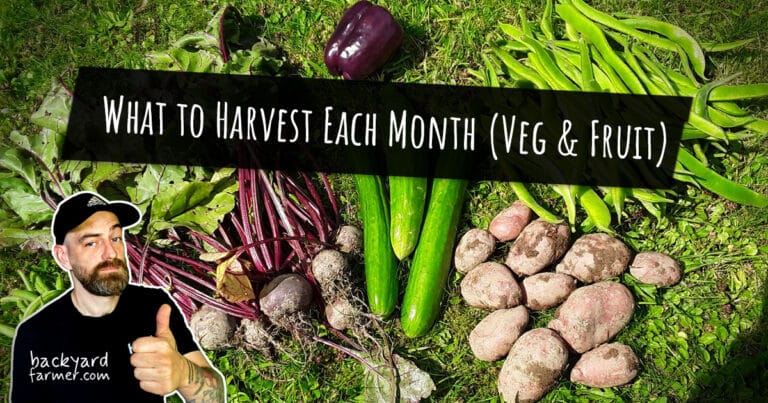
This UK harvest calendar shows you exactly what to harvest each month in the UK, whether you’re growing on an allotment, in a back garden, or under cover in a greenhouse or polytunnel. In simple terms, it’s a practical UK vegetable and fruit harvest guide that helps you understand what’s in season and when crops are genuinely ready.
Too often, we guess when vegetables are ready and either harvest too early or leave them a week too long. Instead, this clear month-by-month harvest guide UK growers can rely on helps you to:
- See what fruit and veg is in season in the UK
- Harvest vegetables at their best flavour and texture
- Avoid overripening, bolting or waste
- Plan ahead for the next sowing and harvesting window
Of course, the UK growing season isn’t uniform. Conditions vary from north to south and between coastal and inland gardens. For example, here in the North West, crops often ripen slightly later than they do in the South East, especially in heavy clay soil or during wetter springs. However, once you understand the broader UK seasonal harvest calendar, you can adjust timing confidently to suit your own patch.
Below, you’ll find a grounded and practical UK harvest guide by month, covering vegetables, fruit and herbs. Each month links to a more detailed breakdown, so you can explore specific crops, check when to harvest vegetables in the UK, and fine-tune your timing.
If you’d like to take it further, you can use the free Veg Planting Calendar to build a personalised UK allotment harvest calendar and growing plan. As a result, you’re not just reacting to what’s ready — you’re planning your harvest year with clarity and confidence. If you’re planning ahead, our What to Plant Each Month in the UK guide shows exactly when to sow for future harvests.
Continue your UK growing & harvesting journey
- What to grow in a small allotment – Easy crop ideas and layout tips – Readers checking a harvest calendar will find this useful for planning what crops to include in the first place if space is limited.
- How to grow strawberries at home – A popular fruit with a distinct harvest season — linking to a guide on how to grow them helps turn harvest timing into action.
- 10 edible backyard plants you can forage in Britain – A helpful illustrated guide – Great for readers interested in harvesting wild edibles as well as cultivated produce throughout the year.
Quick View – UK Harvest Calendar by Month
Below is a practical snapshot of the UK harvest calendar by month, showing what fruit, vegetables and herbs are typically ready to pick.
Although exact timing varies by region, soil type and whether you grow outdoors or under cover, this works as a reliable month-by-month harvest guide UK growers can use as a baseline.
In other words, it shows what should be cropping if your sowing schedule is roughly on track. However, always judge maturity by the plant itself. Weather patterns, microclimates and soil conditions can shift harvest timing from year to year.
Use this as a working UK vegetable and fruit harvest calendar, then adjust according to what you see happening in your own garden or allotment.
UK Harvest Calendar Overview
| Month | Vegetables | Fruit | Herbs |
|---|---|---|---|
| January | Leeks, Kale, Parsnips, Sprouts | Stored apples & pears | Parsley, Thyme |
| February | Sprouts, Purple sprouting broccoli | Forced rhubarb | Chives |
| March | Leeks, Spinach, Spring cabbage | Forced rhubarb | Parsley, Chives |
| April | Spring greens, Radish, Early carrots | Rhubarb | Mint, Chives |
| May | Broad beans, Early potatoes, Lettuce | Early strawberries (late May) | Coriander, Mint |
| June | Peas, New potatoes, Early courgettes | Strawberries, Gooseberries | Basil (under cover) |
| July | Courgettes, French beans, Beetroot | Raspberries, Currants | Basil, Dill |
| August | Tomatoes, Sweetcorn, Onions | Plums, Blackberries | Oregano, Thyme |
| September | Squash, Maincrop potatoes, Carrots | Apples, Pears | Rosemary, Sage |
| October | Pumpkins, Leeks, Kale | Late apples, Quinces | Thyme, Sage |
| November | Leeks, Sprouts, Parsnips | Stored apples | Parsley |
| December | Kale, Sprouts, Parsnips | Stored apples & pears | Thyme |
If you want more detail — including regional harvest differences, succession planting advice and crop-specific guidance on when to harvest vegetables in the UK — head to the full monthly guides below.
There, you can explore each month in depth, understand what fruit and veg is in season in the UK, and fine-tune your seasonal harvest plan with confidence.
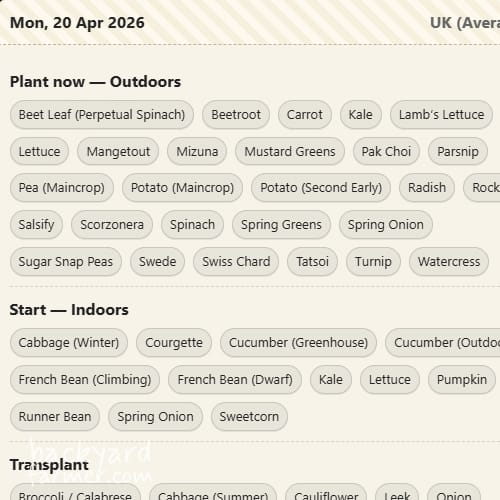
Want to plan your harvest properly?
Use the free Veg-O-Matic Planting Calendar to map out sowing and harvesting dates for your region — and stay one step ahead all season.
Spring Harvest (March–May)
Spring marks a major turning point in the UK harvest calendar. Although winter crops are still finishing, early sowings begin to reward you with fresh, tender produce. As soil temperatures rise and daylight hours increase, growth accelerates quickly. Consequently, the shift from winter survival to steady harvesting becomes obvious across allotments and back gardens.
However, spring weather across the UK can be unpredictable. In northern regions or wetter areas, cold snaps and heavy rain may delay maturity by a week or two. Therefore, when deciding what to harvest each month in the UK, always judge crops by readiness rather than relying strictly on dates.
March – What to Harvest in March (UK)
March can still feel lean outdoors. Nevertheless, hardy winter vegetables continue to provide reliable harvests and remain a key part of the UK vegetable harvest guide for early spring.
In most UK gardens and allotments, March harvests include:
- Leeks
- Kale and other winter brassicas
- Purple sprouting broccoli
- Overwintered spinach
- Spring cabbage
- Forced rhubarb
Meanwhile, in milder southern areas — or under cloches and in greenhouses — early salad leaves may also be ready. Although growth remains slow, harvests stay steady.
👉See the full March harvest guide for detailed timing, storage tips and regional notes on when to harvest vegetables in the UK.
April – What to Harvest in April (UK)
By April, momentum builds. Days lengthen, soil warms and new growth becomes far more dependable. As a result, your month-by-month harvest guide UK growers rely on starts to feel genuinely productive.
Common April harvests include:
- Spring greens
- Radishes
- Overwintered spinach
- Early carrots (under cover)
- Rhubarb
- Spring onions
At this stage, early sowings begin to overlap with late winter crops. Consequently, you move from a narrow harvest window to a steadier flow of seasonal produce. This overlap strengthens your overall UK seasonal harvest calendar and reduces gaps between crops.
May – What to Harvest in May (UK)
By May, the garden delivers the first proper taste of summer. Early sowings now produce consistently, and harvest windows widen noticeably across much of the country.
Typical May harvests include:
- Broad beans
- Early potatoes (first earlies)
- Lettuce and mixed salad leaves
- Spinach and chard
- Rhubarb
- Early strawberries (late May in warmer regions)
At the same time, regular picking becomes more important. If you stay on top of leafy greens and early legumes, plants respond by producing more. In other words, harvest little and often to extend yields and maintain quality.
May effectively bridges spring and summer within the broader UK harvest calendar by month, setting the tone for the productive season ahead. These spring harvests come from early sowings — see our Spring Vegetable Planting Guide for detailed planting advice.
Summer Harvest (June–August)
Summer is when the UK harvest calendar truly comes into its own. As temperatures rise and daylight hours peak, crops grow rapidly and plants move into full production. Consequently, harvest baskets fill quickly across allotments and back gardens alike. However, this is also the stage where consistent picking becomes essential — not only to enjoy the abundance, but also to extend cropping for as long as possible.
In warmer southern regions, harvests often begin slightly earlier. Meanwhile, northern gardens may peak a little later. If you grow under glass or in a polytunnel, you can bring certain crops forward by several weeks and stretch the overall UK seasonal harvest calendar at both ends.
June – What to Harvest in June (UK)
June marks the beginning of reliable abundance within the UK harvest calendar by month. Early sowings finally pay off, and soft fruit bushes start cropping properly.
In most UK gardens and allotments, June harvests include:
- Peas
- First early potatoes
- Broad beans (late June in cooler areas)
- Early courgettes
- Lettuce and mixed salad leaves
- Strawberries
- Gooseberries
At this point, harvesting little and often makes a noticeable difference. If you regularly pick peas, beans and courgettes, plants continue flowering and yields improve. Therefore, when considering what to harvest each month in the UK, frequency matters just as much as timing.
👉 See the full June harvest guide for detailed timing, succession planting advice and guidance on when to harvest vegetables in the UK. (Coming soon)
July – What to Harvest in July (UK)
By July, many allotments and gardens reach peak production. Growth accelerates quickly and, as a result, crops can move from perfect to overripe in just a few days.
Common July harvests include:
- Courgettes (often requiring daily picking)
- French beans and runner beans
- Beetroot
- New carrots
- Early onions
- Raspberries
- Red and blackcurrants
Soft fruit reaches its height this month. Consequently, staying on top of picking prevents waste and maintains quality. Leave fruit too long and flavour declines quickly.
July represents the height of the UK vegetable and fruit harvest guide, where steady attention keeps yields strong and consistent.
👉 See the full July harvest guide for crop-by-crop breakdown and practical preservation ideas. (Coming soon)
August – What to Harvest in August (UK)
August delivers full abundance across much of the country. Greenhouses feel heavy with ripening fruit, while outdoor crops reach full maturity.
Typical August harvests include:
- Tomatoes (especially under cover)
- Sweetcorn
- Maincrop onions
- Garlic (lifted and dried)
- Courgettes and marrows
- Plums
- Blackberries
For many growers, this becomes the busiest period of the year. As harvest volumes increase, planning ahead becomes essential. Freezing, drying, bottling or curing crops properly now will carry you forward into autumn and winter.
Within the wider month-by-month harvest guide UK gardeners follow, August highlights the importance of preparation as much as picking.
👉 See the full August harvest guide for harvest timing, storage advice and late-summer crop management. (Coming soon)
Autumn Harvest (September–November)
Autumn marks a key phase in the UK harvest calendar. As summer crops begin to fade, maincrop vegetables, orchard fruit and long-term storage varieties take centre stage. Consequently, timing becomes even more important. If you harvest at the right moment, you improve flavour, extend storage life and reduce the risk of losing crops to prolonged rain or early frost.
In northern or wetter regions, heavy rain can shorten harvest windows significantly. Meanwhile, in milder southern areas, some late summer crops continue well into early autumn. Therefore, when following a month-by-month harvest guide UK gardeners rely on, stay flexible and respond to local conditions rather than strict dates.
September – What to Harvest in September (UK)
September acts as a transition within the wider UK harvest calendar by month. Late summer crops continue producing, while autumn varieties mature properly.
In most UK gardens and allotments, September harvests include:
- Maincrop potatoes
- Carrots and beetroot
- Squash and early pumpkins
- Late sweetcorn
- Apples (early and mid-season varieties)
- Pears
- Damsons and late plums
At this stage, lifting and curing become essential. Dry potatoes and onions thoroughly before storing them. Otherwise, moisture can lead to rot later in the season.
September highlights an important part of the UK vegetable and fruit harvest guide — harvesting at full maturity and preparing crops correctly for storage.
👉 See the full September harvest guide for detailed storage advice and crop-specific notes on when to harvest vegetables in the UK. (Coming soon)
October – What to Harvest in October (UK)
October represents peak storage season within the UK seasonal harvest calendar. Cooler nights naturally enhance the flavour of many root vegetables and brassicas.
Common October harvests include:
- Pumpkins and winter squash
- Maincrop carrots
- Parsnips (often sweeter after the first frost)
- Early leeks
- Kale
- Late apples
- Quinces
However, don’t delay unnecessarily. Harvest before prolonged wet weather or hard frost sets in. Acting promptly protects crop quality and reduces storage losses.
Within the broader what to harvest each month in the UK cycle, October focuses heavily on preparation and preservation.
👉 See the full October harvest guide for curing, storing and preserving tips. (Coming soon)
November – What to Harvest in November (UK)
By November, growth slows across most of the country. Even so, hardy crops continue to provide steady, dependable food.
Typical November harvests include:
- Leeks
- Brussels sprouts
- Kale and cavolo nero
- Parsnips
- Swedes
- Stored apples and pears
Root crops often remain safely in the ground and can be lifted as needed, provided soil drains well and doesn’t sit waterlogged. In colder regions, adding a light mulch layer helps protect them from deep frost and extends the harvest window.
November reinforces the resilience built into the UK harvest calendar, demonstrating how hardy varieties maintain continuity right through to winter.
👉 See the full November harvest guide for winter crop management and protection advice. (Coming soon)
Winter Harvest (December–February)
Winter can feel quiet in the garden. However, if you plan properly, the UK harvest calendar still provides fresh food through the coldest months. Hardy crops hold their ground outdoors, while well-stored produce carries you forward until spring growth returns.
In milder southern or coastal areas, harvesting often remains steady. Meanwhile, in colder northern regions, growth slows right down. In those cases, fleece, cloches or even a simple mulch layer can make a noticeable difference. Interestingly, many winter vegetables actually taste better after frost because the cold concentrates their sugars.
December – What to Harvest in December (UK)
December harvests rely mainly on hardy outdoor crops and careful storage.
In most UK gardens, December crops include:
- Brussels sprouts
- Kale and cavolo nero
- Parsnips
- Swedes
- Leeks
- Stored apples and pears
Root vegetables often stay safely in the ground and can be lifted as needed, provided the soil drains well and hasn’t frozen solid. However, if prolonged frost is forecast, lifting a few in advance avoids frustration later.
👉 See the full December harvest guide for winter storage advice and crop protection tips. (Coming soon)
January – What to Harvest in January (UK)
January is usually the leanest month of the growing year. Even so, reliable winter crops continue to provide steady harvests.
Common January harvests include:
- Leeks
- Kale
- Purple sprouting broccoli (early crops)
- Parsnips
- Swedes
- Stored onions and squash
At the same time, January gives you space to assess what has stored well and what hasn’t. Therefore, it’s the ideal moment to reflect, review your harvest notes and start planning early spring sowings.
👉 See the full January harvest guide for winter management and forward planning advice. (Coming soon)
February – What to Harvest in February (UK)
By February, the garden begins to shift again. Although winter crops still dominate, the first signs of spring start to appear.
Typical February harvests include:
- Late Brussels sprouts
- Purple sprouting broccoli
- Kale
- Leeks
- Forced rhubarb
- Early greenhouse salad leaves
As daylight increases, growth slowly restarts. Consequently, this month bridges the gap between winter resilience and the fresh harvests of spring within the wider UK harvest calendar by month.
👉 See the full February harvest guide for detailed timing notes and early-season preparation tips. (Coming soon)
How UK Climate Affects Harvest Timing
This UK harvest calendar gives you a solid month-by-month framework. However, exact harvest dates always depend on your local conditions. Although the UK looks small on a map, growing conditions vary far more than most people realise.
Understanding those differences helps you use this UK harvest calendar by month more accurately instead of following it blindly.
North vs South
Generally speaking, southern regions enjoy slightly earlier harvests thanks to warmer spring temperatures and longer growing periods. Meanwhile, northern areas — including much of the North West and Scotland — often see crops mature one to three weeks later, particularly after a slow, cool spring.
For that reason, don’t rely purely on dates. Instead, judge crops by clear signs of readiness:
- Size and colour
- Firmness or softness
- Drying foliage (for onions and garlic)
- Ease of lifting (for root crops)
In other words, let the plant tell you when it’s ready. When you do that consistently, your harvest timing improves naturally.
Coastal vs Inland Gardens
Coastal gardens usually benefit from milder winters and fewer severe frosts. As a result, harvesting windows for hardy crops like kale, leeks and sprouts often stretch a little longer. Inland gardens, especially those sitting in frost pockets, can lose a few weeks at either end of the season.
In addition, wind exposure plays a role. Strong winds can slow growth or stress taller crops such as sweetcorn and brassicas. Therefore, sheltered plots often perform more consistently within the wider UK seasonal harvest calendar.
Soil Type and Drainage
Soil makes a noticeable difference. Heavy clay warms slowly in spring, which can delay early harvests. At the same time, it holds moisture well into autumn, sometimes making lifting root crops harder work.
On the other hand, lighter sandy soils warm quickly and may bring earlier harvests. However, they dry out faster in summer, so inconsistent watering can slow growth.
Once you understand your soil type, you can adjust expectations within the broader month-by-month harvest guide UK gardeners follow and avoid unnecessary frustration.
Growing Under Cover
Greenhouses, polytunnels and cloches can shift harvest timing dramatically.
For example:
- Tomatoes often ripen weeks earlier under cover.
- Salad leaves can crop right through winter.
- Early potatoes can be brought forward.
Protected growing spaces effectively stretch both ends of the harvest season. Consequently, you gain fresh produce beyond the typical outdoor window and extend your overall harvest period.
Seasonal Variability
No two years behave the same. A cold spring, prolonged summer drought or unusually wet autumn can shift harvest timing across the board.
Therefore, treat this UK harvest calendar as a flexible guide rather than a rigid schedule. Observe your crops regularly, pay attention to your own microclimate and make small adjustments as needed.
When you combine seasonal structure with local awareness, you make better decisions and get more from every harvest window in the UK.
Harvesting Tips for Better Yields
Harvesting isn’t just about picking food when it looks ready. When you get the timing right, you improve flavour, extend cropping periods and reduce waste across the whole growing season. In other words, good harvesting habits directly increase your yields.
Below are practical techniques that make a real difference throughout the UK growing year.
Harvest Little and Often
Many crops produce more when you pick them regularly. Courgettes, beans, peas, chillies and tomatoes keep flowering if you stay on top of harvesting. However, if you leave mature fruits sitting on the plant, it naturally slows production.
During peak summer, daily picking often delivers the best results. Although it can feel relentless at times, that steady attention keeps plants productive and yields consistently high.
Pick at the Right Time of Day
Timing within the day matters just as much as timing within the season.
For better flavour and shelf life:
- Harvest leafy greens early in the morning while they’re crisp and fully hydrated.
- Pick herbs before they flower, as their oils are stronger and the taste is sharper.
- Lift root crops on dry days, since this reduces soil sticking and lowers the risk of rot.
Small adjustments like this noticeably improve quality. Over time, these habits become second nature and strengthen your overall harvest results.
Don’t Wait Too Long
It’s easy to think bigger is better. However, overripe vegetables quickly lose flavour and texture. Courgettes turn watery, beans toughen and beetroot becomes woody if you leave them too long.
Therefore, check crops regularly and harvest at their peak. Acting a few days earlier often delivers better results than waiting a few days too long.
Plan for Storage and Preservation
As autumn approaches, harvests often arrive in volume. Potatoes, onions, squash and apples need proper curing before long-term storage. Meanwhile, tomatoes, berries and surplus beans may require freezing, drying or bottling.
If you plan ahead, you prevent waste and spread your harvest more evenly through the year. Otherwise, seasonal gluts quickly turn into compost.
Use Succession Planting to Extend Harvest
Staggered sowing keeps harvest windows overlapping instead of arriving all at once. For example:
- Sow lettuce every 2–3 weeks
- Plant carrots in batches through spring
- Start courgette plants at intervals rather than on the same day
As a result, you create a steadier flow of produce and avoid heavy seasonal peaks followed by gaps. Consequently, your harvest calendar becomes smoother and far more manageable.
Observe, Don’t Just Follow Dates
A harvest calendar gives you structure. However, crops don’t read calendars.
Always assess readiness by looking at:
- Size
- Colour
- Texture
- Taste (where safe to test)
When you learn the signs of maturity in your own garden, you improve harvest timing year after year. Combine seasonal awareness with consistent habits and you’ll see stronger yields and better-quality produce across the entire UK growing season.
Plan Your Harvest Year
A productive season rarely happens by accident. Instead, it begins months earlier with steady planning, realistic timing and a clear understanding of how crops move through the UK harvest calendar.
This UK harvest calendar gives you structure. However, real progress comes when you turn that structure into a practical growing plan that fits your space, soil type and local climate. When you do that, you move from simply following a guide to actively managing your own UK vegetable and fruit harvest schedule.
Harvesting becomes far easier when sowing is timed correctly. Use the What to Plant Each Month guide alongside this harvest calendar to keep your growing year balanced.
Think in Seasons, Not Just Months
It’s easy to focus only on what’s ready today. However, strong results come from thinking one season ahead within the wider month-by-month harvest guide UK gardeners follow.
For example:
- Spring harvests usually come from autumn sowings and overwintered crops.
- Summer abundance depends on steady sowing in early spring.
- Autumn storage crops need planting months in advance.
- Winter harvests rely on hardy varieties and careful timing earlier in the year.
When you understand the full seasonal cycle, you avoid gaps in your UK seasonal harvest calendar and use your growing space far more efficiently.
Match Crops to Your Growing Space
Whether you manage a full allotment or a smaller back garden, planning prevents overcrowding and wasted beds. Otherwise, you risk having everything ready at once — and nowhere left to plant the next crop.
Before sowing, consider:
- How long each crop occupies the ground
- When beds will become free for succession planting
- Which crops naturally follow one another
- Where winter crops will sit once summer beds are cleared
By mapping this out in advance, you make harvest timing in the UK far more predictable. Consequently, your harvest calendar becomes something you control rather than something that controls you.
Use Tools to Stay Organised
Although a general UK harvest guide by month is helpful, a personalised plan works even better. Therefore, using simple tools makes life easier and reduces guesswork.
You can use the free Veg Planting Calendar to:
- Plan sowing and harvest windows more accurately
- Track crop timing throughout the year
- Spread harvests more evenly across the seasons
- Adjust for your specific UK region
When you combine a structured UK harvest calendar by month with a practical planning tool, you gain clarity across the entire growing year and make better decisions in advance.
Keep Learning from Your Own Garden
Even so, no calendar replaces experience. Each year teaches you something new about your soil, microclimate and harvest timing.
Make notes on:
- First and last harvest dates
- Crops that performed well
- Weather patterns that shifted timing
- Varieties worth repeating
Over time, your personal harvest record becomes more accurate than any general guide. As a result, you refine your own version of a UK allotment harvest calendar tailored specifically to your plot.
Plan ahead, observe closely and adjust when needed. If you do that consistently, you’ll enjoy steady, reliable harvests throughout the UK growing year — from the first spring greens right through to the last winter brassicas.