
A small allotment or compact garden can produce a useful amount of food when you choose crops that earn their space. Quick salads, climbing beans, leafy greens, roots and compact varieties can all provide reliable harvests without overcrowding the plot.
This guide includes practical crop recommendations, four 10×10-foot layouts and four 4×4-foot raised-bed plans. You can copy them directly or adapt them to suit the space, time and food you have available.
Best Crops for a Small Allotment
When space is limited, the best crops are usually the ones that produce well, crop repeatedly, grow upwards or earn their place in the plot. Rather than trying to grow everything, focus on crops that give the best return for the room you have.
Good Choices for Small Plots
Quick & Repeat Harvests
- Salad leaves
- Rocket
- Radishes
- Spring onions
- Spinach
- Coriander
- Parsley
High-Yield Crops
- Climbing French beans
- Dwarf French beans
- Chard
- Perpetual spinach
- Courgettes
- Kale
Reliable Crops
- Beetroot
- Onions
- Garlic
- Early potatoes
- Carrots
- Mangetout
- Sugar snap peas
- Hardy herbs
Quick crops are useful for filling gaps and spreading harvests, while climbing beans make use of vertical space and crops such as chard and kale can produce over a long period. Reliable crops are useful when you cannot visit the plot every day.
Crops to Use Carefully
- Sweetcorn
- Large cabbages and cauliflowers
- Pumpkins
- Sprawling squash
- Asparagus
These crops can still be worth growing, but they take up a larger share of a small plot or occupy the same space for longer. Grow them when you particularly enjoy them rather than assuming they offer the best return from limited space.
Four 10×10-Foot Small-Allotment Layouts
A 10×10-foot growing area can hold a useful mix of crops when the space is planned carefully. The four layouts below focus on high yields, regular salads, low-maintenance growing and family-friendly crops.
You can copy each plan as it is or adjust the crops to suit what you eat, how often you visit the plot and the conditions in your garden. Each layout can also be recreated or customised in the Free Allotment Planner
Layout 1 — High‑Yield Food Patch
This layout combines repeat-picking crops with roots and one or two heavier producers.
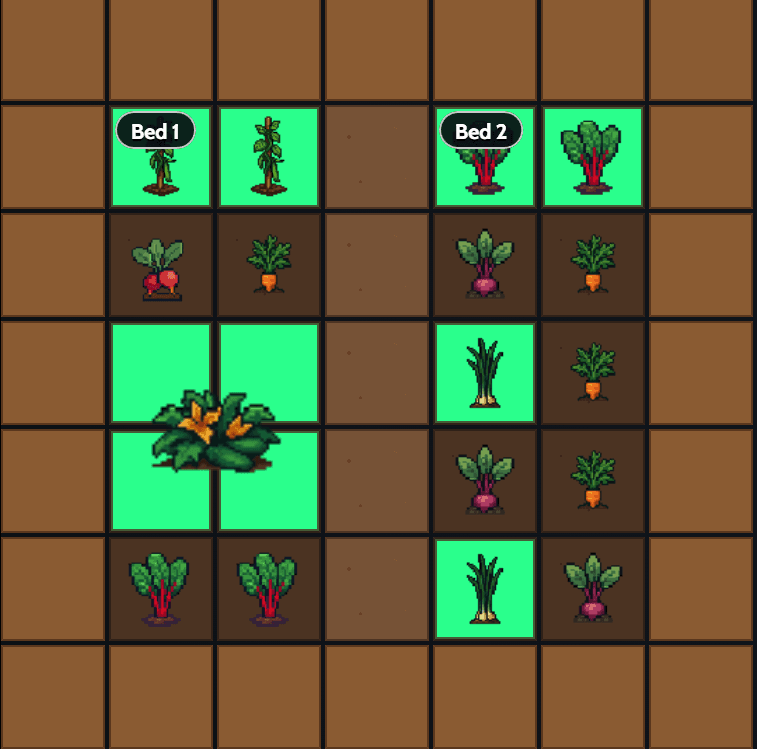
What to grow:
- Climbing French beans
- One courgette plant
- Beetroot
- Carrots
- Chard or perpetual spinach
- Spring onions in spare gaps
Why it works: Beans use vertical space, chard provides repeated harvests and the roots make productive use of the remaining bed.
Layout 2 — Salad Lover’s Plot
A fast-turnover layout for regular salads and fresh herbs throughout the growing season.
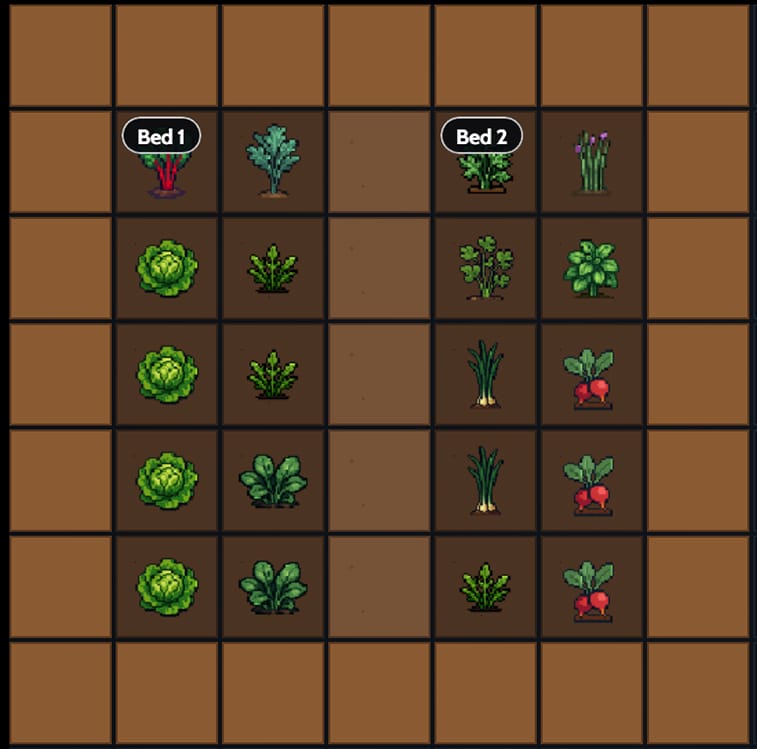
What to grow:
- Cut-and-come-again lettuce
- Rocket
- Spring onions
- Radishes
- Coriander, parsley, chives and summer basil
- A small area of chard or kale
Why it works: Quick crops can be sown little and often, while cut-and-come-again leaves provide several harvests from the same plants.
Layout 3 — Low‑Maintenance Beginner Plot
This straightforward layout suits growers who want dependable crops without constant picking or training.
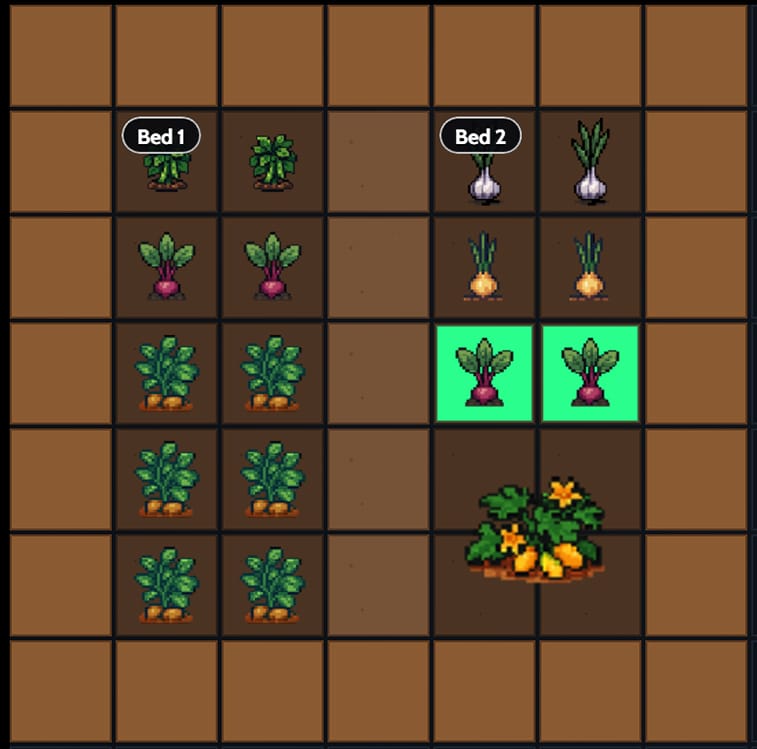
What to grow:
- Early potatoes
- Onions
- Garlic
- Beetroot
- Dwarf French beans
- One compact bush squash, if space allows
Why it works: Most of these crops need relatively little attention once established and can be harvested over a longer period.
Layout 4 — Family‑Friendly Mixed Plot
A varied layout filled with familiar crops that are enjoyable to grow, pick and eat.
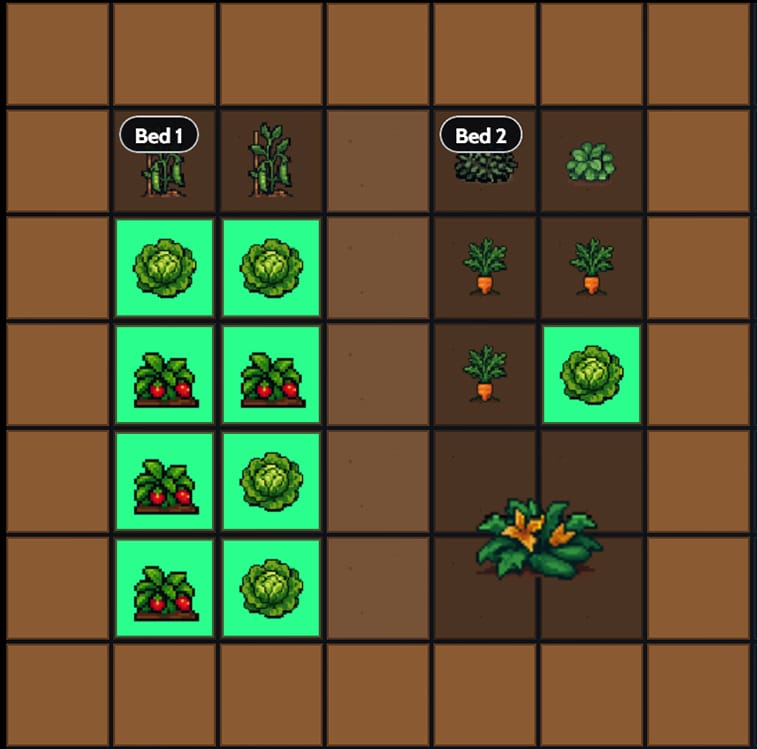
What to grow:
- Strawberries
- Peas or mangetout
- Baby carrots
- One courgette plant
- Lettuce
- Thyme and oregano, with mint kept in a pot
Why it works: The mix provides quick harvests, repeat pickings and crops that are easy for children and beginners to recognise and enjoy.
You can copy one layout in full or combine elements from several plans to suit what your household eats and how much time you have available.
Mini 4×4 Raised Bed Ideas
A 4×4-foot raised bed can hold a useful mix of herbs, salads, roots or family-friendly crops. The four layouts below can be used as standalone beds or added to a larger allotment, then copied or adapted in the Free Allotment Planner App.
4×4 Herb Bed
A compact herb bed for regular kitchen harvests through much of the year.
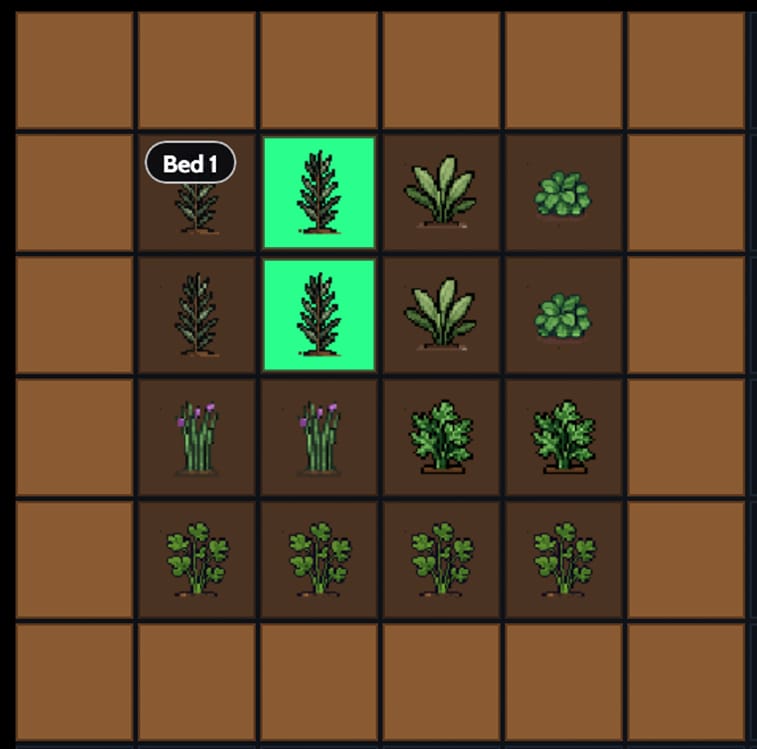
What to grow:
- Rosemary in one corner
- Sage
- Oregano or marjoram
- Parsley
- Chives
- Coriander for spring and summer
- Mint kept in a separate pot
Why it works: Rosemary, sage and oregano prefer sunnier, freer-draining parts of the bed, while parsley, chives and coriander cope better with slightly richer, moister soil. Keeping mint contained prevents it from spreading through the other herbs.
4×4 Salad Bed
A fast-turnover layout for regular leaves, radishes and spring onions.
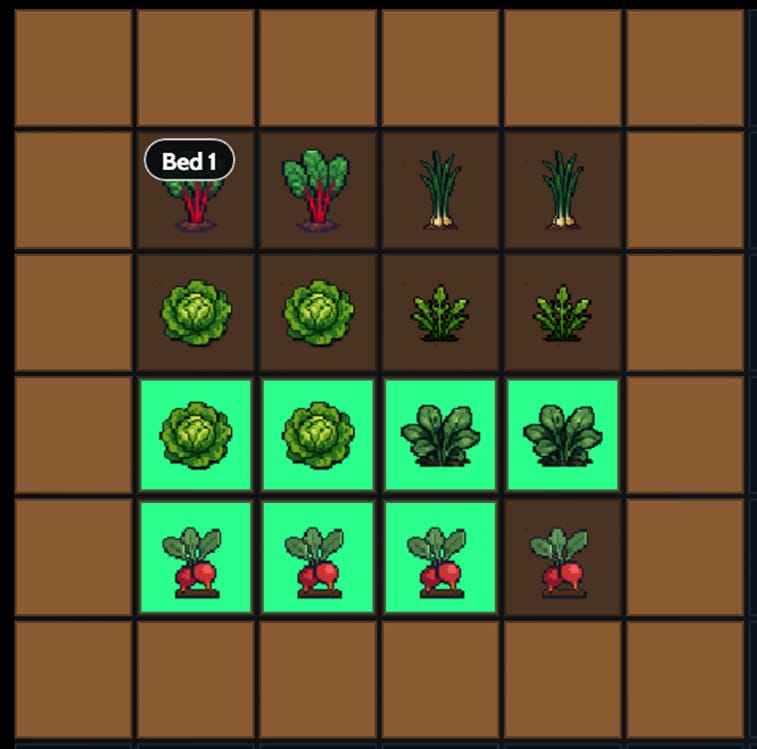
What to grow:
- Cut-and-come-again lettuce
- Rocket
- Spinach or chard
- Spring onions
- Radishes between slower-growing crops
Why it works: Most of these crops mature quickly and can be sown in small batches. Harvesting outer leaves and replacing finished radishes helps keep the bed productive for longer.
4×4 Children’s Garden
A colourful bed filled with crops that are easy to sow, recognise and harvest.
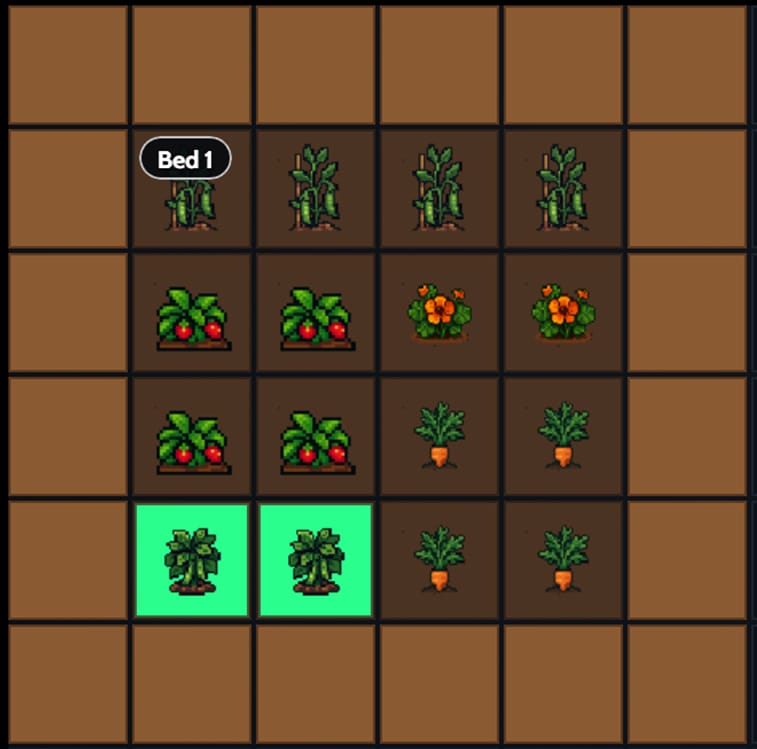
What to grow:
- Strawberries
- Peas or mangetout on a small support
- Baby carrots
- Dwarf French beans
- Nasturtiums
Why it works: The bed combines quick crops, sweet harvests and plants that children can pick directly. Peas and beans make use of height, leaving more room for strawberries and carrots below.
4×4 Root Bed
A simple, low-maintenance bed for roots and storage crops.
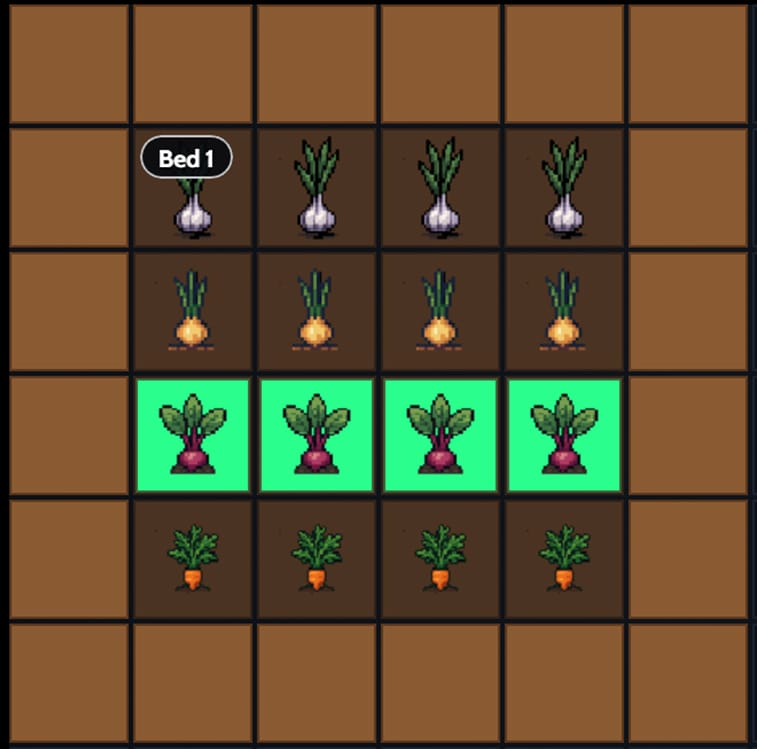
What to grow:
- Carrots
- Beetroot
- Onions
- Garlic
- Turnips, if space and timing allow
Why it works: These crops grow neatly without supports and generally need little attention once established. Onions and garlic occupy the bed for longer, while beetroot, carrots and turnips can be harvested as required.
These plans can be used as standalone raised beds or added to a larger growing area. You can also swap individual crops to suit the season, your soil and what your household regularly eats.
How to Make Better Use of a Small Plot
Making a small allotment productive is less about squeezing in more plants and more about using the available space efficiently through the season. Growing upwards, using temporary gaps and making sensible use of light can all increase what you harvest without overcrowding the plot.
Three Ways to Use the Space Better
Grow Upwards
- Climbing French beans
- Runner beans
- Peas and mangetout
- Cucumbers
- Small climbing squash
Fill Temporary Gaps
- Radishes
- Rocket
- Salad leaves
- Spring onions
- Coriander
Use Lighter Shade
- Lettuce
- Parsley
- Coriander
- Spinach
Use trellis, netting or wigwams to take climbing crops upwards, and sow quick crops in temporary gaps while slower plants are establishing. Leafy crops can also make use of slightly shadier positions, leaving the brightest parts of the plot for crops such as tomatoes, beans and courgettes.
Combine Crops for Space
Crops can share a bed when their size, height and harvest timing work together. Climbing beans can grow above salads, radishes can fit around slower-growing carrots, and lettuce can occupy space beside taller crops while they establish.
Use these combinations to make better use of the bed rather than relying on companion planting as pest control.
Replace Crops as They Finish
Keeping a second crop ready for cleared ground prevents useful growing space sitting empty.
- Radishes → lettuce
- Spring spinach → beetroot
- Early potatoes → kale or chard
- Peas → turnips or pak choi
- Garlic → summer salads
Check the sowing window before replanting, as not every sequence will work at every point in the season.
For more detailed succession and yearly crop planning, see Planning a Vegetable Garden in the UK. The Free Allotment Planner App can also help you test crop positions and plan what follows each harvest.
Common Small-Allotment Mistakes
A small plot can be very productive, but a few simple mistakes can waste space or make it harder to manage.
Overcrowding – Too many plants means more competition for light, water and nutrients.
What to do: Allow for the crop’s full size, not how small it looks when planted.
Growing Too Many Large Crops – Sweetcorn, large brassicas and sprawling squash can dominate a small plot.
What to do: Grow them selectively and prioritise crops that produce over a longer period.
Sowing Everything at Once – Large sowings can create a glut followed by a gap in harvests.
What to do: Sow quick crops such as lettuce, radishes and spring onions little and often.
Ignoring Vertical Space – Peas, climbing beans and cucumbers can use unnecessary ground space if left to trail.
What to do: Train them up supports and use the space below.
Forgetting About Access – Filling every gap can make crops difficult to reach without stepping on the soil.
What to do: Keep beds reachable from the edges and leave access where needed.
Failing to Plan the Next Crop – Beds can sit empty after early crops are harvested.
What to do: Decide what follows and have seed or young plants ready.
Avoiding these mistakes will make a small allotment easier to work and help you get more from the available space.
Plan Your Small Allotment
The free Allotment Planner lets you build a layout, check crop spacing and move plants around before anything goes into the ground.
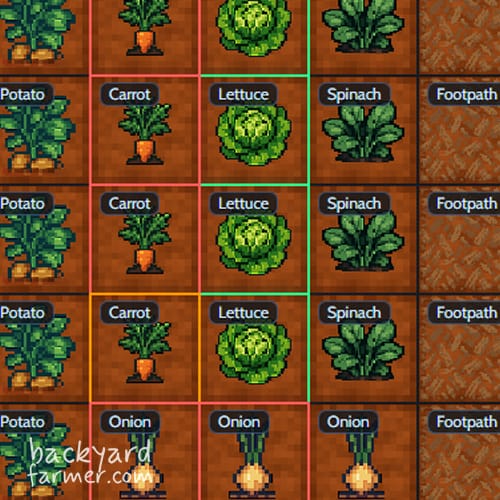
You can use it to:
- Recreate the 10×10 and 4×4 examples
- Test different crop combinations
- Check how much space mature plants need
- Plan what will replace each crop
- Save or print the finished layout
Use one of the example grids as a starting point, then adjust it to suit your space, growing conditions and the crops you regularly eat.
FAQs About Small Allotments
Salad leaves, radishes, beetroot, spring onions, dwarf French beans and chard are dependable choices for beginners.
Start with the crops you eat most, allow enough space for each plant and include a mixture of quick harvests and longer-season crops. Leave access to every part of the bed.
Sweetcorn, large brassicas, pumpkins, sprawling squash and permanent crops such as asparagus can occupy a substantial part of a small plot.
Salad leaves, herbs, climbing beans, chard, beetroot and spring onions can provide useful harvests from relatively little space.
Sow quick crops little and often, replace finished plants promptly and choose crops with different harvest periods.