
Nature does not follow a perfect timetable, and neither does your garden. The weather changes quickly, soil can warm more slowly than expected, and advice that worked one year may need adjusting the next.
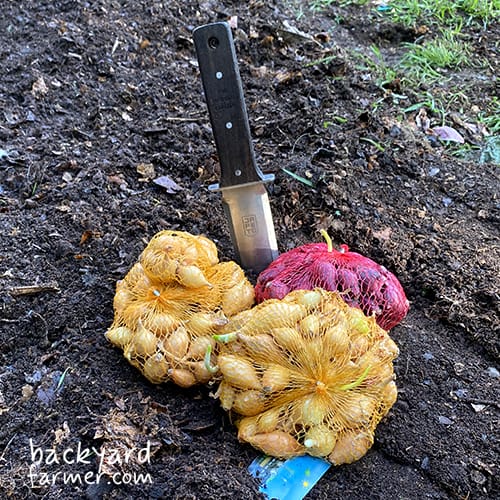
That is why this monthly UK planting guide is best used as a flexible starting point, not a rigid set of dates. Below, I have listed the common vegetables people tend to sow or plant each month, with room for local weather, soil conditions, and regional differences.
For a more specific answer, our free vegetable planting calendar can show you what to plant today as soon as you load the page, including options for different weather regions in Britain.
What to Plant Each Month in the UK
Below is a practical overview of how the growing year usually unfolds in the UK. Think of it as a UK planting calendar by month, showing how priorities shift as temperature, daylight, and soil conditions change. These summaries are deliberately short; however, each month links to a detailed guide if you want to dig deeper.
January
January is a quiet month outdoors, but you can start a few hardy crops under cover if you have a greenhouse, cold frame, or bright windowsill.
Vegetables to sow or plant in January:
- Sprouting seeds (indoors)
- Broad beans, (under cover or in mild areas)
- Onions from seed (under cover)
- Chillies (indoors / warmth)
- Aubergines (indoors / warmth)
- Early peas (under cover)
- Microgreens (indoors)
February
February is still cold, but the growing season starts to wake up. Focus on early indoor sowings and hardy crops that can cope with cool conditions.
Vegetables to sow or plant in February:
March
March is one of the first proper sowing months in the UK. The soil may still be cold, so use cloches, fleece, or modules where needed.
Vegetables to sow or plant in March:
For more detail on what to plant, check out Spring Vegetable Planting Guide (March–May)
April
April is when the vegetable garden starts moving properly. The soil is warming up, daylight is stronger, and many hardy crops can now be sown outdoors. However, cold nights and late frosts can still catch you out, so keep fleece or cloches handy.
Vegetables to sow or plant in April:
May
May is one of the busiest planting months in the UK. The risk of frost starts to reduce in many areas, although colder gardens should still be cautious. This is a good month for sowing fast crops, planting out sturdy young plants, and starting tender vegetables under cover.
Vegetables to sow or plant in May:
- French beans.
- Beetroot
- Carrots
- Lettuce
- Rocket
- Spinach
- Swiss chard
- Radish
- Spring onions
- Peas
June
June is a productive month, but it is also when gaps start appearing as early crops are harvested. Focus on succession sowing, planting out tender crops, and keeping beds full so the growing season does not stall after the first flush of spring vegetables.
Vegetables to sow or plant in June:
If your chilling in the blazing summer sun and want more summer planting advice, read our guide ‘Summer Vegetable Planting Guide (June–August)‘.
July
July is a good month for filling gaps as early crops come out. The main focus is succession sowing, quick crops, and starting a few vegetables that will carry you into autumn and winter.
Good vegetables to sow or plant in July:
August
August is mainly about planning ahead for autumn and winter harvests. Many summer crops are still producing, but this is also a useful month for sowing quick salads, hardy greens, and crops that can stand into the colder months.
Good vegetables to sow or plant in August:
- Winter cabbage
- Lettuce
- Rocket
- Radish
- Spring onions
- Spinach
- Pak choi
- Kale
- Chard
- Turnips
September
September is a transition month. Growth starts to slow, but the soil is often still warm enough for quick crops, hardy greens, and overwintering vegetables.
Good vegetables to sow or plant in September:
- Garlic
- Spinach
- Lettuce
- Rocket
- Radish
- Spring onions
- Pak choi
- Winter lettuce
- Lamb’s lettuce
- Onion sets
If you’re winding down into the autumn vibes, why not continue a little light reading with ‘Vegetables to Plant in Autumn Guide (September-November)‘.
October
October is when the growing season starts winding down, but there are still useful crops to plant. Focus on hardy overwintering vegetables, protected salads, and crops that can establish before winter.
Good vegetables to sow or plant in October:
- Radish
- Garlic
- Onion sets
- Broad beans
- Peas
- Winter lettuce
- Lamb’s lettuce
- Spinach
- Spring cabbage
- Pak choi
November
November is a quieter month for planting, especially outdoors. However, you can still get ahead with hardy crops, overwintering varieties, and a few protected sowings under cover.
Good vegetables to sow or plant in November:
- Sprouting seeds
- Garlic
- Onion sets
- Broad beans
- Peas
- Winter lettuce
- Lamb’s lettuce
- Spinach
- Mustard greens
- Microgreens
December
December is mostly a planning and protection month, but it is not completely dead for growing. Outdoor sowing is limited, so focus on indoor crops, protected salads, and getting ready for the next season.
Good vegetables to sow or plant in December:
- Chillies (indoors / warmth)
- Microgreens
- Sprouting seeds
- Pea shoots
- Winter lettuce (under cover)
- Lamb’s lettuce (under cover)
- Mustard greens (under cover)
- Broad beans (in mild areas or under cover)
- Garlic (if conditions allow)
- Onion seeds (indoors)
There’s not much to do in the winter, so get those feet up by the log fire, warm your toes and get stuck into ‘Winter Growing Guide (December–February)‘.
Each month links to a dedicated guide with practical advice, examples, and timing notes. Which means this becomes a flexible vegetable planting calendar for the Great British Isles that you can return to throughout the year.
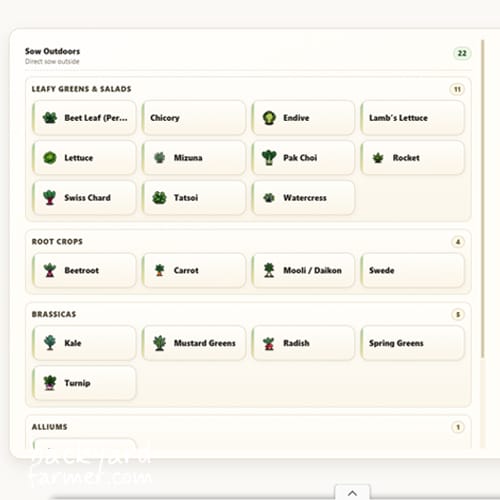
Free Planting Calendar (no sign up)
All you have to do is load the page, and it will tell you what to plant today.
Common Mistakes When Following Planting Calendars
Planting calendars are useful tools, especially when you’re trying to work out what to plant each month in the UK. However, they’re easy to misread. Problems usually crop up when calendars are treated as fixed instructions, rather than flexible references that need a bit of judgement.
Below are some of the most common issues gardeners run into when month-by-month planting advice is followed too rigidly.
Planting by Date Instead of Conditions
One of the biggest mistakes is planting simply because the calendar says it’s time — even when the soil is still cold, wet, or compacted. In the UK, soil temperature and drainage often lag behind the season, particularly in early spring.
As a result, waiting a week or two before you plant vegetables usually leads to stronger roots, better establishment, and healthier plants overall.
Rushing Early Sowing
Early sowing can feel productive at first. However, starting too soon often leads to weak seedlings, slow growth, or losses to frost. This is especially common with tender vegetables that are sown outdoors before conditions have properly settled.
Instead, starting seeds under cover — or simply holding back for a short while — is often the more reliable option when deciding what to sow early in the growing season.
Overcrowding Beds
Planting calendars rarely account for how large plants will become later in the season. When everything on the list gets sown without thinking about spacing, overcrowding quickly follows. In turn, airflow suffers, pests and disease become more likely, and yields drop.
Planning layouts in advance helps prevent this and makes the whole vegetable growing season easier to manage.
Forgetting Succession Sowing
Many planting calendars focus on when to start, but they don’t always consider what happens afterwards. Without succession sowing, beds can quickly become unproductive once early crops are harvested.
By thinking a few weeks ahead and planning follow-on sowings, you can keep harvests going for much longer.
Assuming Advice Applies Everywhere
Conditions vary widely across the UK. What works well in a sheltered southern garden may struggle in a colder, wetter northern plot or an exposed allotment.
For that reason, use monthly planting guidance as context, then adjust based on your local climate, soil type, and exposure when deciding what to plant now.
Used correctly, planting calendars are helpful reference points. Used too rigidly, they can create unnecessary frustration. Treat them as guides, not rules, and your results will be far more consistent across the growing season.
Using Planning Tools Alongside This Guide
Instead of trying to keep spacing, crop rotation, and timings in your head, planning things visually makes the whole growing season easier to manage. Thats where our free garden planning tools come in. If you want to take planting times to the next level, check out our Biodynamic Planting Calendar here. This uses the moons phases and astrological timings into account when planting crops!
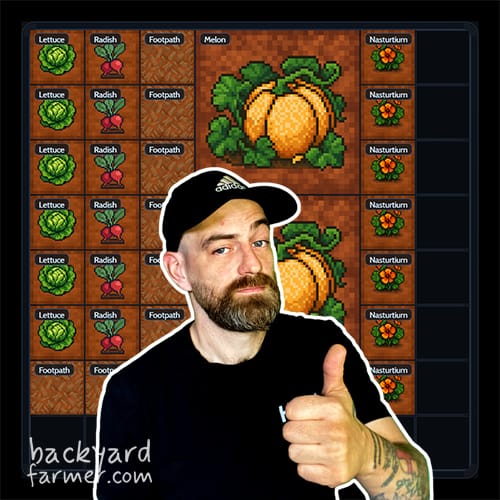
Our FREE Allotment Planner App
- A true square-foot grid system
- Automatic plant spacing rules
- One-tap crop placement
- A mobile-friendly layout you can use right at the allotment
Final Notes
Gardening tends to work best when it’s treated as a seasonal process, not a checklist. Conditions change from year to year and, even within the same garden or allotment, one bed can behave very differently from another.
For that reason, use this guide as a reference point rather than a rulebook. Start with the current month, plan with the growing season in mind, and then be ready to adjust as the weather, soil temperature, and daylight shift. In most cases, small changes made at the right time matter far more than sticking rigidly to dates on a planting calendar.
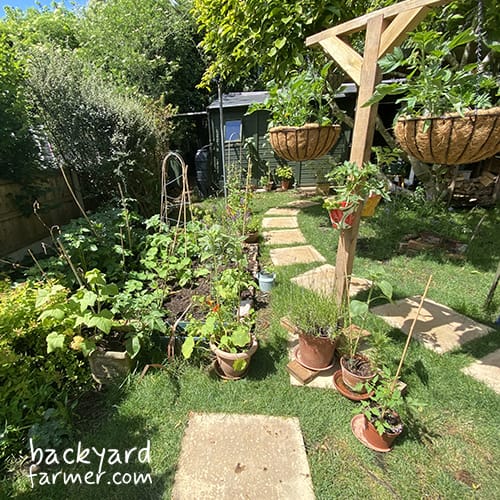
If you’re new to growing vegetables, it’s worth keeping things simple at first. Focus on a manageable number of crops, give them the space they need, and build confidence as the season unfolds. On the other hand, if you’re more experienced, the monthly planting guides can help fine-tune timing and highlight opportunities you might otherwise overlook.
Above all, remember that every growing year in the UK is slightly different. Pay attention to what works in your own garden or allotment, make notes as you go, and let that experience guide your decisions just as much as any vegetable planting calendar ever could.
To get started, head to the guide for the current month, think about what vegetables make sense to plant now, plan your beds with the season ahead in mind, and take things one step at a time. Planting is only half the picture. Once your beds are producing, refer to the UK Harvest Calendar to stay on top of picking and storage timing.