
The Sustainable Development Goals (SDGs) are 17 global goals covering poverty, food, health, education, inequality, climate, ecosystems and other major challenges. They were adopted by all United Nations Member States in 2015 as part of the 2030 Agenda for Sustainable Development.
Together, the goals contain 169 individual targets. Most are centred on 2030, although some originally had earlier deadlines, including 2020 and 2025.
This guide includes:
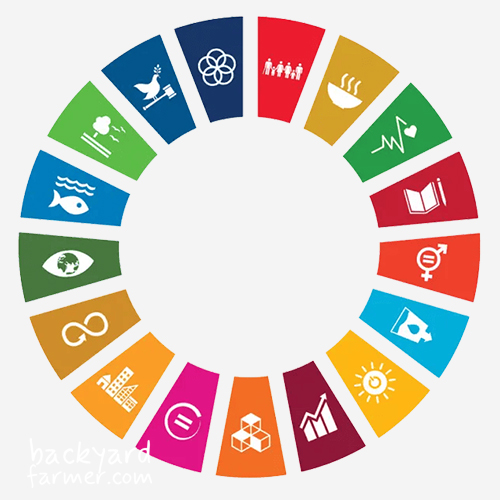
- all 17 Sustainable Development Goals;
- all 169 targets explained in plain English;
- important figures, deadlines and commitments from the original targets; and
- a downloadable PDF for reference.
Where Are the Sustainable Development Goals in 2026?
Progress remains well behind the original ambition of the 2030 Agenda. Of the 139 targets with enough data to assess trends, the UN reports that 15% are on track and 21% show moderate progress. Nearly half are making only marginal progress or none at all, while 15% have fallen below their 2015 baseline.
Progress varies considerably between countries and between targets, so the figures below should be read as the original commitments rather than a statement that every target has been achieved. For the full assessment, see the UN Sustainable Development Goals monitoring and reporting resources.
The 17 Sustainable Development Goals at a Glance
| Goal | Sustainable Development Goal | What It Covers |
|---|---|---|
| 1 | No Poverty | Ending poverty in all its forms |
| 2 | Zero Hunger | Food security, nutrition and sustainable agriculture |
| 3 | Good Health and Well-being | Health and well-being for people of all ages |
| 4 | Quality Education | Inclusive education and lifelong learning |
| 5 | Gender Equality | Equal rights and opportunities for women and girls |
| 6 | Clean Water and Sanitation | Safe water, sanitation and sustainable water management |
| 7 | Affordable and Clean Energy | Reliable, sustainable and modern energy |
| 8 | Decent Work and Economic Growth | Sustainable growth, productive employment and decent work |
| 9 | Industry, Innovation and Infrastructure | Resilient infrastructure, sustainable industry and innovation |
| 10 | Reduced Inequalities | Reducing inequality within and between countries |
| 11 | Sustainable Cities and Communities | Inclusive, safe and sustainable settlements |
| 12 | Responsible Consumption and Production | Using resources and producing goods more sustainably |
| 13 | Climate Action | Tackling climate change and its impacts |
| 14 | Life Below Water | Protecting oceans, seas and marine resources |
| 15 | Life on Land | Protecting ecosystems, forests and biodiversity |
| 16 | Peace, Justice and Strong Institutions | Justice, accountability and peaceful societies |
| 17 | Partnerships for the Goals | International cooperation needed to achieve the SDGs |
Download the 17 Sustainable Development Goals PDF
Want a copy to keep? Download our plain-English PDF covering all 17 Sustainable Development Goals and their 169 targets.
1. No Poverty
Official aim: End poverty in all its forms everywhere.
- 1.1 By 2030, eradicate extreme poverty for everyone. The original SDG target defined this as living on less than $1.25 a day.
Note: This is the historic benchmark written into the 2015 target. The World Bank’s current international poverty line is $3.00 per person per day using 2021 purchasing-power data. - 1.2 By 2030, reduce by at least half the proportion of people living in poverty according to national definitions, including people experiencing poverty in all its dimensions.
- 1.3 Put in place nationally appropriate social-protection systems and measures for everyone, including minimum levels of protection, and achieve substantial coverage of poor and vulnerable people by 2030.
- 1.4 By 2030, ensure that all people, especially poor and vulnerable people, have equal rights to economic resources and access to basic services, land and other property, inheritance, natural resources, appropriate technology and financial services.
- 1.5 By 2030, strengthen the resilience of poor and vulnerable people and reduce their exposure to climate-related extreme events and other economic, social and environmental shocks and disasters.
- 1.a Ensure significant resources are mobilised from a range of sources so developing countries can implement programmes and policies to end poverty.
- 1.b Create sound policy frameworks at national, regional and international levels that support investment in poverty reduction and give greater attention to poor and gender-responsive development strategies.
2. Zero Hunger
Official aim: End hunger, achieve food security and improved nutrition and promote sustainable agriculture.
- 2.1 By 2030, end hunger and ensure that everyone, especially poor and vulnerable people, has access to safe, nutritious and sufficient food throughout the year.
- 2.2 By 2030, end all forms of malnutrition, including achieving by 2025 the internationally agreed targets on stunting and wasting in children under five, and address the nutritional needs of adolescent girls, pregnant and breastfeeding women and older people.
- 2.3 By 2030, double the agricultural productivity and incomes of small-scale food producers, particularly women, Indigenous peoples, family farmers, pastoralists and fishers, while ensuring secure and equal access to land, resources, knowledge, finance, markets and opportunities for value addition and non-farm employment.
- 2.4 By 2030, ensure sustainable food-production systems and resilient agricultural practices that increase productivity, help maintain ecosystems, strengthen adaptation to climate change and progressively improve land and soil quality.
- 2.5 By 2020, maintain the genetic diversity of seeds, cultivated plants, farmed and domesticated animals and their related wild species. Support seed and plant banks, national and international conservation facilities, and fair access to and sharing of benefits from genetic resources and traditional knowledge.
- 2.a Increase investment in rural infrastructure, agricultural research and extension services, technology development and plant and livestock gene banks to improve agricultural productive capacity in developing countries, especially least developed countries.
- 2.b Correct and prevent trade restrictions and distortions in world agricultural markets, including through the elimination of agricultural export subsidies and measures with equivalent effects.
- 2.c Adopt measures to ensure the proper functioning of food commodity markets and their derivatives, and facilitate timely access to market information to help limit extreme food-price volatility.
3. Good Health and Well-being
Official aim: Ensure healthy lives and promote well-being for all at all ages.
- 3.1 By 2030, reduce the global maternal mortality ratio to less than 70 deaths per 100,000 live births.
- 3.2 By 2030, end preventable deaths of newborns and children under five, with countries aiming for neonatal mortality of no more than 12 per 1,000 live births and under-five mortality of no more than 25 per 1,000.
- 3.3 By 2030, end the epidemics of AIDS, tuberculosis, malaria and neglected tropical diseases, and combat hepatitis, water-borne diseases and other communicable diseases.
- 3.4 By 2030, reduce by one-third premature mortality from non-communicable diseases through prevention and treatment, and promote mental health and well-being.
- 3.5 Strengthen the prevention and treatment of substance abuse, including narcotic-drug abuse and harmful use of alcohol.
- 3.6 By 2020, halve the number of global deaths and injuries from road-traffic accidents.
- 3.7 By 2030, ensure universal access to sexual and reproductive healthcare services, including family planning, information and education, and integrate reproductive health into national strategies and programmes.
- 3.8 Achieve universal health coverage, including financial-risk protection, access to quality essential healthcare services and safe, effective, quality and affordable essential medicines and vaccines for all.
- 3.9 By 2030, substantially reduce the number of deaths and illnesses from hazardous chemicals and air, water and soil pollution and contamination.
- 3.a Strengthen implementation of the World Health Organisation Framework Convention on Tobacco Control in all countries, as appropriate.
- 3.b Support research and development of vaccines and medicines for communicable and non-communicable diseases that primarily affect developing countries, provide access to affordable essential medicines and vaccines, and support the flexibilities available under international intellectual-property agreements.
- 3.c Substantially increase health financing and the recruitment, development, training and retention of the health workforce in developing countries, especially least developed countries and small island developing States.
- 3.d Strengthen the capacity of all countries, particularly developing countries, for early warning, risk reduction and management of national and global health risks.
4. Quality Education
Official aim: Ensure inclusive and equitable quality education and promote lifelong learning opportunities for all.
- 4.1 By 2030, ensure that all girls and boys complete free, equitable and quality primary and secondary education leading to relevant and effective learning outcomes.
- 4.2 By 2030, ensure that all girls and boys have access to quality early-childhood development, care and pre-primary education so they are ready for primary education.
- 4.3 By 2030, ensure equal access for all women and men to affordable and quality technical, vocational and tertiary education, including university.
- 4.4 By 2030, substantially increase the number of young people and adults with relevant skills for employment, decent jobs and entrepreneurship.
- 4.5 By 2030, eliminate gender disparities in education and ensure equal access to all levels of education and vocational training for vulnerable people, including people with disabilities, Indigenous peoples and children in vulnerable situations.
- 4.6 By 2030, ensure that all young people and a substantial proportion of adults achieve literacy and numeracy.
- 4.7 By 2030, ensure that learners acquire the knowledge and skills needed to promote sustainable development, including education for sustainable development, human rights, gender equality, peace, global citizenship, cultural diversity and the contribution of culture to sustainable development.
- 4.a Build and upgrade education facilities that are child-, disability- and gender-sensitive and provide safe, non-violent, inclusive and effective learning environments for all.
- 4.b By 2020, substantially expand globally the number of scholarships available to developing countries, especially least developed countries, small island developing States and African countries, for higher education and technical, engineering and scientific programmes.
- 4.c By 2030, substantially increase the supply of qualified teachers, including through international cooperation for teacher training in developing countries.
5. Gender Equality
Official aim: Achieve gender equality and empower all women and girls.
- 5.1 End all forms of discrimination against all women and girls everywhere.
- 5.2 Eliminate all forms of violence against women and girls in public and private life, including trafficking, sexual exploitation and other forms of exploitation.
- 5.3 Eliminate all harmful practices, such as child, early and forced marriage and female genital mutilation.
- 5.4 Recognise and value unpaid care and domestic work through public services, infrastructure, social-protection policies and the promotion of shared responsibility within households and families.
- 5.5 Ensure women’s full and effective participation and equal opportunities for leadership at all levels of decision-making in political, economic and public life.
- 5.6 Ensure universal access to sexual and reproductive health and reproductive rights in accordance with international agreements.
- 5.a Undertake reforms to give women equal rights to economic resources and access to ownership and control over land and other property, financial services, inheritance and natural resources.
- 5.b Enhance the use of enabling technology, especially information and communications technology, to promote women’s empowerment.
- 5.c Adopt and strengthen sound policies and enforceable legislation for promoting gender equality and empowering all women and girls.
6. Clean Water and Sanitation
Official aim: Ensure availability and sustainable management of water and sanitation for all.
- 6.1 By 2030, achieve universal and equitable access to safe and affordable drinking water for all.
- 6.2 By 2030, achieve access to adequate and equitable sanitation and hygiene for all, paying special attention to the needs of women and girls and people in vulnerable situations, and end open defecation.
- 6.3 By 2030, improve water quality by reducing pollution, eliminating dumping and minimising the release of hazardous chemicals and materials, halving the proportion of untreated wastewater and substantially increasing recycling and safe reuse globally.
- 6.4 By 2030, substantially increase water-use efficiency across all sectors and ensure sustainable withdrawals and supply of freshwater to address water scarcity and substantially reduce the number of people suffering from water scarcity.
- 6.5 By 2030, implement integrated water-resources management at all levels, including through transboundary cooperation where appropriate.
- 6.6 By 2020, protect and restore water-related ecosystems, including mountains, forests, wetlands, rivers, aquifers and lakes.
- 6.a By 2030, expand international cooperation and capacity-building support for developing countries in water- and sanitation-related activities and programmes, including water harvesting, desalination, water efficiency, wastewater treatment, recycling and reuse technologies.
- 6.b Support and strengthen the participation of local communities in improving water and sanitation management.
7. Affordable and Clean Energy
Official aim: Ensure access to affordable, reliable, sustainable and modern energy for all.
- 7.1 By 2030, ensure universal access to affordable, reliable and modern energy services.
- 7.2 By 2030, substantially increase the share of renewable energy in the global energy mix.
- 7.3 By 2030, double the global rate of improvement in energy efficiency.
- 7.a By 2030, enhance international cooperation to facilitate access to clean-energy research and technology, including renewable energy, energy efficiency and advanced and cleaner fossil-fuel technology, and promote investment in energy infrastructure and clean-energy technology.
- 7.b By 2030, expand infrastructure and upgrade technology for supplying modern and sustainable energy services in developing countries, especially least developed countries, small island developing States and landlocked developing countries.
8. Decent Work and Economic Growth
Official aim: Promote sustained, inclusive and sustainable economic growth, full and productive employment and decent work for all.
- 8.1 Sustain per-capita economic growth in accordance with national circumstances and, in particular, at least 7% annual GDP growth in the least developed countries.
- 8.2 Achieve higher levels of economic productivity through diversification, technological upgrading and innovation, including by focusing on high-value-added and labour-intensive sectors.
- 8.3 Promote development-oriented policies that support productive activities, decent job creation, entrepreneurship, creativity and innovation, and encourage the formalisation and growth of micro-, small- and medium-sized enterprises.
- 8.4 Improve global resource efficiency in consumption and production and work to decouple economic growth from environmental degradation, in accordance with the 10-Year Framework of Programmes on Sustainable Consumption and Production.
- 8.5 By 2030, achieve full and productive employment and decent work for all women and men, including young people and people with disabilities, and equal pay for work of equal value.
- 8.6 By 2020, substantially reduce the proportion of young people not in employment, education or training.
- 8.7 Take immediate and effective measures to eradicate forced labour, end modern slavery and human trafficking, prohibit and eliminate the worst forms of child labour and, by 2025, end child labour in all its forms.
- 8.8 Protect labour rights and promote safe and secure working environments for all workers, including migrant workers, particularly women migrants and people in precarious employment.
- 8.9 By 2030, devise and implement policies to promote sustainable tourism that creates jobs and promotes local culture and products.
- 8.10 Strengthen the capacity of domestic financial institutions to encourage and expand access to banking, insurance and financial services for all.
- 8.a Increase Aid for Trade support for developing countries, particularly least developed countries, including through the Enhanced Integrated Framework for Trade-Related Technical Assistance.
- 8.b By 2020, develop and implement a global strategy for youth employment and implement the Global Jobs Pact of the International Labour Organisation.
9. Industry, Innovation and Infrastructure
Official aim: Build resilient infrastructure, promote inclusive and sustainable industrialisation and foster innovation.
- 9.1 Develop quality, reliable, sustainable and resilient infrastructure, including regional and transborder infrastructure, to support economic development and human well-being, with a focus on affordable and equitable access for all.
- 9.2 Promote inclusive and sustainable industrialisation and, by 2030, significantly raise industry’s share of employment and GDP in line with national circumstances, while doubling its share in least developed countries.
- 9.3 Increase the access of small-scale industrial and other enterprises, particularly in developing countries, to financial services, including affordable credit, and their integration into value chains and markets.
- 9.4 By 2030, upgrade infrastructure and retrofit industries to make them sustainable, with greater resource-use efficiency and wider adoption of clean and environmentally sound technologies and processes.
- 9.5 By 2030, enhance scientific research and upgrade the technological capabilities of industrial sectors, particularly in developing countries, while encouraging innovation and substantially increasing the number of research and development workers per 1 million people and public and private spending on research and development.
- 9.a Facilitate sustainable and resilient infrastructure development in developing countries through enhanced financial, technological and technical support, especially in African countries, least developed countries, landlocked developing countries and small island developing States.
- 9.b Support domestic technology development, research and innovation in developing countries, including by ensuring a policy environment that supports industrial diversification and value addition to commodities.
- 9.c Significantly increase access to information and communications technology and strive to provide universal and affordable internet access in least developed countries by 2020.
10. Reduced Inequalities
Official aim: Reduce inequality within and among countries.
- 10.1 By 2030, progressively achieve and sustain income growth of the bottom 40% of the population at a rate higher than the national average.
- 10.2 By 2030, empower and promote the social, economic and political inclusion of all, irrespective of age, sex, disability, race, ethnicity, origin, religion or economic or other status.
- 10.3 Ensure equal opportunity and reduce inequalities of outcome, including by eliminating discriminatory laws, policies and practices and promoting appropriate legislation, policies and action.
- 10.4 Adopt policies, especially fiscal, wage and social-protection policies, and progressively achieve greater equality.
- 10.5 Improve the regulation and monitoring of global financial markets and institutions and strengthen implementation of those regulations.
- 10.6 Ensure enhanced representation and voice for developing countries in decision-making in global international economic and financial institutions.
- 10.7 Facilitate orderly, safe, regular and responsible migration and mobility of people, including through planned and well-managed migration policies.
- 10.a Implement the principle of special and differential treatment for developing countries, especially least developed countries, in accordance with World Trade Organisation agreements.
- 10.b Encourage official development assistance and financial flows, including foreign direct investment, to states where the need is greatest, particularly least developed countries, African countries, small island developing States and landlocked developing countries.
- 10.c By 2030, reduce to less than 3% the transaction costs of migrant remittances and eliminate remittance corridors with costs higher than 5%.
11. Sustainable Cities and Communities
Official aim: Make cities and human settlements inclusive, safe, resilient and sustainable.
- 11.1 By 2030, ensure access for all to adequate, safe and affordable housing and basic services and upgrade slums.
- 11.2 By 2030, provide access to safe, affordable, accessible and sustainable transport systems for all, improving road safety and expanding public transport, with special attention to vulnerable people.
- 11.3 By 2030, enhance inclusive and sustainable urbanisation and the capacity for participatory, integrated and sustainable human-settlement planning and management.
- 11.4 Strengthen efforts to protect and safeguard the world’s cultural and natural heritage.
- 11.5 By 2030, significantly reduce the number of deaths and people affected by disasters, including water-related disasters, and substantially reduce direct economic losses relative to global GDP, with a focus on protecting poor and vulnerable people.
- 11.6 By 2030, reduce the adverse environmental impact of cities per person, including by paying special attention to air quality and municipal and other waste management.
- 11.7 By 2030, provide universal access to safe, inclusive and accessible green and public spaces, especially for women and children, older people and people with disabilities.
- 11.a Support positive economic, social and environmental links between urban, peri-urban and rural areas by strengthening national and regional development planning.
- 11.b By 2020, substantially increase the number of cities and human settlements adopting and implementing integrated policies and plans for inclusion, resource efficiency, climate-change adaptation and mitigation, resilience to disasters, and develop and implement disaster-risk management in line with the Sendai Framework.
- 11.c Support least developed countries, including through financial and technical assistance, in building sustainable and resilient buildings using local materials.
12. Responsible Consumption and Production
Official aim: Ensure sustainable consumption and production patterns.
- 12.1 Implement the 10-Year Framework of Programmes on Sustainable Consumption and Production Patterns, with developed countries taking the lead and all countries taking action according to their development and capabilities.
- 12.2 By 2030, achieve the sustainable management and efficient use of natural resources.
- 12.3 By 2030, halve per-capita global food waste at the retail and consumer levels and reduce food losses along production and supply chains, including post-harvest losses.
- 12.4 By 2020, achieve the environmentally sound management of chemicals and all wastes throughout their life cycle, in accordance with international frameworks, and significantly reduce their release into air, water and soil.
- 12.5 By 2030, substantially reduce waste generation through prevention, reduction, recycling and reuse.
- 12.6 Encourage companies, especially large and transnational companies, to adopt sustainable practices and include sustainability information in their reporting.
- 12.7 Promote sustainable public-procurement practices in accordance with national policies and priorities.
- 12.8 By 2030, ensure that people everywhere have relevant information and awareness for sustainable development and lifestyles in harmony with nature.
- 12.a Support developing countries in strengthening their scientific and technological capacity to move towards more sustainable patterns of consumption and production.
- 12.b Develop and implement tools to monitor sustainable-development impacts for sustainable tourism that creates jobs and promotes local culture and products.
- 12.c Rationalise inefficient fossil-fuel subsidies that encourage wasteful consumption by removing market distortions, taking into account national circumstances and protecting poor and affected communities.
13. Climate Action
Official aim: Take urgent action to combat climate change and its impacts.
- 13.1 Strengthen resilience and adaptive capacity to climate-related hazards and natural disasters in all countries.
- 13.2 Integrate climate-change measures into national policies, strategies and planning.
- 13.3 Improve education, awareness-raising and human and institutional capacity on climate-change mitigation, adaptation, impact reduction and early warning.
- 13.a Implement the commitment undertaken by developed-country parties to the United Nations Framework Convention on Climate Change to mobilise jointly $100 billion annually by 2020 from all sources to address the needs of developing countries, in the context of meaningful mitigation actions and transparency on implementation, and fully operationalise the Green Climate Fund through its capitalisation as soon as possible.
- 13.b Promote mechanisms for raising capacity for effective climate-change-related planning and management in least developed countries and small island developing States, including focusing on women, young people and local and marginalised communities.
14. Life Below Water
Official aim: Conserve and sustainably use the oceans, seas and marine resources for sustainable development.
- 14.1 By 2025, prevent and significantly reduce marine pollution of all kinds, especially from land-based activities, including marine debris and nutrient pollution.
- 14.2 By 2020, sustainably manage and protect marine and coastal ecosystems to avoid significant adverse impacts, including by strengthening their resilience and taking action for their restoration.
- 14.3 Minimise and address the impacts of ocean acidification, including through enhanced scientific cooperation at all levels.
- 14.4 By 2020, effectively regulate harvesting and end overfishing, illegal, unreported and unregulated fishing and destructive fishing practices, and implement science-based management plans to restore fish stocks in the shortest time feasible.
- 14.5 By 2020, conserve at least 10% of coastal and marine areas, consistent with national and international law and based on the best available scientific information.
- 14.6 By 2020, prohibit certain forms of fisheries subsidies that contribute to overcapacity and overfishing, eliminate subsidies that contribute to illegal, unreported and unregulated fishing, and refrain from introducing new such subsidies, while recognising appropriate and effective special and differential treatment for developing and least developed countries.
- 14.7 By 2030, increase the economic benefits to small island developing States and least developed countries from the sustainable use of marine resources, including through sustainable management of fisheries, aquaculture and tourism.
- 14.a Increase scientific knowledge, develop research capacity and transfer marine technology in accordance with the Intergovernmental Oceanographic Commission Criteria and Guidelines, to improve ocean health and enhance the contribution of marine biodiversity to developing countries.
- 14.b Provide access for small-scale artisanal fishers to marine resources and markets.
- 14.c Enhance the conservation and sustainable use of oceans and their resources by implementing international law, including the United Nations Convention on the Law of the Sea.
15. Life on Land
Official aim: Protect, restore and promote sustainable use of terrestrial ecosystems, sustainably manage forests, combat desertification, halt and reverse land degradation and halt biodiversity loss.
- 15.1 By 2020, ensure the conservation, restoration and sustainable use of terrestrial and inland freshwater ecosystems and their services, especially forests, wetlands, mountains and drylands.
- 15.2 By 2020, promote the implementation of sustainable management of all types of forests, halt deforestation, restore degraded forests and substantially increase afforestation and reforestation globally.
- 15.3 By 2030, combat desertification, restore degraded land and soil, including land affected by desertification, drought and floods, and strive to achieve a land-degradation-neutral world.
- 15.4 By 2030, ensure the conservation of mountain ecosystems, including their biodiversity, to enhance their capacity to provide benefits essential for sustainable development.
- 15.5 Take urgent and significant action to reduce the degradation of natural habitats, halt the loss of biodiversity and, by 2020, protect and prevent the extinction of threatened species.
- 15.6 Promote fair and equitable sharing of the benefits arising from the use of genetic resources and promote appropriate access to those resources.
- 15.7 Take urgent action to end poaching and trafficking of protected species of flora and fauna and address both demand and supply of illegal wildlife products.
- 15.8 By 2020, introduce measures to prevent the introduction and significantly reduce the impact of invasive alien species on land and water ecosystems and control or eradicate priority species.
- 15.9 By 2020, integrate ecosystem and biodiversity values into national and local planning, development processes, poverty-reduction strategies and accounts.
- 15.a Mobilise and significantly increase financial resources from all sources to conserve and sustainably use biodiversity and ecosystems.
- 15.b Mobilise significant resources from all sources and at all levels to finance sustainable forest management and provide adequate incentives to developing countries to advance such management.
- 15.c Enhance global support for efforts to combat poaching and trafficking of protected species, including by increasing the capacity of local communities to pursue sustainable livelihood opportunities.
16. Peace, Justice and Strong Institutions
Official aim: Promote peaceful and inclusive societies for sustainable development, provide access to justice for all and build effective, accountable and inclusive institutions at all levels.
- 16.1 Significantly reduce all forms of violence and related death rates everywhere.
- 16.2 End abuse, exploitation, trafficking and all forms of violence against and torture of children.
- 16.3 Promote the rule of law at national and international levels and ensure equal access to justice for all.
- 16.4 By 2030, significantly reduce illicit financial and arms flows, strengthen the recovery and return of stolen assets and combat all forms of organised crime.
- 16.5 Substantially reduce corruption and bribery in all their forms.
- 16.6 Develop effective, accountable and transparent institutions at all levels.
- 16.7 Ensure responsive, inclusive, participatory and representative decision-making at all levels.
- 16.8 Broaden and strengthen the participation of developing countries in the institutions of global governance.
- 16.9 By 2030, provide legal identity for all, including birth registration.
- 16.10 Ensure public access to information and protect fundamental freedoms, in accordance with national legislation and international agreements.
- 16.a Strengthen relevant national institutions, including through international cooperation, for building capacity at all levels in developing countries to prevent violence and combat terrorism and crime.
- 16.b Promote and enforce non-discriminatory laws and policies for sustainable development.
17. Partnerships for the Goals
Official aim: Strengthen the means of implementation and revitalise the global partnership for sustainable development.
The targets under Goal 17 are grouped by theme because they cover the practical systems needed to finance, coordinate and measure progress on all the other goals.
Finance
- 17.1 Strengthen domestic resource mobilisation, including through international support for developing countries, to improve domestic capacity for tax and other revenue collection.
- 17.2 Developed countries should fully implement their official development assistance commitments, including commitments made by many developed countries to provide 0.7% of gross national income to developing countries and 0.15% to 0.20% to least developed countries.
- 17.3 Mobilise additional financial resources for developing countries from multiple sources.
- 17.4 Assist developing countries in achieving long-term debt sustainability through coordinated policies aimed at fostering debt financing, relief and restructuring, and address the external debt of highly indebted poor countries to reduce debt distress.
- 17.5 Adopt and implement investment-promotion regimes for least developed countries.
Technology
- 17.6 Enhance North-South, South-South and triangular regional and international cooperation on science, technology and innovation, including improved coordination through existing mechanisms.
- 17.7 Promote the development, transfer, dissemination and diffusion of environmentally sound technologies to developing countries on favourable terms, including concessional and preferential terms, as mutually agreed.
- 17.8 Fully operationalise the technology bank and science, technology and innovation capacity-building mechanism for least developed countries by 2017 and enhance the use of enabling technology, particularly information and communications technology.
Capacity Building
- 17.9 Enhance international support for implementing effective and targeted capacity-building in developing countries to support national plans for implementing all the Sustainable Development Goals.
Trade
- 17.10 Promote a universal, rules-based, open, non-discriminatory and equitable multilateral trading system under the World Trade Organization.
- 17.11 Significantly increase the exports of developing countries, with the aim of at least doubling the least developed countries’ share of global exports by 2020.
- 17.12 Realise timely implementation of duty-free and quota-free market access on a lasting basis for all least developed countries, consistent with World Trade Organization decisions.
Systemic Issues
Policy and Institutional Coherence
- 17.13 Enhance global macroeconomic stability, including through policy coordination and policy coherence.
- 17.14 Enhance policy coherence for sustainable development.
- 17.15 Respect each country’s policy space and leadership to establish and implement policies for poverty eradication and sustainable development.
Multi-Stakeholder Partnerships
- 17.16 Enhance the global partnership for sustainable development, complemented by multi-stakeholder partnerships that mobilise and share knowledge, expertise, technology and financial resources.
- 17.17 Encourage and promote effective public, public-private and civil-society partnerships, building on the experience and resourcing strategies of partnerships.
Data, Monitoring and Accountability
- 17.18 By 2020, enhance capacity-building support for developing countries, including least developed countries and small island developing States, to increase the availability of high-quality, timely and reliable data disaggregated by income, sex, age, race, ethnicity, migration status, disability, geographic location and other relevant characteristics.
- 17.19 By 2030, build on existing initiatives to develop measurements of progress on sustainable development that complement GDP and support statistical capacity-building in developing countries.
Download the 17 Sustainable Development Goals PDF
Download all 17 goals and 169 targets in one plain-English PDF for easy reference.
Sources
- United Nations — Transforming our world: the 2030 Agenda for Sustainable Development
- United Nations — Sustainable Development Goals
- United Nations Statistics Division — 2026 SDG Monitoring
- World Bank — June 2025 Update to Global Poverty Lines