
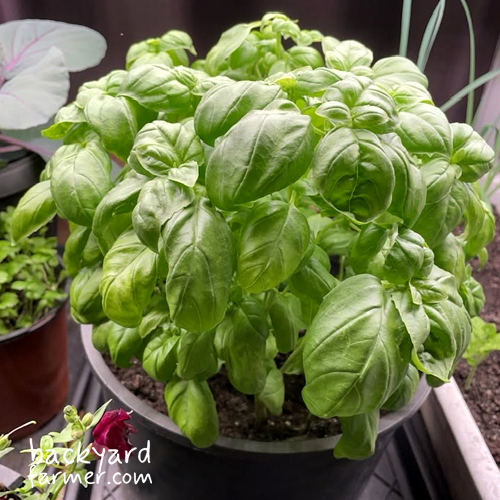
Growing basil in the UK can be surprisingly frustrating. It’s often sold as an easy herb, but if you’ve ever brought a supermarket plant home only to watch it collapse within a week, you’ll know that’s not the full story.
The reality is simple: basil isn’t difficult — it just needs the right conditions. Warmth, light, and regular pruning matter far more than anything else, and most UK setups fall short on at least one of those.
Once you get those basics right, basil becomes one of the most rewarding plants you can grow. You’ll get stronger, bushier plants, better flavour, and a steady supply of fresh leaves instead of a short-lived crop. If you’re trying to keep a supermarket basil plant alive, the biggest improvement is usually splitting the overcrowded pot and giving the plants more light and root space.
When to Plant Basil in the UK
Basil is one of those crops where timing makes or breaks it. Get it right and it takes off; get it wrong and it just sits there — or worse, goes backwards.
In the UK, the main thing to remember is that basil hates the cold. It isn’t forgiving like parsley or chives. It wants warmth from the start.
If you’re sowing from seed, start indoors from March to April on a warm windowsill or in a propagator. You can keep sowing through April to June if you want a steady supply.
For outdoor growing, hold off until late May or early June, once nights are reliably mild. Even a small drop in temperature can stall young plants, which is why planting too early is one of the most common mistakes.
You can push a later sowing into July, but after that you’re working against shorter days and cooler conditions.
In real UK conditions, it’s usually better to plant basil slightly late rather than too early. A plant going into warm June soil will often outgrow one that struggled through a cold May.
If you’re growing indoors, you’ve got more flexibility. Basil will grow most of the year if it’s warm enough and gets decent light — just expect slower growth in winter unless you boost the light.
Where to Grow Basil
Basil will grow in most UK setups if you give it enough light and warmth — but where you put it makes a noticeable difference to how well it performs.
The sweet spot is a warm, sunny, sheltered position. Outdoors, that usually means a south-facing patio, up against a wall, or inside a greenhouse. Basil doesn’t enjoy wind or big temperature swings, so exposed beds can hold it back even in good weather.
For most people, growing basil in pots is the easiest and most reliable option. Containers warm up quicker, drain better, and you can move them to chase the sun or bring them in if the weather dips. In practice, a pot on a bright patio or windowsill will often outperform a plant in open ground.
If you’re growing indoors, put basil in the brightest spot you’ve got — ideally a south-facing windowsill. In the UK, light is usually the limiting factor indoors, which is why plants can turn thin and leggy if they’re set back from the glass.
Soil-wise, keep it simple: light, fertile, and well-drained. Standard multipurpose compost works well in pots. If it feels heavy, loosen it with a bit of grit or perlite. In beds, avoid anything that stays wet — that’s a quick route to yellow leaves and slow growth.
Indoor vs Outdoor (Quick Reality Check)
- Indoors: Reliable warmth, but often short on light
- Outdoors: Better light and airflow, but depends on warm weather
- Best of both: Start indoors, move outside once it’s properly warm
In real UK conditions, basil does best when you treat it like a warm-season crop that needs a bit of protection, rather than something you can plant anywhere and leave to it.
How to Plant Basil
Basil is best grown from seed in the UK. You can also rescue supermarket plants, but the key in both cases is the same: don’t let it get crowded.
Growing Basil from Seed (Simple Method)
- Fill a pot or tray with fine, lightly moist compost
- Sow seeds thinly on the surface (or cover very lightly, around 0.5cm)
- Water gently so you don’t wash them away
- Place somewhere warm (18–22°C is ideal)
- Keep the compost just damp — not wet
Seeds usually germinate in 5–10 days. As soon as they’re up, move them into the brightest spot you’ve got. If they stay in dull light, they’ll stretch quickly.
As they grow, thin them out early. It feels harsh, but it’s the difference between sturdy plants and a tray of weak, tangled stems.
The Supermarket Basil Fix (Worth Doing Once)
Most supermarket basil is grown for quick sale, not longevity. You’re usually getting dozens of seedlings crammed into one small pot, all competing with each other.
If you split it up early, you can turn one plant into several decent ones:
- Tip the plant out of the pot
- Gently pull the root ball into 3–6 smaller clumps
- Pot each clump on into fresh compost
- Water well and keep somewhere bright and warm
It looks rough when you do it, but it works. This alone is often the difference between a plant that dies in days and one that keeps producing for weeks.
Common Planting Mistakes to Avoid
- Sowing too early into cold conditions → slow or stalled growth
- Overwatering seedlings → weak roots or damping off
- Not thinning plants → leggy, underperforming plants
Keep it warm, keep it bright, and give each plant a bit of space. Do that, and basil is actually very straightforward to get going.
Spacing and Layout
Basil starts off small, so it’s tempting to pack more in — but that usually backfires. Give it space and airflow, and it fills out properly. Cram it in, and you’ll end up with thin stems and smaller leaves.
As a rough guide, aim for 15–25cm between plants. In rows, leave about 25cm between rows. If you’re using a square foot setup, that works out at 1–2 plants per square, depending on how tightly you want to grow.
In pots, it’s usually better to keep it simple: one strong plant per small pot, or a couple in a larger container. It might look a bit sparse early on, but basil bulks out quickly once it gets going.
The main issue here is overcrowding — especially with seedlings or supermarket plants. When basil is packed in, it competes for light and airflow, which leads to weak growth and a higher chance of problems later on.
If you want to map your basil spacing properly before planting, use the Allotment Planner to lay it out first. It takes the guesswork out and helps you avoid squeezing too much into the space.
Watering, Feeding, and Care
Basil isn’t fussy, but it does react quickly to how you treat it. Get the balance right and it grows fast and full. Get it wrong and it stalls, yellows, or bolts.
Watering Basil Properly
Basil wants consistent moisture, not wet soil. Aim for lightly damp compost rather than something that stays soggy.
- Water when the top layer starts to dry
- Don’t let pots dry out completely
- Make sure excess water can drain away
Overwatering is the usual culprit, especially indoors. If compost stays wet, roots struggle and leaves start to yellow.
Feeding Basil
Basil doesn’t need heavy feeding, but plants in pots do better with a light feed every 1–2 weeks through the growing season.
A simple liquid feed is enough — you’re supporting steady growth, not forcing it.
The Real Secret: Pruning
If there’s one thing that makes the biggest difference, it’s regular pruning.
- Pinch out tips once plants reach 10–15cm
- Cut just above a pair of leaves
- Harvest little and often
That pushes the plant to branch instead of shooting up on one stem.
It also helps delay flowering, which keeps leaves tender and productive for longer. Once basil flowers, growth slows and flavour drops.
Indoor vs Outdoor Care
- Indoors: Watch light levels and go easy on watering
- Outdoors: Watch cold nights and sudden changes
Indoors it’s usually lack of light that holds basil back. Outdoors it’s temperature.
Common Care Mistakes
- Letting plants flower too early → less leaf production
- Keeping compost constantly wet → root problems
- Not harvesting regularly → tall, weak plants
Focus on warmth, light, and regular pruning, and basil more or less takes care of itself.
Common Problems
Basil is pretty straightforward once it’s up and running, but a few issues crop up again and again — especially with UK light and temperatures.
Basil Flowering Too Early (Bolting)
- Cause: Not pruning, stress, or maturity
- Fix: Pinch out tips regularly and remove flower heads early
Once basil flowers, it shifts energy away from leaf growth. Leaves get smaller and lose flavour.
Basil Leaves Turning Yellow
- Cause: Overwatering or poor drainage
- Fix: Let the top layer dry slightly and improve drainage
Weak or Leggy Growth
- Cause: Lack of light or overcrowding
- Fix: Move to brighter light and thin plants out
Basil Plant Suddenly Dying
- Cause: Overcrowding, stress, or inconsistent watering
- Fix: Split and repot early, keep conditions steady
Slugs and Cold Damage (Outdoors)
- Cause: Slugs or cold nights
- Fix: Protect plants and wait for warm conditions
Most issues come back to temperature, light, watering, and pruning.
When and How to Harvest Basil
Basil is one of those herbs where picking it actually helps it grow. Do it right, and you’ll get a steady supply. Leave it too long, and it goes leggy and starts to flower.
In most UK conditions, you can start harvesting around 6–10 weeks after sowing, once the plant has a few strong sets of leaves.
How to Tell When Basil is Ready
- Plants are roughly 10–15cm tall
- Several sets of healthy leaves
- Growth looks sturdy
How to Harvest Basil Properly
- Cut just above a pair of leaves
- Take the top growth
- Avoid stripping lower leaves
Cut-and-Come-Again
- Harvest little and often
- Don’t take more than a third at once
- Keep picking to keep growth going
Storage Tips
- Keep stems in water at room temperature
- Avoid the fridge if possible
Keep cutting it, and it keeps giving.
Companion Planting
Basil pairs well with warm-season crops, especially tomatoes.
Good Companions
- Tomatoes
- Peppers and chillies
- Courgettes
Avoid
- Large plants that shade it
- Very thirsty crops
Companion planting here is mostly about grouping plants with similar needs rather than chasing big benefits.
Plan Your Basil Layout
If you want to plan your layout properly before planting, use the Allotment Planner to map spacing, companion planting, and bed layout in one place.
FAQ
Yes — and in the UK it’s often the best way. Pots warm up faster and are easier to manage.
Around 6–10 weeks, depending on warmth and light.
Yes, once you get warmth, light, and spacing right.
Overcrowding — especially with supermarket plants.
Yes, up to July for a shorter crop.
Only in warm summer conditions.
Yes, but winter growth is slower without extra light.