
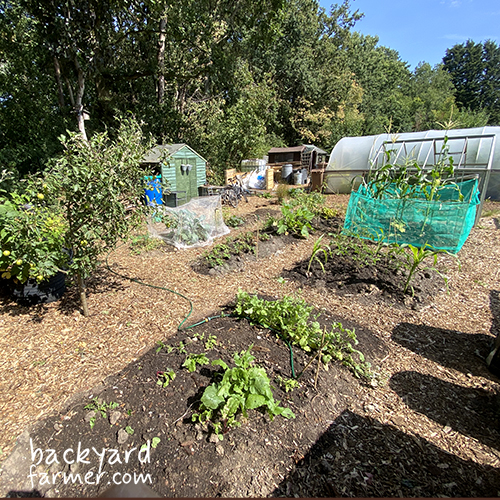
August has probably been the most productive month on the allotment so far.
There has been plenty to harvest, the sweetcorn is getting close, and more of the plot is finally starting to look like productive growing space rather than something I am still trying to reclaim.
It has not all been straightforward, though.
Temperatures reached around 35°C during some of the hotter spells, which brought a few problems of its own. Plants bolted, watering became much more important and some crops showed just how quickly they can struggle when conditions change.
Thankfully, temperatures have now returned to something much more manageable.
August has mostly been about harvesting, watering and learning what the plot does in extreme summer weather.
What Changed in August?
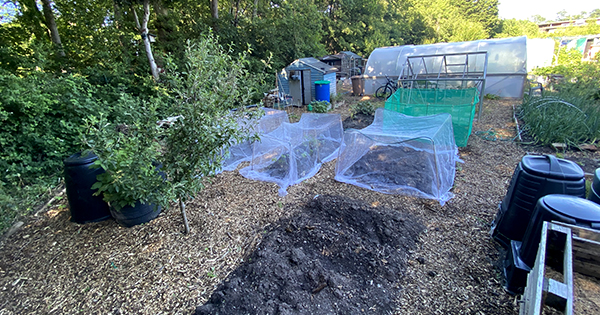
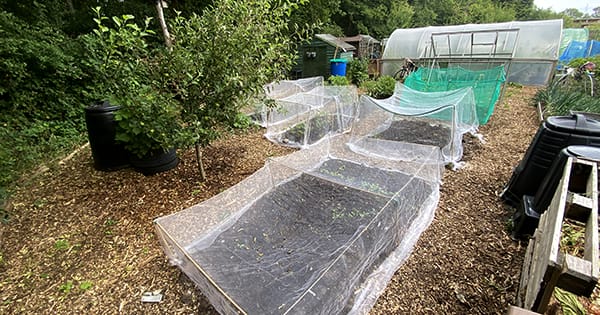
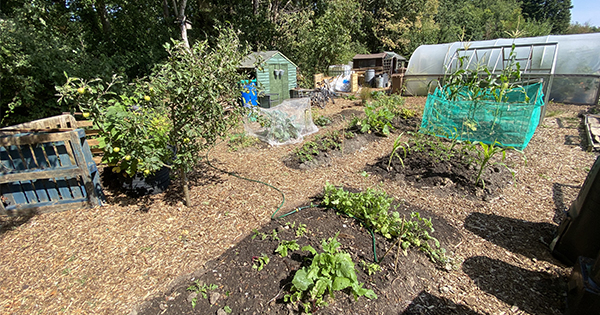
The biggest physical change this month was moving the shed.
It had been sitting in one of the better sunny positions on the allotment, which increasingly seemed like a waste of valuable growing space.
I have now moved it back towards the tree line, where shade makes the ground less useful for vegetables anyway.
That has opened up enough sunny ground for another long growing bed, which should make much better use of the plot next year.
Elsewhere, some beds are already becoming empty as crops finish.
Rather than rushing to fill every gap again, I am going to start using some of this space to improve the soil.
The ground here is still fairly poor, so autumn will probably involve well-rotted manure, green manures and plenty more organic matter.
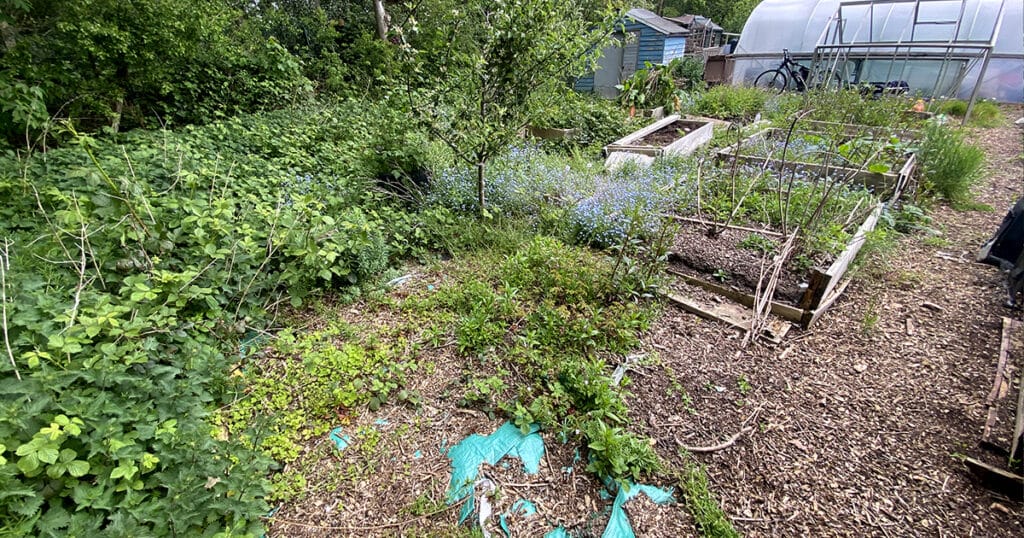
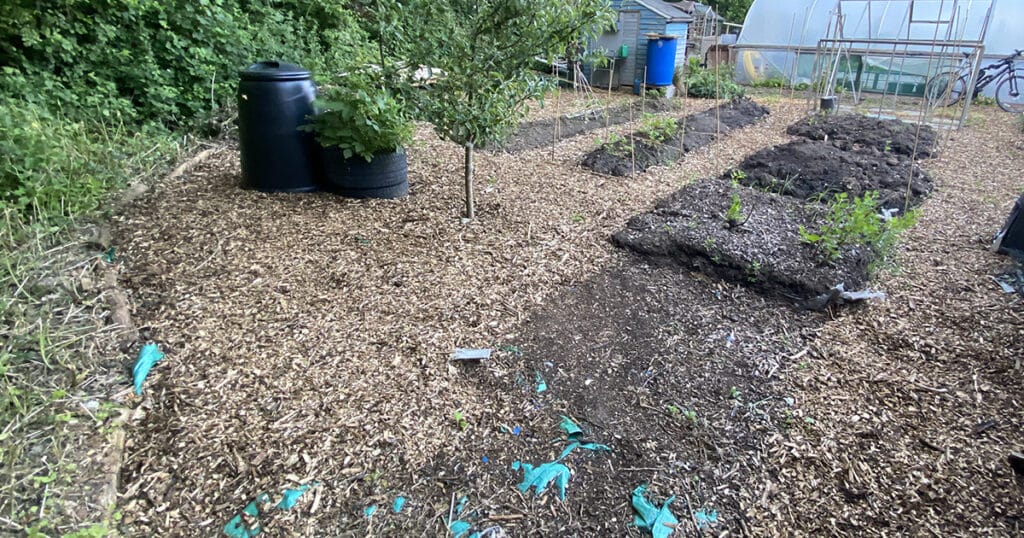
The allotment is gradually moving from clearing and construction towards improving the ground itself.
August Became a Proper Harvest Month
August finally felt like the month when the work started paying back properly.
Potatoes, beans, courgettes, beetroot, turnips and other summer crops have all been producing, while fruit around the plot has continued to develop.
After spending the first few months building beds, clearing ground and trying to get crops established, being able to regularly leave with food feels like a fairly major milestone.
There are still failures mixed in with it, but that is increasingly becoming part of the point.
I am learning which parts of the plot perform well, which dry out fastest and which crops cope best with the conditions here.
The Heat Was the Biggest Lesson
The temperature climbed towards 35°C on some days, and that exposed a few weaknesses.
Water disappeared from the soil surprisingly quickly and several plants responded to the stress by bolting.
Rather than treating all of those plants as a loss, I allowed some of them to finish flowering and collected seed.
That gives me something useful back from crops that had otherwise finished early.
The hot spell was also a useful reminder that watering deeply and consistently matters far more than simply wetting the surface.
Fortunately, the water butt has been working well, so having stored water available directly on the plot made dealing with the hotter days considerably easier.
Now that temperatures have fallen again, the whole allotment feels much easier to manage.
The Comfrey Feed Has Gone Into Use
Last month’s batch of comfrey feed was finally ready.
I strained out the remaining plant material and added the liquid to the water butt, where it could dilute before being used around the plot.
Most of it has gone towards the root-growing area.
It is another small step towards using more of what the allotment itself produces rather than constantly bringing things onto the plot.
The comfrey will grow back, so there should be plenty more available for future batches.
Bean Rust Appeared
One problem that became noticeable this month was rust on some of the beans.
Bean rust is a fungal disease rather than a nutrient deficiency, and the characteristic orange-brown marks are fairly easy to recognise once they appear.
The plants have still produced, so it has not been disastrous, but it is something I will be watching more closely next year.
The combination of dense growth, plant stress and summer conditions can give fungal problems an opportunity to establish.
For now, badly affected material will be removed rather than added to the compost heap.
It is another example of the allotment teaching me something that is difficult to learn from simply reading a growing guide.
The Sweetcorn Netting Has Worked
One experiment I am particularly pleased with is the sweetcorn protection.
Squirrels are common around the allotment because of the mature trees nearby, and sweetcorn is an obvious target once the cobs start filling.
I have seen other growers protecting individual cobs with bottles, socks and similar covers.
Instead, I surrounded the crop with the 2m-high netting.
So far, it has worked extremely well.
The squirrels have stayed away and the cobs have been left completely open to continue developing normally.
It is simple, but this is exactly the sort of thing I wanted to learn during the first year: what actually works on this particular plot.
Empty Beds Mean It Is Time to Think About Next Year
For the first time, I now have several beds becoming empty.
Earlier in the year I would probably have viewed empty ground as something that immediately needed another crop putting into it.
Now I am more interested in improving it.
The existing soil is not particularly rich, so some beds will be given well-rotted manure, while others are good candidates for green manure.
After months of concentrating on what I can grow this year, attention is beginning to shift towards creating better soil for next year.
That should make the second season considerably easier than the first.
The Allotment Community Is Starting to Grow Too
One of the nicest developments this month has had nothing to do with vegetables.
We now have a community group for people on the allotment.
It has only recently started, but people are already talking about swapping seeds, exchanging spare plants and helping each other out.
It is an easy part of allotment growing to overlook when concentrating on beds, crops and harvests.
You are not just renting a patch of ground.
You are growing alongside a group of people doing much the same thing, usually with spare seeds, spare plants and plenty of accumulated knowledge between them.
That community side is becoming one of my favourite parts of having the plot.
What Worked Well in August?
| Job or Idea | Why It Helped |
|---|---|
| Using the water butt | Made watering much easier during the extreme heat |
| Moving the shed | Freed another valuable sunny growing area |
| Saving seed from bolted crops | Turned some heat-related failures into something useful |
| Using the comfrey feed | Returned nutrients produced on the plot back into the soil |
| 2m netting around the sweetcorn | Prevented squirrel damage without covering individual cobs |
| Letting beds become empty | Creates an opportunity to improve poor soil before next year |
| Starting the community group | Already encouraging plant and seed swaps |
The biggest lesson this month has probably been that productive growing is not just about planting more crops.
Sometimes the better decision is to protect what is already growing, improve the soil or simply observe what happens when conditions become difficult.
Jobs for September
September should start shifting the plot towards autumn.
The main jobs will be harvesting the remaining summer crops, watching the sweetcorn as it reaches maturity, clearing finished plants, preparing empty beds with organic matter, sowing suitable green manures and continuing to collect seed where it is worth keeping.
I also want to start building the new long bed where the shed previously stood.
After the heat of August, though, doing all of that in more normal temperatures will be very welcome.
Final Thoughts — August on the Allotment
August has probably been the clearest example yet of why I wanted an allotment in the first place.
There has been plenty of food coming off the plot, but also plenty to learn.
The extreme heat caused bolting and increased watering demands. Bean rust appeared. Empty beds exposed just how much soil improvement is still needed.
But the water storage worked, the corn protection worked, seeds have been saved and moving the shed has created another large sunny growing area.
Even the failures are now starting to feed into next year’s plans.
And with growers beginning to swap plants, seeds and ideas through the new community group, the plot is starting to feel like part of something bigger than the growing space itself.
Four months in, I am harvesting more — but I am also starting to understand the plot.
I think that final line is particularly strong for Month 4. It moves the diary narrative on nicely from July’s theme of the allotment becoming a productive plot rather than a restoration project.