
Introduction
This week the allotment started to feel less like a clearing job and more like an actual growing space.
I managed to get up there twice, with two decent sessions, and the difference already feels huge. There is still plenty to do, but the plot is starting to show a bit of structure now.
The main jobs this week were:
- Weeding back to the plot border
- Dismantling more of the rotten raised beds
- Getting the first two growing rows in
- Making the most of a fresh woodchip delivery
- Planting the first proper crops
- Starting to think seriously about chickens
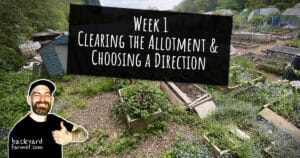
After Week 1, where most of the work was about choosing a direction, Week 2 has been about getting stuck in and making that direction visible.
Reclaiming the Plot Edges
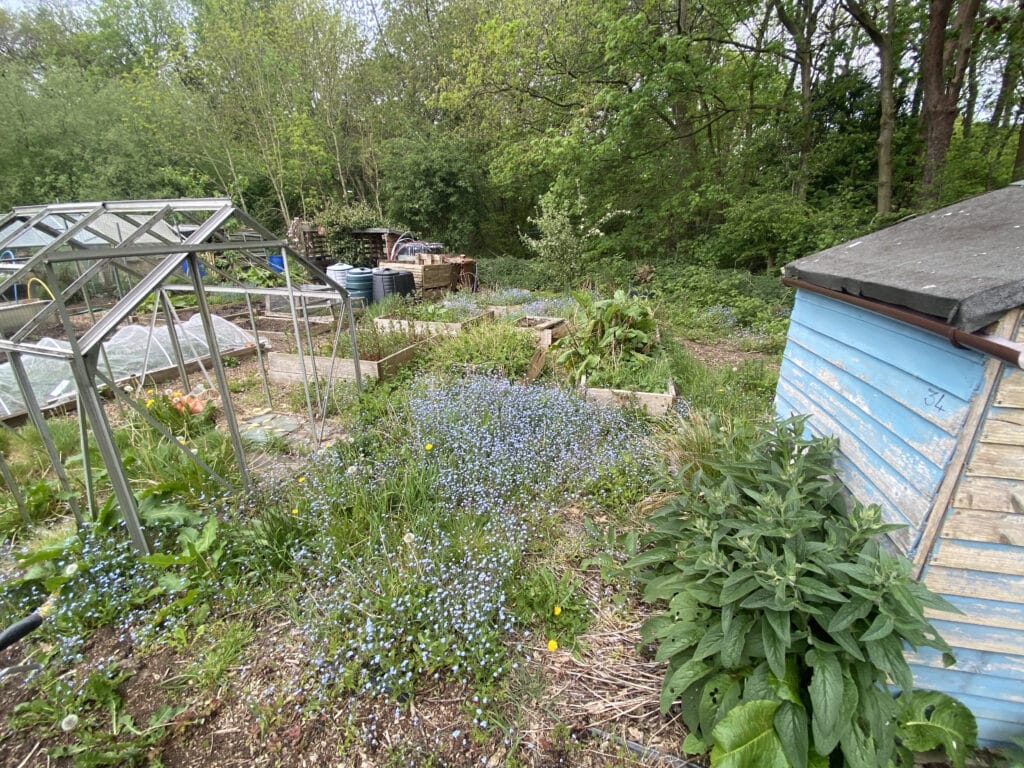
The first proper job this week was weeding back to the border.
That might not sound exciting, but it made a big difference. When you take on an overgrown plot, the edges disappear quickly. You end up working inside a vague patch of weeds, old timber, hidden plants and half-forgotten paths.
Once I started clearing back to the boundary, the plot suddenly felt bigger.
It also helped me see the space more clearly. There is a good-sized growing area here, and now I can start thinking properly about paths, beds, planting areas and where everything will sit long term.
The Rotten Raised Beds Are Nearly Gone
I’ve now dismantled nearly all of the rotten raised beds.
They looked useful at first glance, but once I started pulling them apart, it was obvious they were too far gone. The timber was soft, the structure was failing, and keeping them would have meant working around someone else’s old layout rather than building something that actually suits how I want to grow.
Rather than rebuild everything straight away, I’m carrying on with the no dig approach and using what is already there.
The old bed contents have been reshaped into new rows, so nothing useful has been wasted. It still looks rough in places, but it feels like the right way to handle this plot.
The First Two Rows Are In
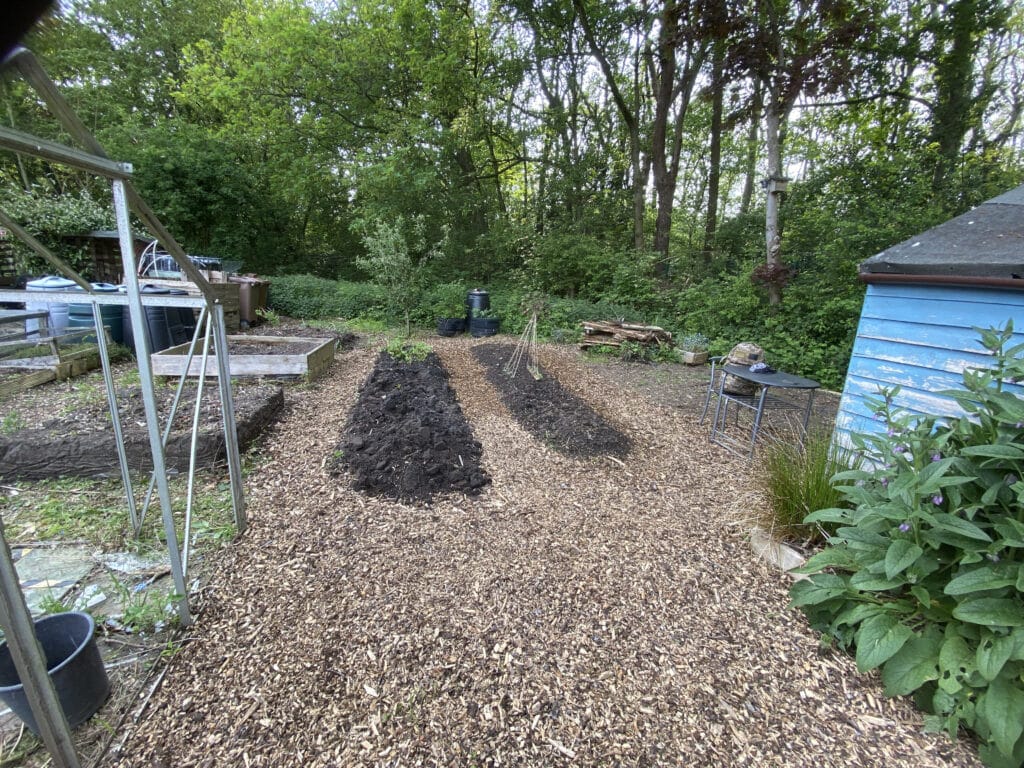
Over the two sessions, I managed to get the first two rows in.
That felt like a proper milestone.
After all the clearing, pulling timber apart, shifting soil and working out what to keep, it was good to finally plant something with intention.
So far, the plot now has:
| Crop | Notes |
|---|---|
| Maris Bard potatoes | Planted into one of the new rows |
| Red Duke of York potatoes | Early potatoes now in the ground |
| Broad beans | A solid, reliable early crop |
| Mange tout | Added for climbing growth and quick harvests |
| Nasturtiums | Useful, edible, and good for pollinators |
| Calendula | Great for pollinators and a good companion flower |
| Strawberries | Inherited from the previous plot holder |
The strawberries were already here, tucked into the plot from before. I’m keeping them for now and will see how they settle once the surrounding area is tidied up.
Making the Most of the Woodchip Delivery
There was also a fresh delivery of woodchip for everyone on the allotment site to use.
Naturally, I made the most of it.
I put down a good layer around the new rows, and it instantly made the space feel more organised. Woodchip paths are one of those simple allotment jobs that make everything look better while also doing something useful.
It should help:
- Suppress weeds
- Mark out the growing rows clearly
- Keep the paths cleaner underfoot
- Make the plot easier to work in wet weather
- Slowly feed the soil life as it breaks down
The plot already feels more usable now. Instead of stepping through weeds and rough ground, there are actual paths forming.
That makes a big psychological difference too. Once you can walk around a space properly, it starts to feel like a garden rather than a job list.
Plenty of Room Still to Plant
Even with the first rows in, there is still plenty of room left.
That’s good, because I’ve got more crops coming on and about a week before some of them are ready to plant out.
The next crops waiting in the wings include:
| Crop | Current Plan |
|---|---|
| Sweetcorn | Needs a warm, open block |
| Courgettes | Will need plenty of space |
| Cucumbers | Likely to go in once conditions are right |
| Tomatoes | Waiting for warmer planting-out weather |
| Chillies | Still growing on before going outside |
I don’t want to rush these out too early. The plot has good potential, but it is still exposed, and late cold nights can catch you out at this time of year.
For now, the aim is to keep building the structure of the allotment, then plant out once the weather feels a bit more settled.
Chicken Plans
One of the unexpected bits of news this week is that chickens are allowed on the site.
So, at some point in the future, I’m planning to get two.
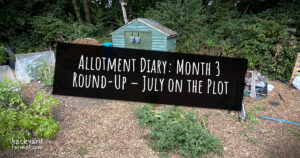
The blue shed on the plot should be perfect for converting into a small coop, and there is enough space nearby to create a decent run for them. I’m not rushing into it, because the main growing areas need sorting first, but it is now part of the long-term plan.
It fits the whole idea of the plot really well.
A couple of chickens would provide eggs, manure, character, and a bit more life on the allotment. They would also make the place feel less like a patch of rented land and more like a proper self-reliant little corner.
That is the direction I want this plot to go in.
What’s Next
The next jobs are fairly clear now.
Over the coming week or two, I want to:
- Finish removing the last bits of rotten raised bed timber
- Keep shaping the growing rows
- Add more woodchip while it is available
- Work out where the sweetcorn and courgettes will go
- Keep an eye on the inherited strawberries
- Start thinking through the chicken coop layout
- Get the next batch of plants hardened off and ready
There is still a lot of graft ahead, but the plot is already starting to change.
Final Thoughts — Week 2
Week 2 felt like the point where the allotment started becoming productive.
Last week was mostly about clearing, observing and deciding what direction to take. This week, the first proper rows went in, crops were planted, paths started forming, and the future layout became easier to imagine.
It is still rough around the edges, but that doesn’t bother me.
In fact, I quite like it at this stage. You can see the old plot underneath, the new plan starting to appear, and all the useful bits being worked back into the space rather than thrown away.
The potatoes are in. The broad beans are in. The woodchip paths are down.
And now, somehow, chickens are part of the plan too.